Key Takeaways
-
L-citrulline converts to L-arginine in the kidneys, which boosts nitric oxide production and supports vasodilation and cardiovascular health.1
-
Clinical studies show L-citrulline improves flow-mediated dilation by 1.81% and can reduce blood pressure, especially at 3–6 grams daily.1
-
Compared to L-arginine, L-citrulline bypasses liver metabolism, which supports higher bioavailability and more sustained plasma arginine levels.1
-
L-citrulline is generally safe for healthy adults at recommended doses, with mild side effects and specific medical exceptions.1
-
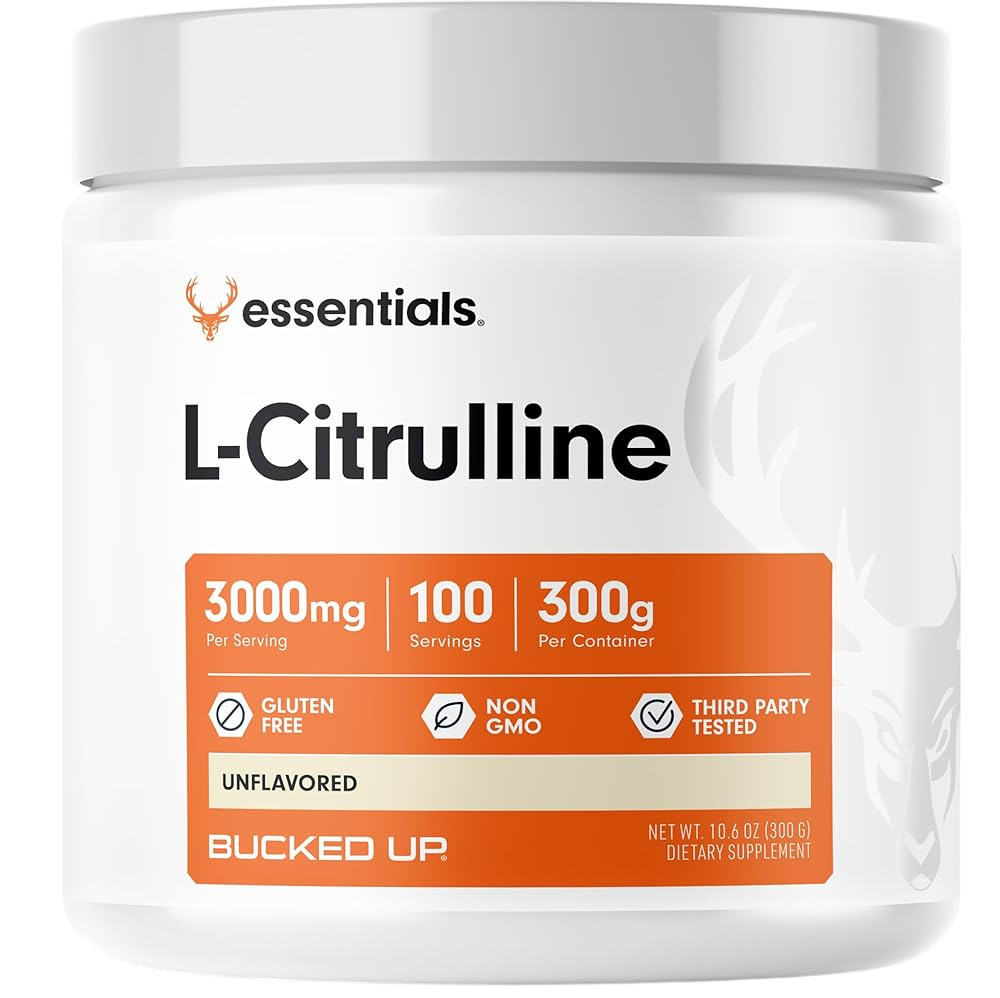
Support your heart health with Bucked Up’s pure L-citrulline – shop now for science-backed dosing.1
How This Guide Helps You Use L-Citrulline
L-citrulline is a non-essential amino acid that supports cardiovascular health by converting to L-arginine in the kidneys, which then promotes nitric oxide production for vasodilation.1 This guide explains how L-citrulline works, summarizes key research on cardiovascular benefits, outlines effective dosing ranges, and gives practical tips for using it consistently.
Why L-Citrulline Supports Heart and Vascular Health
L-citrulline is a non-essential alpha-amino acid that plays a central role in nitric oxide synthesis and the urea cycle. Unlike L-arginine, which undergoes extensive first-pass metabolism in the liver and gut, L-citrulline bypasses this initial breakdown and converts to L-arginine primarily in the kidneys.
The cardiovascular benefits of L-citrulline come from several key mechanisms:
-
Enhanced nitric oxide production through increased L-arginine availability
-
Vasodilation through nitric oxide synthase (NOS) enzyme activation
-
Improved endothelial function and vascular elasticity
-
Ammonia detoxification through the urea cycle
1
The main advantage of L-citrulline over direct L-arginine supplementation is its superior bioavailability and more sustained arginine levels, as shown in the comparison below.1
|
Parameter |
L-Citrulline |
L-Arginine |
Source |
|---|---|---|---|
|
Absorption |
Bypasses liver metabolism |
Significant first-pass extraction |
|
|
Peak Time |
Within hours |
Rapid but short-lived |
Pharmacokinetic studies |
|
Plasma Arginine Increase |
Approximately 1.5 times the plasma arginine AUC (421 ± 65 vs. 289 ± 50 µmol h l⁻¹ at 1500 mg bid vs 1600 mg bid) |
Modest, transient rises |
What Studies Show About L-Citrulline and Cardiovascular Health
Recent meta-analyses and randomized controlled trials report measurable effects of L-citrulline on cardiovascular health markers. A 2025 systematic review and meta-analysis of 8 randomized controlled trials published in Frontiers in Nutrition found that L-citrulline supplementation improved flow-mediated dilation (FMD) by a weighted mean difference of 1.81% in middle-aged and older adults.1
Blood pressure reductions appear in studies that use adequate dosages. A 2022 randomized, double-blind trial published in Nutrients found that L-citrulline supplementation in postmenopausal women with hypertension lowered resting aortic diastolic blood pressure and improved flow-mediated dilation (FMD).1 The studies below highlight consistent cardiovascular benefits across different populations and dosing protocols.
|
Study |
Dose |
Outcome |
Source |
|---|---|---|---|
|
Frontiers Nutr 2025 |
Various |
FMD +1.81% |
|
|
Nutrients 2022 |
≥6g daily |
DBP reduction, improved FMD |
|
|
Bailey et al. 2015 |
Daily |
BP reduction, improved O2 uptake |
RCT |
Studies show that L-citrulline supplementation can support blood pressure management in individuals with elevated blood pressure, with notable effects observed at effective daily doses.1 Understanding these effective doses helps translate the research into a practical routine.
Finding an Effective L-Citrulline Dose for Heart Health
Effective dosages of L-citrulline typically range from 3–6 grams daily, with performance and vascular benefits often observed at these levels.1 The 3–6 gram daily range mentioned earlier represents a practical sweet spot for cardiovascular support, with specific protocols varying by form.
-
Pure L-citrulline: 3–6 grams daily, divided into two servings
-
Citrulline malate: 6–8 grams daily (providing approximately 3.4–4.5 grams of pure L-citrulline)
-
Timing: about 60 minutes before physical activity or as a consistent daily supplement
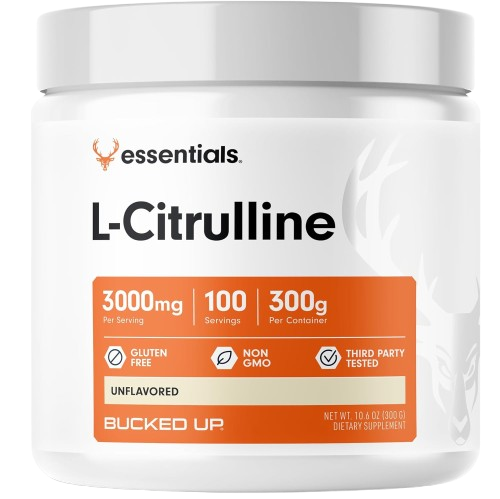
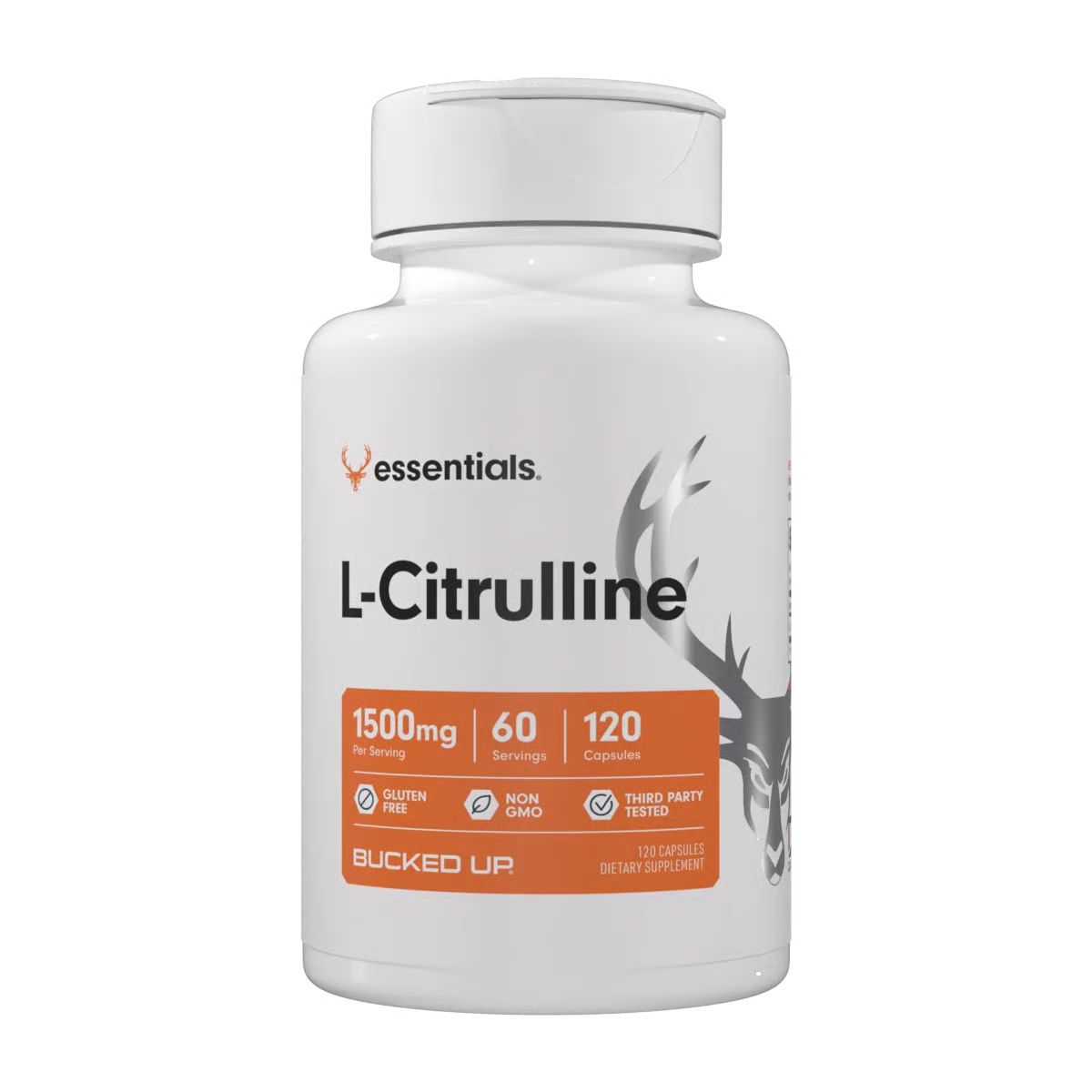
Pharmacokinetic studies show that L-citrulline supplementation raises plasma L-arginine levels, which supports nitric oxide production.1 Bucked Up offers several L-citrulline formats: 3 grams per scoop in powder form, 750 milligrams per capsule (4 capsules equal 3 grams), and pre-workout formulas containing 6 grams citrulline malate or 4 grams pure L-citrulline with ingredients like AstraGin® that can support absorption.
Practical Ways to Use L-Citrulline with Bucked Up Products
Different cardiovascular and performance goals call for slightly different L-citrulline strategies. For individuals with borderline blood pressure who want daily support, 3 grams of pure L-citrulline powder mixed with water can provide steady nitric oxide support. Athletes who want both cardiovascular benefits and performance enhancement may choose pre-workout formulas that combine citrulline malate with complementary ingredients.
Helpful implementation steps include checking labels for pure L-citrulline content, starting at the lower end of the dosing range to assess tolerance, and looking for absorption-supporting ingredients such as AstraGin®. Shop Bucked Up’s transparent-label L-citrulline powders and pre-workouts to match your specific heart health and training goals. The company’s USA-manufactured products provide clear, detailed labeling.
Safety, Side Effects, and Drug Interactions
L-citrulline is generally safe for healthy adults at doses of 3–6 grams daily but should be avoided during pregnancy, while nursing, in severe kidney disease, and in patients taking antihypertensive medications or nitrates because of potential additive blood pressure-lowering effects.1
Common side effects are usually mild and infrequent, and they tend to appear only with very high doses of 10 grams or more. Reported effects include gastrointestinal discomfort, nausea, bloating, or headaches.1 L-citrulline may interact with PDE5 inhibitors including sildenafil (Viagra), tadalafil (Cialis), and vardenafil (Levitra), since both can lower blood pressure and may increase the risk of hypotension when combined.1
Common L-Citrulline Mistakes and Misconceptions
Some supplements may contain lower L-citrulline doses or can use proprietary blends that obscure the actual content. Bucked Up provides transparent labeling with clearly stated doses. Another frequent misconception involves L-arginine superiority, yet research shows L-citrulline’s better bioavailability and more sustained plasma arginine elevation compared to L-arginine.
Daily L-citrulline use is safe for healthy adults at recommended doses and supports arterial health through sustained nitric oxide production. Consistent intake matters more than occasional high doses for long-term vascular support.
FAQ
How does L-citrulline boost nitric oxide production?
L-citrulline converts to L-arginine in the kidneys, and L-arginine then serves as the substrate for nitric oxide synthase enzymes to produce nitric oxide. This pathway bypasses the extensive first-pass metabolism that limits L-arginine supplementation effectiveness, which supports more sustained nitric oxide production and vasodilation.
What dosage of L-citrulline is effective for blood pressure support?
Studies report significant cardiovascular benefits with 3–6 grams of pure L-citrulline daily, with doses of 6 grams or higher often producing the most notable blood pressure reductions. A practical approach involves dividing the daily dose into two servings and taking it consistently for at least 14 days to build and maintain vascular benefits.
Is L-citrulline good for arteries?
L-citrulline supports arterial health by improving endothelial function, reducing arterial stiffness, and enhancing flow-mediated dilation.1 These effects contribute to better vascular elasticity and overall cardiovascular function, which can be especially helpful for individuals with prehypertension or those who want to maintain healthy blood vessels.
What happens if you take L-citrulline daily?
Daily L-citrulline supplementation at appropriate doses of 3–6 grams is generally safe for healthy adults and can provide ongoing cardiovascular benefits.1 Regular use supports consistent nitric oxide production, improved blood flow, and enhanced endothelial function. Most people tolerate these doses well when they follow recommended guidelines.
How does L-citrulline compare to L-arginine for cardiovascular health?
L-citrulline shows better bioavailability and more sustained plasma arginine elevation compared to L-arginine for cardiovascular support. As explained in the mechanisms section, L-citrulline’s ability to bypass first-pass metabolism gives it a practical advantage: more consistent nitric oxide support with fewer gastrointestinal side effects than direct L-arginine supplementation for many users.
Conclusion: Putting L-Citrulline to Work for Your Heart
L-citrulline offers a research-backed way to support cardiovascular health through enhanced nitric oxide production and improved vascular function.1 Evidence shows benefits for blood pressure management, endothelial function, and arterial health when people use daily doses in the 3–6 gram range.
Start supporting your heart health with Bucked Up’s science-focused L-citrulline powders and pre-workout formulas. Choose the format that fits your routine and use it consistently for meaningful cardiovascular support.
1 The content provided in this article is for informational purposes only and is not medical advice. Consult with a medical professional before implementing any changes to your diet, health, or exercise routines. Individual results will vary and are based on a combination of each individual’s diet, exercise, age, and health circumstances. These statements have not been evaluated by the Food and Drug Administration. This product is not intended to diagnose, treat, cure or prevent any disease.
This article was written by Ryan Gardner, CEO of Bucked Up. As the maker of Bucked Up Protein Soda, we have a financial interest in this information. The views expressed are our own and should be read with that context in mind.