Key Takeaways
- L-citrulline raises nitric oxide by converting to L-arginine, which improves blood flow, oxygen delivery, and muscle pumps during training.1
- It helps clear ammonia through the urea cycle and supports Krebs Cycle energy production, which can reduce fatigue and support endurance.1
- Clinical studies using 6–8g doses report more reps in later sets, longer cycling time to exhaustion, and higher oxygen uptake in athletes.1
- L-citrulline often outperforms arginine because it has higher bioavailability and avoids heavy first-pass breakdown in the gut and liver.1
- For practical use, choose Bucked Up’s pure L-citrulline or citrulline malate in the 3–8g range daily or pre-workout to support performance.1
How L-Citrulline Supports Performance in Your Body
L-citrulline supports athletic performance through three main actions: nitric oxide support, ammonia clearance, and energy metabolism.1 The kidneys convert ingested L-citrulline into L-arginine, which acts as the direct building block for nitric oxide. Higher nitric oxide levels relax and widen blood vessels, which improves circulation and nutrient delivery to working muscles during exercise.1
L-citrulline also participates in the urea cycle, a pathway that removes ammonia, a waste product from protein breakdown and hard training. Better ammonia clearance can delay fatigue and may help keep blood lactate levels lower during intense efforts.1 When paired with malic acid as citrulline malate, the malate portion supports the Krebs Cycle, which helps aerobic ATP production and phosphocreatine recovery, both of which support endurance.1
Research on L-Citrulline for Endurance and Training Volume
Multiple randomized controlled trials show that L-citrulline can support athletic performance. Across studies, athletes often see more total work, longer time to exhaustion, and better recovery between efforts.1
The table below highlights how different citrulline doses and forms affect key outcomes such as later-set performance, cycling endurance, and oxygen use during exercise.
| Study | Dose | Outcome |
|---|---|---|
| Pérez-Guisado 2010 | 8g citrulline malate | more repetitions in later sets |
| Journal of Sports Medicine 2016 | citrulline malate | longer cycling time to exhaustion |
| Sports Medicine Research 2015 | L-citrulline | improved oxygen uptake during exercise |
Pérez-Guisado’s 2010 study reported that citrulline malate increased bench press performance in trained men and reduced muscle soreness compared to placebo.1 The extra work came mainly in the later sets, where fatigue usually hits hardest.
Research conducted in Mallorca, Spain found that L-citrulline malate improved use of branched-chain amino acids during exercise and increased human growth hormone levels. Other work shows that L-citrulline supplementation supported cycling performance, reduced post-exercise tiredness, and improved concentration in athletes.1 Recent meta-analyses continue to report similar performance benefits across different sports and training styles.
Why Many Athletes Choose L-Citrulline Over Arginine
L-citrulline often raises blood arginine levels more effectively than taking arginine itself.1 Schwedhelm et al. 2008 showed that oral L-citrulline produced roughly double the sustained increase in plasma arginine compared to an equal dose of L-arginine. One reason is that about 40% of orally administered L-arginine is broken down in the small intestine during first-pass metabolism before it can circulate.
Unlike arginine’s first-pass degradation, this kidney-based conversion mentioned earlier sends arginine directly into circulation. The result is a more stable rise in blood arginine, which supplies more raw material for nitric oxide production and supports consistent blood flow during training.
L-Citrulline Dosing Guidelines for Training and Daily Use
Most performance-focused studies use moderate to higher doses of citrulline. For resistance training, 6–8 grams of citrulline malate, which provides about 3.4–4.5 grams of pure L-citrulline, taken 30–60 minutes before lifting, has shown strong results.1 For daily cardiovascular and recovery support, 3–6 grams of pure L-citrulline per day appears effective in research.1
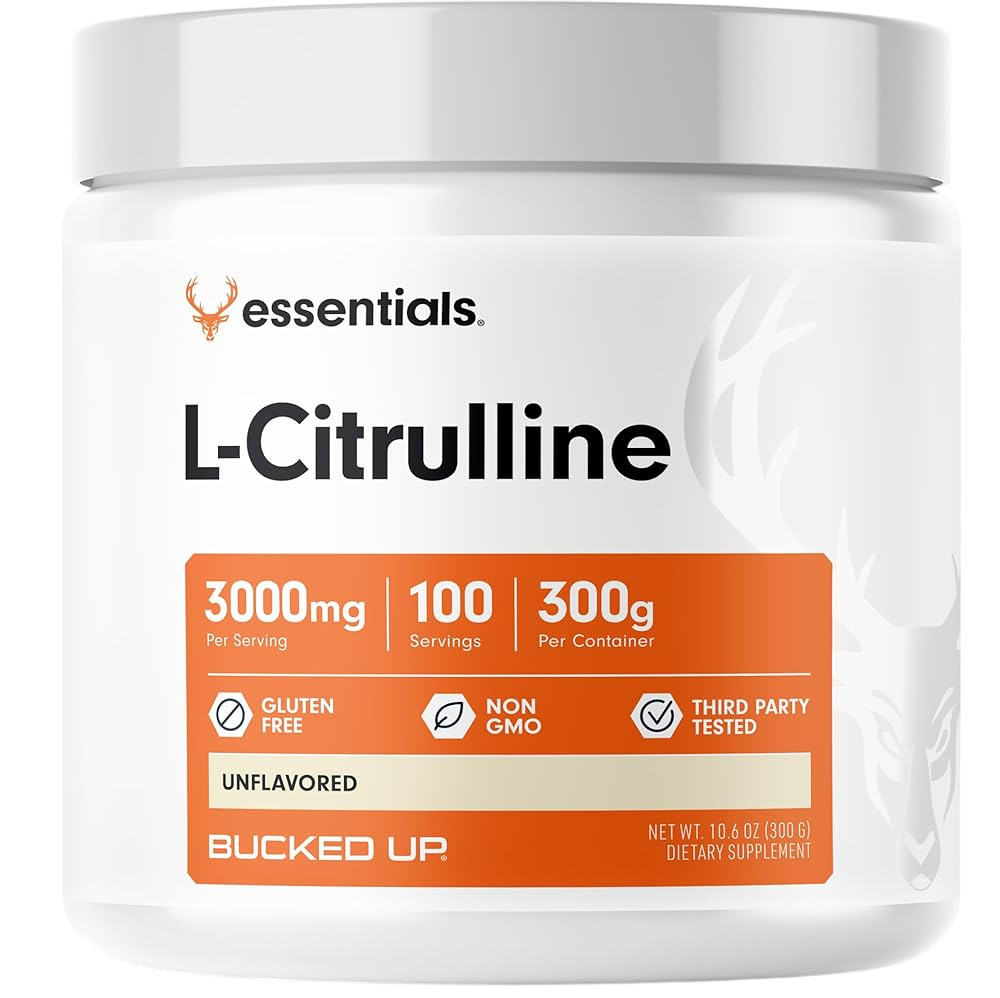
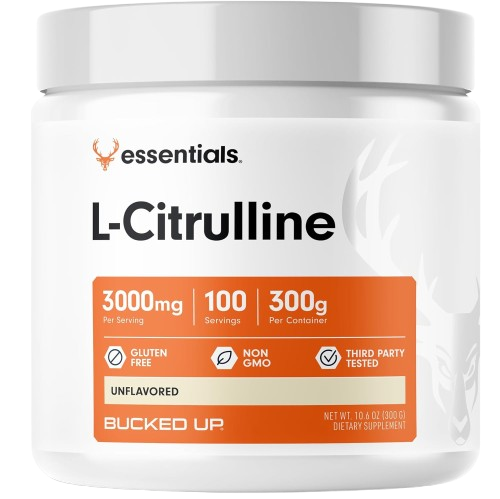
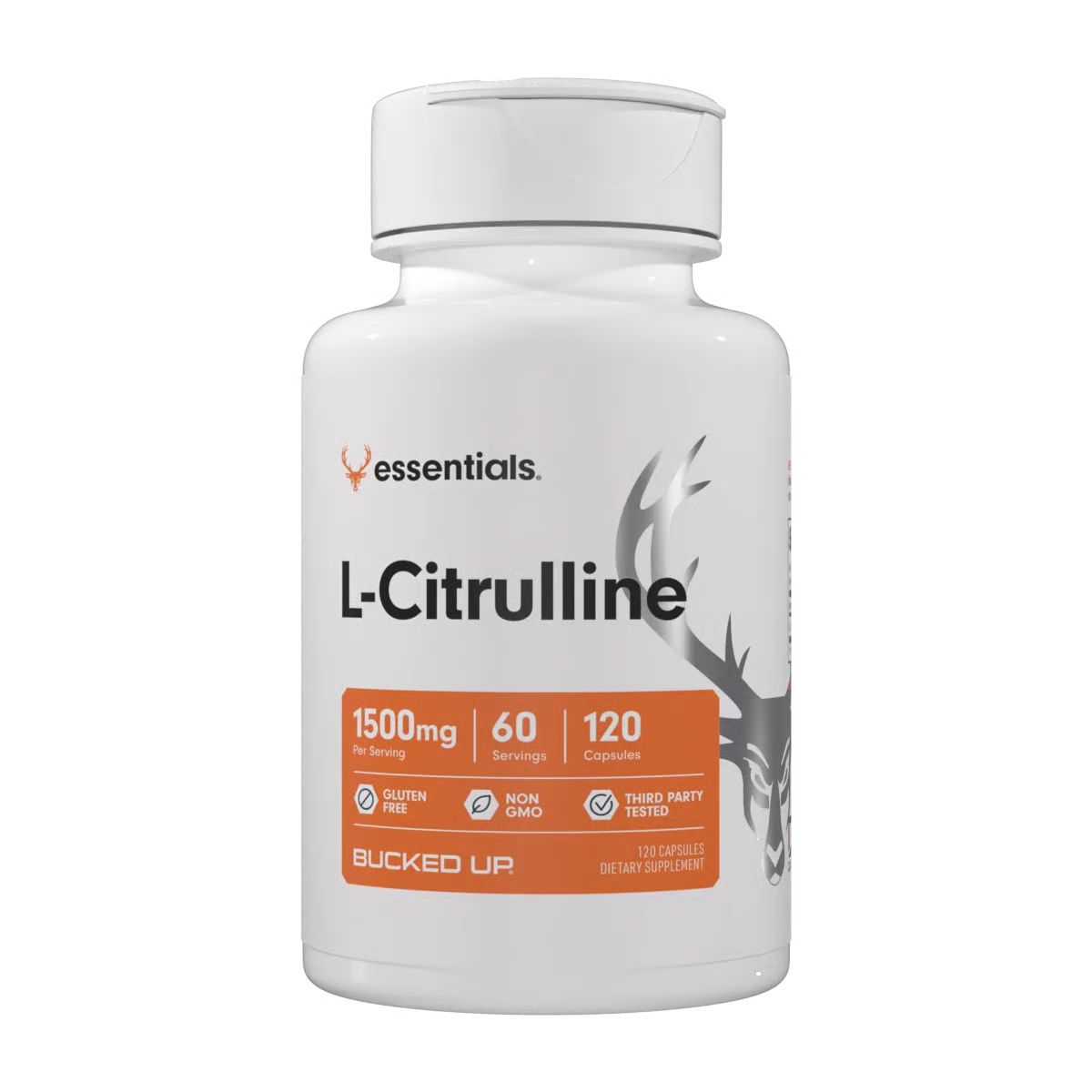
Choose Bucked Up’s pure L-citrulline or citrulline malate to match these research-backed ranges and tailor your dose to your training style.
Peak blood levels usually appear within about 60 minutes after taking L-citrulline, so pre-workout timing matters for short-term performance effects. Studies in healthy adults report safe use at doses up to roughly 10–15 grams per day, although most people stay in the lower ranges.
Bucked Up Formulas That Feature L-Citrulline
Bucked Up offers several L-citrulline-based formulas that fit different experience levels and stimulant preferences. The Bucked Up Pre-Workout includes 6,000 mg of citrulline malate in a 2:1 ratio and adds Astragin® for absorption support. This formula gives a solid nitric oxide threshold and uses malic acid to support energy production for longer sessions.1
For high-tolerance athletes who want more stimulation than the foundational formula provides, Woke AF uses the same 6,000 mg citrulline malate dose with 333 mg caffeine. The robust citrulline content helps balance potential tightening of blood vessels from higher stimulant intake and supports steady nutrient delivery during intense training.1
If you want to push pump and performance through several pathways at once, Mother Bucker focuses on advanced L-citrulline support. It combines 4,000 mg pure L-citrulline with Nitrosigine® and Hydroprime® glycerol. This combination targets vasodilation and cell hydration through multiple mechanisms, which can create a fuller, more hydrated muscle pump than standard citrulline alone.1 Transparent labeling lets athletes see exact ingredient amounts.
Safety, Side Effects, and Smart Use of L-Citrulline
L-citrulline shows a strong safety record in healthy adults. Clinical research reports no serious adverse events at oral doses up to 15 grams in healthy adults, and most trials in the 3–6 gram range note few side effects.1 When side effects appear, they usually involve mild stomach discomfort at higher doses, and pure L-citrulline often feels easier on digestion than more acidic citrulline malate.
L-citrulline does not act like a stimulant and does not raise heart rate. It can lower blood pressure in some people by relaxing blood vessels through nitric-oxide related pathways.1 Anyone with low baseline blood pressure or using blood pressure medication should speak with a healthcare professional, since extra vasodilation could drop blood pressure too far. People with serious kidney disease also need medical guidance, because L-citrulline metabolism relies heavily on kidney function.
L-citrulline can enhance the effects of phosphodiesterase inhibitors and blood pressure drugs, which may increase the risk of large blood pressure drops.1 Pregnant or nursing women should avoid L-citrulline supplements because safety data in these groups remains limited. For those cleared to use it, starting with Bucked Up’s tested citrulline formulas can provide performance support with quality and purity in mind.
L-Citrulline FAQ
How long does L-citrulline take to kick in?
L-citrulline usually reaches peak blood levels within about 60 minutes after you take it. For workout performance, most people take it 30–60 minutes before training to allow time for conversion to arginine and for nitric-oxide related blood flow support. Many users notice stronger pumps and better endurance during the session once circulation increases.1
Is L-citrulline good for endurance athletes?
L-citrulline can support endurance athletes through several mechanisms. Studies report longer cycling time to exhaustion and higher oxygen use during aerobic exercise. The amino acid supports oxygen delivery to working muscles, helps limit ammonia buildup that contributes to fatigue, and supports steady energy production through its role in the urea cycle and related pathways. Endurance athletes can benefit from both pre-session dosing and consistent daily use for cardiovascular support.
Why do bodybuilders take L-citrulline?
Bodybuilders often use L-citrulline for stronger pumps and higher training volume. Research shows that citrulline can increase total reps in resistance training, which raises the overall training stimulus and may support muscle growth.1 Better circulation brings more nutrients to muscles during sets and can help recovery between sets. Many lifters also value the visible vascularity and muscle fullness that come with higher nitric-oxide related blood flow.
What is the difference between citrulline malate and pure L-citrulline?
Citrulline malate combines L-citrulline with malic acid in a 2:1 ratio, which supports both nitric-oxide related blood flow and energy production through the Krebs Cycle. Pure L-citrulline provides only the amino acid, which focuses the effect on arginine levels and circulation. Citrulline malate may offer extra endurance support through malic acid’s role in ATP production, while pure L-citrulline allows more concentrated dosing for pump-focused goals.
Can you take L-citrulline daily?
Daily L-citrulline use appears safe and helpful for most healthy adults. Research supports 3–6 grams per day for cardiovascular support and ongoing performance benefits. Regular use may improve blood vessel function and support healthy blood pressure over time. Athletes often pair a daily baseline dose with a higher pre-workout amount while keeping total intake within the commonly cited safety range of up to about 15 grams per day.
Using L-Citrulline to Chase New PRs
L-citrulline supports performance by raising arginine and nitric oxide, clearing metabolic waste, and backing up energy production.1 Across multiple studies, athletes see more total work, longer efforts before fatigue, and better recovery between bouts. With higher bioavailability than arginine and a strong safety record, L-citrulline can serve as a core supplement for lifters and endurance athletes who want to push past plateaus and set new personal records.
1 The content provided in this article is for informational purposes only and is not medical advice. Consult with a medical professional before implementing any changes to your diet, health, or exercise routines.
Individual results will vary and are based on a combination of each individual’s diet, exercise, age, and health circumstances.
These statements have not been evaluated by the Food and Drug Administration. This product is not intended to diagnose, treat, cure or prevent any disease.
This article was written by Ryan Gardner, CEO of Bucked Up. As the maker of Bucked Up Protein Soda, we have a financial interest in this information. The views expressed are our own and should be read with that context in mind.