Key Takeaways
- L-citrulline bypasses the digestive breakdown that limits L-arginine and supports a more sustained rise in plasma arginine for nitric oxide production*.1
- Research-backed daily doses range from 3–6 g of pure L-citrulline or 6–8 g of citrulline malate 2:1 for performance and cardiovascular support*.1
- Transparent labels that disclose exact gram amounts, specify the form and ratio, and avoid proprietary blends let you confirm you are getting an effective dose.
- Peak plasma levels occur 0.7–2 hours after ingestion, so taking a dose about 60 minutes pre-workout supports acute benefits while daily use supports consistent results.
- Ready to hit a studied dose every time with full label clarity? Grab Bucked Up’s pure L-Citrulline powder here and train with full transparency.
How L-Citrulline Works Differently from L-Arginine
L-citrulline is a non-essential alpha-amino acid produced naturally in the intestines and liver. It was first isolated from watermelon (Citrullus lanatus), and smaller amounts appear in cucumbers, squash, pumpkins, and muskmelon. Reaching even 3 grams from food alone would require roughly 2.2 to 3.3 lbs of watermelon per day, so supplementation becomes the practical route for anyone chasing performance-relevant amounts.
L-citrulline can support nitric oxide production* more effectively than direct L-arginine supplementation because of pharmacokinetics.1 Oral L-arginine exhibits incomplete bioavailability averaging 21% after a 10 g dose in healthy volunteers, because intestinal and hepatic arginase enzymes degrade a substantial portion before it reaches systemic circulation. L-citrulline sidesteps that bottleneck. It is absorbed from the small intestine, bypasses first-pass metabolism, and is converted to L-arginine in the kidneys via the enzymes argininosuccinate synthase and argininosuccinate lyase.
This pathway produces a more sustained elevation of plasma L-arginine.1 In a study of 20 healthy volunteers, 0.75 g of L-citrulline twice daily produced a plasma L-arginine AUC equivalent to either 1.6 g slow-release L-arginine twice daily or 1 g immediate-release L-arginine three times daily. These findings suggest citrulline is roughly twice as potent on a gram-for-gram basis for raising circulating arginine. Peak plasma concentrations of L-citrulline typically occur within 0.7 to 2 hours post-ingestion.
How L-Citrulline Supports Performance in the Body
L-citrulline’s studied physiological effects run through two primary pathways: nitric oxide synthesis support* and urea cycle participation.
Nitric oxide synthesis support.*1 Endothelial nitric oxide synthase (eNOS) uses L-arginine as its direct substrate, producing nitric oxide and releasing L-citrulline as a metabolic byproduct. This citrulline is then recycled back into L-arginine through the citrulline-NO cycle, a recycling process described earlier that maintains a continuous substrate supply for eNOS even during intense exercise. This intracellular recycling is considered a primary driver of nitric oxide synthesis, a phenomenon sometimes called the “arginine paradox.” Nitric oxide signals vascular smooth muscle to relax, which supports vasodilation and blood flow to active tissues.
Urea cycle and ammonia clearance.* L-citrulline functions as a central intermediate in the urea cycle, accelerating the conversion of ammonia (a byproduct of protein metabolism and strenuous exercise) into urea for excretion. Supporting ammonia clearance*1 may help reduce exercise-induced ammonia accumulation in skeletal muscle. Researchers have linked this accumulation with central fatigue.
Malate and the Krebs cycle (citrulline malate only). When L-citrulline is bonded with malic acid to form citrulline malate, the malate component enters the picture as a Krebs cycle intermediate. Malic acid is theorized to support oxidative ATP production and phosphocreatine recovery. These effects may contribute to the endurance and recovery support* observed in citrulline malate research.
Research-Backed Daily L-Citrulline Dosage Ranges
Studied dosage ranges vary by form and training goal. The following ranges reflect what researchers have used in peer-reviewed studies on healthy, recreationally active adults:
- Pure L-citrulline for exercise performance. Six grams per day for seven days supported a 12% improvement in exercise tolerance and 7% greater total work completed during severe-intensity cycling compared with placebo in healthy recreationally active young men.1
- Pure L-citrulline for general cardiovascular function support.* Daily intakes between 3 and 6 g have been studied for supporting nitric oxide production via the eNOS pathway in healthy adults.1
- Citrulline malate for resistance training. Daily intakes between 6 and 8 g of citrulline malate represent the range most commonly studied for performance-focused applications. Participants typically take this amount approximately 60 minutes before exercise.
- The 2:1 ratio note. In a 2:1 citrulline malate formula, approximately 1.76 g of the compound delivers 1 g of pure L-citrulline. A 6,000 mg dose of citrulline malate 2:1 therefore provides roughly 3.4 g of actual L-citrulline alongside approximately 2.6 g of malic acid. This combination supports nitric oxide production* and ammonia clearance* at the same time.
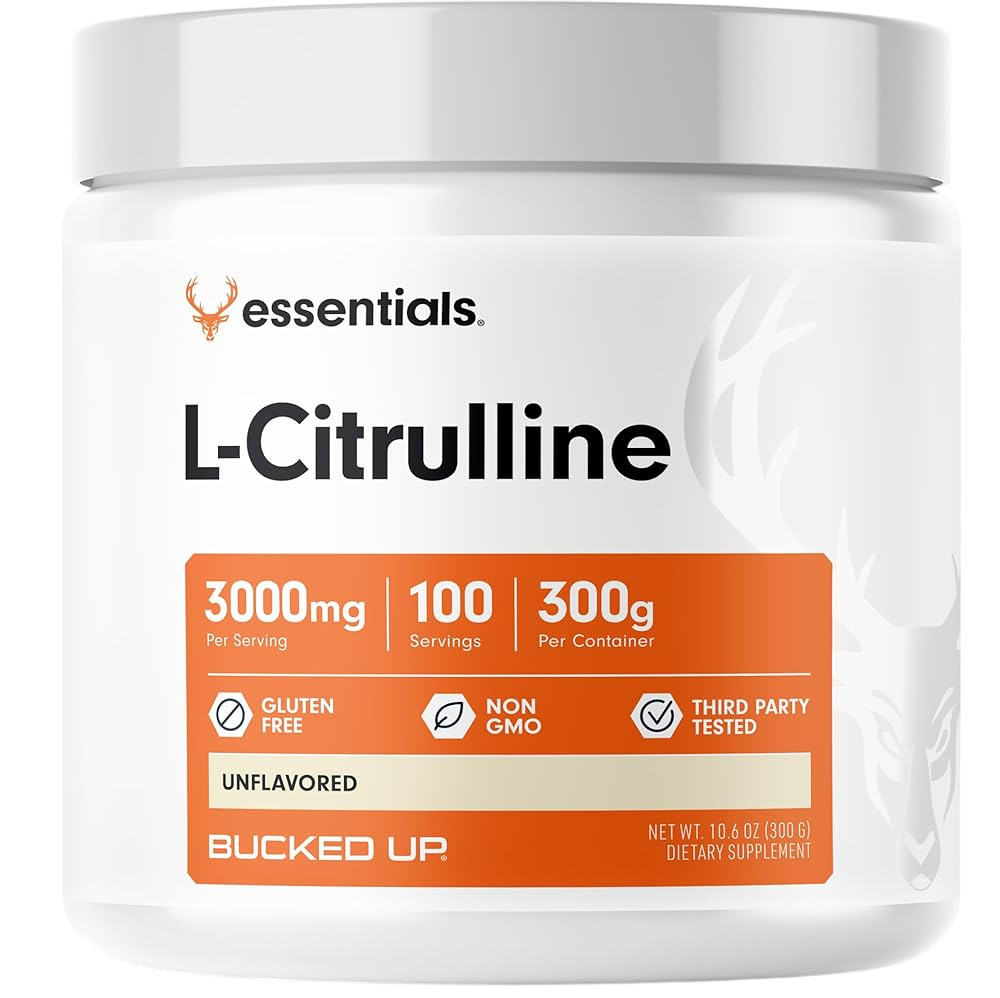
Bucked Up’s L-Citrulline products deliver the studied doses covered above, with 3,000 mg per scoop of pure powder or 750 mg per capsule, and provide full transparency on every label. Shop Bucked Up’s L-Citrulline at research-backed doses to match the ranges covered above.
Choosing Forms and Timing for Your Goals
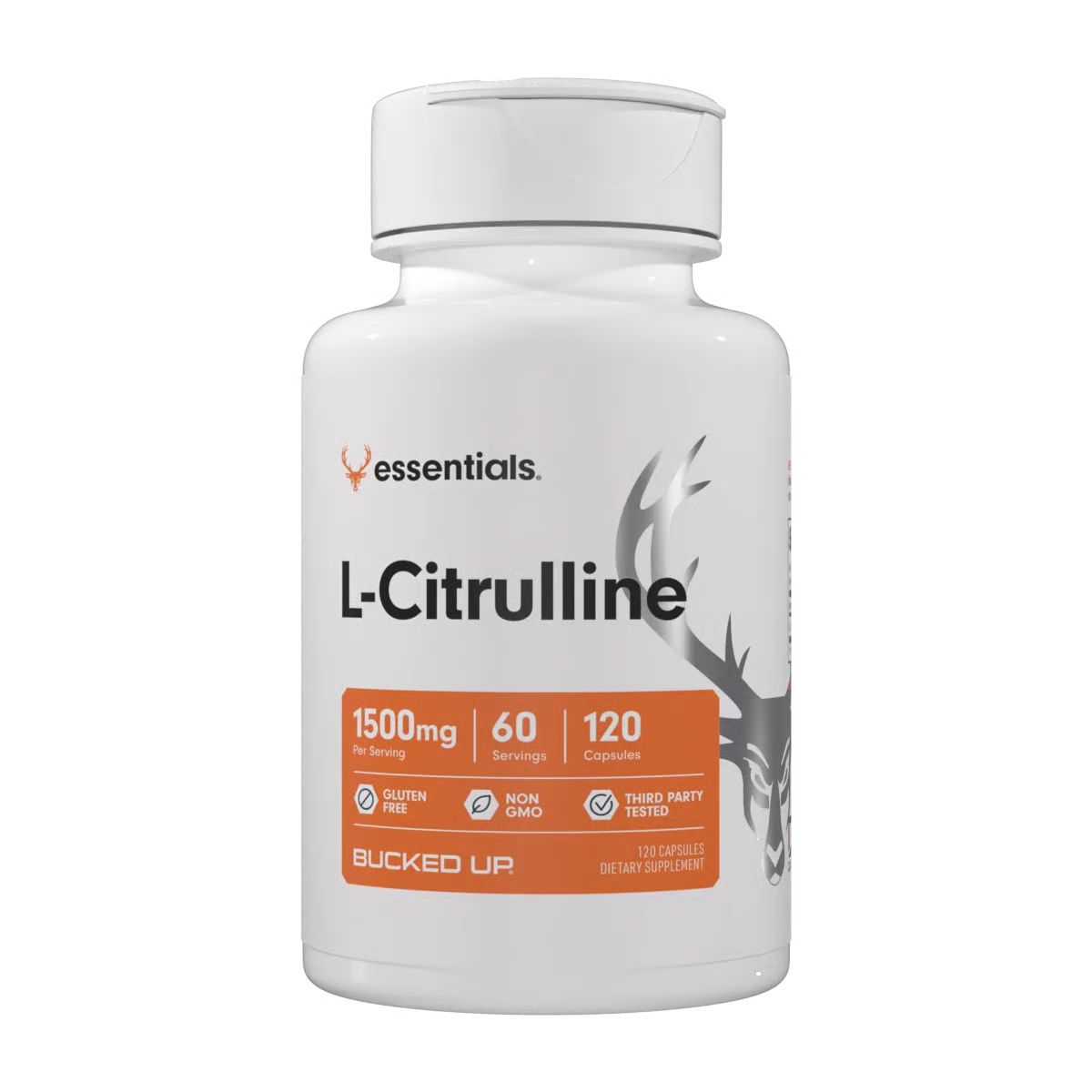
Pure L-citrulline delivers 100% L-citrulline per gram, which makes it straightforward to dial in an exact dose. This form works well for stacking protocols where you want precise control over citrulline input without additional compounds. Bucked Up’s L-Citrulline Powder provides 3,000 mg per scoop from 300 g of unflavored powder, and the L-Citrulline Capsules deliver 750 mg per capsule for a 1,500 mg two-capsule serving.
Citrulline malate 2:1 pairs L-citrulline with malic acid in a two-to-one ratio by weight. The malate component adds theoretical Krebs cycle support on top of the nitric oxide pathway benefits*, so many athletes choose this form for endurance-focused training. Direct comparison trials and systematic reviews have not established a proven ergogenic advantage of citrulline malate over an equivalent dose of pure L-citrulline for resistance exercise performance or endurance. The choice between forms often comes down to whether you want the dual-pathway support of malate or the concentrated citrulline density of the pure form.
Timing. For acute performance support*, many users take L-citrulline approximately 60 minutes before intense physical activity, aligning with the peak plasma window described earlier. Multi-day supplementation protocols have shown more consistent benefits for exercise performance than single acute doses in controlled trials, so daily use may offer advantages beyond pre-workout timing alone.
Reading Citrulline Labels: A Practical Transparency Checklist
Studied dosage ranges only help when you can confirm what is in the product you are buying. Use this simple sequence when you read a label:
- Start with disclosed gram amounts per ingredient. Every ingredient, including L-citrulline or citrulline malate, should appear with its own milligram or gram amount on the label. If the label lists a “pump blend” with a single combined weight, you cannot confirm whether the citrulline dose reaches the studied range.
- Next, confirm form specificity. The label should state whether the product uses pure L-citrulline or citrulline malate and, for citrulline malate, the ratio. A label that lists only “citrulline” without specifying the form leaves you guessing about actual L-citrulline content.
- Then, watch for proprietary blends on key actives. Proprietary blends can obscure under-dosing. Some pre-workouts may list L-citrulline prominently while including only 1 to 2 g inside a blend. Without individual disclosure, you cannot verify the dose.
- Finally, look for absorption support. Citrulline that is not absorbed is wasted. Ingredients studied to support bioavailability, such as Astragin®, are clinically studied to support citrulline absorption* and can complement a disclosed dose.
Bucked Up’s foundational pre-workouts (Bucked Up Pre-Workout and Woke AF) disclose 6,000 mg of Citrulline Malate 2:1 per serving on the label.1 Mother Bucker discloses 4,000 mg of Pure L-Citrulline, stacked with Nitrosigine® and Hydroprime® Glycerol for a multi-pathway pump approach. Every formula in the Bucked Up pre-workout line includes Astragin® to support absorption of the disclosed citrulline dose*.1 No blends. No guessing. Grams on the label. See the full label transparency for yourself — every gram disclosed, no blends.
Safety, Side Effects, and Quality Standards
L-citrulline is generally well-tolerated at the doses studied for performance support and often produces a milder side-effect profile than direct L-arginine supplementation. At typical pre-workout doses (6 to 8 g citrulline malate or 3 to 6 g pure L-citrulline), gastrointestinal side effects are infrequent. Very high single doses of 10 g or more may cause nausea, bloating, cramps, or headaches in some individuals because of vasodilatory effects.
Individuals with naturally low blood pressure, kidney conditions, or those taking blood pressure medications, nitrate medications, or phosphodiesterase-5 inhibitors should consult a healthcare provider before using L-citrulline. Its vasodilatory effects may interact with these conditions and medications. Discontinue use at least two weeks before any scheduled surgery and follow your healthcare provider’s guidance. Pregnant or breastfeeding individuals should consult a healthcare provider before use.
Bucked Up products are manufactured in GMP (Good Manufacturing Practices) certified facilities in the USA, which reflects a commitment to manufacturing quality standards.
*These statements have not been evaluated by the Food and Drug Administration. This product is not intended to diagnose, treat, cure, or prevent any disease.
Frequently Asked Questions
Why does L-citrulline support nitric oxide production more effectively than L-arginine?
L-arginine is the direct substrate for nitric oxide synthase, but a significant portion of oral L-arginine is broken down by arginase enzymes in the gut and liver before it reaches systemic circulation. L-citrulline bypasses this first-pass degradation, is converted to L-arginine in the kidneys, and produces a more sustained elevation of plasma L-arginine. This sustained availability provides more consistent substrate for endothelial nitric oxide synthase activity and supports nitric oxide production more reliably than direct L-arginine supplementation at comparable doses.
What is the rationale for the 2:1 ratio in citrulline malate?
The 2:1 ratio refers to two parts L-citrulline bonded with one part malic acid by weight. This ratio reflects the formulation used in the majority of peer-reviewed research on citrulline malate for exercise performance. The L-citrulline component supports nitric oxide production and ammonia clearance via the urea cycle*, while the malate component is theorized to support aerobic ATP production as a Krebs cycle intermediate. Together, the two compounds address both the vascular and energy-metabolism sides of training support*. When you evaluate a citrulline malate product, confirming the 2:1 ratio on the label helps ensure you are getting the form studied in the research literature rather than an unspecified blend of the two compounds.
When is the best time to take L-citrulline for performance support?
For acute performance support*, many users take L-citrulline approximately 60 minutes before intense physical activity. This timing aligns with the peak plasma window (0.7 to 2 hours post-ingestion). Multi-day supplementation protocols have shown more consistent performance benefits in controlled trials than single pre-workout doses alone, so daily use at a consistent time may offer advantages beyond the acute pre-workout window. Individuals using pure L-citrulline powder can also split doses across the day for general daily support* while timing a pre-workout dose appropriately.
How do I know if a pre-workout contains a studied amount of L-citrulline?
Check the supplement facts panel for an individually disclosed milligram or gram amount next to L-citrulline or citrulline malate. The studied range for citrulline malate in resistance training research is 6 to 8 g per serving. For pure L-citrulline, daily intakes between 3 and 6 g have been studied for general support. If the label lists a proprietary blend with a single combined weight covering multiple ingredients, you cannot verify the citrulline dose. Also confirm the form (pure L-citrulline versus citrulline malate) and, for citrulline malate, the ratio. Products that include an absorption-support ingredient such as Astragin® and disclose its amount separately provide an additional layer of transparency regarding bioavailability support*.
Conclusion: Putting Transparent Citrulline Dosing into Practice
The transparent citrulline benefits and optimal daily dosage picture centers on three pillars. First, understand the mechanism, including renal conversion to L-arginine, nitric oxide synthesis support*, and urea cycle participation. Second, know the studied ranges, such as 3 to 6 g pure L-citrulline or 6 to 8 g citrulline malate 2:1, timed approximately 60 minutes pre-exercise. Third, verify those amounts on the label before you buy.
A product that discloses its citrulline dose, specifies the form and ratio, and includes absorption support gives you the information you need for an evidence-informed decision. A product that hides those numbers behind a proprietary blend does not, regardless of what the marketing says.
Always consult a healthcare provider before beginning any new supplement regimen, particularly if you have existing health conditions or take prescription medications.
Get your studied dose of L-Citrulline with full transparency on every label.
*These statements have not been evaluated by the Food and Drug Administration. This product is not intended to diagnose, treat, cure, or prevent any disease.
References
Schwedhelm, E., Maas, R., Freese, R., Jung, D., Lukacs, Z., Jambrecina, A., Spickler, W., Schulze, F., & Böger, R. H. (2008). Pharmacokinetic and pharmacodynamic properties of oral L-citrulline and L-arginine: Impact on nitric oxide metabolism. British Journal of Clinical Pharmacology, 65(1), 51–59. https://ncbi.nlm.nih.gov/pmc/articles/PMC2291275
Moinard, C., & Cynober, L. (2007). Citrulline: A new player in the control of nitrogen homeostasis. Journal of Nutrition, 137(6 Suppl 2), 1621S–1625S. Referenced via: https://ncbi.nlm.nih.gov/pmc/articles/PMC6683098
1 The content provided in this article is for informational purposes only and is not medical advice. Consult with a medical professional before implementing any changes to your diet, health, or exercise routines.
Individual results will vary and are based on a combination of each individual’s diet, exercise, age, and health circumstances.
These statements have not been evaluated by the Food and Drug Administration. This product is not intended to diagnose, treat, cure or prevent any disease.
This article was written by Ryan Gardner, CEO of Bucked Up. As the maker of Bucked Up Protein Soda, we have a financial interest in this information. The views expressed are our own and should be read with that context in mind.