Written by: Ryan Gardner, Owner, Managing Partner, CEO, Bucked Up
Key Takeaways
-
Many pre-workout products hide L-Citrulline doses inside proprietary blends, so athletes cannot easily see how much they get.
-
L-Citrulline outperforms L-Arginine for raising plasma arginine levels and supporting nitric oxide production because it avoids heavy first-pass metabolism.1
-
Research-backed dosing typically uses 3–6 g of pure L-Citrulline or 6–8 g of Citrulline Malate taken 30–60 minutes before training.
-
Transparent gram disclosure, the right citrulline form, and absorption support agents like Astragin® are key criteria when comparing brands.
-
Bucked Up delivers fully disclosed, research-aligned L-Citrulline doses across its lineup.1 Explore transparent dosing options to support your pump and performance.
How L-Citrulline Works in Your Pre-Workout
L-Citrulline is a non-essential alpha-amino acid found naturally in the body and in foods like watermelon, cucumbers, and squash. In sports nutrition, it has become a primary amino acid used to support nitric oxide production and has largely replaced L-Arginine in many well-formulated pre-workouts over the past decade.
This shift comes from how each amino acid behaves in the body. L-Arginine is the direct substrate for nitric oxide synthase (NOS) enzymes, but oral L-Arginine undergoes substantial first-pass metabolism by arginase enzymes in the gut and liver, which limits the amount reaching systemic circulation. Meta-analytic reviews confirm L-Citrulline is approximately twice as potent as L-Arginine for raising plasma arginine levels due to lower first-pass metabolism (Romero et al., 2019). L-Citrulline bypasses that first-pass breakdown, is absorbed intact in the small intestine with approximately 97% bioavailability, and is converted to L-Arginine primarily in the kidneys via argininosuccinate synthase and argininosuccinate lyase. Peak plasma concentrations occur about one hour after ingestion.
This process supports a more sustained elevation of plasma L-Arginine and downstream nitric oxide production.1 A study of healthy young men found that 7 days of 6 g/day L-Citrulline supplementation supported exercise tolerance and total work completed during severe-intensity cycling, whereas equivalent L-Arginine dosing did not, despite both raising blood arginine levels (Bailey et al., J Appl Physiol, 2015). Higher plasma L-Arginine supports nitric oxide synthesis, which in turn supports vasodilation and blood flow to active muscle tissue, delivering oxygen, glucose, and other metabolic substrates during training.*1
L-Citrulline also plays a role in the urea cycle, supporting ammonia clearance during intense exercise.1 Ammonia accumulation is implicated in central fatigue, so this pathway has relevance for endurance and recovery support.* When L-Citrulline is combined with malic acid to form Citrulline Malate, typically in a 2:1 ratio, the malate component, a Krebs Cycle intermediate, is theorized to support oxidative ATP production alongside the vasodilatory effects of the citrulline fraction.*1
Choosing Between Powders, Capsules, and Pre-Workouts
Understanding how L-Citrulline behaves in the body sets the stage for choosing the right delivery format. L-Citrulline is sold in three primary formats: pure L-Citrulline powder, capsules, and multi-ingredient pre-workout formulas. Each format has practical trade-offs to weigh before you buy.
Pure L-Citrulline powder delivers 100% of the stated dose as the active amino acid. Pure L-Citrulline delivers 100% of the stated dose as the active amino acid, unlike Citrulline Malate where the headline weight includes malic acid. This structure makes dosing math straightforward and allows flexible stacking with other ingredients.
Citrulline Malate is a compound of L-Citrulline and malic acid, typically in a 2:1 ratio by weight. Commercial L-Citrulline Malate is only 56.6% citrulline by weight, meaning an 8 g dose of Citrulline Malate delivers approximately 4.5 g of actual L-Citrulline. A product listing 3 g of Citrulline Malate on the label provides only approximately 1.7 g of actual L-Citrulline, which sits well below the doses studied for performance support.
For pre-workout use, the most common research-backed protocol is 6 to 8 g of Citrulline Malate or 3 to 6 g of pure L-Citrulline taken approximately one hour before training. Absorption support agents like Astragin® appear in some formulas and are studied to support citrulline bioavailability, which matters when you pay for a disclosed gram amount and want it to reach circulation.*1
Capsule formats offer convenience and exact dosing without mixing, though they usually require multiple capsules to reach performance-relevant doses. Multi-ingredient pre-workouts combine citrulline with energy, focus, and endurance ingredients in a single serving, which suits lifters who prefer a complete formula rather than separate components.
Bucked Up applies these dosing principles across its product line, offering both Citrulline Malate and pure L-Citrulline formats. Compare formats and find your ideal dose.
How to Use L-Citrulline and What to Expect
Timing your dose around training helps you match L-Citrulline’s peak levels to your workout. Because peak plasma citrulline and arginine concentrations occur about one hour after ingestion, taking L-Citrulline 30 to 60 minutes before training aligns with this pharmacokinetic window.
Daily use versus workout-only use depends on your goals. For performance support, pre-workout dosing on training days is the most studied protocol. For broader cardiovascular function support in healthy adults, some research uses daily divided doses of 3 to 6 g of pure L-Citrulline.* Individual response varies based on training status, diet, and baseline nitric oxide levels, so results differ between users.
Stacking strategies matter for advanced lifters. L-Citrulline pairs with ingredients like Nitrosigine® (a patented arginine silicate) and glycerol-based compounds to support nitric oxide and cellular hydration through multiple pathways.* Astragin® is studied to support citrulline absorption when included in the same formula.* These combinations appear more often in advanced-tier formulas than in entry-level pre-workouts.
Realistic expectations keep results in perspective. L-Citrulline supports blood flow, muscle pump, endurance, and recovery from intense training.*1 It is not a stimulant and does not directly support energy in the way caffeine does. The pump it supports signals nutrient delivery to working muscle, not just an aesthetic effect. Some users notice effects within a single session at adequate doses, while others need consistent use over several days to gauge the full response.
Safety Guidelines and How to Compare Brands
L-Citrulline is generally well-tolerated at doses studied for performance support. Clinical research has not identified a toxic dose threshold for L-Citrulline in healthy adults, with oral supplementation up to 15 grams reported without adverse events (Breuillard et al., Amino Acids 2015). Mild gastrointestinal discomfort, including nausea or bloating, can occur at very high single doses, and mild gastrointestinal discomfort including bloating and diarrhea can occur specifically at doses above 6 g/day in some individuals. Headaches appear rarely and are attributed to vasodilatory effects in sensitive individuals.
People taking blood pressure medications, nitrates, or other vasodilators should talk with a healthcare provider before using L-Citrulline, because additive vasodilatory effects are possible. The same guidance applies to individuals with kidney conditions, those who are pregnant or breastfeeding, and anyone scheduled for surgery within two weeks. Always consult your healthcare provider if any of these situations apply to you.
Several criteria help you compare brands objectively. First, exact gram disclosure: the label should state the precise amount of L-Citrulline or Citrulline Malate per serving, not hide it inside a proprietary blend. Second, citrulline form: pure L-Citrulline and Citrulline Malate (2:1) have different actual citrulline content per gram, so the form matters when you calculate the real dose. Third, absorption support: inclusion of agents like Astragin® is a useful differentiator. Fourth, manufacturing standards: products made in GMP-certified facilities meet established quality and consistency benchmarks. Fifth, third-party testing or certification adds an additional layer of verification beyond manufacturer claims.
Bucked Up’s Approach to L-Citrulline and Nitric Oxide Support
Bucked Up is a supplement company based in Orem, Utah, that discloses exact ingredient amounts across its pre-workout line. No proprietary blends obscure the citrulline dose, and no dusting occurs. The gram amounts appear clearly on the label.
In foundational products including Bucked Up Pre-Workout and Woke AF, the formula uses 6,000 mg of Citrulline Malate (2:1) per serving. At the 2:1 ratio, the L-Citrulline fraction supports nitric oxide production and vasodilation,* while the malic acid fraction is theorized to support Krebs Cycle energy metabolism.* The 6 g Citrulline Malate dose sits within the range studied for resistance training performance support.1 Woke AF pairs this same citrulline load with 333 mg of caffeine, addressing the practical concern that high-stimulant formulas can cause vasoconstriction that works against the pump. The citrulline dose is sized to support vasodilation alongside the stimulant load.*1 Both formulas include Astragin®, studied to support citrulline absorption.*1
Mother Bucker, Bucked Up’s advanced-tier formula, takes a different approach. It removes malic acid entirely and uses 4,000 mg of pure L-Citrulline stacked with Nitrosigine® and Hydroprime® Glycerol. This combination, which Bucked Up calls the Pump Trifecta, is designed to support nitric oxide production and cellular hydration through multiple pathways simultaneously.*1 Astragin® appears here as well. The formula also contains 400 mg of caffeine (split between fast-release and microencapsulated delay-release forms), Beta-Alanine at 6.4 g, Alpha GPC, and Huperzine A for focus support.*
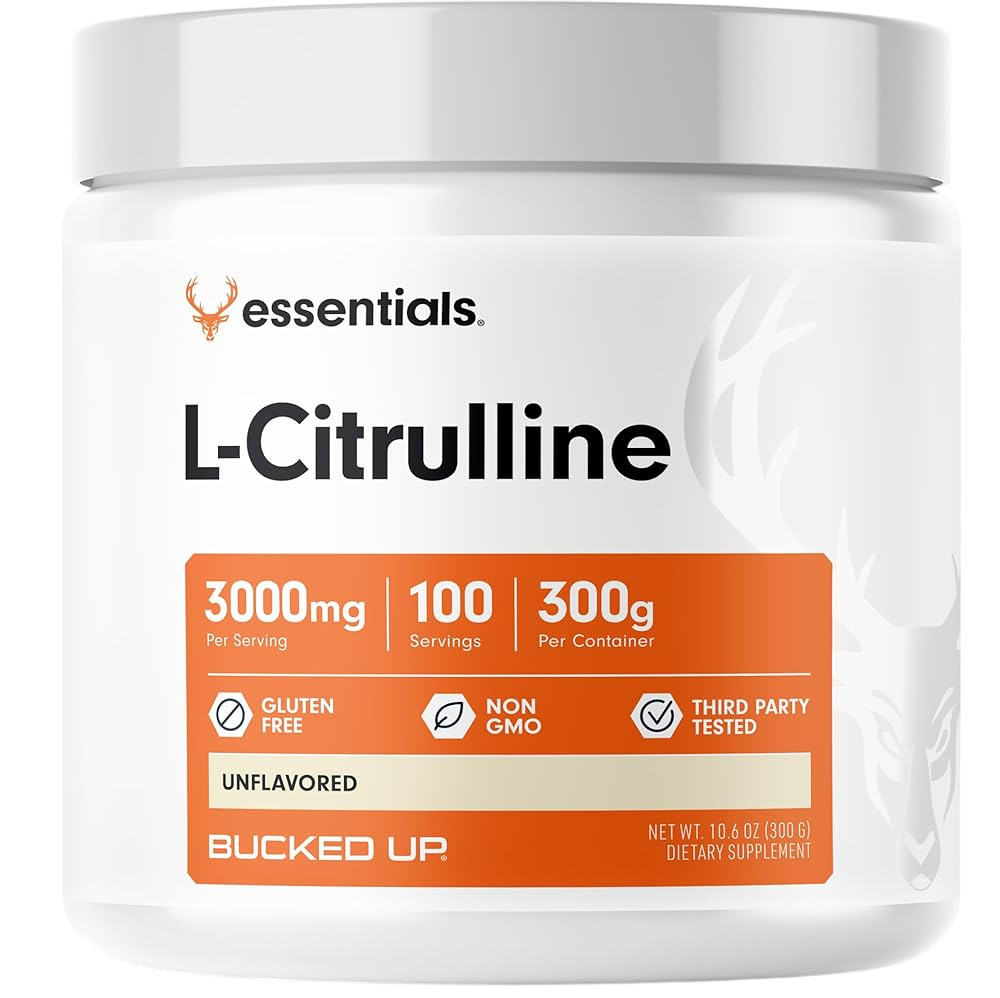
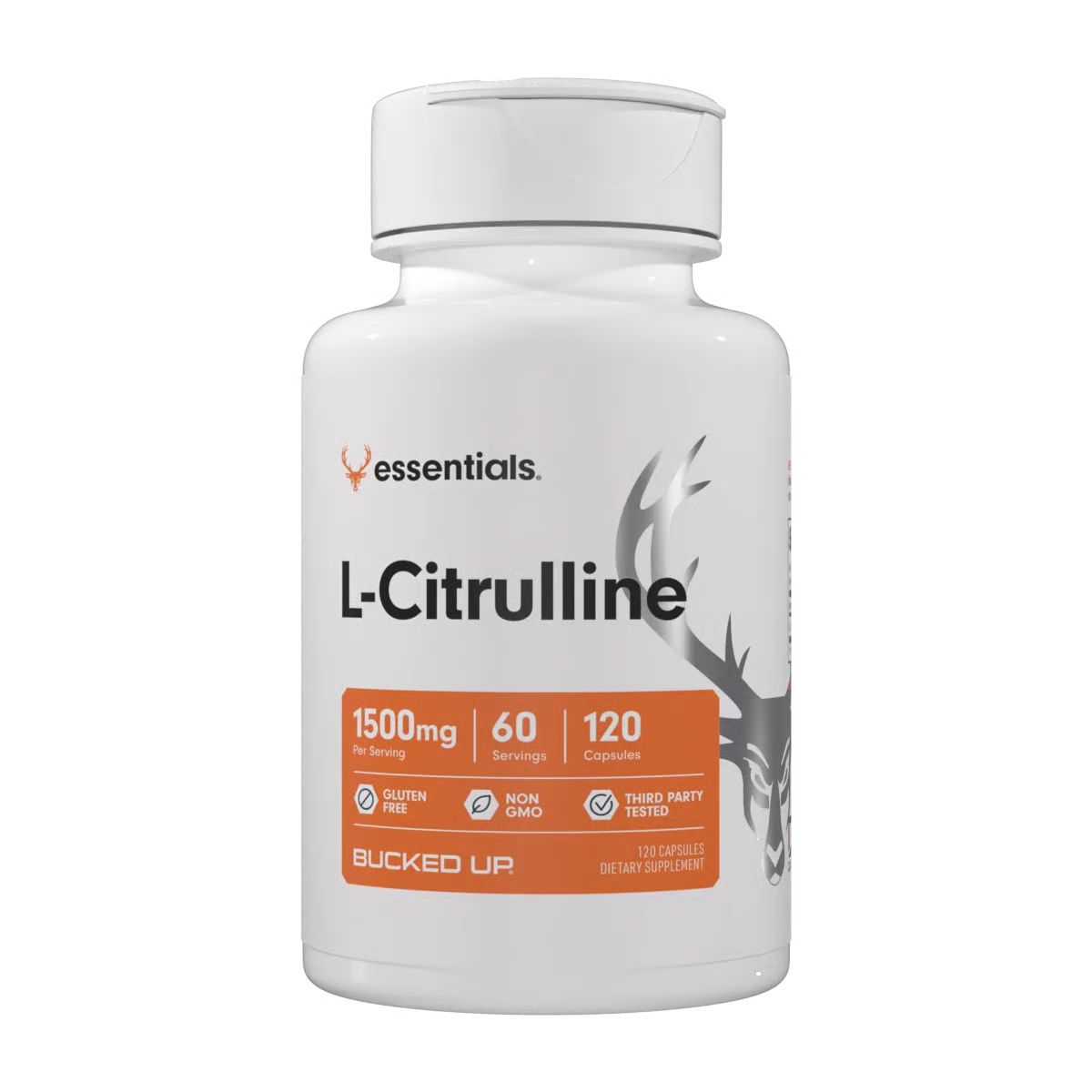
For lifters who prefer standalone citrulline without additional pre-workout ingredients, Bucked Up offers L-Citrulline Powder (300 g, providing 3,000 mg of pure L-Citrulline per scoop) and L-Citrulline Capsules (750 mg per capsule). These formats suit stacking protocols or users who want to control their citrulline dose independently of a full pre-workout formula.
Other brands in the amino acid and pre-workout category vary in their approach to citrulline dosing. Some products can use proprietary blends that do not disclose individual ingredient amounts, which makes it impossible to verify whether the citrulline dose reaches the levels studied for performance support. Some formulas list L-Arginine rather than L-Citrulline as the primary nitric oxide support ingredient, which carries the pharmacokinetic limitations described earlier. Evaluating any brand against the criteria above, including gram disclosure, citrulline form, and absorption support, gives a reliable basis for comparison without relying solely on marketing language.
This transparent approach to formulation extends across Bucked Up’s entire pre-workout lineup. View the full transparent-label lineup.
Frequently Asked Questions
How long does it take to notice effects from L-Citrulline?
For acute pre-workout use, L-Citrulline reaches peak plasma concentrations roughly one hour after ingestion, which explains the 30 to 60 minute pre-training window. Some users notice a difference in muscle pump and blood flow support within a single session at adequate doses. Others find that consistent daily use over several days produces a more noticeable response, as plasma arginine levels stabilize at a higher baseline. Individual response varies based on training status, diet, and baseline nitric oxide levels, so there is no universal onset timeline.
Should L-Citrulline be taken every day or only before workouts?
Both patterns appear in the research. For acute training performance support, pre-workout dosing on training days is the most studied protocol, typically 6 to 8 g of Citrulline Malate or 3 to 6 g of pure L-Citrulline taken before exercise. For broader daily use targeting cardiovascular function support in healthy adults, some research uses divided daily doses of 3 to 6 g of pure L-Citrulline regardless of training schedule. If your primary goal is training performance, pre-workout dosing on training days is the most practical approach. If you train frequently and want consistent plasma arginine support, daily use is a reasonable option at the doses described above.
What is the difference between pure L-Citrulline and Citrulline Malate?
Pure L-Citrulline is 100% L-Citrulline by weight, so every gram on the label is the active amino acid. Citrulline Malate is a compound of L-Citrulline and malic acid, typically in a 2:1 ratio by weight, meaning only about two-thirds of the labeled weight is actual L-Citrulline. A 6 g serving of Citrulline Malate (2:1) delivers roughly 3.4 g of L-Citrulline. The malic acid component is a Krebs Cycle intermediate theorized to support aerobic energy production alongside the citrulline’s nitric oxide support role. Pure L-Citrulline is preferred when the goal is maximizing the citrulline dose per gram of product, while Citrulline Malate is used when the dual support of nitric oxide production and energy metabolism is the target. Neither form is universally superior; the choice depends on training goals and the total dose of actual L-Citrulline delivered per serving.
When is it appropriate to consult a healthcare provider before using L-Citrulline?
Consulting a healthcare provider is appropriate before using L-Citrulline if you take blood pressure medications, nitrates, or phosphodiesterase-5 inhibitors, because L-Citrulline’s vasodilatory effects may combine with these medications and cause an excessive drop in blood pressure. The same caution applies if you have a kidney condition, significant liver disease, or naturally low blood pressure. Pregnant or breastfeeding individuals should avoid L-Citrulline supplementation or consult a healthcare provider, as safety data for these populations is limited. If you have surgery scheduled within two weeks, discontinue L-Citrulline and follow your healthcare provider’s guidance. When in doubt, a brief conversation with your doctor before starting any new supplement remains the safest approach.
Conclusion: Using L-Citrulline to Support Training Performance
The amino acid category for nitric oxide and performance support centers on a few non-negotiable factors. These include the form of citrulline used, the actual gram amount of L-Citrulline delivered per serving, whether the label discloses that amount openly, and whether absorption support is included. L-Citrulline’s pharmacokinetic advantage over L-Arginine is well-documented in peer-reviewed literature, and the dose thresholds studied for performance support are specific enough that label transparency becomes essential for informed purchasing decisions.
Foundational training habits, consistent nutrition, and adequate recovery remain the primary drivers of performance. L-Citrulline supplementation at researched doses supports nitric oxide production, blood flow, muscle pump, endurance, and recovery from intense training* as part of that foundation, not as a replacement for it.1 Brands that disclose exact gram amounts, use established citrulline forms at studied doses, and include absorption support give you the information needed to make that assessment yourself.
The brand’s commitment to research-backed dosing and label transparency helps you make informed choices about nitric oxide support. Shop research-backed L-Citrulline formulas.
*These statements have not been evaluated by the Food and Drug Administration. This product is not intended to diagnose, treat, cure, or prevent any disease.
References
Bailey, S. J., et al. (2015). L-citrulline supplementation improves O2 uptake kinetics and high-intensity exercise performance in humans. Journal of Applied Physiology. Via Dr. Stanfield
Bahri, S., et al. (2013). Pharmacokinetics of L-citrulline. Nutrition. Via Dr. Stanfield
Schwedhelm, E., et al. (2008). Pharmacokinetic and pharmacodynamic properties of oral L-citrulline and L-arginine. British Journal of Clinical Pharmacology. Via Ubie Health
1 The content provided in this article is for informational purposes only and is not medical advice. Consult with a medical professional before implementing any changes to your diet, health, or exercise routines. Individual results will vary and are based on a combination of each individual’s diet, exercise, age, and health circumstances. These statements have not been evaluated by the Food and Drug Administration. This product is not intended to diagnose, treat, cure or prevent any disease.
This article was written by Ryan Gardner, CEO of Bucked Up. As the maker of Bucked Up Protein Soda, we have a financial interest in this information. The views expressed are our own and should be read with that context in mind.