Written by: Ryan Gardner, Owner, Managing Partner, CEO, Bucked Up
Key Takeaways on Arginine, Citrulline, and Pumps
- L-arginine faces extensive first-pass metabolism, which creates low and variable bioavailability and limits its nitric oxide support.
- L-citrulline bypasses intestinal and hepatic breakdown, then converts to L-arginine in the kidneys for higher and more sustained plasma arginine levels.1
- Research suggests citrulline can be about twice as potent as arginine at raising plasma arginine on a gram-for-gram basis, so many athletes favor it as a nitric oxide precursor.
- Common effective dosing includes 6 to 8 grams of citrulline malate before training or 3 to 6 grams of pure L-citrulline daily for ongoing nitric oxide support.
- Bucked Up discloses exact gram amounts of citrulline across its pre-workout line and offers a standalone Pure L-Citrulline Powder for athletes who want precise dosing control.
Why L-Arginine Has Limitations for Nitric Oxide Support
L-arginine is the direct substrate for nitric oxide synthase (NOS) enzymes, so it looks ideal on paper. The challenge is delivery. Oral L-arginine undergoes substantial first-pass metabolism by intestinal and hepatic arginases, which creates low and highly variable bioavailability. That range is not a typo. The same dose can behave very differently depending on gut transit time, arginase activity, and individual physiology.
L-arginine can be metabolized to nitric oxide and L-citrulline by nitric oxide synthase or to urea and L-ornithine by arginase, and these pathways compete for the same substrate. In the intestinal wall and liver, arginase often dominates. A significant portion of oral L-arginine is extracted and broken down by arginase in these tissues before it reaches systemic circulation. Gastrointestinal side effects become more common with single L-arginine doses above 9 grams, which limits how far you can push the dose to compensate for poor absorption.
When Combining L-Arginine and L-Citrulline Makes Sense
Given arginine’s absorption challenges, some athletes consider stacking arginine with citrulline to cover both angles. In practice, combining them is generally not necessary when citrulline alone raises plasma arginine more reliably. L-citrulline produces a greater increase in plasma arginine levels than L-arginine. Citrulline outperformed arginine at a lower total gram dose.
A 2010 UCLA study reported that a 5.2 gram blend of L-arginine and L-citrulline supported time to anaerobic threshold in older male cyclists aged 50 to 73, so the combination has some research behind it. However, the pharmacokinetic case for citrulline alone remains strong, and many well-formulated products now rely on citrulline as the primary pump ingredient.
How Nitric Oxide Production Supports Training
Nitric oxide (NO) is a gaseous signaling molecule produced inside the cells that line blood vessels. When nitric oxide synthase (NOS) enzymes convert L-arginine into nitric oxide, vascular smooth muscle relaxes, which supports vasodilation and blood flow.* That blood flow supports the delivery of oxygen, glucose, and other metabolic substrates to active muscle tissue during training.*1
The pharmacokinetic advantage of citrulline fits directly into this pathway. L-citrulline is absorbed intact in the small intestine and converted to L-arginine primarily in the kidneys via argininosuccinate synthetase (ASS) and argininosuccinate lyase (ASL), which regenerates L-arginine for sustained nitric oxide production by eNOS, iNOS, and nNOS. Because citrulline is not a substrate for arginase, it avoids the metabolic bottleneck that limits arginine. L-citrulline shows high oral bioavailability compared with arginine.1
*These statements have not been evaluated by the Food and Drug Administration. This product is not intended to diagnose, treat, cure, or prevent any disease.
What Makes a Nitric Oxide Ingredient Effective
Citrulline stands out as a reliable nitric oxide precursor on a gram-for-gram basis. L-citrulline is more potent than L-arginine at raising plasma arginine levels. The arginine-to-ADMA ratio matters because ADMA (asymmetric dimethylarginine) is an endogenous NOS inhibitor. A higher arginine-to-ADMA ratio means more substrate is available for nitric oxide synthesis.*
L-citrulline acts as a slow-release reservoir of arginine that sustains nitric oxide production, while direct L-arginine produces a rapid but short-lived plasma spike due to rapid urea cycle metabolism. For training, sustained availability usually serves better than a brief spike that fades before the session ends.
*These statements have not been evaluated by the Food and Drug Administration. This product is not intended to diagnose, treat, cure, or prevent any disease.
Dosing Framework for Training Days and Daily Support
The studied dosing ranges differ by form and goal, which means evaluating a label requires knowing which specific numbers match your objective:
- Weight training (citrulline malate): 6 to 8 grams of citrulline malate taken about 30 to 60 minutes before exercise for weight training support.*
- Daily support (pure L-citrulline): 3 to 6 grams of pure L-citrulline per day, often split into two servings.*
- Timing: For acute training support, 6 to 8 grams of citrulline malate taken about one hour before training is the most common research-backed protocol.
- Peak plasma concentration: L-citrulline typically reaches peak plasma levels within 0.7 to 2 hours after ingestion.
*These statements have not been evaluated by the Food and Drug Administration. This product is not intended to diagnose, treat, cure, or prevent any disease.
Comparing Citrulline Malate 2:1 and Pure L-Citrulline
Citrulline malate and pure L-citrulline are distinct forms, so the label wording matters when you evaluate a dose. Citrulline malate in a 2:1 ratio is approximately 56.82% citrulline by weight, meaning 1.76 grams of citrulline malate provides 1 gram of pure L-citrulline. This conversion matters when reading labels. A product listing 6 grams of citrulline malate (2:1) delivers roughly 3.4 grams of actual L-citrulline.
The malate component (malic acid) is an intermediate in the Krebs Cycle, the aerobic energy production pathway. The proposed contribution is support for oxidative ATP production and phosphocreatine recovery, which may support endurance and reduce fatigue during training.*1 Pure L-citrulline removes the malate and delivers 100% of the listed weight as the active amino acid. Advanced formulas that stack citrulline with other pump ingredients often use the pure form to maximize the citrulline dose within a serving.
A systematic review concluded that adding malate to citrulline has not been demonstrated to enhance exercise performance versus citrulline alone (Gough et al., Eur J Appl Physiol, 2021), although citrulline malate remains the most studied form in resistance training research at the 6 to 8 gram dose range.
*These statements have not been evaluated by the Food and Drug Administration. This product is not intended to diagnose, treat, cure, or prevent any disease.
How Bucked Up Uses Citrulline Across Its Pre-Workouts
Bucked Up lists gram amounts on every label instead of grouping pump ingredients into a proprietary blend. The foundational pre-workouts, including Bucked Up Pre-Workout and Woke AF, use 6,000 mg of Citrulline Malate 2:1, which sits in the dose range studied in resistance training research for supporting nitric oxide production and muscle pump.*1 Astragin® appears across the pre-workout line and is studied for its potential to support citrulline absorption.*1
The advanced-tier formula, Mother Bucker, uses 4,000 mg of Pure L-Citrulline stacked with Nitrosigine® and Hydroprime® Glycerol. Removing the malate creates room for a pure citrulline dose alongside two additional pump-pathway ingredients, which supports vasodilation and cellular hydration through multiple mechanisms.*1 For athletes who want the same foundational citrulline dose without stimulants, the Non-Stimulant Pre-Workout carries 6,000 mg of Citrulline Malate 2:1, so those who train at night or cycle off caffeine can maintain their pump ingredient intake.*1
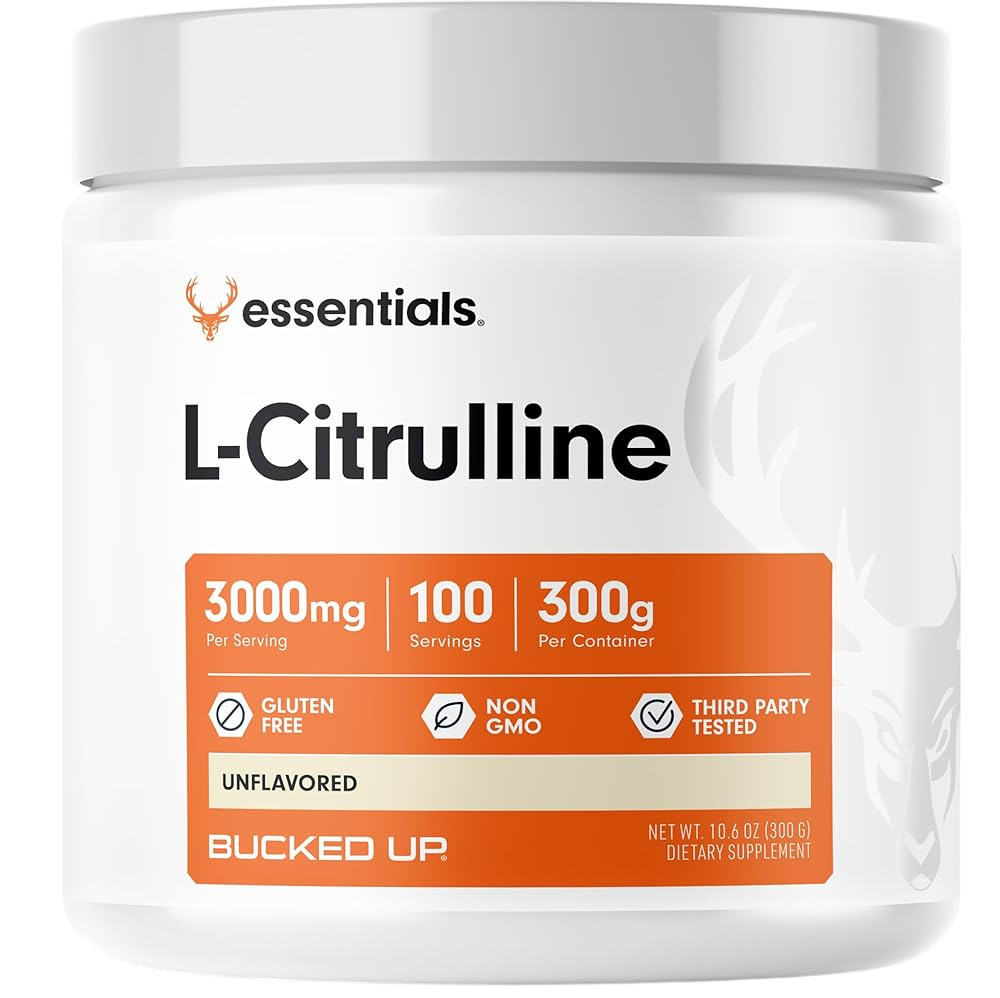
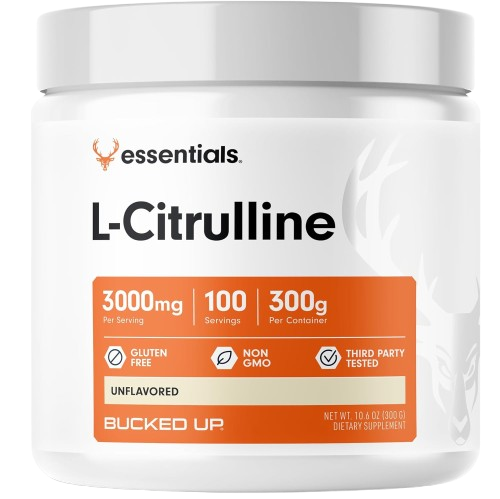
Bucked Up also offers a standalone Pure L-Citrulline Powder (300g) for athletes running higher-dose stacking protocols or who want to dial in their citrulline intake independently of a pre-workout formula. When you evaluate any supplement, look for disclosed gram amounts instead of proprietary blends. That standard helps you compare formulas more confidently.
*These statements have not been evaluated by the Food and Drug Administration. This product is not intended to diagnose, treat, cure, or prevent any disease.
Frequently Asked Questions
What happens if I take L-arginine every day?
Daily L-arginine supplementation is generally well-tolerated at moderate doses, yet the bioavailability problem remains. Arginase activity in the gut and liver continues to degrade a substantial portion of each dose before it reaches systemic circulation, with average bioavailability around 21% after a 10 gram dose. Gastrointestinal side effects such as nausea, bloating, and diarrhea become more common above 9 to 10 grams per day. For individuals who want daily nitric oxide support, L-citrulline at 3 to 6 grams per day is the form with more consistent pharmacokinetic behavior. Always consult your healthcare provider before beginning any new supplementation protocol.
Does citrulline raise testosterone?
L-citrulline has been studied for its role in the post-exercise rise in growth hormone (GH), but research on testosterone specifically is limited and not a primary focus for this ingredient. The well-established mechanism for L-citrulline is its conversion to L-arginine in the kidneys, which supports nitric oxide production and blood flow.* Citrulline is not positioned as a testosterone-support ingredient in the peer-reviewed literature, and Bucked Up does not make testosterone claims for L-citrulline. If testosterone support is a goal, that calls for a different category of ingredients and a conversation with your healthcare provider.
*These statements have not been evaluated by the Food and Drug Administration. This product is not intended to diagnose, treat, cure, or prevent any disease.
What is the dark side of L-arginine?
The main limitation of L-arginine is its pharmacokinetic profile. The same arginase enzymes that participate in the urea cycle degrade a large fraction of oral L-arginine before it reaches circulation, which makes the effective dose unpredictable. At higher doses of 10 grams or more, gastrointestinal side effects are common. There is also a phenomenon called the arginine paradox. Cells can produce nitric oxide even when circulating arginine appears adequate, which suggests that exogenous arginine supplementation does not always create proportional increases in nitric oxide output. Individuals taking blood pressure medications, nitrate medications, or PDE5 inhibitors should consult their healthcare provider before using L-arginine because additive vasodilatory effects are a known interaction risk.
Key Takeaways on Choosing a Nitric Oxide Support Ingredient
The pharmacokinetic evidence consistently favors L-citrulline over L-arginine for supporting plasma arginine levels and downstream nitric oxide production.* The bioavailability gap discussed earlier, with arginine’s average around 21% versus citrulline’s much higher value, helps explain why Schwedhelm et al. reported that L-citrulline can be about twice as potent as L-arginine at raising plasma arginine on a gram-for-gram basis.
The dosing framework outlined earlier, which includes 6 to 8 grams of citrulline malate before training or 3 to 6 grams of pure L-citrulline daily, offers an evidence-backed starting point for evaluating any pre-workout formula. Citrulline malate delivers roughly 566 mg of citrulline per gram of compound, while pure L-citrulline delivers 1,000 mg per gram. Knowing which form appears on the label, and how many grams are disclosed, gives you a practical way to compare products.
Bucked Up discloses exact gram amounts for every citrulline ingredient across its line. Evaluate labels for disclosed gram amounts instead of proprietary blends, and choose the Pure L-Citrulline option that fits your protocol.
*These statements have not been evaluated by the Food and Drug Administration. This product is not intended to diagnose, treat, cure, or prevent any disease.
References
Schwedhelm, E., Maas, R., Freese, R., Jung, D., Lukacs, Z., Jambrecina, A., Spickler, W., Schulze, F., & Böger, R. H. (2008). Pharmacokinetic and pharmacodynamic properties of oral L-citrulline and L-arginine: Impact on nitric oxide metabolism. British Journal of Clinical Pharmacology, 65(1), 51–59. https://pmc.ncbi.nlm.nih.gov/articles/PMC6683098
Gough, L. A., Sparks, S. A., McNaughton, L. R., Higgins, M. F., Newbury, J. W., Trexler, E., Faghy, M. A., & Bridge, C. A. (2021). A critical review of citrulline malate supplementation and exercise performance. European Journal of Applied Physiology, 121(12), 3283–3295. Referenced via: https://drstanfield.com/blogs/articles/l-citrulline-benefits-forms-dosing-and-side-effects
1 The content provided in this article is for informational purposes only and is not medical advice. Consult with a medical professional before implementing any changes to your diet, health, or exercise routines.
Individual results will vary and are based on a combination of each individual’s diet, exercise, age, and health circumstances.
These statements have not been evaluated by the Food and Drug Administration. This product is not intended to diagnose, treat, cure or prevent any disease.
This article was written by Ryan Gardner, CEO of Bucked Up. As the maker of Bucked Up Protein Soda, we have a financial interest in this information. The views expressed are our own and should be read with that context in mind.