Written by: Ryan Gardner, Owner, Managing Partner, CEO, Bucked Up
Key Takeaways: Arginine vs Citrulline for Real-World Training
-
L-Arginine faces heavy first-pass metabolism in the gut and liver, which limits its impact on plasma arginine and nitric oxide support*.1
-
L-Citrulline bypasses arginase breakdown, converts to L-Arginine in the kidneys, and keeps plasma arginine elevated for steadier nitric oxide support* and pump*.1
-
Research links 6–8 g of Citrulline Malate or 3–6 g of Pure L-Citrulline taken about 60 minutes pre-workout with more reps to failure, better time-to-exhaustion, and less post-workout soreness.1
-
When you compare pre-workouts, look for clear citrulline form and dose, absorption support such as Astragin®, and no proprietary blends hiding key amounts.
-
Bucked Up includes disclosed L-Citrulline dosing across its line—explore the full L-Citrulline lineup to see which option fits your training.1
The Flat-Workout Problem Behind Weak Pumps
Flat workouts often start as a blood flow problem, not a caffeine problem. Caffeine supports energy and alertness, but energy without circulation feels like a tuned engine with clogged fuel lines. Your circulatory system moves oxygen, glucose, and nutrients to working muscles, and nitric oxide signals blood vessels to relax and widen.
When nitric oxide support drops, pumps fade and high-volume training feels harder to sustain.1 Many pre-workouts try to fix this with L-Arginine, the direct nitric oxide precursor, but oral L-Arginine behaves very differently in the body than most labels suggest.
Why This Matters for Beginners, Volume Lifters, and High-Stim Users
Beginners often feel discouraged when they train hard but never feel a solid pump, which can slow mind-muscle connection and consistency. High-volume lifters who push multiple sets to failure need strong nitric oxide support* for nutrient delivery during the session and for recovery support afterward*.1
High-stim users who take heavy caffeine loads face another issue, because high stimulant intake can narrow blood vessels when they need to open. In each case, the arginine vs citrulline choice affects whether a session feels productive or flat.
L-Arginine in the Body: First-Pass Breakdown and Short-Lived Effects
Oral L-Arginine runs into problems before it reaches your muscles. After you swallow it, L-Arginine moves into the small intestine, where arginase enzymes begin breaking it down before it can enter circulation. Any remaining arginine then passes through the liver, where arginase continues degrading it.
Schwedhelm et al. (2008) in the British Journal of Clinical Pharmacology showed in a randomized controlled trial of 20 participants that oral L-Citrulline raised plasma arginine and nitric oxide metabolites more effectively than oral L-Arginine because citrulline avoids this early breakdown. A 2017 study by Agarwal et al. in the Journal of Nutrition, reviewed by Canyonside Labs, reported that a large share of oral L-Arginine undergoes first-pass splanchnic extraction.
The pattern is a quick but brief spike in plasma arginine that does not maintain nitric oxide support*. This effect is often called the “arginine paradox,” where serum arginine rises after supplementation, but nitric oxide production does not keep pace because available arginine is rapidly consumed or degraded.
A 2009 study in well-trained male athletes found that 6 g per day of L-Arginine for three days raised serum arginine yet did not change nitric oxide production or anaerobic performance, as summarized by Dr. Stanfield.
L-Citrulline in the Body: Kidney Conversion and Steady Nitric Oxide Support
L-Citrulline does not act as a substrate for arginase, and that single detail changes its path in the body. Because arginase does not break it down, oral L-Citrulline is absorbed intact through the small intestine with high oral bioavailability, according to a pharmacokinetics review by Dr. Stanfield. It then travels to the kidneys, where argininosuccinate synthase and argininosuccinate lyase convert it into L-Arginine.
This pathway creates a slower, more sustained rise in plasma arginine instead of the spike-and-drop pattern seen with direct L-Arginine. Peak plasma L-Citrulline levels usually appear about one hour after ingestion, which supports the common recommendation to take it roughly 60 minutes before training.
Bailey et al. (2015) in the Journal of Applied Physiology compared pure L-Citrulline, L-Arginine, and placebo in a randomized controlled trial of 10 participants and found that L-Citrulline supported oxygen uptake kinetics and high-intensity exercise performance, while L-Arginine did not.
A 2019 meta-analysis by Romero et al. in Nutrients, cited by Canyonside Labs, concluded that L-Citrulline raises plasma arginine more effectively than L-Arginine in humans because it experiences less first-pass metabolism.
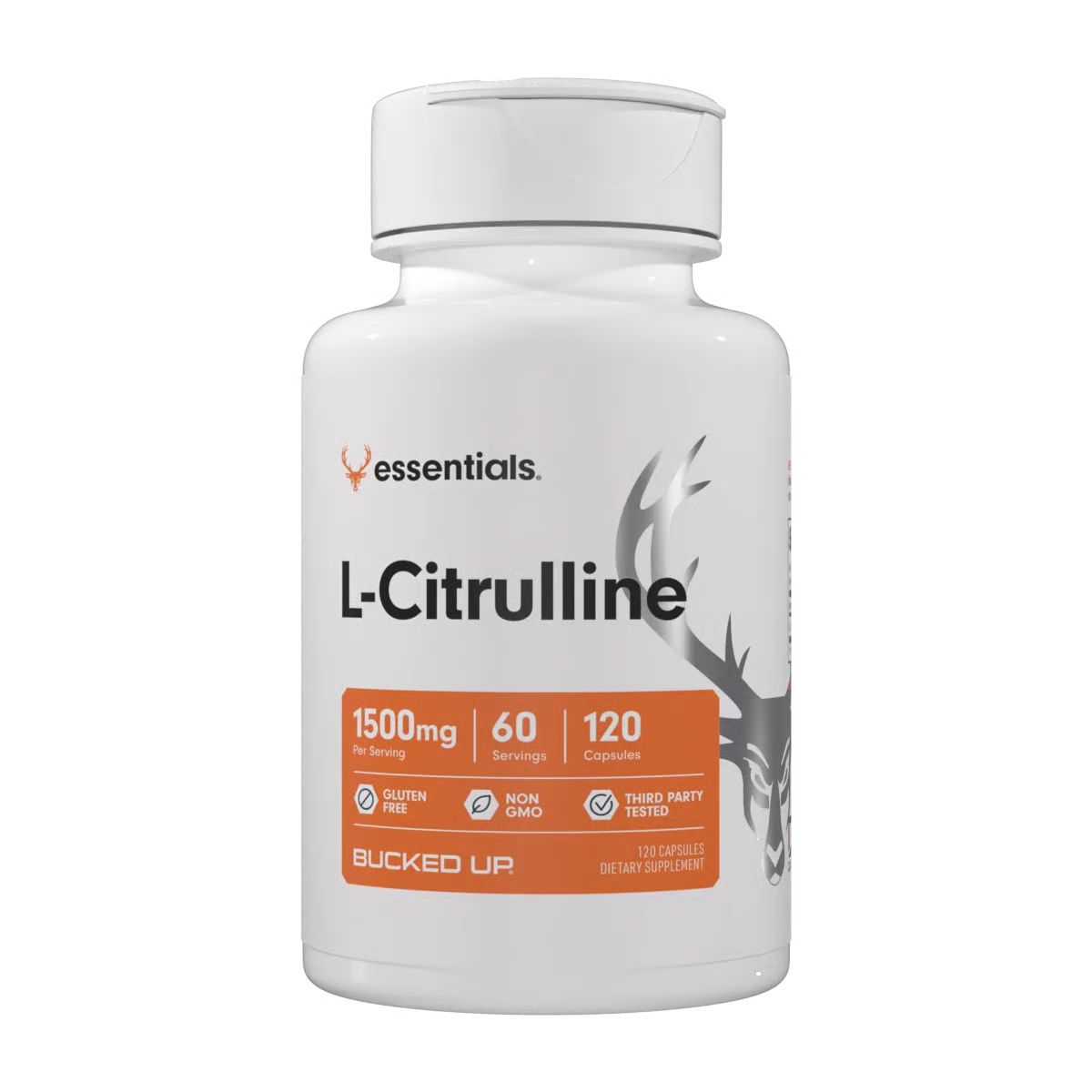
Bucked Up formulas apply this kidney conversion pathway by using disclosed doses of both Citrulline Malate and Pure L-Citrulline. See how these formulas put the pharmacokinetic research into practice.
How L-Citrulline Works: Nitric Oxide, Ammonia, and Malate Support
L-Citrulline supports nitric oxide production* and performance through several routes.1 First, the kidney conversion pathway supplies steady L-Arginine to endothelial nitric oxide synthase (eNOS), which supports vasodilation and blood flow to working muscles*. Second, L-Citrulline sits in the middle of the urea cycle, which converts ammonia into urea for excretion.
By supporting ammonia clearance*, L-Citrulline may help limit exercise-related ammonia buildup in skeletal muscle, a factor linked to central fatigue.1 Third, combining L-Citrulline with malic acid creates Citrulline Malate, where malate feeds directly into the Krebs cycle.
Malate acts as a natural citric acid cycle intermediate, and research by Bendahan et al., reviewed by RTHM, found that Citrulline Malate supported higher oxidative ATP production during exercise and faster phosphocreatine recovery afterward. The malate component also supports the malate-aspartate shuttle, which moves cytosolic NADH from glycolysis into the mitochondrial matrix to help maximize ATP yield from glucose.
What the Research Shows on Reps, Endurance, and Soreness
Most Citrulline Malate performance studies center on a 6 to 8 gram pre-exercise dose. Acute intake of 8 g of Citrulline Malate about one hour before training has been linked with more reps to failure in high-volume resistance work, supported peak power, and less muscle soreness 24 to 48 hours later.1 as summarized by Dr. Stanfield.
A review of non-stimulant pre-workout ingredients, published by News-Medical, highlighted studies showing reduced soreness between 24 and 48 hours after exercise with Citrulline Malate. For endurance work, Bailey et al. (2015) reported that L-Citrulline supported oxygen uptake kinetics and time-to-exhaustion during high-intensity cycling.
A meta-analysis cited by News-Medical did not find significant oxygen uptake benefits during low-intensity exercise, which suggests that citrulline’s main advantages appear during high-intensity or anaerobic efforts.
Ways to Get Citrulline: Food, Standalone Powders, and Pre-Workouts
L-Citrulline occurs naturally in watermelon, cucumbers, squash, and pumpkins, but reaching even 3 g from food alone would require roughly 2.2 to 3.3 lbs of watermelon per day, which is not realistic for pre-workout timing. Standalone L-Citrulline powders give precise control over dose and stack easily with any drink or formula.
Blended pre-workouts that list exact amounts of Citrulline Malate or Pure L-Citrulline let you confirm that you are hitting research-backed ranges. Products that rely on proprietary blends can hide citrulline content, which makes it hard to know whether you reach the 6 to 8 g Citrulline Malate range studied for resistance training.
Checklist for Evaluating Pump and Nitric Oxide Ingredients
Use a simple checklist when you judge any pre-workout for pump and nitric oxide support*. First, check the form and look for Citrulline Malate 2:1 or Pure L-Citrulline. A 2:1 ratio means two parts L-Citrulline to one part malic acid, and 1.76 g of Citrulline Malate 2:1 supplies about 1 g of pure L-Citrulline.
Second, check the dose and see whether Citrulline Malate reaches at least 6 g per serving or Pure L-Citrulline reaches at least 3 g.
Third, look for absorption support, such as Astragin®, which has been studied for effects on citrulline bioavailability.
Fourth, confirm label transparency and make sure citrulline appears with a clear number instead of being buried in a proprietary blend.
Fifth, consider the stimulant load and check whether formulas with 300 mg or more of caffeine also include enough citrulline to support vasodilation alongside the stimulants.
Safety, Limits, and Common Myths About Arginine and Citrulline
L-Citrulline is generally well-tolerated at doses used in performance research and often causes fewer side effects than L-Arginine. Very high oral L-Arginine doses, in the 21 to 30 g per day range, have been linked with nausea, vomiting, and diarrhea, as noted by Dr. Stanfield.
The Mayo Clinic also advises that L-Arginine is not recommended for people who have had a recent heart attack. L-Citrulline doses above 6 g per day can raise the chance of mild gastrointestinal issues such as bloating and diarrhea, according to Ubie Health.
People with kidney conditions, low blood pressure, or those taking blood pressure medications, nitrate drugs, or PDE5 inhibitors should talk with a healthcare provider before using L-Citrulline because combined vasodilatory effects are possible. Pregnant or breastfeeding individuals should also consult a healthcare provider before use.
Stop L-Citrulline at least two weeks before any scheduled surgery and follow your provider’s instructions. A frequent myth claims that simply taking more L-Arginine will drive more nitric oxide, but the pharmacokinetic data above show that first-pass degradation, not total intake, often limits its impact.
Real-World Scenarios: Picking a Strategy for Your Goal
Pump-focused lifters who train hard but feel flat can look for a pre-workout that clearly lists 6,000 mg of Citrulline Malate 2:1, which sits in the range studied for nitric oxide support* and pump*. High-tolerance users who run 300 mg or more of caffeine per session may benefit from a formula that pairs a strong citrulline dose with the stimulant stack to support vasodilation while energy stays high.
Science-driven bodybuilders who want more than standard Citrulline Malate often stack Pure L-Citrulline with Nitrosigine® and a glycerol-based hydration ingredient to support nitric oxide* and cellular hydration through several pathways at once.
Stim-sensitive lifters or night trainers can choose a stimulant-free pre-workout that still lists a full Citrulline Malate dose, which supports pump* and endurance* without affecting sleep.
Whether you chase pump, manage high stim intake, or build multi-pathway stacks, Bucked Up’s disclosed citrulline doses align with these scenarios. Match your training goal to a fitting citrulline formula.
FAQ: Timing, Dosing, Stacking, and Form Choice
When should I take L-Citrulline before a workout?
For acute performance support, take L-Citrulline about 60 minutes before training and see the pharmacokinetics section above for the research on peak plasma timing. If your pre-workout already includes Citrulline Malate or Pure L-Citrulline, follow the product’s timing directions, which often suggest 20 to 30 minutes before training for the full formula.
How much L-Citrulline or Citrulline Malate do I need per serving?
For resistance training, use the 6 to 8 g Citrulline Malate range discussed in the research section or 3 to 6 g of Pure L-Citrulline. Remember that 1.76 g of Citrulline Malate 2:1 supplies about 1 g of pure L-Citrulline, so the two forms do not match gram for gram on labels. Always check whether a product lists Citrulline Malate or Pure L-Citrulline and confirm that the per-serving amount appears clearly instead of being hidden in a proprietary blend.
Can I stack a standalone L-Citrulline powder with my existing pre-workout?
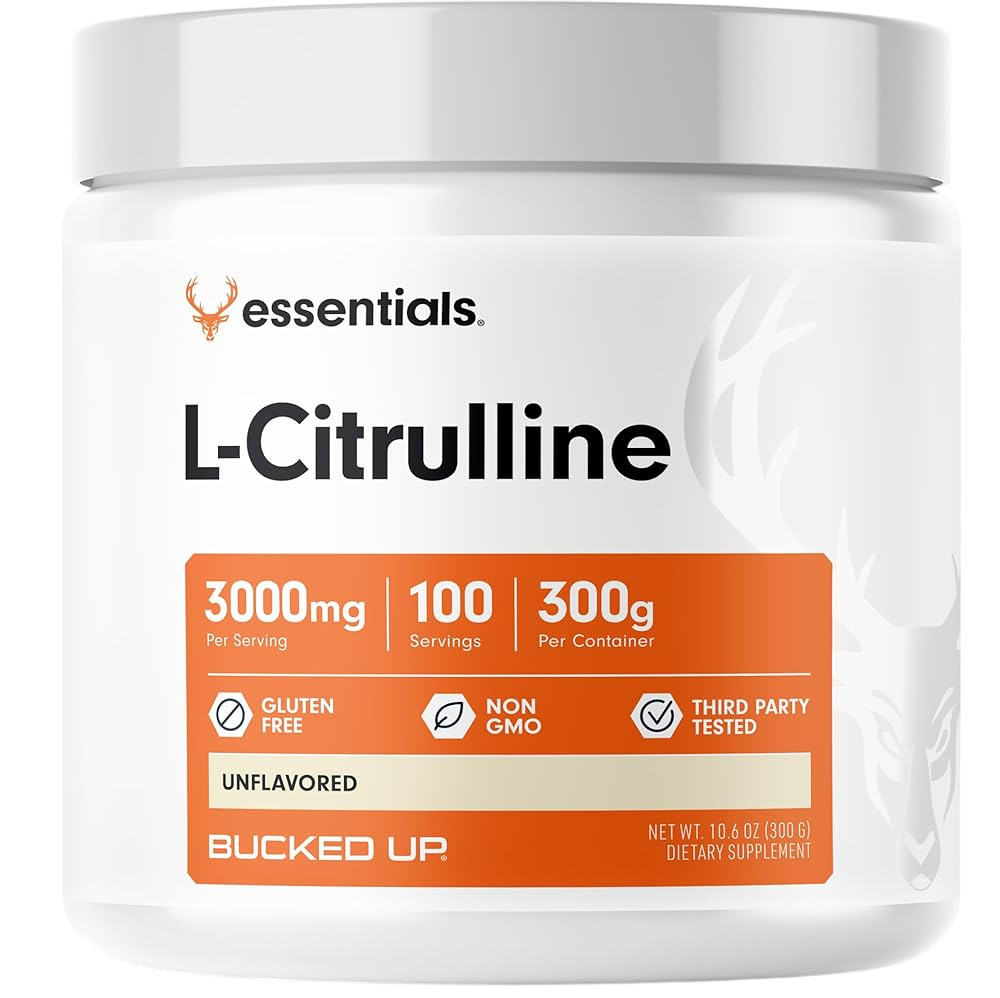
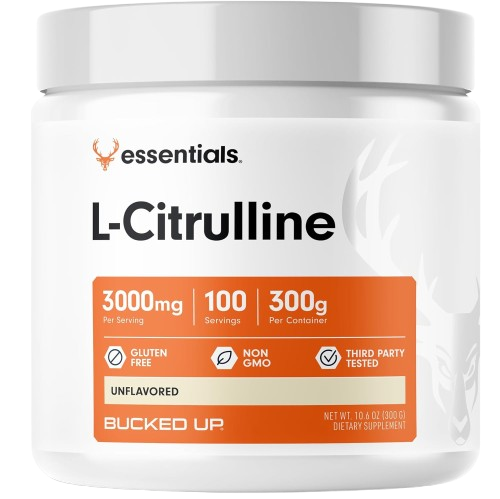
Standalone Pure L-Citrulline powder is unflavored and mixes into most beverages, which makes stacking simple. This strategy helps when your current pre-workout lists a citrulline dose below studied performance ranges or when you want a specific target dose for a training block.
If your pre-workout already provides a disclosed 6,000 mg of Citrulline Malate 2:1, adding extra powder can move you into higher ranges that some advanced users explore for nitric oxide support*. Talk with a healthcare provider before you raise total daily citrulline intake, especially if you use blood pressure medications or other vasodilators.
Why do some people feel L-Citrulline and others barely notice it?
Response to L-Citrulline depends on baseline nitric oxide status, training intensity, hydration, and actual dose. Well-hydrated users who train hard and take at least 6 g of Citrulline Malate 2:1 are more likely to notice pump and endurance support* effects.
Users who take under-dosed products, or products that list citrulline without a clear amount, may never reach an effective threshold. Mild gastrointestinal sensitivity at higher single doses above 10 g can also affect how well some people tolerate and absorb it.
Is Citrulline Malate 2:1 better than Pure L-Citrulline?
Each form fits different goals. Citrulline Malate 2:1 supplies L-Citrulline for nitric oxide support* plus malic acid for Krebs cycle support, which suits endurance work or high-volume resistance training where aerobic ATP production and ammonia clearance* both matter.
Pure L-Citrulline delivers only L-Citrulline per gram, which works well when you want maximum citrulline content for stacking or when you already use other Krebs cycle or energy-support ingredients. Your training style, full stack, and focus on pump, endurance, or both should guide the choice.
Conclusion: Focus on Transparent Labels and Proven Doses
The arginine vs citrulline comparison points toward a clear pharmacokinetic pattern. L-Citrulline avoids heavy first-pass metabolism, converts to L-Arginine in the kidneys, and supports steadier nitric oxide production* and pump* than oral L-Arginine, which often breaks down before reaching circulation.
The practical takeaway is simple. Choose a pre-workout that discloses its citrulline form and amount, reaches research-backed dose ranges, and includes an absorption-support ingredient.
Bucked Up’s pre-workout line lists 6,000 mg of Citrulline Malate 2:1 in foundational and high-stim formulas and combines 4,000 mg of Pure L-Citrulline with Nitrosigine® and Hydroprime® Glycerol in an advanced-tier option, with Astragin® included across the line to support citrulline absorption*.1 No proprietary blend math is needed because the grams appear clearly on the label.
Bucked Up discloses every gram so you can compare the label to the research. Shop transparent, research-focused L-Citrulline formulas.
*These statements have not been evaluated by the Food and Drug Administration. This product is not intended to diagnose, treat, cure, or prevent any disease. Consult your healthcare provider before use if you have a medical condition, are taking prescription medications, are pregnant or breastfeeding, or are scheduled for surgery.
References
Schwedhelm, E., Maas, R., Freese, R., Jung, D., Lukacs, Z., Jambrecina, A., Spickler, W., Schulze, F., & Böger, R. H. (2008). Pharmacokinetic and pharmacodynamic properties of oral L-citrulline and L-arginine: Impact on nitric oxide metabolism. British Journal of Clinical Pharmacology, 65(1), 51–59. https://pmc.ncbi.nlm.nih.gov/articles/PMC2291275/
Bailey, S. J., Blackwell, J. R., Lord, T., Vanhatalo, A., Winyard, P. G., & Jones, A. M. (2015). L-citrulline supplementation improves O2 uptake kinetics and high-intensity exercise performance in humans. Journal of Applied Physiology, 119(4), 385–395. https://pubmed.ncbi.nlm.nih.gov/26023227/
1 The content provided in this article is for informational purposes only and is not medical advice. Consult with a medical professional before implementing any changes to your diet, health, or exercise routines. Individual results will vary and are based on a combination of each individual’s diet, exercise, age, and health circumstances. These statements have not been evaluated by the Food and Drug Administration. This product is not intended to diagnose, treat, cure or prevent any disease.
This article was written by Ryan Gardner, CEO of Bucked Up. As the maker of Bucked Up Protein Soda, we have a financial interest in this information. The views expressed are our own and should be read with that context in mind.