Written by: Ryan Gardner, Owner, Managing Partner, CEO, Bucked Up
Key Takeaways
-
L-citrulline converts to L-arginine in the kidneys, bypassing first-pass metabolism and supplying substrate for nitric oxide production and vascular relaxation.*1
-
The arginine-citrulline recycling loop sustains intracellular arginine levels more effectively than direct L-arginine supplementation alone.
-
L-citrulline also supports the urea cycle, aiding ammonia clearance during high-intensity exercise and helping delay fatigue onset.*1
-
Pure L-citrulline delivers more citrulline per gram than citrulline malate 2:1, so match the form to your goal of nitric oxide support or added Krebs-cycle energy metabolism.*1
-
Explore Bucked Up L-Citrulline options with disclosed doses and forms to support your performance goals.1
The Nitric Oxide Synthesis Pathway in Everyday Terms
The citrulline-to-arginine-to-nitric-oxide sequence functions as a recycling loop, not a one-way street. Nitric oxide synthase converts L-arginine into nitric oxide and L-citrulline as a byproduct. That citrulline then re-enters the kidney conversion pathway to regenerate L-arginine. This arginine-citrulline cycle helps sustain local L-arginine availability in endothelial cells more effectively than a single bolus of L-arginine.
The “arginine paradox” highlights why this loop matters. Cells can support nitric oxide production even when circulating arginine levels appear adequate. Intracellular arginine recycling, supported by citrulline, drives nitric oxide synthesis. Supplementing citrulline feeds that intracellular loop directly.
Why L-Citrulline Often Outperforms Direct L-Arginine
The pharmacokinetic case against oral L-arginine is straightforward. Oral L-citrulline raises plasma L-arginine levels more effectively than oral L-arginine because L-citrulline is not a substrate for arginase and avoids substantial degradation in the gut and liver during first-pass metabolism. L-arginine, by contrast, undergoes heavy presystemic extraction before it can reach the kidneys or vasculature.
L-citrulline supplementation raises plasma L-arginine levels (Schwedhelm et al., 2008). It also exhibits high oral bioavailability.
A controlled trial in 10 healthy young men found that seven days of 6 g/day L-citrulline produced similar increases in blood arginine levels as 6 g/day L-arginine. Only citrulline, however, supported a 12% improvement in exercise tolerance and a 7% increase in total work completed during severe-intensity cycling (Bailey et al., J Appl Physiol, 2015).1 The arginine levels matched, yet the performance outcomes differed, which illustrates the bioavailability advantage in a single data point.
The Urea Cycle, Ammonia, and Fatigue
L-citrulline is more than a nitric oxide precursor. It also acts as a key intermediate in the urea cycle, the metabolic process that converts ammonia, a toxic byproduct of protein catabolism and high-intensity exercise, into urea for renal excretion. L-citrulline participates in ammonia detoxification by facilitating the conversion of toxic ammonia into non-toxic urea, which supports ammonia clearance during sustained or high-intensity efforts.*1
Ammonia accumulation in skeletal muscle is implicated in central fatigue during prolonged exercise. L-citrulline supplementation may support the urea cycle’s capacity to process that ammonia and may help delay fatigue onset.*1 This mechanism differs from nitric oxide synthesis, which is why L-citrulline fits well in endurance-focused formulations beyond pump support.
Choosing Between Pure L-Citrulline and 2:1 Citrulline Malate
Two primary supplemental forms appear on labels: pure L-citrulline and citrulline malate, a compound of L-citrulline and malic acid. The ratio matters for dosing. Pure L-citrulline is essentially 100% citrulline by weight, whereas citrulline malate is only 56.6% citrulline by weight, with the remainder as malic acid. A 6 g serving of citrulline malate 2:1 delivers approximately 3.4 g of actual L-citrulline.
The malate component (malic acid) is an intermediate in the Krebs cycle, the aerobic ATP production pathway. It is theorized to support oxidative energy production and phosphocreatine recovery. A 2021 systematic review concluded that adding malate to citrulline has not been shown to provide a pharmacokinetic advantage for nitric-oxide-related effects over pure L-citrulline (Gough et al., Eur J Appl Physiol, 2021). The two forms therefore serve different formulation goals rather than one being categorically superior.
Label readers should also note that products labeled “2:1 citrulline malate” can show variable actual citrulline content in independent testing (Chappell et al., J Int Soc Sports Nutr, 2018). This variability creates dosing ambiguity when you want a precise L-citrulline dose.
Timing L-Citrulline for Training and Daily Support
For acute performance support, many people take L-citrulline about 60 minutes before intense physical activity to match its peak plasma concentration window. For daily cardiovascular function support,* splitting doses, such as morning and evening, may help sustain arginine and nitric oxide levels throughout the day. This approach aligns with multi-day supplementation at 6 g/day for seven or more days, which has shown benefits for exercise tolerance where single acute doses have not.
How Long It Takes to Notice Effects
Peak plasma citrulline and arginine concentrations occur after ingestion, which supports the common 45 to 60 minute pre-exercise window. Acute pump support* can therefore occur from a single dose. Vascular function outcomes,* however, appear more consistently in trials that use multi-day protocols of seven days or longer.
Daily Use, Tolerance, and Safety
L-citrulline is generally well-tolerated at studied performance doses. Gastrointestinal discomfort such as nausea, bloating, or cramps may occur at very high single doses of 10 g or more. Some people report headaches, likely related to vasodilatory effects. Consult your healthcare provider before use if you have low blood pressure, kidney conditions, are pregnant or breastfeeding, or take blood pressure medications, nitrate medications, or phosphodiesterase-5 inhibitors, because additive vasodilatory effects are possible.
Citrulline and Blood Vessel Function
A systematic review and meta-analysis of eight randomized controlled trials in middle-aged and older adults found that L-citrulline supplementation supported flow-mediated dilation (FMD, a measure of endothelial function) (Frontiers in Nutrition, 2023). The same analysis reported significant reductions in arterial stiffness parameters. These findings reflect vascular function support* in studied populations and should not be interpreted as treatment outcomes.
How to Read L-Citrulline on Supplement Labels
Three connected questions help you evaluate any L-citrulline label. First, check whether the gram amount of L-citrulline is disclosed or buried in a proprietary blend. Without clear disclosure, you cannot verify whether a dose falls within studied ranges, which makes the second question critical: which form appears on the label?
Pure L-citrulline and citrulline malate 2:1 deliver different amounts of actual citrulline per gram, so the labeled ratio determines whether that disclosed dose is adequate. Even a properly dosed formula still depends on absorption. The third question is whether the formula includes an absorption-support ingredient, because citrulline that is not absorbed does not contribute to the pathway described above.
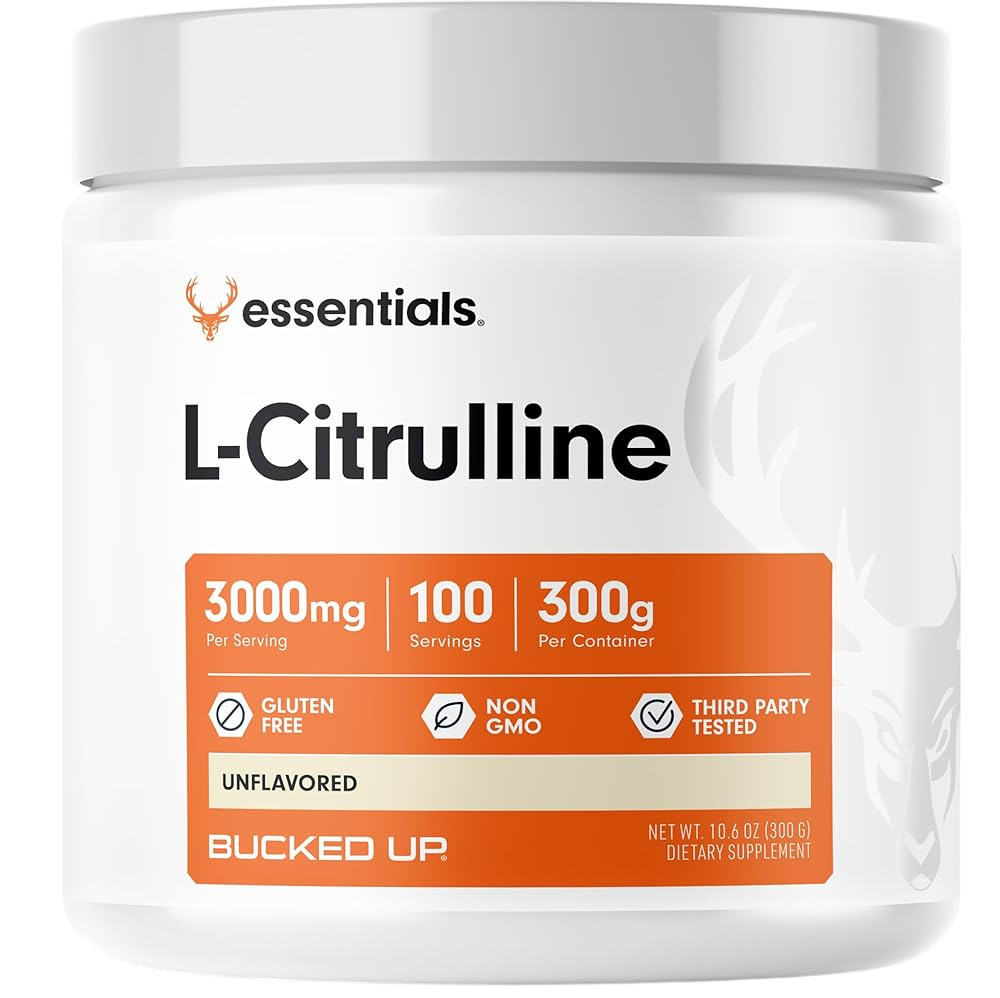
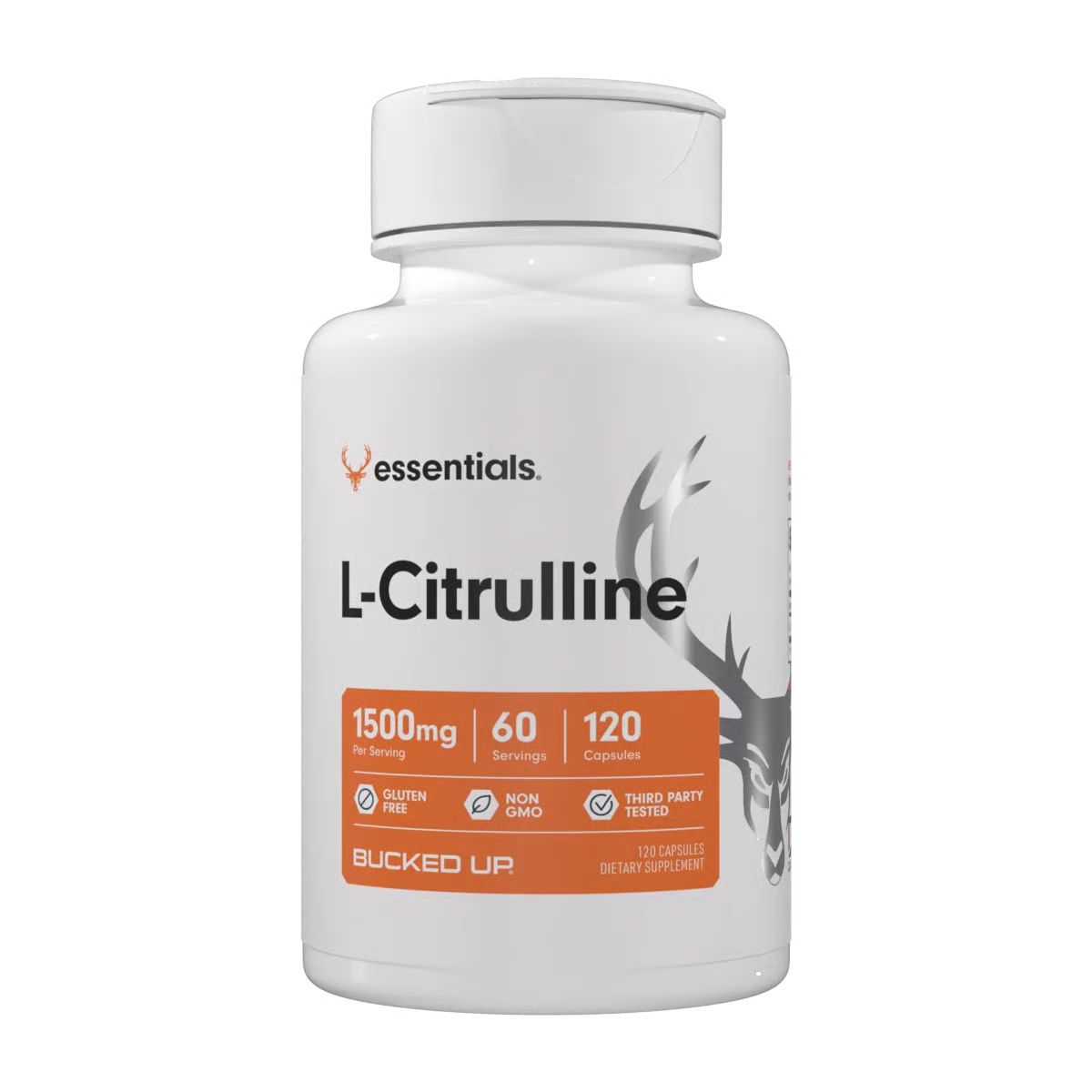
Bucked Up promotes a science-backed approach to dosing, with Citrulline Malate 2:1 and Pure L-Citrulline disclosed openly on every label. Explore Bucked Up’s L-Citrulline lineup to match your training and performance goals.
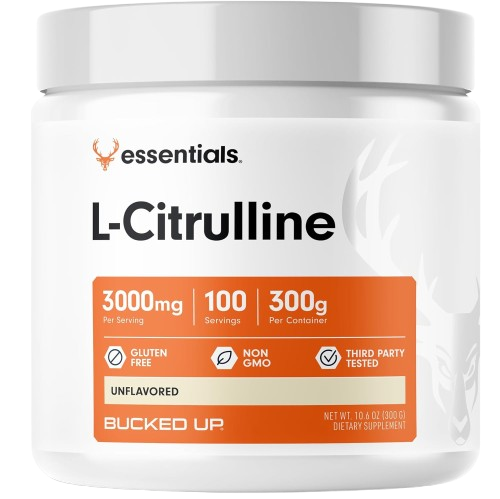
Bucked Up’s pre-workout line includes Astragin®, which is studied to support citrulline absorption,* across its formulas.1 The foundational Bucked Up and Woke AF pre-workouts use 6,000 mg of Citrulline Malate 2:1, which places them in the dose range studied for resistance training performance support.*1 Mother Bucker pairs 4,000 mg of Pure L-Citrulline with Nitrosigine® and Hydroprime® Glycerol for a multi-pathway approach to blood flow support* and cellular hydration support.*1 For athletes who prefer to control their own dosing stack, the standalone Bucked Up L-Citrulline Powder (300 g) delivers 3,000 mg of Pure L-Citrulline per scoop with no additional active ingredients, which makes it straightforward to dial in an exact dose.
Putting It All Together: Practical L-Citrulline Takeaways
L-citrulline supports nitric oxide production* by converting to L-arginine in the kidneys and bypassing first-pass arginase degradation that limits direct L-arginine supplementation. The resulting L-arginine supplies eNOS with substrate to generate nitric oxide, which diffuses to vascular smooth muscle and supports vasodilation* through the sGC-cGMP-PKG signaling cascade. Separately, L-citrulline participates in the urea cycle and supports ammonia clearance* during high-intensity exercise. Citrulline malate 2:1 adds a malic acid component theorized to support Krebs cycle energy metabolism,* although current evidence does not show a pharmacokinetic advantage over pure L-citrulline for nitric oxide outcomes specifically.
For label evaluation, focus on a simple checklist: disclosed gram amount, correct form for your goal, dose within studied ranges (6 to 8 g citrulline malate or 3 to 6 g pure L-citrulline for most performance applications), and a pre-exercise timing window of 45 to 60 minutes. Bucked Up promotes a science-backed approach to dosing, with Citrulline Malate and Pure L-Citrulline at transparently disclosed amounts. Review Bucked Up’s L-Citrulline options to see which formula best fits your training plan.
*These statements have not been evaluated by the Food and Drug Administration. This product is not intended to diagnose, treat, cure, or prevent any disease. Consult your healthcare provider before use if you have any medical condition, are taking prescription medications (including blood pressure medications, nitrate medications, or phosphodiesterase-5 inhibitors), are pregnant or breastfeeding, or are planning surgery.
Frequently Asked Questions
What is the difference between L-citrulline and citrulline malate, and which should I choose?
Pure L-citrulline is 100% citrulline by weight and is the direct precursor to L-arginine in the nitric oxide pathway. Citrulline malate is a compound of L-citrulline and malic acid, typically in a 2:1 ratio, meaning roughly 56.6% of its weight is actual citrulline. The malate component is an intermediate in the Krebs cycle and is theorized to support aerobic energy production alongside the nitric oxide pathway.
If your primary goal is nitric oxide and blood flow support,* pure L-citrulline delivers more citrulline per gram. If you want a formula that also targets the energy metabolism side of endurance training,* citrulline malate 2:1 is the more studied option for that dual purpose. In both cases, confirm that the label discloses the gram amount of the specific form so you can verify that the dose falls within studied ranges.
How long does L-citrulline take to work, and should I take it every day?
Peak plasma concentrations of L-citrulline and the resulting L-arginine elevation occur after ingestion, which supports a 45 to 60 minute pre-exercise window for acute performance support.* For vascular function support* and exercise tolerance outcomes,* research more consistently shows benefits with multi-day protocols of seven days or longer at doses such as 6 g per day. Splitting a daily dose into two servings, morning and evening, may help sustain plasma arginine and nitric oxide levels throughout the day.
Daily use at studied doses is generally well-tolerated, but you should consult your healthcare provider if you have underlying health conditions or take prescription medications.
Why do some pre-workouts use L-arginine instead of L-citrulline?
L-arginine is the direct substrate for nitric oxide synthase, so it appears to be the intuitive ingredient choice on paper. The challenge lies in pharmacokinetics. Oral L-arginine undergoes substantial degradation by arginase enzymes in the gut and liver during first-pass metabolism, which limits how much reaches systemic circulation. L-citrulline bypasses that degradation, converts to L-arginine in the kidneys, and produces a more sustained elevation of plasma arginine.
As noted earlier, controlled trials have shown that while L-citrulline and L-arginine can produce similar plasma arginine levels, only citrulline translates those levels into measurable performance improvements. When evaluating a pre-workout label, look for disclosed gram amounts of L-citrulline or citrulline malate rather than L-arginine if nitric oxide and blood flow support* are your goals.
What dose of L-citrulline is supported by research for resistance training?
The most frequently studied dose range for resistance training performance support* is 6 to 8 g of citrulline malate 2:1 taken 30 to 60 minutes before exercise. That range delivers approximately 3.4 to 4.5 g of actual L-citrulline. For pure L-citrulline, 3 to 6 g per day covers both performance and daily cardiovascular function support* in studied populations.
When reading a label, convert citrulline malate grams to actual citrulline by multiplying by approximately 0.566 to confirm that the dose falls within the studied range. Products that do not disclose the gram amount of citrulline separately from a proprietary blend prevent this verification.
1 The content provided in this article is for informational purposes only and is not medical advice. Consult with a medical professional before implementing any changes to your diet, health, or exercise routines. Individual results will vary and are based on a combination of each individual’s diet, exercise, age, and health circumstances. These statements have not been evaluated by the Food and Drug Administration. This product is not intended to diagnose, treat, cure or prevent any disease.
This article was written by Ryan Gardner, CEO of Bucked Up. As the maker of Bucked Up Protein Soda, we have a financial interest in this information. The views expressed are our own and should be read with that context in mind.