Written by: Ryan Gardner, Owner, Managing Partner, CEO, Bucked Up
Key Takeaways
-
L-Citrulline bypasses first-pass metabolism to raise L-Arginine and nitric oxide levels more effectively than direct L-Arginine supplementation, supporting vasodilation and blood flow.*1
-
Research-backed pre-workout doses are 6–8 g Citrulline Malate (2:1) or 3–6 g pure L-Citrulline, and many labels hide lower amounts inside proprietary blends.
-
Peak plasma levels occur 0.7–2 hours after ingestion, so timing intake 30–60 minutes pre-workout helps support nitric oxide during training.*1
-
Citrulline Malate adds Malic Acid for endurance-focused sessions, while pure L-Citrulline fits high-dose stacking; Bucked Up formulas disclose exact grams and include Astragin for absorption.*1
-
Consistent daily use supports ammonia clearance and training endurance; Bucked Up L-Citrulline can help support these goals.*1
How L-Citrulline Drives Nitric Oxide and Blood Flow
L-Citrulline is a non-essential alpha-amino acid found naturally in the body and in foods like watermelon. Reaching 3 grams from food alone would require roughly 2.2 to 3.3 lbs of watermelon per day, which is not realistic for performance dosing. In supplement form, L-Citrulline matters because it follows a metabolic route that oral L-Arginine does not match.
You swallow L-Citrulline, it moves through the small intestine, and it largely bypasses first-pass metabolism in the liver. L-Arginine, by contrast, is significantly degraded by arginase enzymes in the gut and liver before it reaches systemic circulation. L-Citrulline then travels to the kidneys, where argininosuccinate synthase and argininosuccinate lyase convert it into L-Arginine. This pathway produces a more substantial and sustained rise in circulating L-Arginine than direct L-Arginine supplementation,*1 which provides more substrate for Nitric Oxide Synthase (NOS) enzymes to support nitric oxide production.*1
Nitric oxide is a gaseous signaling molecule that supports the relaxation of vascular smooth muscle cells. This relaxation supports vasodilation and blood flow to active tissues, including skeletal muscle.*1 This blood flow support is one reason L-Citrulline is valued for performance. L-Citrulline also participates in the urea cycle, which supports ammonia clearance during intense exercise*1 and relates to fatigue buffering.* These combined effects help explain why L-Citrulline’s metabolic route, which bypasses first-pass metabolism, supports better systemic availability than L-Arginine.*
*These statements have not been evaluated by the Food and Drug Administration. This product is not intended to diagnose, treat, cure, or prevent any disease.
Pre-Workout Dosing Ranges You Can Actually Use
Dosing accuracy matters, and many labels create confusion by leaving out key details. Research on resistance training performance has examined 6–8 g of Citrulline Malate taken before exercise, which provides about 3.4–4.5 g of pure L-Citrulline. Citrulline Malate in a 2:1 ratio combines L-Citrulline and Malic Acid, so 1.76 grams of Citrulline Malate (2:1) yields approximately 1 gram of pure L-Citrulline. A label that shows 6,000 mg of Citrulline Malate (2:1) delivers roughly 3,400 mg of actual L-Citrulline plus Malic Acid.
A label that shows 2,000 mg of Citrulline Malate inside a proprietary blend delivers under 1,200 mg of L-Citrulline. That amount is a light sprinkle compared with studied ranges. Knowing the conversion ratio gives you a simple way to evaluate any pre-workout label that uses Citrulline Malate.
Bucked Up promotes science-backed dosing of ingredients, including Citrulline Malate and pure L-Citrulline. See Bucked Up’s disclosed L-Citrulline and Citrulline Malate doses.
Timing Intake and Peak Plasma Levels
For acute performance support, most people take L-Citrulline about 30 to 60 minutes before intense physical activity. Peak plasma concentrations of L-Citrulline occur within 0.7 to 2 hours after ingestion, which lines up with this pre-workout window. Taking it right before training can mean the conversion to L-Arginine and the related nitric oxide support are still building when your early sets begin.
Consistent daily intake also matters. Because L-Citrulline participates in the urea cycle and supports ammonia clearance,* regular use may support a more stable baseline instead of relying only on sharp pre-workout spikes.* For general well-being support, research has examined 3 to 6 grams of pure L-Citrulline or 6 to 8 grams of Citrulline Malate daily, sometimes split into two servings.
*These statements have not been evaluated by the Food and Drug Administration. This product is not intended to diagnose, treat, cure, or prevent any disease.
Citrulline Malate vs Pure L-Citrulline for Different Goals
The choice between Citrulline Malate and pure L-Citrulline comes down to training goals. Citrulline Malate pairs L-Citrulline with Malic Acid, a Krebs Cycle intermediate involved in aerobic ATP production. The Malic Acid component is theorized to support oxidative energy metabolism and phosphocreatine recovery along with the vasodilatory support from the Citrulline portion.* For athletes focused on endurance-style resistance training, higher-rep work, or sessions where energy metabolism support is a priority, 6,000 mg of Citrulline Malate (2:1) is the studied form.
Pure L-Citrulline removes Malic Acid and delivers a higher concentration of L-Citrulline per gram of product. This profile suits advanced stacking protocols where the goal is to increase L-Citrulline intake alongside other nitric oxide-supporting ingredients like Nitrosigine. Bucked Up’s Mother Bucker uses 4,000 mg of pure L-Citrulline stacked with Nitrosigine and Hydroprime Glycerol for cellular hydration support,*1 which Bucked Up calls the Pump Trifecta. Bucked Up Pre-Workout, Woke AF, and the Non-Stimulant Pre-Workout use 6,000 mg Citrulline Malate (2:1) for combined pump and ammonia clearance support.*1
*These statements have not been evaluated by the Food and Drug Administration. This product is not intended to diagnose, treat, cure, or prevent any disease.
Daily Use, Ammonia Clearance, and Absorption
Consistent intake supports the urea cycle’s role in ammonia clearance,* which extends beyond a single pre-workout serving. Ammonia accumulates during strenuous exercise as a byproduct of protein metabolism, and its buildup is linked with central fatigue. Supporting its clearance through regular L-Citrulline intake may contribute to training endurance over time.*
Absorption determines how much of a dose your body can actually use. Citrulline that does not absorb is wasted, no matter what the label claims. Bucked Up includes Astragin across the pre-workout line, an ingredient studied to support citrulline absorption and bioavailability.* L-Citrulline is generally well-tolerated, although very high single doses, such as 10 g or more, may cause gastrointestinal discomfort like cramps or diarrhea. Astragin’s inclusion is intended to support the bioavailability of every gram disclosed on the label.*
*These statements have not been evaluated by the Food and Drug Administration. This product is not intended to diagnose, treat, cure, or prevent any disease.
What Pumps and Endurance Feel Like in the Gym
Nitric oxide pre-workout results with L-Citrulline in resistance training center on blood flow and ammonia clearance.* Supporting nitric oxide production supports vasodilation, which supports the delivery of oxygen, glucose, and other substrates to active skeletal muscle during training.*1 This process underlies the pump and also shows why the pump is more than an aesthetic effect. It reflects nutrient delivery to working tissue.*1
Research using Citrulline Malate in resistance training has examined total repetitions to muscular failure across multiple sets, often with 8 grams of Citrulline Malate. Studies have also explored its role in supporting recovery from delayed onset muscle soreness (DOMS) in the days after exercise.* Multi-ingredient pre-workout supplements that include caffeine, beta-alanine, and L-Citrulline have been studied for upper body resistance exercise performance in specific populations, and results vary by individual, training status, dose, and form.
Bucked Up promotes science-backed dosing of ingredients, including Citrulline Malate and pure L-Citrulline. Explore Bucked Up’s L-Citrulline options for pumps and endurance support.
*These statements have not been evaluated by the Food and Drug Administration. This product is not intended to diagnose, treat, cure, or prevent any disease.
How Long L-Citrulline Takes to Kick In
As noted earlier, peak plasma levels occur 0.7 to 2 hours after ingestion. The key practical point is timing. If you take L-Citrulline immediately before lifting, the conversion to L-Arginine in the kidneys and the related nitric oxide support* may still be ramping up when your first working set starts. Taking it 30 to 60 minutes before training aligns the rising plasma levels with the early part of your session.
*These statements have not been evaluated by the Food and Drug Administration. This product is not intended to diagnose, treat, cure, or prevent any disease.
L-Citrulline and Muscle Pump Support
L-Citrulline supports nitric oxide production,*1 which supports vasodilation and blood flow to active muscle tissue during training.*1 The pump is the visible and tactile result of increased blood volume in working muscles, and it reflects the same blood flow that supports oxygen and nutrient delivery.* L-Citrulline supports muscle pump* through its role in the L-Citrulline to L-Arginine to nitric oxide pathway, provided the dose is high enough to support that conversion. Research has examined 6 to 8 grams of Citrulline Malate or 3 to 6 grams of pure L-Citrulline for this purpose, so a 1-gram dusting in a proprietary blend does not match studied ranges.
*These statements have not been evaluated by the Food and Drug Administration. This product is not intended to diagnose, treat, cure, or prevent any disease.
Day-to-Day Results Many Users Report
With consistent use at studied doses, L-Citrulline supports training endurance*1 through ammonia clearance and blood flow support,*1 and supports recovery from intense training.* Users who take Citrulline Malate or pure L-Citrulline daily within studied ranges may notice support for sustained performance across multiple sets and sessions,*1 along with support for reduced muscle soreness in the days after hard training.*1
Pre-workout supplements represent a growing segment of the supplement market, which reflects increased interest in performance-focused ingredients like L-Citrulline that work independently of caffeine. L-Citrulline has no stimulant properties and carries no habituation or dependency risk.
*These statements have not been evaluated by the Food and Drug Administration. This product is not intended to diagnose, treat, cure, or prevent any disease.
How to Read L-Citrulline on a Pre-Workout Label
Evaluating an L-Citrulline pre-workout label comes down to three checkpoints. First, look for disclosed grams, meaning the label shows the exact amount of L-Citrulline or Citrulline Malate per serving instead of hiding it in a proprietary blend. Second, check the form and dose. Citrulline Malate (2:1) at 6,000 mg or pure L-Citrulline at 4,000 mg or higher fall within ranges research has examined for performance support. Anything below 3,000 mg of pure L-Citrulline or 6,000 mg of Citrulline Malate (2:1) sits outside those studied ranges.
Third, look for absorption support. An ingredient like Astragin on the label has been studied for citrulline bioavailability.* A formula that discloses grams, uses a studied form at a studied dose, and includes an absorption agent gives you clear information. One that hides behind a proprietary blend asks you to rely more on marketing than on math.
Bucked Up promotes science-backed dosing of ingredients, including Citrulline Malate and pure L-Citrulline. Review Bucked Up’s labels for L-Citrulline content and absorption support.
*These statements have not been evaluated by the Food and Drug Administration. This product is not intended to diagnose, treat, cure, or prevent any disease.
Frequently Asked Questions
What is the difference between Citrulline Malate and pure L-Citrulline, and which should I use?
Citrulline Malate is a compound of L-Citrulline and Malic Acid, typically in a 2:1 ratio. The Malic Acid component is a Krebs Cycle intermediate theorized to support aerobic energy metabolism along with the nitric oxide support from the Citrulline portion. Pure L-Citrulline delivers 100% L-Citrulline with no Malic Acid, which suits high-dose stacking protocols where you want maximum L-Citrulline per gram.
For most lifters focused on endurance, pump, and ammonia clearance support, 6,000 mg of Citrulline Malate (2:1) is a studied starting point. For advanced athletes stacking multiple nitric oxide-supporting ingredients, pure L-Citrulline at 4,000 mg or higher alongside ingredients like Nitrosigine may fit better. Neither form is universally superior, and the right choice depends on your training goals and the rest of your stack.
Is L-Citrulline safe to take daily?
L-Citrulline is generally well-tolerated at doses studied for performance support and often shows a milder side-effect profile than L-Arginine. Oral supplementation at doses up to 15 grams has been reported without adverse events in healthy adults. Unlike L-Arginine, L-Citrulline typically does not cause gastrointestinal distress such as cramping or diarrhea, even at larger single doses.
L-Citrulline has no stimulant properties and carries no habituation or dependency risk. Individuals with low blood pressure, kidney conditions, or those taking blood pressure medications, nitrate medications, or phosphodiesterase-5 inhibitors should consult a healthcare provider before use, because L-Citrulline’s vasodilatory effects may interact with those conditions or medications. Anyone who is pregnant or breastfeeding should also consult a healthcare provider before supplementing.
Why does Bucked Up include Astragin in its pre-workouts?
Astragin is an ingredient studied to support the absorption and bioavailability of citrulline. A high-dose L-Citrulline formula only delivers results if your body absorbs the ingredient. Bucked Up includes Astragin across the pre-workout line, including Bucked Up Pre-Workout, Woke AF, Mother Bucker, and the Non-Stimulant Pre-Workout, to support the bioavailability of every gram disclosed on the label.
This approach highlights a practical difference between a formula that simply lists grams and one that also supports absorption of those grams. High doses of any ingredient that pass through without absorbing are wasted regardless of what the label says.
Can I use L-Citrulline powder on its own, or does it need to be part of a pre-workout formula?
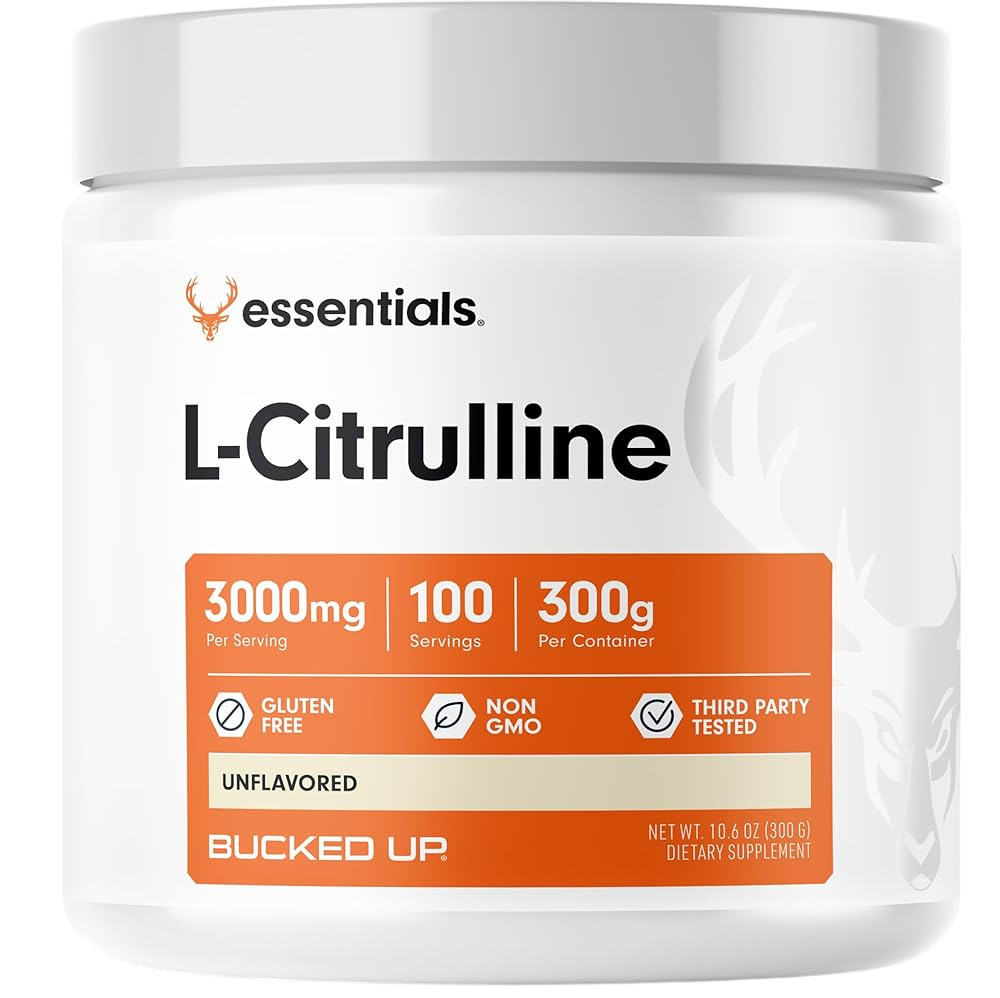
Pure L-Citrulline powder works as a standalone ingredient or as part of a stack. Bucked Up’s L-Citrulline Powder (300g) is unflavored and provides 3,000 mg of pure L-Citrulline per scoop. This format gives athletes flexibility to dial in an exact dose, add it to an existing pre-workout, or run a higher-dose stacking protocol.
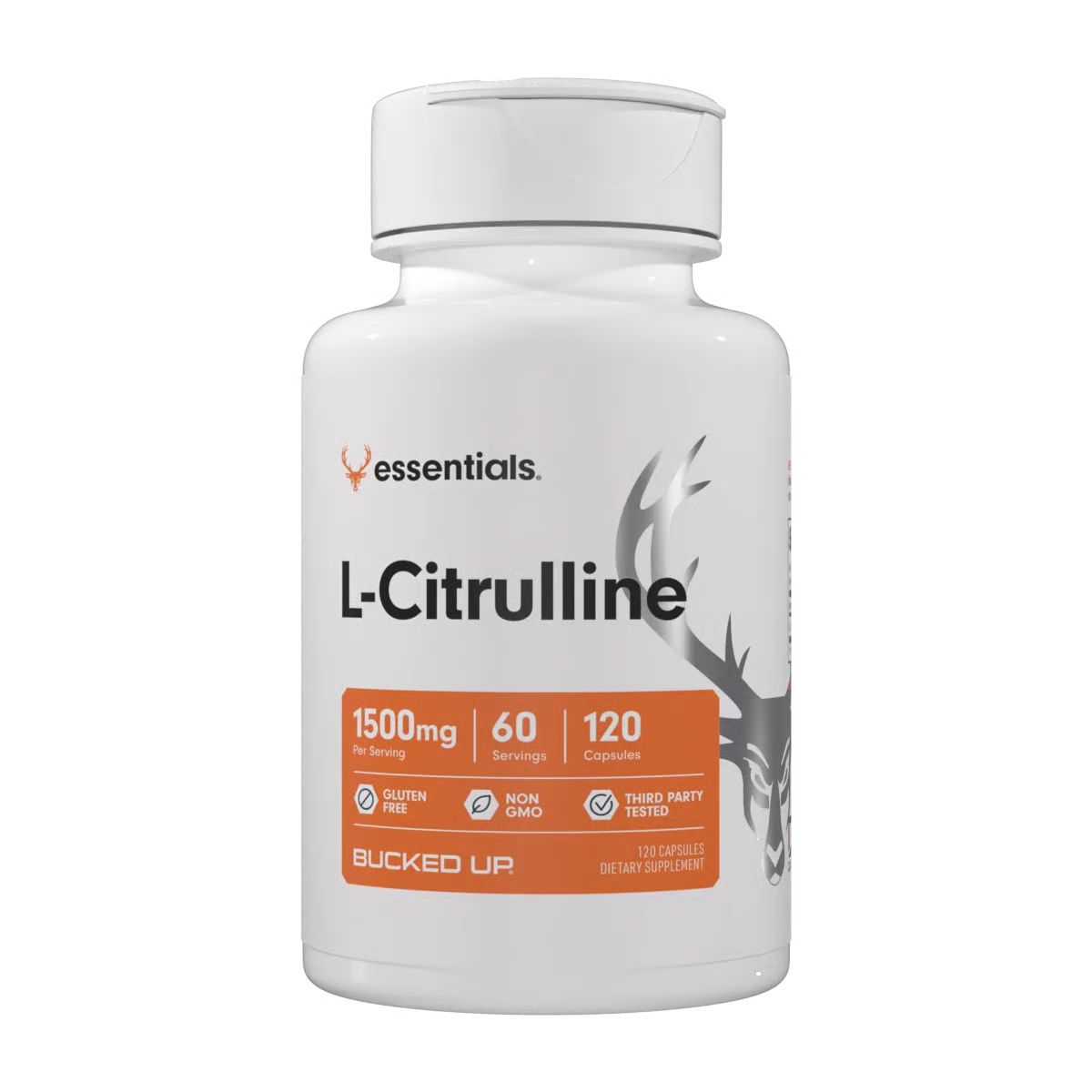
Standalone powder is particularly useful for lifters who already use a stimulant-based pre-workout and want additional nitric oxide support without more caffeine. Capsule formats, such as Bucked Up’s L-Citrulline Capsules at 750 mg per capsule, offer a convenient exact-dose option for people who prefer not to mix powders.
How do I know if a pre-workout has enough L-Citrulline to actually work?
Three label checks help you decide. First, look for a disclosed gram amount instead of an ingredient listing inside a proprietary blend. If the label does not show the exact milligrams of L-Citrulline or Citrulline Malate per serving, you cannot judge the dose. Second, check the form and apply the conversion. A 1.76 gram serving of Citrulline Malate (2:1) yields about 1 gram of pure L-Citrulline, so 6,000 mg of Citrulline Malate (2:1) delivers roughly 3,400 mg of L-Citrulline.
Research on resistance training performance has examined 6 to 8 grams of Citrulline Malate or 3 to 6 grams of pure L-Citrulline. Third, look for an absorption-supporting ingredient like Astragin. A label that passes all three checkpoints gives you enough information to make an informed choice.
References
Mordor Intelligence. (2025). Pre-workout supplements market size and share analysis: Growth trends and forecasts (2026-2031). https://mordorintelligence.com/industry-reports/pre-workout-supplements-market
1 The content provided in this article is for informational purposes only and is not medical advice. Consult with a medical professional before implementing any changes to your diet, health, or exercise routines. Individual results will vary and are based on a combination of each individual’s diet, exercise, age, and health circumstances. These statements have not been evaluated by the Food and Drug Administration. This product is not intended to diagnose, treat, cure or prevent any disease.
This article was written by Ryan Gardner, CEO of Bucked Up. As the maker of Bucked Up Protein Soda, we have a financial interest in this information. The views expressed are our own and should be read with that context in mind.