Written by: Ryan Gardner, Owner, Managing Partner, CEO, Bucked Up
Key Takeaways
-
Creatine monohydrate has decades of research showing direct support for muscle size and training volume, so it usually comes first for most lifters.1
-
L-citrulline works through the nitric oxide pathway to support blood flow and training endurance, with more conditional and indirect effects on hypertrophy.1
-
Research consistently shows creatine provides stronger, more reliable evidence for muscle gains, while citrulline works well as a secondary volume-support tool when used consistently.1
-
A practical starting point is 3 to 5 g of creatine daily, then 3 to 6 g of L-citrulline or citrulline malate about 45 to 60 minutes before training.
-
Once your creatine routine is locked in, adding Bucked Up L-Citrulline can support peak performance and training volume.1
The Real Problem When You Pick Between Creatine and L-Citrulline
Most lifters face a simple but frustrating problem. You have a limited budget, a small supplement shelf, and two ingredients that both show up on pre-workout labels with real research behind them. Creatine monohydrate has decades of data. L-citrulline has a growing body of peer-reviewed work on training volume and blood flow support. Neither one is a scam, yet treating them as interchangeable or choosing the wrong one as your base costs you time and money.
Much of the confusion comes from how supplement marketing presents both ingredients. Pre-workout labels stack them together without explaining which one drives muscle gains and which one mainly supports the training environment. That lack of clarity leads to under-investing in creatine, over-relying on citrulline for outcomes it was never meant to deliver, or buying both in suboptimal forms and wondering why progress feels stuck.
Why Getting This Choice Wrong Slows Your Progress
A beginner chasing strength who skips creatine and buys a citrulline-heavy pre-workout misses the most well-supported muscle-gain mechanism available. An intermediate lifter focused on hypertrophy can stall size progress when training volume is capped by energy availability instead of blood flow. For anyone sensitive to high-stimulant formulas, the problem grows: stimulant-heavy products can cause vasoconstriction that works against the pump, and without enough citrulline to support vasodilation alongside caffeine, the formula works against itself.
Misjudging the priority does more than slow progress. It creates a false ceiling where you blame your training or genetics when the real issue is a supplement hierarchy that never matched how these ingredients actually work.
How Creatine and L-Citrulline Work Inside Your Body
Creatine monohydrate increases intramuscular phosphocreatine stores. Phosphocreatine rapidly helps regenerate ATP during short, high-intensity efforts like heavy squats or sprints. More phosphocreatine means more ATP between reps, which allows more total work per session over time. Creatine does not directly trigger muscle protein synthesis, but the extra training volume it supports creates the mechanical stimulus that drives hypertrophy.
L-citrulline is not incorporated into proteins, which separates it from most amino acids and removes any direct role in muscle protein synthesis. Its main action runs through the nitric oxide pathway. Oral L-citrulline bypasses first-pass metabolism in the gut and liver, reaches the kidneys, and converts into L-arginine, which then serves as the substrate for nitric oxide synthase enzymes. The resulting nitric oxide supports vasodilation, which improves blood flow and nutrient delivery to working muscle. L-citrulline also participates in the urea cycle, helping convert ammonia into urea for excretion, which may support metabolic waste clearance during intense training. When paired with malic acid as citrulline malate, the malate portion is theorized to support Krebs Cycle activity and aerobic ATP production.
Creatine supports the energy system that powers muscle contraction and growth stimulus. L-citrulline supports the delivery system that keeps nutrients and oxygen moving to the muscle during training. These different mechanisms create different roles and different priority levels for muscle gains.
What Research Shows About L-Citrulline vs Creatine for Muscle Size
A 2024 systematic review and meta-analysis of 10 randomized controlled trials found that creatine combined with resistance training increased muscle size compared with resistance training plus placebo. All studies used direct imaging methods such as MRI, CT scans, or ultrasound and lasted at least six weeks. The pooled standardized effect for muscle size was 0.11, with additional regional muscle-thickness gains of roughly 0.10 to 0.16 cm in both upper- and lower-body muscles. The effect size is modest but measured directly on muscle tissue and compounds over months and years of consistent training.
The L-citrulline data looks more conditional. L-citrulline supplementation can support exercise tolerance and total work completed during intense exercise.1 However, multi-day L-citrulline supplementation has shown benefits for exercise tolerance compared with single pre-exercise doses.1 The National Institutes of Health notes that current research does not provide strong enough evidence to recommend citrulline or citrulline malate supplements for broad exercise or athletic performance improvements.
Overall, creatine has stronger and more direct evidence for muscle hypertrophy outcomes. L-citrulline offers meaningful but more conditional support for training volume, especially with consistent multi-day use rather than one-off pre-workout servings.
Real-World Supplement Formats You Will Actually See
Standalone creatine monohydrate powder gives a simple starting point. It is widely available, cost-effective per serving, and has one of the deepest research bases in the muscle-gain category. It does not require cycling and does not need to be taken pre-workout to work, although daily consistency matters more than timing.
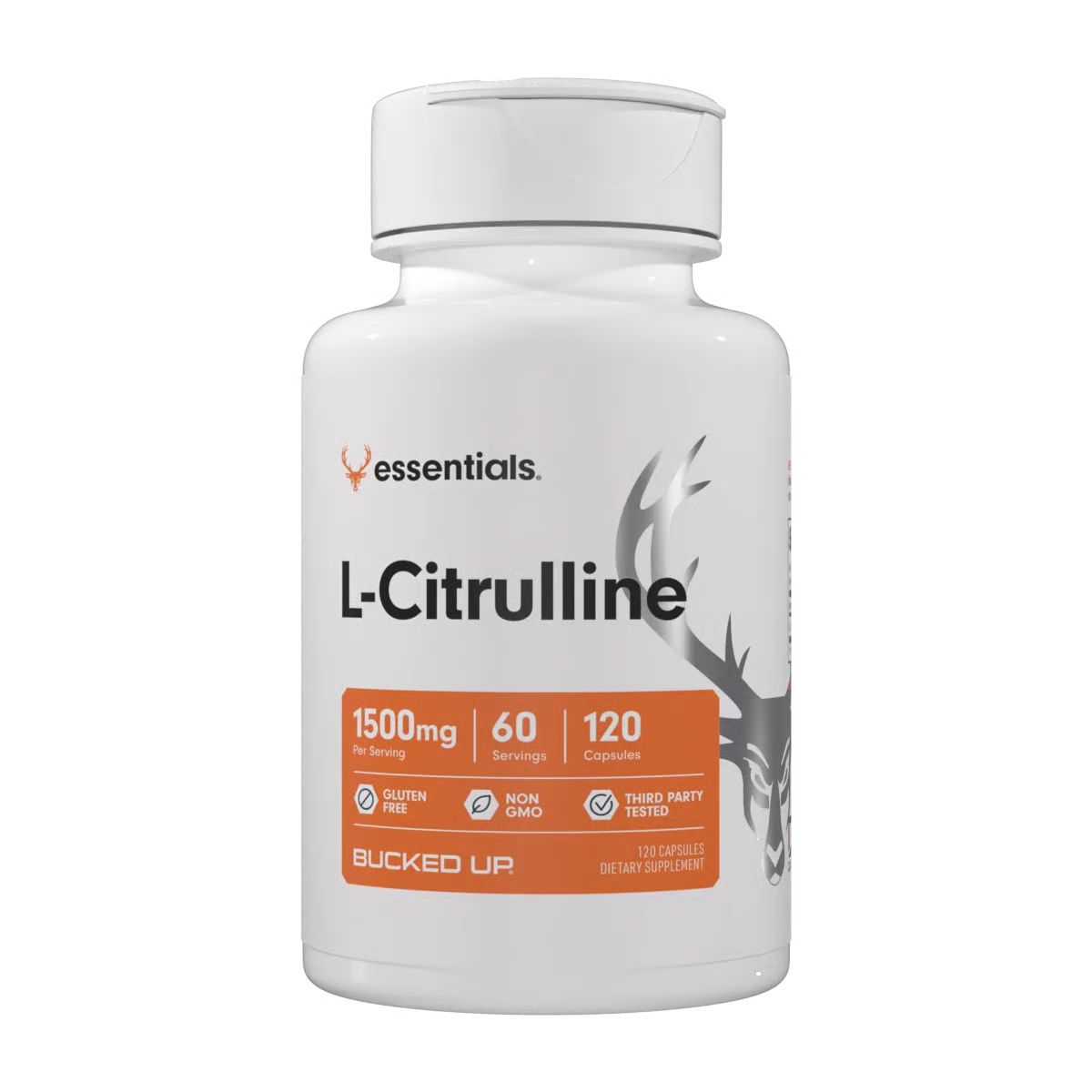
Pure L-citrulline powder or capsules provide dosing flexibility without malic acid. This format works well for lifters who want to stack citrulline on top of an existing pre-workout or who prefer higher-dose protocols. Citrulline malate blends in a 2:1 ratio supply both citrulline and malate, which is theorized to support aerobic energy production alongside vasodilation. Pre-workout formulas that combine both creatine and citrulline are available, but creatine doses in these products often fall below the 3 to 5 g daily maintenance range seen in research, so checking the label becomes essential.
How to Read Labels and Ignore the Hype
Disclosed gram amounts should be your first filter. Any product that lists L-citrulline or citrulline malate inside a proprietary blend without exact doses cannot be compared to research. Evidence supports L-citrulline doses of 3 to 6 g of pure L-citrulline for supporting muscular endurance and reducing post-exercise soreness. If the label does not show those numbers, you cannot confirm that your serving matches the studied range.
For citrulline malate, confirm the ratio. A 2:1 ratio means two parts citrulline to one part malic acid. A product listing 6 g of citrulline malate at 2:1 delivers approximately 3.4 g of actual L-citrulline. Timing also matters. L-citrulline and citrulline malate are typically taken about 60 minutes before exercise, with peak plasma concentrations occurring within 0.7 to 2 hours after ingestion. For creatine, daily consistency matters more than exact timing.
Safety, Limits, and Common Myths About These Ingredients
One persistent myth claims that L-citrulline can replace creatine for muscle gains. It cannot. Their mechanisms do not overlap in a meaningful way for direct hypertrophy outcomes. Citrulline supports the training environment, while creatine supports the energy system that drives the training stimulus. Treating them as substitutes is like swapping your engine for a better fuel line and expecting the car to accelerate faster.
Another myth suggests that more citrulline always means more benefit. Single doses above 10 g can lead to arginine over-saturation, and very high single doses may cause gastrointestinal discomfort such as nausea, bloating, and cramps. Individual responses vary. Some lifters feel strong pump and endurance support at 6 g citrulline malate, while others notice only subtle changes. Consistent multi-day use appears more reliable than one-off high doses based on current evidence.
Both ingredients are generally well-tolerated at studied doses. Talk with your healthcare provider before use if you have underlying health conditions, take prescription medications, or are pregnant or breastfeeding.
Four Practical Scenarios for Choosing Creatine and L-Citrulline
Scenario 1: The beginner building a foundation. A lifter about six months into consistent training, focused on strength gains, with a limited supplement budget benefits most from creatine monohydrate first. The evidence for direct muscle-size support is stronger, the cost per serving stays low, and this base makes every future training session more productive.
Scenario 2: The intermediate lifter hitting a volume wall. A lifter who has used creatine consistently for six months, sees strength progress, but feels sessions fade in the final sets can add L-citrulline or a citrulline malate pre-workout at a disclosed dose. This step supports training volume and ammonia clearance.
Scenario 3: The high-stim user with flat pumps. A lifter using a high-caffeine pre-workout who notices vasoconstriction and weak muscle fullness during training may benefit from more citrulline. High stimulant loads can work against vasodilation. A pre-workout that pairs high caffeine with a full, disclosed dose of citrulline malate supports both energy and blood flow.
Scenario 4: The science-focused bodybuilder building an advanced stack. A lifter who already has creatine dialed in and wants a more researched nitric oxide support stack can combine pure L-citrulline with Nitrosigine® and a glycerol compound. This approach supports vasodilation and cellular hydration through multiple biological pathways.
Your Step-by-Step Creatine-First Stacking Plan
Step one sets creatine monohydrate as a daily non-negotiable. A standard maintenance dose of 3 to 5 g per day, taken consistently regardless of training day, saturates phosphocreatine stores over time and forms your base for muscle gains.
Step two adds L-citrulline as pre-workout support for training volume. Peak plasma concentrations of citrulline and arginine occur within approximately one to two hours after oral L-citrulline ingestion, so taking your pre-workout 45 to 60 minutes before training lines up with this window.
For citrulline delivery, Bucked Up pre-workout formulas list exact gram amounts on the label. The foundational Bucked Up Pre-Workout and Woke AF formulas each contain 6,000 mg of Citrulline Malate at a 2:1 ratio, which sits within the dose range studied for nitric oxide and training performance support.1 Mother Bucker includes 4,000 mg of Pure L-Citrulline stacked with Nitrosigine® and Hydroprime® Glycerol for a multi-pathway approach to vasodilation and cellular hydration support. Every formula in the Bucked Up line includes Astragin®, which is studied for citrulline absorption support.1 Lifters who prefer to dose pure L-citrulline separately or stack it with an existing routine can use the standalone powder and capsule options for more control.
Frequently Asked Questions
Can you take creatine and L-citrulline at the same time?
Yes. These compounds work through different mechanisms and have no known negative interactions when combined. Creatine supports intramuscular phosphocreatine stores for energy during high-intensity efforts. L-citrulline supports nitric oxide production and blood flow through the arginine-nitric oxide pathway. A 2025 double-blind randomized placebo-controlled trial in basketball players reported that combined supplementation of creatine, beta-alanine, and L-citrulline supported anaerobic power, endurance, and overall performance more than any single ingredient alone.1 Stacking them makes sense once creatine is in place as your base.
Is citrulline malate better than pure L-citrulline for resistance training?
Current research does not consistently favor one form for resistance training outcomes. Citrulline malate at a 2:1 ratio supplies both L-citrulline and malic acid, with malate theorized to support Krebs Cycle activity and aerobic ATP production. Pure L-citrulline delivers 100% citrulline per gram, so a lower total dose can match the same citrulline content. One 2024 study in resistance-trained adults found no significant difference in strength or endurance outcomes between citrulline malate and an equivalent pure L-citrulline dose. The key practical point is understanding the ratio on any label, because the math determines how much citrulline you actually get.
How long does it take for L-citrulline to work?
For acute pre-workout effects, the pharmacokinetic window described earlier explains why timing 45 to 60 minutes before training is standard. For more consistent training volume support, the research discussed above suggests that daily, steady use outperforms occasional pre-workout dosing.
Does L-citrulline directly build muscle?
No. L-citrulline is not built into muscle proteins and does not directly stimulate muscle protein synthesis. Its contribution to muscle gains is indirect. By supporting blood flow and ammonia clearance during training, it can help support the training volume that creates the mechanical stimulus for hypertrophy. Creatine shows a more direct and better-documented relationship with muscle size outcomes, so it sits higher in an evidence-based supplement hierarchy for muscle gains.
The Bottom Line on L-Citrulline vs Creatine for Muscle Gains
The hierarchy becomes clear once you understand the mechanisms. Creatine monohydrate supports the energy system that powers the training stimulus for muscle growth, and its impact on muscle size appears in imaging studies with consistent findings. L-citrulline supports blood flow, ammonia clearance, and training volume through the nitric oxide pathway, with the most reliable benefits showing up with consistent multi-day use instead of single doses. These ingredients do not compete. They work as sequential priorities.
Start with creatine. Add L-citrulline once that foundation is in place. When you evaluate any citrulline product, look for disclosed gram amounts that match studied ranges, confirm the citrulline-to-malate ratio if you choose citrulline malate, and time your intake about 60 minutes before training. Products that hide doses inside proprietary blends make it impossible to confirm that you are getting research-aligned amounts.
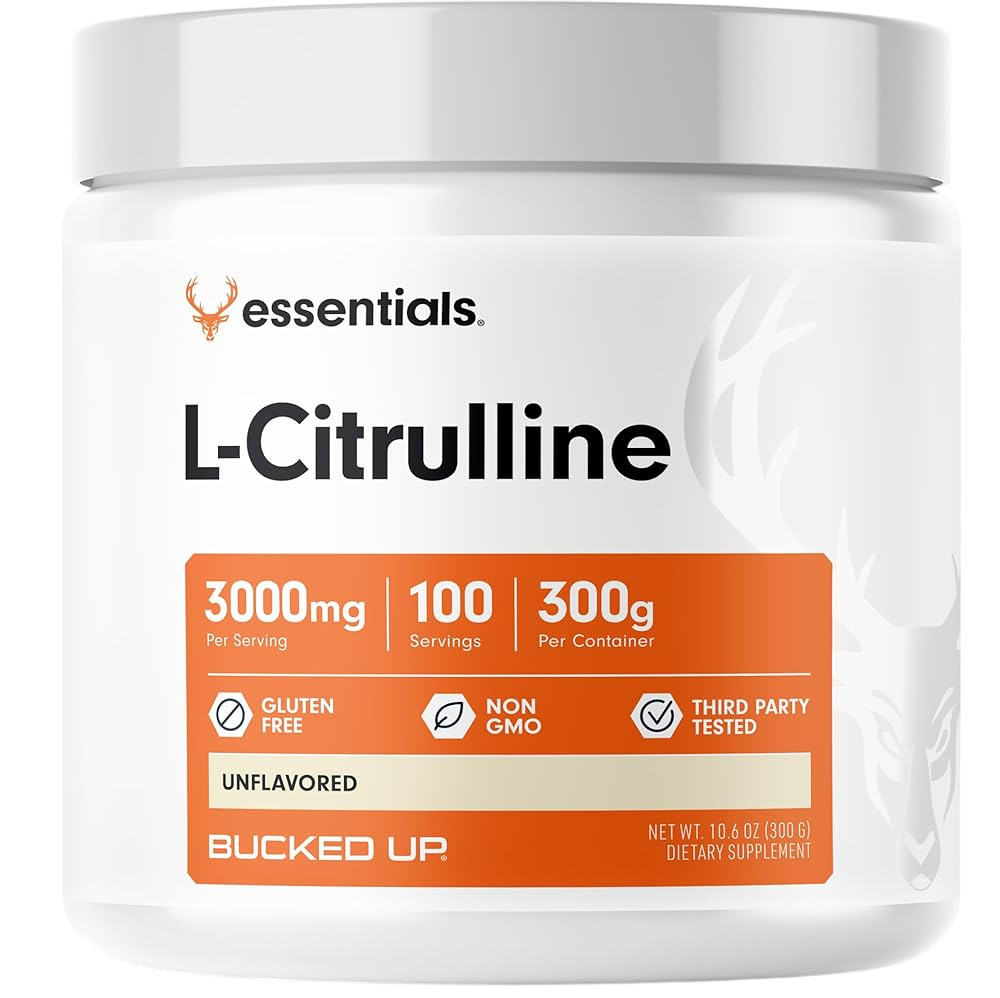
Bucked Up supports a science-informed approach to both ingredients, offering Citrulline Malate and Pure L-Citrulline at disclosed gram amounts. Find the L-Citrulline option that fits your training goals and supports your peak performance.
*These statements have not been evaluated by the Food and Drug Administration. This product is not intended to diagnose, treat, cure, or prevent any disease.
References
Bailey, S. J., et al. (2015). L-citrulline supplementation supports exercise tolerance and oxygen uptake kinetics during severe-intensity exercise. Journal of Applied Physiology. Retrieved from https://drstanfield.com/blogs/articles/l-citrulline-benefits-forms-dosing-and-side-effects
Lanhers, C., et al. (2024). Creatine supplementation and resistance training: A systematic review and meta-analysis. Retrieved from https://drkumardiscovery.com/posts/effects-creatine-supplementation-combined-resistance
1 The content provided in this article is for informational purposes only and is not medical advice. Consult with a medical professional before implementing any changes to your diet, health, or exercise routines. Individual results will vary and are based on a combination of each individual’s diet, exercise, age, and health circumstances. These statements have not been evaluated by the Food and Drug Administration. This product is not intended to diagnose, treat, cure or prevent any disease.
This article was written by Ryan Gardner, CEO of Bucked Up. As the maker of Bucked Up Protein Soda, we have a financial interest in this information. The views expressed are our own and should be read with that context in mind.