Written by: Ryan Gardner, Owner, Managing Partner, CEO, Bucked Up
Key Takeaways
-
L-Citrulline supports workout performance through nitric oxide production and ammonia clearance, so it can help serious trainers chasing better pumps and endurance.1*
-
High-quality L-Citrulline supplements clearly list exact doses on the label instead of hiding amounts inside proprietary blends.
-
Pure L-Citrulline delivers 100% active ingredient by weight, while Citrulline Malate needs larger servings to match the same citrulline content.
-
Daily supplementation around 6g of pure L-Citrulline shows more consistent benefits than single pre-workout doses alone, with peak plasma levels about one hour after ingestion.1
-
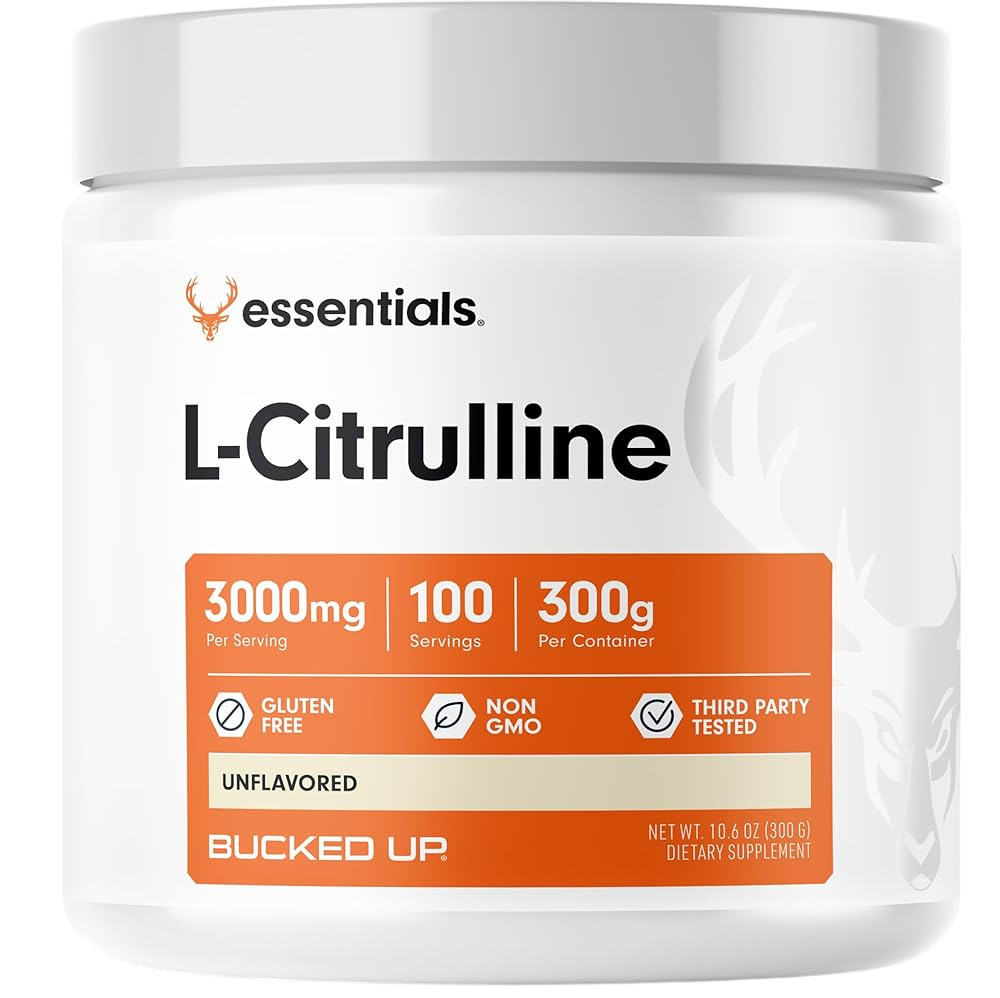
For transparent dosing and flexible stacking, explore Bucked Up’s standalone L-Citrulline powder as part of your training plan.
What L-Citrulline Is and Why Quality Makes a Difference
L-Citrulline is a non-essential alpha-amino acid produced naturally in the body, mainly in the intestines and liver, and found in foods like watermelon (Citrullus lanatus), cucumbers, and squash.
In sports nutrition, it plays a key role in nitric oxide synthesis and acts as an intermediate in the urea cycle. Hitting a performance-relevant dose from food alone would require roughly 2.2 to 3.3 lbs of watermelon per day, so supplementation becomes the practical choice for consistent trainers.
Quality matters because some supplements list L-Citrulline on the label without disclosing how much is actually present. This lack of transparency often appears as proprietary blends that make it hard to know whether a serving contains a studied dose or a trace amount.
For intermediate lifters who train regularly and care about the science behind their stack, this is why label transparency and dose disclosure serve as baseline criteria for any L-Citrulline product.
How L-Citrulline Supports Training, Endurance, and Recovery
L-Citrulline is studied primarily for its role in supporting workout volume, muscle endurance, and recovery from intense training.1* Research in resistance training shows that Citrulline Malate has been examined for its ability to support training volume and recovery from delayed onset muscle soreness (DOMS). Endurance athletes have also been studied, with trials looking at time-to-exhaustion and power output during cycling.
Recovery research connects these performance effects to L-Citrulline’s role in ammonia clearance, which can influence fatigue during hard sessions. This recovery angle ties directly into how L-Citrulline works through nitric oxide pathways and the urea cycle.
*These statements have not been evaluated by the Food and Drug Administration. This product is not intended to diagnose, treat, cure, or prevent any disease.
How L-Citrulline Works in the Body
Understanding how L-Citrulline produces performance effects starts with its impact on nitric oxide. L-Citrulline bypasses intestinal and liver first-pass metabolism via arginase, which supports a more efficient and sustained elevation of plasma arginine levels compared to direct L-arginine supplementation, and this in turn supports greater nitric oxide production.1*
The kidneys convert absorbed L-Citrulline into L-Arginine through two enzymes: argininosuccinate synthase (ASS) and argininosuccinate lyase (ASL). Elevated plasma L-Arginine then serves as substrate for nitric oxide synthase (NOS) enzymes, which produce nitric oxide, a gaseous signaling molecule that supports relaxation of vascular smooth muscle and vasodilation.*
The second key pathway is the urea cycle. L-Citrulline participates in ammonia detoxification as an intermediate in the urea cycle by helping convert toxic ammonia from amino acid catabolism into non-toxic urea for renal excretion, a mechanism that may support reduced fatigue during sustained exercise independent of nitric oxide pathways.*
Peak plasma concentrations typically occur about one hour after oral ingestion, which explains common pre-workout timing recommendations.
*These statements have not been evaluated by the Food and Drug Administration. This product is not intended to diagnose, treat, cure, or prevent any disease.
Forms and Delivery Options for L-Citrulline
L-Citrulline comes in three main delivery formats for athletes:
-
Standalone powder: Unflavored pure L-Citrulline powder offers maximum dosing flexibility. You can mix it into any beverage and stack it with other supplements, which suits trainers running custom protocols.
-
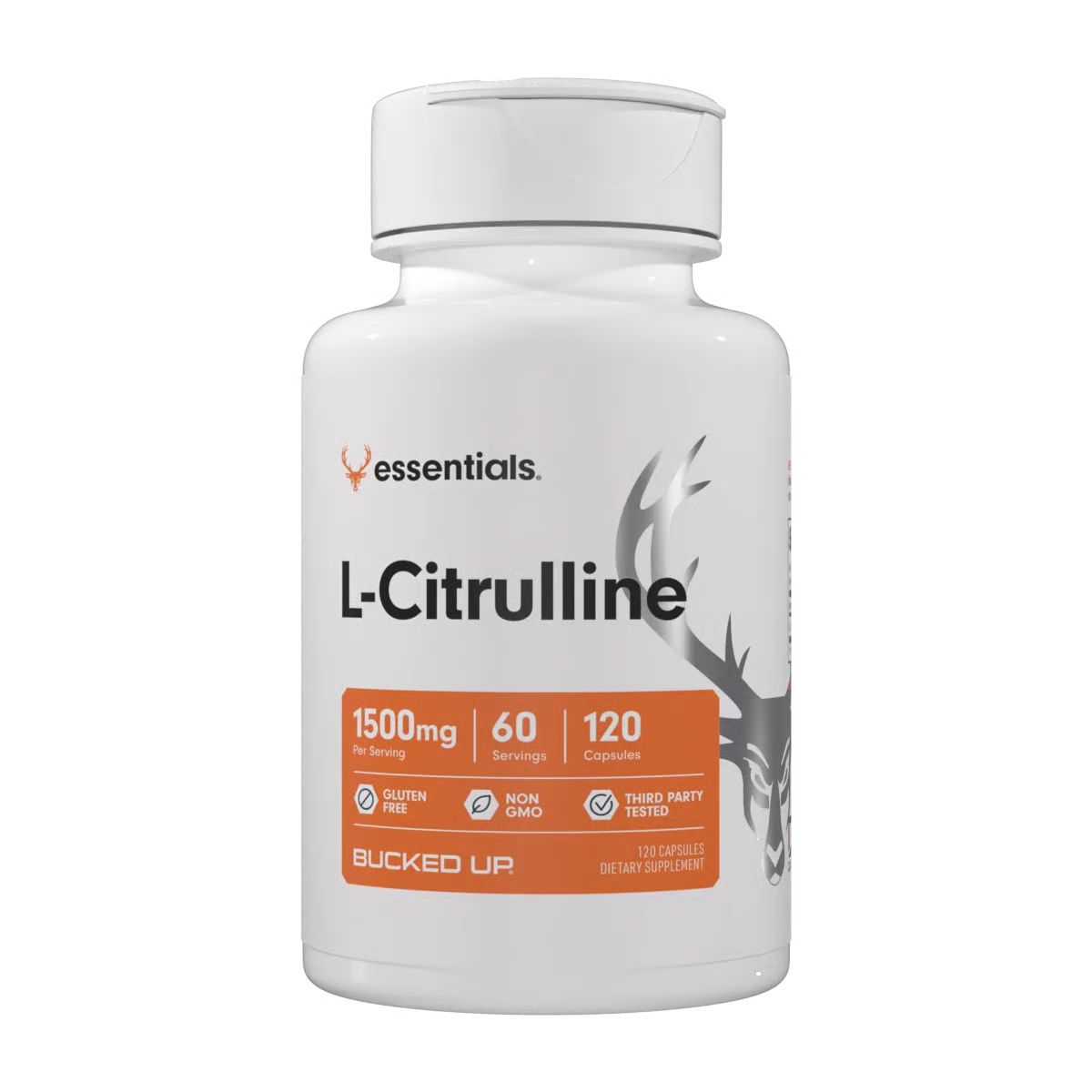
Capsules: Capsules provide convenience and precise dosing for users who want portability or prefer to add L-Citrulline to an existing stack without more powder.
-
Multi-ingredient pre-workout formulas: These combine L-Citrulline or Citrulline Malate with other performance ingredients. The key check here is whether the L-Citrulline dose appears clearly on the label instead of being hidden in a proprietary blend.
Bucked Up applies this clear-dosing approach across both standalone and pre-workout formats. After you decide which format fits your routine, you can explore Bucked Up’s L-Citrulline options to match your preferred delivery style.
Pure L-Citrulline Versus Citrulline Malate in Practice
Most supplement labels do not fully explain the difference between pure L-Citrulline and Citrulline Malate, yet the distinction affects dosing and value. Here is how the two forms compare:
-
Pure L-Citrulline delivers 100% L-Citrulline by weight, so a 3g scoop provides 3,000mg of active citrulline.
-
Citrulline Malate (2:1) combines L-Citrulline and Malic Acid in a 2:1 ratio. The actual L-Citrulline content is only part of the total Citrulline Malate weight, so you need a larger serving of Citrulline Malate to match the L-Citrulline dose from the pure form.
-
The Malate component (Malic Acid) is a Krebs Cycle intermediate theorized to support energy metabolism and lactate clearance. However, controlled studies, including a 2024 direct comparison of 43 resistance-trained adults, show no ergogenic advantage of Citrulline Malate over pure L-Citrulline when matched for citrulline dose.
-
Label disclosure matters: A product that lists “Citrulline Malate” without specifying the ratio or total grams makes it impossible to calculate the actual L-Citrulline content per serving.
-
Dose equivalence: More Citrulline Malate (2:1) by weight is required to deliver the same amount of L-Citrulline as the pure form, so serving size expectations should adjust accordingly.
Typical Usage Patterns and Smart Stacking
For acute performance support, L-Citrulline is often taken about 60 minutes before intense physical activity, which lines up with the roughly one-hour window to peak plasma concentration.
Multi-day supplementation of 6g per day of pure L-Citrulline for 7 days has shown benefits for exercise tolerance, while single pre-exercise doses have not produced consistent performance improvements in controlled trials. These findings suggest that daily use may support more reliable outcomes than workout-only dosing.
Beyond timing, many trainers combine L-Citrulline with complementary ingredients to target multiple performance pathways. Common stacking approaches pair L-Citrulline with Beta-Alanine for endurance support, with Nitrosigine® for additional blood flow support,* and with absorption agents like Astragin® to support bioavailability.*
Bucked Up’s Mother Bucker formula combines 4,000mg of Pure L-Citrulline with Nitrosigine® and Hydroprime® Glycerol for a multi-pathway approach to the pump.1*
*These statements have not been evaluated by the Food and Drug Administration. This product is not intended to diagnose, treat, cure, or prevent any disease.
Research-Supported Benefits and Realistic Expectations
The research base for L-Citrulline in exercise performance is substantial yet nuanced. Studies using 8g of Citrulline Malate have examined total repetitions to muscular failure across multiple sets in resistance training. Endurance-focused research has evaluated time-to-exhaustion and power output in cyclists, while recovery studies have tracked self-reported muscle soreness in the days after exercise.
Individual response varies across users. The National Institutes of Health Office of Dietary Supplements notes that evidence remains insufficient to set firm dosing recommendations for exercise performance with L-Citrulline, and results across trials are not uniform.
Training status, baseline diet, hydration, and overall supplement protocol all influence outcomes. A realistic approach treats L-Citrulline as one well-studied piece of a broader performance strategy rather than a standalone solution.
Who Gains the Most and Key Safety Points
Consistent trainers who focus on resistance training or high-intensity endurance work represent the main audience for L-Citrulline supplementation.
Studies on exercise performance have safely used 2 to 5 grams per day of L-Citrulline and 8 grams of Citrulline Malate with no reported side effects, and doses up to 6 grams per day for up to 4 weeks produced no adverse effects in nonathletes according to National Institutes of Health data.
Mild gastrointestinal symptoms such as nausea, bloating, and heartburn are the most commonly noted side effects, especially at higher single doses.
L-Citrulline supplementation should be avoided during pregnancy and breastfeeding because safety data remain limited. Anyone with these conditions should consult a healthcare provider before use.
Third-party testing and GMP-certified manufacturing provide meaningful quality signals. Bucked Up products are manufactured in GMP-certified facilities in the USA, which supports consistent production standards.
How to Evaluate High-Quality L-Citrulline Supplements
Choosing a high-quality L-Citrulline supplement for workout performance becomes easier when you apply clear criteria:
-
Disclosed dose: The label should state the exact grams of L-Citrulline or Citrulline Malate per serving, without hiding amounts in proprietary blends.
-
Form and ratio clarity: If Citrulline Malate appears on the label, the 2:1 ratio should be specified so you can calculate actual citrulline content.
-
Alignment with studied amounts: Some athletic protocols use up to 6 grams daily of L-Citrulline. Products that provide far less without context or explanation deserve extra scrutiny.
-
Absorption support: Astragin® is clinically studied to support citrulline absorption.* Its presence across a product line signals attention to bioavailability, not just label numbers.
-
Manufacturing standards: GMP-certified facilities help support consistent quality and safety in production.
-
Value per effective dose: Calculate cost per gram of actual L-Citrulline, factoring in the roughly 56.6% citrulline content of Citrulline Malate compared with 100% in the pure form.
Bucked Up’s standalone L-Citrulline Powder (300g) provides 3,000mg of Pure L-Citrulline per scoop with full label transparency. The pre-workout line discloses Citrulline Malate at 6,000mg (2:1) in Bucked Up, Woke AF, and Non-Stimulant Pre-Workout, and 4,000mg of Pure L-Citrulline in Mother Bucker, stacked with Nitrosigine® and Hydroprime® Glycerol.
To support bioavailability across these formulas, every product includes Astragin®.* This combination of disclosed doses, studied forms, and absorption support reflects Bucked Up’s science-informed approach to L-Citrulline supplementation. See how Bucked Up’s transparent labeling and studied doses line up with the criteria above.
*These statements have not been evaluated by the Food and Drug Administration. This product is not intended to diagnose, treat, cure, or prevent any disease.
Frequently Asked Questions
When should I take L-Citrulline for workout performance?
L-Citrulline is commonly taken about 60 minutes before intense physical activity, which matches the typical time to peak plasma concentration. As discussed in the usage section, the 60-minute pre-workout window remains standard, though some users split doses across the day when following daily supplementation protocols. Current evidence suggests that taking L-Citrulline with or without food does not significantly change absorption.
Can I take L-Citrulline every day, or only on training days?
Both daily and training-day-only approaches appear in research and real-world use. Daily supplementation at doses around 6g of pure L-Citrulline has been studied for exercise tolerance benefits over multi-day periods, which suggests consistent daily use may support outcomes beyond single pre-workout doses.
Workout-day-only use is also common, especially when L-Citrulline comes inside a pre-workout formula. Your choice depends on goals, budget, and whether you use a standalone product or a multi-ingredient formula, and you should consult your healthcare provider if you have underlying health conditions.
What is the difference between pure L-Citrulline and Citrulline Malate, and which should I choose?
Pure L-Citrulline delivers 100% citrulline by weight, which makes dosing straightforward for nitric oxide support and ammonia clearance. Citrulline Malate (2:1) combines L-Citrulline with Malic Acid, and the citrulline portion makes up about 56.6% of the total weight.
The Malic Acid component is theorized to support energy metabolism through the Krebs Cycle, yet controlled research has not shown a consistent ergogenic advantage of Citrulline Malate over pure L-Citrulline when matched for actual citrulline content.
In practice, many lifters use 6,000mg (2:1) Citrulline Malate in resistance-training settings, while pure L-Citrulline appeals to users who want more direct dosing control for stacking or higher-dose protocols.
Are there any interactions I should know about before taking L-Citrulline?
L-Citrulline may compound the effects of blood-pressure-lowering medications, nitrate medications, and PDE5 inhibitors because of additive vasodilatory effects. Individuals with severe kidney impairment, significant liver disease, or naturally low blood pressure should proceed carefully.
L-Citrulline should also be avoided during pregnancy and breastfeeding due to limited safety data. Anyone taking prescription medications or managing an existing health condition should talk with a healthcare provider before adding L-Citrulline to a supplement routine.
How do I know if an L-Citrulline supplement is high quality?
Start with label transparency. A high-quality product discloses the exact grams of L-Citrulline or Citrulline Malate per serving and lists the ratio if Citrulline Malate is used. Products that tuck L-Citrulline into a proprietary blend without a clear amount make it impossible to judge whether the dose matches studied ranges. Manufacturing in a GMP-certified facility adds another layer of quality assurance.
The inclusion of absorption-supporting ingredients like Astragin® signals attention to bioavailability, and calculating cost per gram of actual citrulline helps you compare value between pure L-Citrulline and Citrulline Malate.
Making Informed Choices for Your Training
High-quality L-Citrulline supplements for workout performance share several traits: disclosed doses, clear form identification, alignment with studied amounts, and manufacturing standards that support consistency. The science behind L-Citrulline, from its role in nitric oxide synthesis to its function in the urea cycle for ammonia clearance, gives informed buyers a practical framework for evaluating products.
No supplement replaces consistent training, solid nutrition, and recovery. L-Citrulline is a well-studied ingredient that, at appropriate doses and with transparent labeling, can play a meaningful role in a performance-focused supplement stack.
The pump it supports is more than aesthetic, because it reflects blood flow and nutrient delivery to working muscle.* When you understand the forms, check the label, and choose products that show their work, you can build a stack that matches your goals.
This dosing philosophy, outlined in the evaluation criteria above, guides how Bucked Up formulates its L-Citrulline products. Apply these criteria to Bucked Up’s transparent L-Citrulline lineup to see which option fits your training style.
*These statements have not been evaluated by the Food and Drug Administration. This product is not intended to diagnose, treat, cure, or prevent any disease.
References
Lefton, J. (2023). Citrulline: Benefits, Side Effects, Dosage, and Interactions. Verywell Health.
Stanfield, B. (2024). L-Citrulline: Benefits, Forms, Dosing, and Side Effects. Dr. Brad Stanfield.
Abe, Y. (2024). L-Citrulline Dosing and Safety. Ubie Health.
1 The content provided in this article is for informational purposes only and is not medical advice. Consult with a medical professional before implementing any changes to your diet, health, or exercise routines. Individual results will vary and are based on a combination of each individual’s diet, exercise, age, and health circumstances. These statements have not been evaluated by the Food and Drug Administration. This product is not intended to diagnose, treat, cure or prevent any disease.
This article was written by Ryan Gardner, CEO of Bucked Up. As the maker of Bucked Up Protein Soda, we have a financial interest in this information. The views expressed are our own and should be read with that context in mind.