Last updated: April 22, 2026
Key Takeaways: Citrulline vs Arginine for Pumps
- Citrulline generally outperforms arginine for bodybuilding pumps because it avoids heavy liver breakdown and sustains plasma arginine levels.1
- Research shows citrulline can increase reps in resistance training, reduce soreness by about 40%, and improve cycling endurance by 12%.1
- Arginine has roughly 20% absorption, can cause GI issues, and wears off quickly, while citrulline is usually well-tolerated up to 15 grams.1
- Effective pre-workout dosing often falls around 6–8 grams of citrulline malate or 3–6 grams of pure L-citrulline taken about 60 minutes before training.1
- Most lifters can skip arginine blends and use Bucked Up’s pure L-Citrulline for research-supported pumps and performance.1
How Arginine and Citrulline Work in Your Body
L-Arginine acts as a direct precursor to nitric oxide production but breaks down heavily in the gut and liver before it reaches your bloodstream. L-Citrulline, originally isolated from watermelon, follows a different metabolic route. Citrulline bypasses first-pass metabolism and converts to arginine in the kidneys, which supplies a steadier stream of material for nitric oxide synthesis.1 Citrulline supplements usually come as pure L-Citrulline, which is 100% active, or as Citrulline Malate, which combines citrulline with malic acid in a 2:1 ratio to potentially support ATP production and ammonia buffering.1
Arginine vs Citrulline: Mechanisms for Pumps and Performance
| Aspect | L-Arginine | L-Citrulline |
|---|---|---|
| Bioavailability | L-Arginine oral bioavailability is approximately 20% due to first-pass metabolism by enterocytes | Near 100% absorption |
| Peak Plasma Time | 30–60 minutes, short duration | 0.7–2 hours, sustained elevation |
| GI Tolerance | Can cause gastrointestinal issues such as diarrhea and nausea at higher doses | Well-tolerated up to 15 grams of L-citrulline over a maximum of 8 hours without side effects |
| Endurance Support | Minimal performance benefits | 12% improvement in cycling endurance |
Arginine delivers quick nitric oxide spikes but struggles with low oral bioavailability and more frequent gastrointestinal issues. Citrulline provides steadier nitric oxide support with better overall tolerance.1
These mechanistic differences show up clearly when researchers test pumps, strength, and endurance in controlled studies.1
Research on Pumps, Strength, and Endurance
Current research strongly favors citrulline for resistance training and pump-focused workouts. A landmark 2010 study with 41 men found that 8 grams of citrulline malate increased repetitions during lower-body resistance exercise and reduced muscle soreness by about 40% at 24–48 hours after training.1 Bailey et al.’s 2015 research showed that citrulline supplementation improved oxygen uptake kinetics and enhanced high-intensity exercise performance in trained cyclists, while arginine did not improve performance in similar settings.1
Romero et al.’s 2019 meta-analysis confirmed the “L-arginine paradox,” highlighting citrulline’s stronger ability to raise plasma arginine levels.1 More recent systematic reviews continue to support citrulline’s effectiveness for strength training performance, which positions it as a well-supported option for bodybuilders who want better pumps and endurance.1
Dialing In Citrulline Dosing and Timing
Effective citrulline dosing depends on the form you use and the results you want. For citrulline malate, research supports 6–8 grams taken about 60 minutes before training, which supplies roughly 3.4–4.5 grams of pure citrulline. Pure L-Citrulline usually requires about 3–6 grams to reach similar effects.1 Peak plasma concentrations appear within about 0.7–2 hours after ingestion, so pre-workout timing plays a key role in maximizing pump benefits.1
The 6-gram mark often acts as a practical threshold for noticeable pump effects in many lifters. Citrulline malate can also support endurance through malic acid’s role in energy metabolism.1 Gastrointestinal issues stay uncommon below 10 grams for most people, although anyone taking blood pressure medications should talk with a healthcare provider because citrulline can enhance vasodilation.1
Stacking Arginine and Citrulline: Is It Worth It?
Using arginine with citrulline usually adds little benefit because citrulline already raises plasma arginine more effectively.1 This overlap makes standalone citrulline supplementation more practical and often more budget-friendly. Advanced formulas such as Bucked Up’s Mother Bucker stack citrulline with Nitrosigine to support nitric oxide through multiple pathways without relying on arginine’s less reliable absorption.
Why Bucked Up’s Citrulline Formulas Appeal to Lifters
Bucked Up targets common pre-workout gaps through clear labeling and purposeful ingredient combinations. The foundational Bucked Up and Woke AF pre-workouts each include 6,000 mg of Citrulline Malate in a 2:1 ratio, which aligns with research-supported ranges for pump and endurance support.1 Mother Bucker builds on this approach with 4,000 mg of Pure L-Citrulline plus Nitrosigine and Hydroprime Glycerol, creating what the company describes as a “pump trifecta.”1
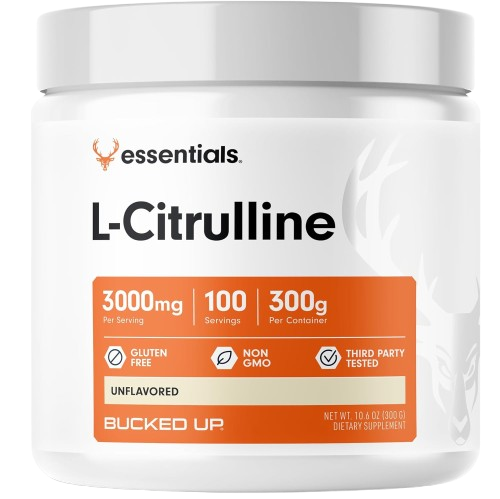
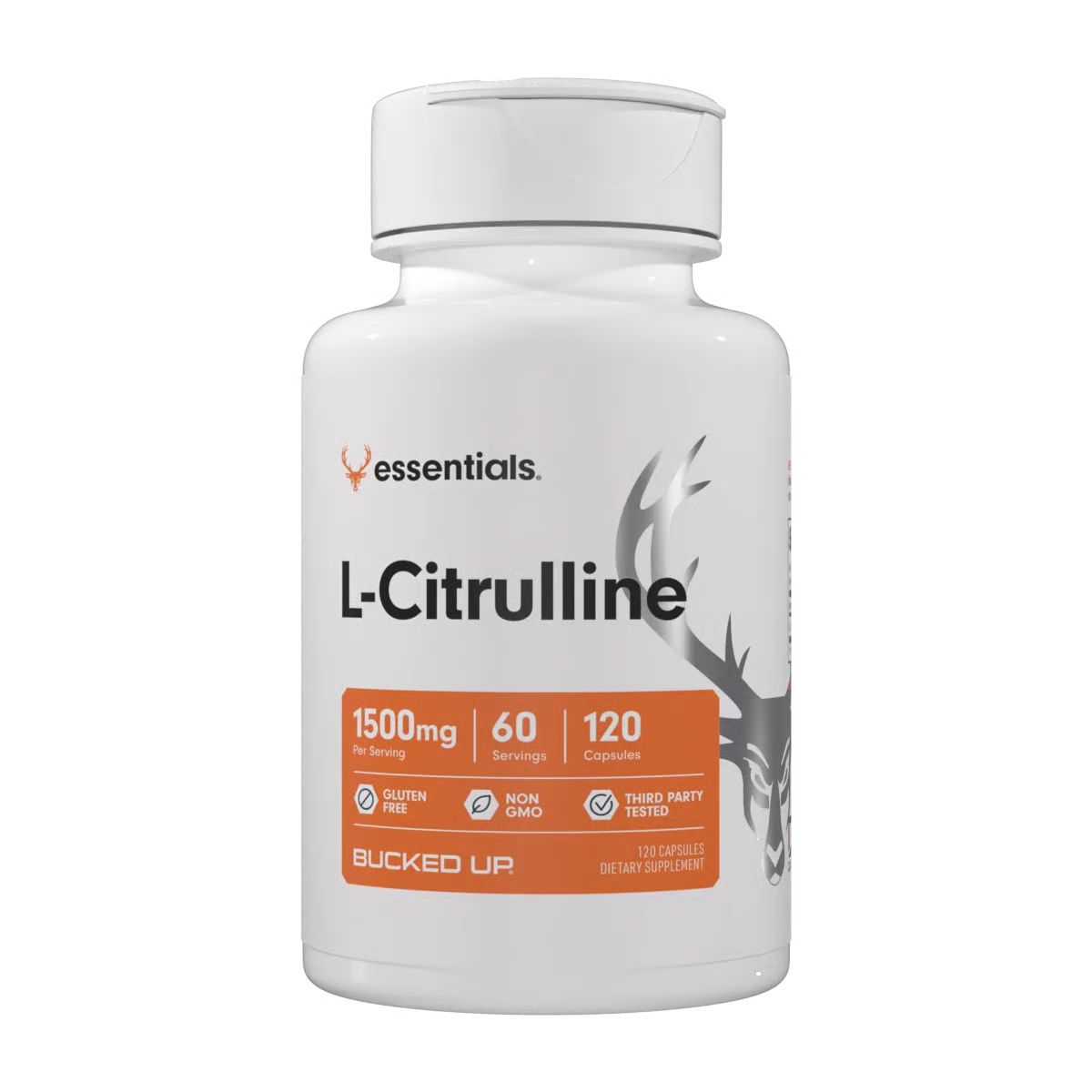
Each formula uses Astragin to support citrulline absorption, which helps address bioavailability concerns that can limit real-world results.1 The product line also covers a wide stimulant range: Bucked Up at 200 mg caffeine, Woke AF at 333 mg, and Mother Bucker at 400 mg. This spread lets you match your caffeine tolerance while keeping citrulline dosing consistent across products. If you prefer a simple approach, Bucked Up also offers both capsule and powder versions of pure L-Citrulline for standalone use.
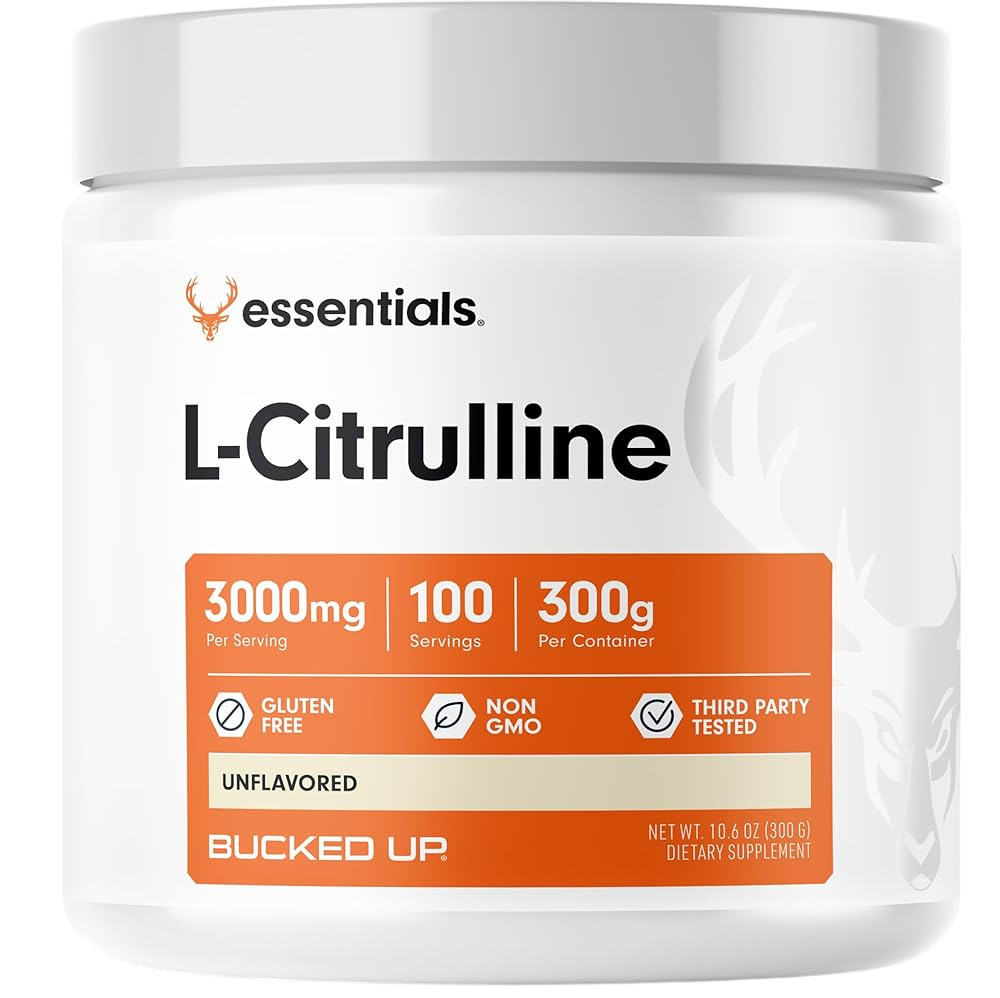
Bucked Up focuses on research-supported dosing of well-studied ingredients, including Citrulline Malate and Pure L-Citrulline. Explore Bucked Up’s L-Citrulline options to match your training goals.
Choosing the Right Citrulline Formula for Your Training
Different training goals pair better with specific citrulline setups. For maximum pump and visible vascularity, Mother Bucker’s multi-pathway nitric oxide support offers a comprehensive pump-focused formula.1 Endurance-minded athletes may lean toward the standard Bucked Up formula, which uses citrulline malate to support both pumps and sustained energy metabolism.1
Lifters who like higher stimulant levels can use Woke AF to maintain pump effects even when caffeine might otherwise narrow blood vessels.1 Those who avoid stimulants can choose the Non-Stim formula, which still supplies the full 6,000 mg citrulline malate dose for pump and performance support.1
Conclusion: Applying the Citrulline Research to Your Training
Current scientific evidence favors citrulline over arginine for bodybuilding pumps and performance.1 Stronger bioavailability, steadier nitric oxide production, and solid tolerability make citrulline a practical, research-backed option for serious lifters. With the formulations outlined above, you can choose the Bucked Up citrulline product that fits your stimulant preference, training style, and performance needs. Discover which Bucked Up citrulline formula fits your performance goals.
FAQ
Which is better for building muscle, citrulline or arginine?
Available research suggests citrulline may support muscle building more effectively than arginine because it reaches the bloodstream more reliably and sustains nitric oxide production longer.1 Studies show that citrulline avoids the liver breakdown that limits arginine’s impact and can provide roughly double the plasma arginine elevation for extended periods. This pattern can support stronger muscle pumps, better nutrient delivery, and improved training performance that all contribute to muscle growth over time.1
Does L-citrulline give you better pumps?
L-Citrulline often delivers more consistent pumps than arginine supplementation.1 Studies indicate that 6–8 grams of citrulline malate can significantly increase repetitions during resistance training while supporting muscle fullness and vascularity.1 The sustained nitric oxide production from citrulline’s kidney-based conversion to arginine helps maintain pump effects across longer training sessions, while arginine tends to produce shorter-lived spikes.1
Is it better to take L-arginine and L-citrulline together?
Taking arginine and citrulline together usually offers limited extra benefit because citrulline already raises arginine levels effectively through its metabolic pathway. The overlap makes the combination less efficient and often less cost-effective than using citrulline alone. Many advanced formulas instead pair citrulline with ingredients such as Nitrosigine or glycerol to support nitric oxide and cell hydration through complementary mechanisms.
How much citrulline is needed for a good pump?
Research points to about 6 grams of citrulline malate or roughly 3–4 grams of pure L-citrulline as a common threshold for noticeable pump effects.1 Most lifters take this dose about 60 minutes before training to line up with peak plasma concentrations. Higher intakes up to 8 grams of citrulline malate may support additional endurance, while doses above 10 grams rarely scale benefits and may increase the chance of mild gastrointestinal discomfort.
What are the main side effects of high-dose arginine versus citrulline?
Arginine can cause gastrointestinal issues such as diarrhea and nausea at higher doses because of its lower absorption and potential gut irritation. Citrulline is well-tolerated up to 15 grams of L-citrulline over a maximum of 8 hours without side effects,1 which makes it easier to use consistently. Both amino acids can interact with blood pressure medications, so anyone on those prescriptions should consult a medical professional before using high doses.1
1 The content provided in this article is for informational purposes only and is not medical advice. Consult with a medical professional before implementing any changes to your diet, health, or exercise routines.
Individual results will vary and are based on a combination of each individual’s diet, exercise, age, and health circumstances.
These statements have not been evaluated by the Food and Drug Administration. This product is not intended to diagnose, treat, cure or prevent any disease.
This article was written by Ryan Gardner, CEO of Bucked Up. As the maker of Bucked Up Protein Soda, we have a financial interest in this information. The views expressed are our own and should be read with that context in mind.