Last updated: April 22, 2026
Key Takeaways: How L-Citrulline Supports Blood Flow and Performance
- L-Citrulline converts to L-arginine in the kidneys, bypasses liver breakdown, and supports sustained nitric oxide production and vasodilation.1
- It can boost workout performance, with studies showing up to 53% more reps in resistance training and 12% longer endurance in cyclists.1
- Research shows higher sustained plasma arginine levels with L-Citrulline than with L-arginine, and many people report less GI discomfort at effective doses.1
- Effective ranges include 3-6g daily for circulation support and 6-8g Citrulline Malate pre-workout for pumps and recovery.1
- Bucked Up offers pure L-Citrulline and high-dose stacks that apply these research-backed ranges; shop L-Citrulline to start seeing results.1
The Step-by-Step Mechanism: How L-Citrulline Supports Nitric Oxide and Blood Flow
L-Citrulline supports blood flow through a clear four-step biochemical process.
1. Intestinal Absorption: L-Citrulline bypasses extensive first-pass metabolism that breaks down much of oral L-arginine in the gut and liver. This bypass allows more of the compound to reach systemic circulation.
2. Kidney Conversion: Absorbed L-Citrulline travels to the kidneys. There, argininosuccinate synthase and lyase enzymes convert it to L-arginine, which creates a more sustained release of this nitric oxide precursor.
3. Nitric Oxide Production: The kidney-derived L-arginine fuels endothelial nitric oxide synthase (eNOS) to produce nitric oxide. Peak plasma concentrations occur within 0.7-2 hours after ingestion.
4. Vasodilation and Enhanced Flow: Nitric oxide relaxes vascular smooth muscle cells. This relaxation widens blood vessels and supports oxygen and nutrient delivery to active tissues including skeletal muscle, cardiac muscle, and brain.
This mechanism explains why L-Citrulline produces 35% higher sustained plasma arginine concentrations compared to equal doses of direct L-arginine. These elevated arginine levels can translate into noticeable performance and circulation benefits.1
Key Benefits for Workouts, Endurance, Recovery, and Heart Health
L-Citrulline supplementation delivers measurable improvements across strength, endurance, recovery, and cardiovascular support in human trials.1
Resistance training performance and recovery often show the most dramatic changes. In one study, 8g Citrulline Malate increased total repetitions by up to 53% across multiple sets during resistance exercise.1 The same protocol reduced muscle soreness by 40% at 24-48 hours post-exercise, which suggests better recovery between sessions.1
Endurance athletes can see complementary benefits. L-Citrulline supplementation enabled cyclists to perform 12% longer before exhaustion and improved power output during time trials.1 Longer time to fatigue and higher power help support both training quality and race performance.
Recovery enhancement also appears through improved ammonia clearance and nutrient delivery.1 These effects support reduced delayed onset muscle soreness (DOMS) and help muscles feel fresher between hard efforts.
Beyond training, cardiovascular support extends into daily health. Doses of 6g or higher significantly reduced diastolic blood pressure in individuals with prehypertension and mild hypertension.1
Bucked Up’s formulations apply these benefits through precisely dosed L-Citrulline matrices. This approach helps align real-world products with the ranges used in research.
L-Citrulline vs. Arginine for Blood Flow: Why Citrulline Often Performs Better
The pharmacokinetic advantages of L-Citrulline over L-arginine come from clear differences in absorption and metabolism. This 35% arginine advantage stems from citrulline’s ability to bypass intestinal and hepatic breakdown.
L-Arginine faces immediate degradation by arginase enzymes in the digestive system. About 40% of dietary L-arginine can be degraded by the small intestine in first-pass metabolism in adults before it reaches systemic circulation. This process creates short-lived plasma spikes and often requires higher doses that can cause gastrointestinal distress for some people.
L-Citrulline avoids this limitation, appears fully in plasma, and provides a steadier conversion to arginine in the kidneys. Bucked Up’s 6g Citrulline Malate formulations in products like Bucked Up Pre-Workout and Woke AF, combined with AstraGin for absorption support, are designed to deliver consistent blood flow and pump effects.
Optimal Dosing, Timing, and Forms for Circulation and Performance
Effective L-Citrulline use depends on matching dose and timing to your specific goals.
| Form/Dose | Use Case | Bucked Up Example |
|---|---|---|
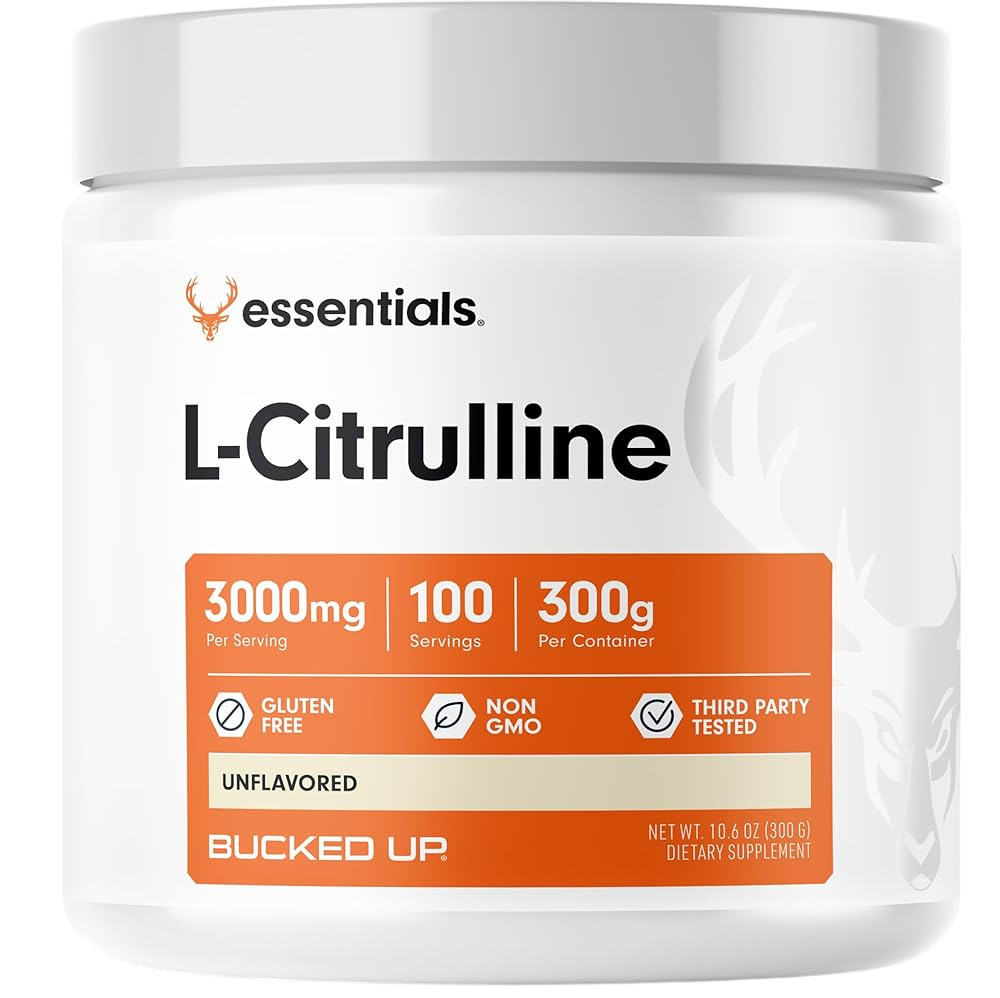
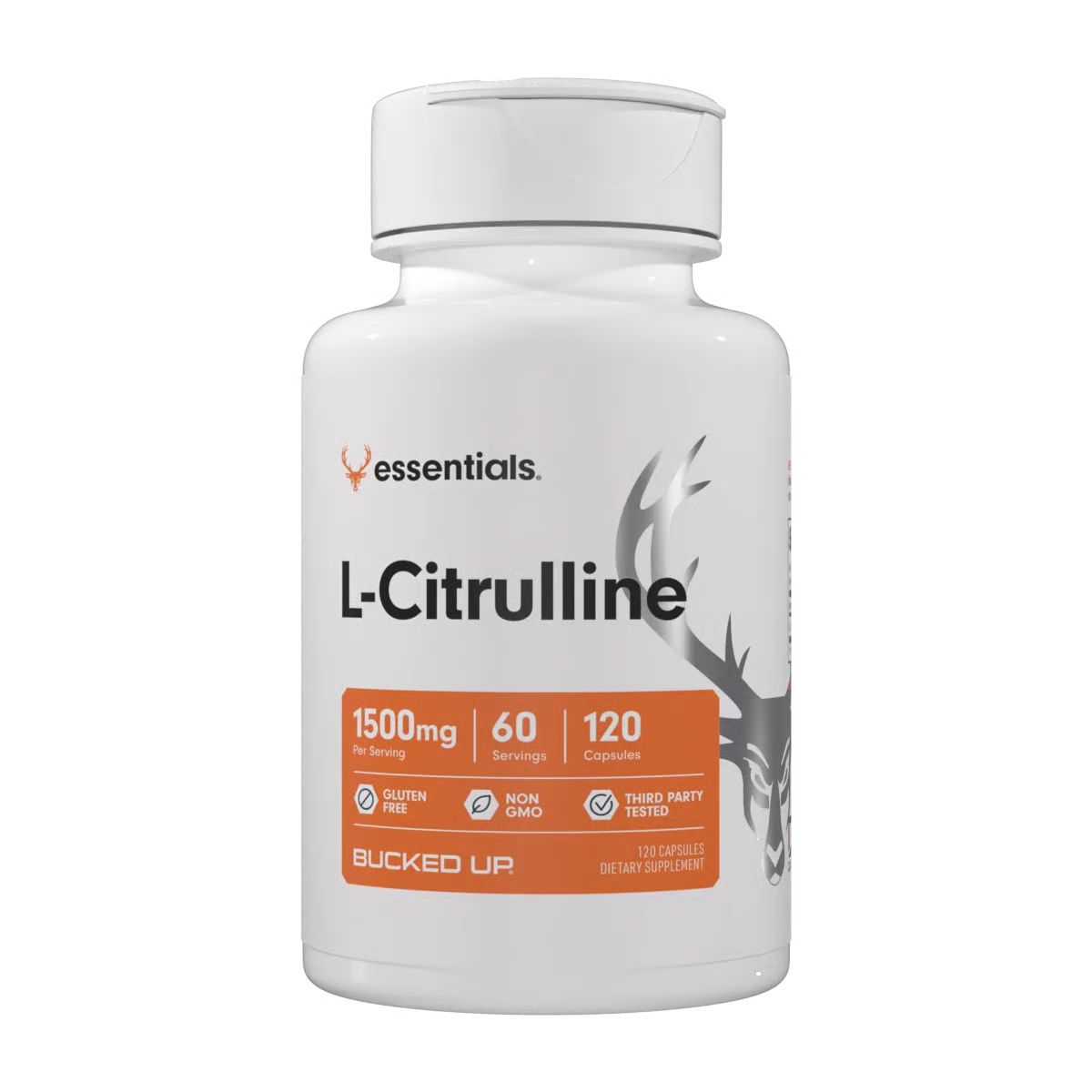
| 3-6g pure L-Citrulline daily | General circulation and heart health support | L-Citrulline Powder (3g/scoop), Capsules (1.5g/2 caps) |
| 6-8g Citrulline Malate 30-60min pre-workout | Workout pumps and performance support | Bucked Up / Woke AF / Non-Stim (6g each) |
Peak effects occur 1-2 hours after ingestion, so pre-workout timing plays a key role for exercise benefits.1 Pure L-Citrulline focuses on nitric oxide support, while Citrulline Malate also supplies malic acid, which participates in the Krebs Cycle and supports energy metabolism.
Bucked Up promotes research-aligned dosing of ingredients, including Citrulline Malate and pure L-Citrulline. You can explore Bucked Up’s L-Citrulline options and choose the format that fits your routine and training style.
Bucked Up’s L-Citrulline Stacks Compared with Competitors
Bucked Up focuses on transparent, high-dose L-Citrulline formulations that clearly list ingredient amounts. The foundational Bucked Up Pre-Workout provides 6g Citrulline Malate with AstraGin and Senactiv to support absorption and utilization, while some competitors can use proprietary blends that make it harder to see exact doses.
For advanced athletes, Mother Bucker combines 4g pure L-Citrulline with Nitrosigine and HydroPrime Glycerol to create a “Pump Trifecta” that targets vasodilation through multiple biological pathways.
This emphasis on label clarity and effective dosing contrasts with competitor products that may list L-Citrulline but include lower or undisclosed amounts.
Safety, Side Effects, and Who May Benefit Most
L-Citrulline shows strong safety and tolerability across clinical studies. One review reported no significant side effects at doses up to 15g daily for up to 9 months.1 Mild gastrointestinal effects can appear at very high single doses above 10g.1
People with low blood pressure, kidney disorders, or those taking antihypertensive medications, nitrates, or PDE5 inhibitors should talk with a healthcare provider before using L-Citrulline, since combined vasodilatory effects may be additive. L-Citrulline can be a useful option for pump-focused athletes, bodybuilders, and fitness enthusiasts who want consistent, research-backed performance support.1
Frequently Asked Questions
How long does L-Citrulline take to kick in?
L-Citrulline reaches peak plasma concentrations within 1-2 hours after ingestion. Many people notice changes in blood flow and muscle pumps starting around 30-60 minutes after taking it. For workout benefits, take L-Citrulline 30-60 minutes before training so peak levels align with your session.
How much L-Citrulline per day supports circulation?
For general circulation and heart health support, 3-6g of pure L-Citrulline daily often provides effective results in studies.1 For workout performance and stronger pumps, 6-8g of Citrulline Malate taken before exercise tends to deliver the most noticeable benefits.1 Doses above 10g have not shown clear added advantages and may increase the chance of mild digestive discomfort.
What are the circulation benefits of Citrulline Malate?
Citrulline Malate combines L-Citrulline’s nitric oxide support with malic acid’s role in energy metabolism. This pairing can enhance endurance performance, support reduced muscle soreness through improved ammonia clearance, and assist both blood flow and cellular energy production during intense exercise.1
L-Citrulline vs. arginine for blood flow: which often works better?
L-Citrulline often outperforms L-arginine for blood flow support because it bypasses first-pass liver metabolism that breaks down much of supplemental arginine.1 As noted earlier, citrulline’s 35% advantage in plasma arginine levels supports stronger and longer-lasting nitric oxide production compared with equal oral doses of arginine.
Can I stack L-Citrulline with other supplements?
L-Citrulline stacks well with absorption-support ingredients like AstraGin, performance compounds like Beta-Alanine, and advanced nitric oxide boosters like Nitrosigine. Bucked Up’s formulations showcase these stacking strategies by combining L-Citrulline with complementary ingredients that support absorption and overall performance while maintaining a focus on safety.
Conclusion: Putting L-Citrulline Research into Everyday Training
L-Citrulline supports blood flow and circulation through its conversion to L-arginine in the kidneys, which helps bypass several limitations seen with direct arginine supplementation. Research supports dosing protocols of 3-8g, depending on goals, with pre-workout timing playing a central role for exercise performance.
Bucked Up promotes research-aligned dosing of ingredients, including Citrulline Malate and pure L-Citrulline. You can explore Bucked Up’s citrulline formulations and select the option that fits your training goals, schedule, and preferred format.
1 The content provided in this article is for informational purposes only and is not medical advice. Consult with a medical professional before implementing any changes to your diet, health, or exercise routines.
Individual results will vary and are based on a combination of each individual’s diet, exercise, age, and health circumstances.
These statements have not been evaluated by the Food and Drug Administration. This product is not intended to diagnose, treat, cure or prevent any disease.
This article was written by Ryan Gardner, CEO of Bucked Up. As the maker of Bucked Up Protein Soda, we have a financial interest in this information. The views expressed are our own and should be read with that context in mind.