Last updated: April 22, 2026
Key Takeaways for L-Arginine vs L-Citrulline
- L-Citrulline has higher bioavailability than L-Arginine because it bypasses first-pass liver metabolism and supports sustained plasma arginine levels.1
- Studies show L-Citrulline can increase repetitions by up to 53% and reduce muscle soreness by about 40%, which supports higher training volume for hypertrophy.1
- Effective doses of L-Arginine often cause GI issues like nausea and bloating, while L-Citrulline is generally well tolerated up to 15g.1
- Research-supported dosing typically lands at 6-8g Citrulline Malate pre-workout for performance and 3-6g daily for recovery.1
- Choose Bucked Up L-Citrulline for clearly labeled, research-aligned dosing that can support muscle growth and training performance.1
How L-Arginine and L-Citrulline Work in Your Body
L-Arginine acts as a direct precursor to nitric oxide synthesis but runs into significant metabolic obstacles. The gastrointestinal tract metabolizes a substantial portion of ingested L-Arginine, while the liver metabolizes approximately 10% of gut-derived L-Arginine, which limits how much reaches systemic circulation.
L-Citrulline follows an indirect route. The body converts L-Citrulline to L-Arginine primarily in the kidneys through the urea cycle enzymes argininosuccinate synthase and argininosuccinate lyase. This pathway supports sustained arginine release and higher plasma levels over time. This kidney-based conversion bypasses the first-pass metabolism that limits L-Arginine’s effectiveness.
For muscle growth, both amino acids ultimately support nitric oxide production, which improves nutrient and oxygen delivery to working muscles.1 Their different metabolic pathways, however, create different outcomes for training performance and recovery.
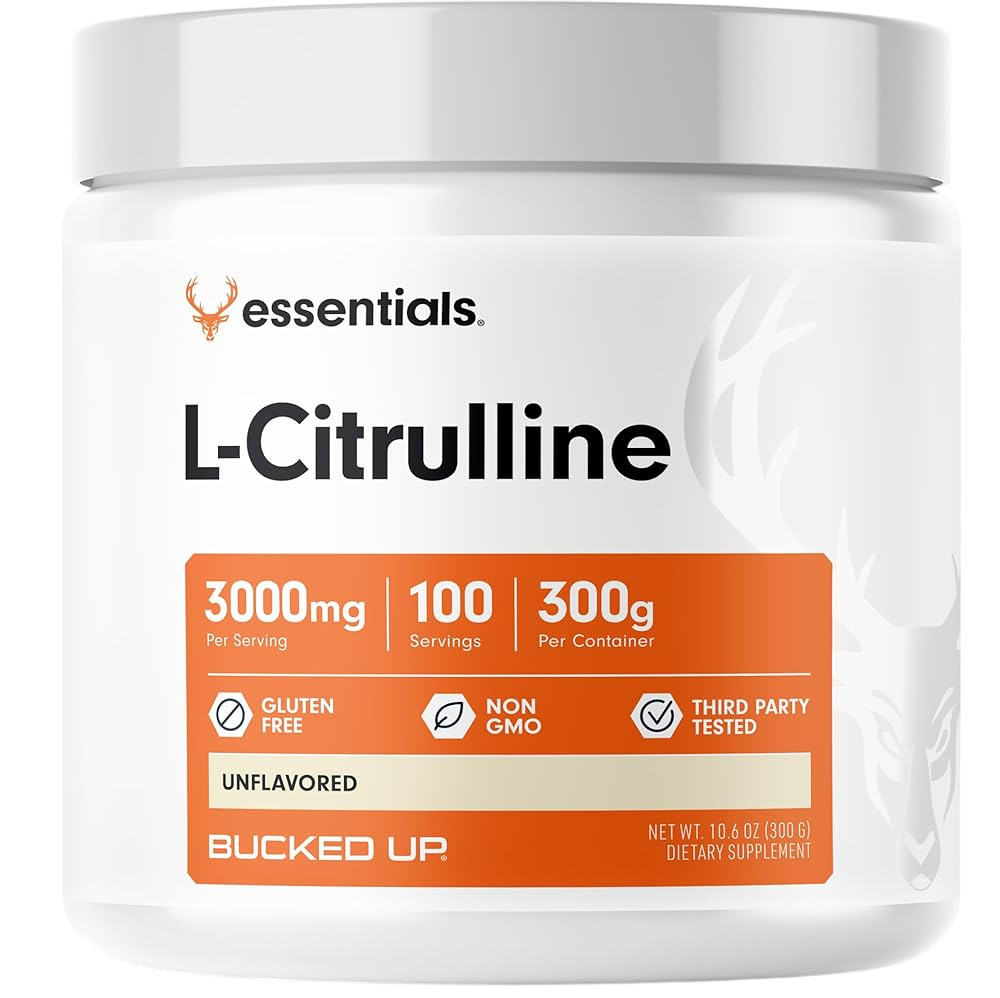
Ready to put this nitric-oxide pathway to work? Explore Bucked Up Citrulline Malate and pure L-Citrulline options built around these mechanisms.
Head-to-Head Comparison: L-Arginine vs L-Citrulline
The table below highlights how L-Arginine and L-Citrulline differ in bioavailability, performance impact, recovery support, and tolerability. Focus on how L-Citrulline’s higher systemic arginine levels connect with better training performance and fewer digestive issues at effective doses.1
| Criteria | L-Arginine | L-Citrulline |
|---|---|---|
| Bioavailability | Low systemic availability | High bioavailability |
| Plasma Arginine Increase | Rapid spike, short duration | Approximately twice as potent for raising plasma arginine |
| Performance Enhancement | Variable results in studies | +53% repetitions (8g citrulline malate) |
| Recovery Benefits | Limited evidence | 40% reduction in muscle soreness |
| Effective Dosage | Higher doses (with GI issues) | 6-8g citrulline malate |
| Side Effects | Nausea, abdominal pain, diarrhea, bloating | Well tolerated up to 15g with no GI side effects |
Muscle Growth Comparison: L-Arginine vs L-Citrulline
Current research suggests L-Citrulline can offer more consistent support for muscle growth than L-Arginine.1 Human studies indicate that L-Citrulline supplements raise plasma arginine levels more effectively than similar amounts (equimolar doses) of L-Arginine, creating a more sustained elevation that may support training adaptations.1
Performance findings from resistance and endurance studies reinforce this pattern. Pérez-Guisado and Jakeman’s 2010 study found that citrulline malate enhances athletic anaerobic performance by increasing bench press repetitions and relieving muscle soreness.1 That 2010 bench press trial is the source of the often-cited 53% repetition increase, which illustrates how higher training volume can translate into better hypertrophy potential over time.1
Endurance data point in a similar direction. Suzuki et al.’s 2016 double-blind randomized placebo-controlled study found that oral L-Citrulline supplementation enhances cycling time trial performance in healthy trained men.1 These findings suggest that L-Citrulline can support both strength-focused and endurance-focused training blocks.1
Why L-Citrulline Often Outperforms L-Arginine
The main difference comes from metabolic efficiency. L-Arginine undergoes first-pass metabolism in the gut and liver by the enzyme arginase, which leads to poor bioavailability, a rapid but short-lived plasma arginine spike, and frequent gastrointestinal side effects at performance doses of 10+ grams.1
In contrast, L-Citrulline follows the kidney conversion pathway described earlier. L-Citrulline bypasses intestinal and liver first-pass extraction by arginase, is converted to arginine primarily in the kidneys, and produces sustained elevations of plasma arginine and nitric oxide levels, with excellent tolerability up to 15 grams without gastrointestinal side effects.1 This metabolic advantage helps explain why L-Citrulline can maintain higher arginine levels for longer, while L-Arginine tends to create only brief spikes.
How L-Citrulline Can Help You Look and Train Bigger
L-Citrulline supports muscle growth indirectly by boosting training capacity and recovery.1 Higher repetition performance allows more total work per session, and greater training volume is a primary driver of hypertrophy.
This enhanced training capacity pairs with recovery benefits. The 40% reduction in muscle soreness seen in research means many lifters can return to heavy sessions sooner and maintain higher weekly volume. Over time, that pattern supports more muscle gain.1
Researchers have also explored L-Citrulline in populations that often struggle with training intensity. Studies in obese older adults show that L-Citrulline supplementation combined with HIIT can lead to greater increases in strength and reductions in fat mass.1 These findings reinforce the idea that better performance and recovery can support favorable body composition changes across different age groups and starting points.
Optimal L-Citrulline Dosing and Timing
For resistance training and muscle growth, research often supports 6-8g of Citrulline Malate taken 30-60 minutes before exercise.1 This range typically provides approximately 3.4-4.5g of pure L-Citrulline and aligns with the doses used in the bench press and soreness studies discussed earlier.
For daily use focused on recovery and general performance, 3-6g of pure L-Citrulline can provide steady benefits.1 This consistent intake helps maintain elevated plasma arginine levels, which supports blood flow, nutrient delivery, and training quality across the week.
The malate component in Citrulline Malate offers additional support for energy metabolism through its role in the Krebs cycle.1 Many lifters prefer Citrulline Malate pre-workout for performance, then use pure L-Citrulline for daily maintenance, depending on their routine and tolerance.
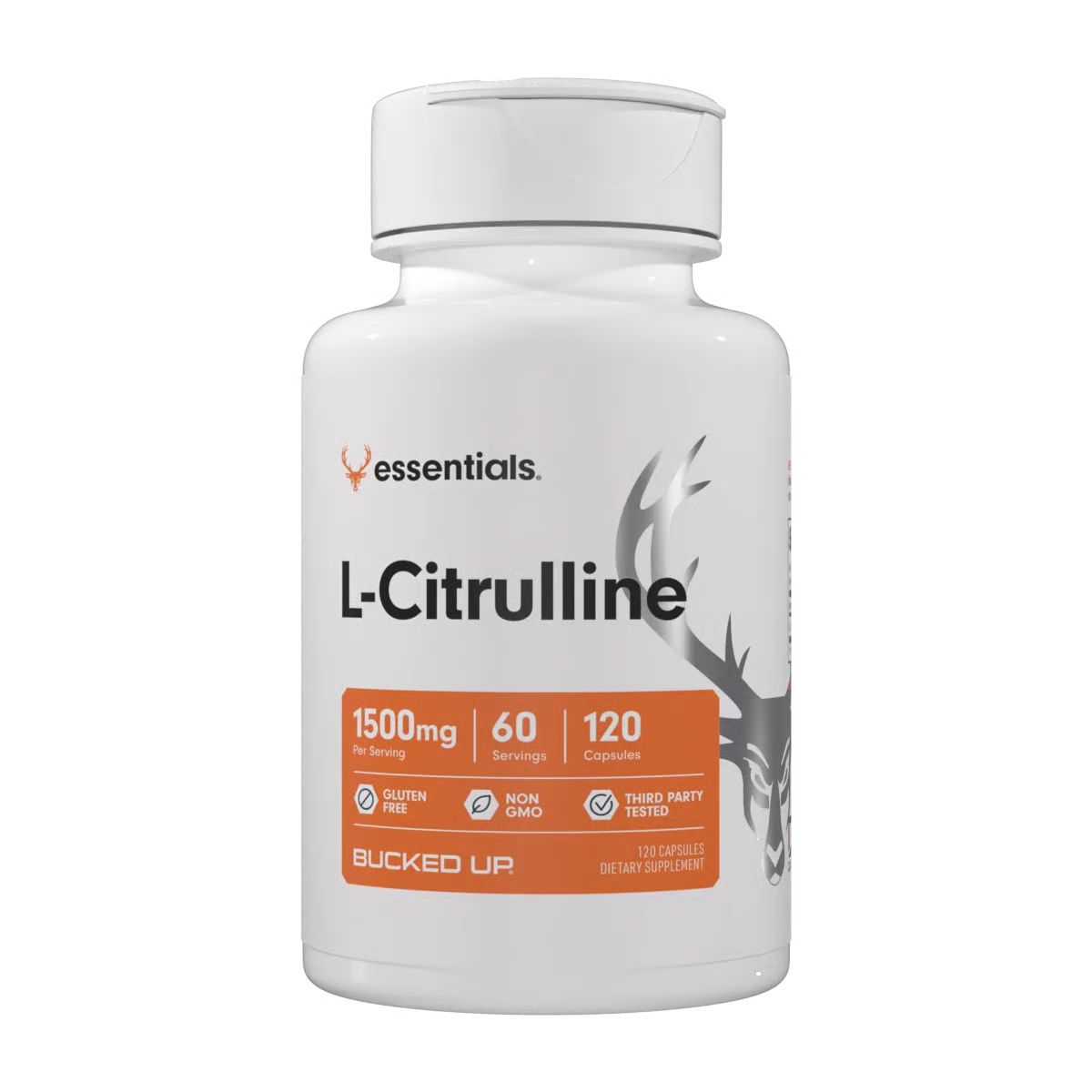
Bucked Up’s citrulline malate and pure L-Citrulline formulas are built around these research-supported ranges. Dial in your pre-workout and daily dosing with clearly labeled L-Citrulline options.
Safety and Tolerability: L-Arginine vs L-Citrulline
Available research suggests L-Citrulline often has a more favorable safety profile than L-Arginine at performance-focused doses.1 L-Arginine is more likely to cause gastrointestinal discomfort, bloating, or diarrhea at higher doses compared to L-Citrulline, which is generally better tolerated with fewer digestive side effects.1
Individuals with low blood pressure should approach both supplements carefully because of their vasodilatory effects.1 Caution is advised for individuals with severe kidney impairment, significant liver disease, hypotension, or those taking blood-pressure-lowering medications, PDE5 inhibitors, or nitrates. Discuss L-Citrulline or L-Arginine use with a healthcare professional if you fall into any of these groups.
Frequently Asked Questions
How does Citrulline Malate differ from pure L-Arginine?
Citrulline Malate combines L-Citrulline with malic acid in a 2:1 ratio, which supports both nitric oxide production and energy metabolism through the Krebs cycle.1 Pure L-Arginine acts as a direct nitric oxide precursor but has poor bioavailability and often causes digestive issues at doses used for performance.1
What dose of L-Citrulline supports muscle growth?
For muscle growth, 6-8g of Citrulline Malate taken 30-60 minutes pre-workout is a commonly used, research-aligned range.1 This amount delivers approximately 3.4-4.5g of pure L-Citrulline and adds the metabolic support of malic acid for sustained energy production during training.
Can I stack L-Citrulline with creatine?
Yes. L-Citrulline and creatine work through different mechanisms and pair well in many programs. Citrulline supports blood flow and endurance, while creatine supports power output and muscle volume.1 Many comprehensive pre-workout formulas include both ingredients for this reason.
Should I take L-Citrulline on rest days?
Daily L-Citrulline supplementation at 3-6g can support recovery and help maintain elevated plasma arginine levels.1 While rest-day use is not mandatory, consistent daily intake may provide cumulative benefits for muscle protein synthesis and recovery processes.
How long before I notice results from L-Citrulline?
Acute effects such as a stronger pump and improved endurance usually appear within 30-60 minutes of supplementation.1 Many lifters notice performance improvements in repetitions and soreness within 1-2 weeks of consistent use. Strength and visible muscle growth typically develop over 4-8 weeks of regular training with appropriate nutrition.1
Conclusion: When to Choose L-Citrulline Over L-Arginine
Current evidence suggests L-Citrulline can offer practical advantages over L-Arginine for muscle growth and performance.1 Its higher bioavailability, more sustained plasma arginine elevation, supportive performance data, and favorable tolerability profile make it a strong option for many lifters.
If you want to apply this research in your own training, look for products that clearly state their L-Citrulline and Citrulline Malate content. Bucked Up provides science-backed L-Citrulline and Citrulline Malate dosing so you can match your supplement routine to your muscle-building goals.
1 The content provided in this article is for informational purposes only and is not medical advice. Consult with a medical professional before implementing any changes to your diet, health, or exercise routines.
Individual results will vary and are based on a combination of each individual’s diet, exercise, age, and health circumstances.
These statements have not been evaluated by the Food and Drug Administration. This product is not intended to diagnose, treat, cure or prevent any disease.
This article was written by Ryan Gardner, CEO of Bucked Up. As the maker of Bucked Up Protein Soda, we have a financial interest in this information. The views expressed are our own and should be read with that context in mind.