Last updated: April 22, 2026
Key Takeaways
- Citrulline can boost performance with up to 53% more reps in resistance training, 12% longer cycling endurance, and 40% less muscle soreness.1
- It increases nitric oxide for better blood flow, clears ammonia to fight fatigue, and, in citrulline malate, supports ATP energy production.1
- L-citrulline delivers 100% pure citrulline for steady nitric oxide support, while citrulline malate (about 56% citrulline) adds extra energy support for power output.1
- Most athletes use 6-8g citrulline malate or 3-6g L-citrulline, taken 30-60 minutes before training for peak effects.1
- Bucked Up provides science-backed L-citrulline dosing for performance, so you can shop L-citrulline supplements that match your training goals.1
How Citrulline Fuels Performance and Endurance
L-citrulline supports performance through three main pathways.1 First, it converts to arginine and then nitric oxide, which relaxes blood vessel walls and improves oxygen and nutrient delivery to working muscles. This enhanced blood flow helps you sustain performance during intense training sessions.1
Second, citrulline speeds up ammonia clearance through the urea cycle. Ammonia buildup contributes to muscular fatigue. By clearing this byproduct more efficiently, citrulline helps your muscles maintain energy production during longer or harder efforts.1
Third, citrulline malate pairs citrulline with malic acid. In this form, the malate component supports the Krebs cycle for ATP production.1 This added energy support can matter most during efforts that demand both strength and endurance.
Research shows that citrulline supplementation can reduce blood lactate and ammonia concentrations.1 These changes target two major factors that limit exercise capacity and drive fatigue.
Study-Backed Citrulline Benefits for Strength and Endurance
Strength and power athletes see some of the clearest benefits from citrulline. A randomized controlled trial of 41 men reported that 8g of citrulline malate increased bench press repetitions by 53% and reduced muscle soreness by 40% at 24-48 hours post-exercise.1 Most of this performance boost appeared in the second half of the workout, when fatigue usually cuts into output.
Endurance results look more mixed and seem to depend on the sport. Cyclists taking L-citrulline showed a 12% longer time to exhaustion and improved power output during high-intensity cycling.1 At the same time, a 2023 meta-analysis of 9 randomized controlled trials found no significant improvement in overall endurance performance metrics. These findings suggest that citrulline may help more in high-intensity or power-endurance efforts than in steady-state aerobic work.
Water sports may also benefit from citrulline. A study of trained female kayakers found that 8g of citrulline malate reduced 1-km time trial completion times compared to no supplementation1, although the improvement was similar to the placebo response.
The resistance training research also showed meaningful reductions in delayed onset muscle soreness.1 Less soreness can help athletes maintain training intensity across back-to-back sessions.
L-Citrulline vs. Citrulline Malate for Training Goals
The choice between pure L-citrulline and citrulline malate depends on your training style and how you like to dose supplements. Citrulline malate typically contains about 56% actual citrulline by weight in a 2:1 ratio. A 6g serving of citrulline malate therefore provides roughly 3.4g of L-citrulline.
| Form | Citrulline Content | Performance Edge |
|---|---|---|
| Pure L-Citrulline | 100% (4g = 4g citrulline) | Steady nitric oxide support through kidney conversion1 |
| Citrulline Malate 2:1 | ~56% (6g = 3.4g citrulline) | Energy production support plus ammonia buffering1 |
Both forms show higher bioavailability than arginine supplementation.1 Citrulline avoids the heavy first-pass metabolism that limits arginine. Athletes who focus on sustained power output often favor citrulline malate for its added energy support, while those who want flexible dosing sometimes choose pure L-citrulline.
Dialing In L-Citrulline Dosage and Timing
Effective citrulline dosing depends on your sport and goals. Peak plasma levels appear about 0.7 to 2 hours after ingestion, so timing your dose before training matters.
| Activity | Dose/Form | Timing | Notes |
|---|---|---|---|
| Weight Training | 6-8g Citrulline Malate | 30-60min pre-workout | Supported for higher repetition performance1 |
| Endurance Sports | 3-6g Pure L-Citrulline | About 60min pre-exercise | Daily use may offer added benefits |
Food alone rarely provides enough citrulline for performance effects. Watermelon is the richest natural source, yet you would need about 2.2-3.3 lbs per day to reach just 3g of citrulline. Most athletes find supplementation more practical when they want consistent performance support.
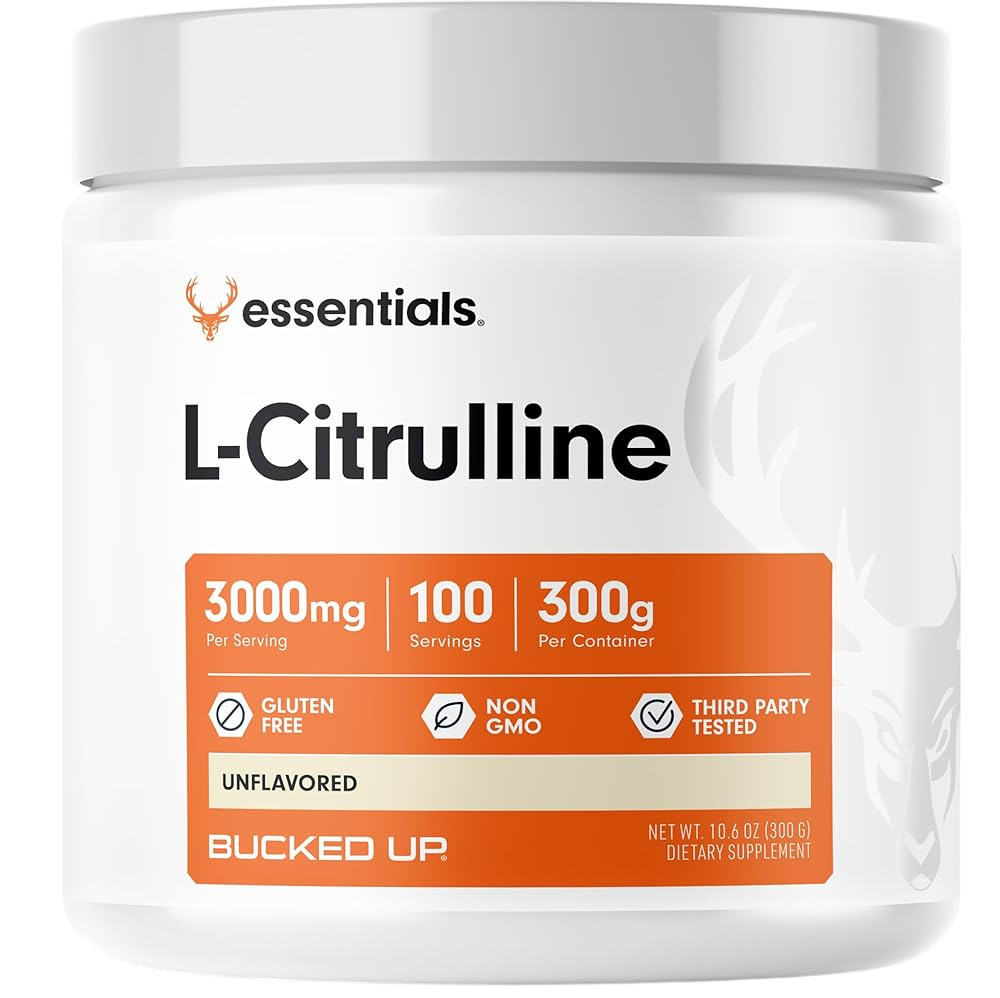
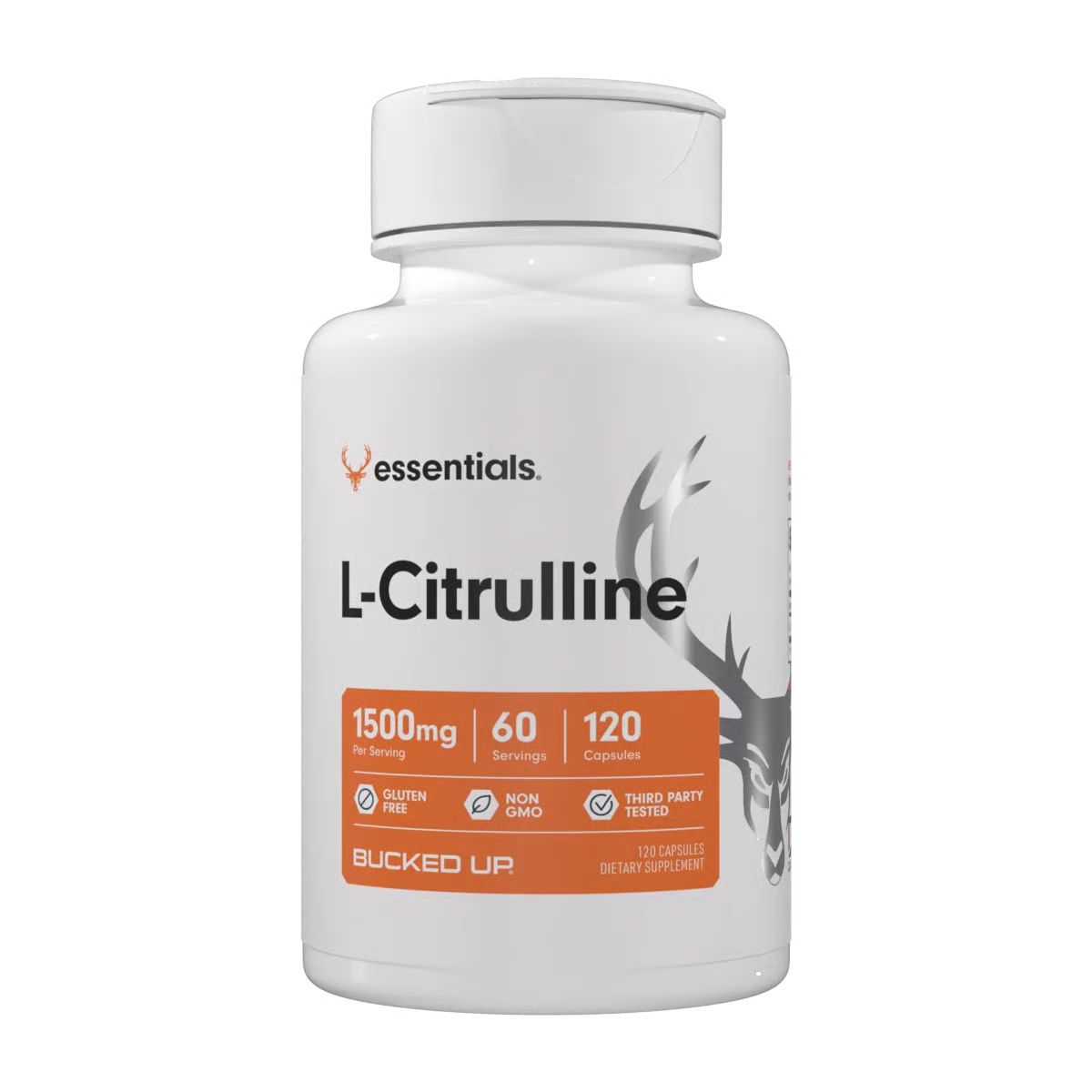
Bucked Up includes effective doses of research-backed ingredients, such as Citrulline Malate and pure L-Citrulline. You can explore dosing options that match your training goals and choose the format that fits your routine.
Bucked Up L-Citrulline Compared to Other Pre-Workouts
Bucked Up products highlight transparent dosing and research-informed formulations. The Bucked Up Pre-Workout provides 6g of citrulline malate in a 2:1 ratio. Woke AF keeps the same citrulline malate dose while increasing stimulant content. For more advanced users, Mother Bucker combines 4g of pure L-citrulline with Nitrosigine® and Hydroprime® glycerol.
AstraGin® appears across several Bucked Up formulas to support ingredient absorption.1 This ingredient helps improve citrulline uptake, so the amount on the label more closely reflects what your body can use.1 Some competitors can use proprietary blends that make it harder to see exact ingredient amounts.
Clear labeling helps you understand what you are taking and adjust your total daily citrulline intake based on how your body responds.
L-Citrulline Safety, Side Effects, and Who Should Be Cautious
L-citrulline shows a strong safety record in healthy adults at commonly used doses. Some people notice mild gastrointestinal discomfort with single servings above about 6-8g.1 Splitting the dose or slightly reducing it often resolves these issues.
People with naturally low blood pressure should be cautious, because citrulline’s vasodilating effect can potentially worsen hypotension.1 Anyone using blood pressure medications or erectile dysfunction drugs should speak with a healthcare professional before adding citrulline, since combined effects may lower blood pressure further.
Kidney function concerns mainly apply to people with existing renal conditions, because citrulline metabolism occurs in the kidneys. Healthy adults using standard doses generally do not show signs of kidney stress in the research.
FAQ
Is L-citrulline good for endurance athletes?
L-citrulline can support endurance athletes by improving blood flow and helping clear ammonia.1 Studies report mixed results for pure endurance outcomes, yet cyclists in one trial experienced a 12% longer time to exhaustion with supplementation. The benefits may stand out more in events that require sustained power rather than only steady aerobic output.
How much citrulline per day for athletes?
Athletes commonly use 6-8g of citrulline malate or 3-6g of pure L-citrulline per day. For short-term performance support, many take the full amount 30-60 minutes before training. Some athletes split their intake into two or more servings to maintain steadier levels, especially when using pure L-citrulline for general circulation or wellness support.
Why do athletes take citrulline?
Athletes turn to citrulline to increase training volume, reduce fatigue, and support faster recovery.1 The supplement boosts nitric oxide production for better blood flow and nutrient delivery. It also supports ammonia removal, which can delay the point at which muscles feel exhausted. Together, these effects can mean more reps, longer sessions, and less soreness the next day.
What are citrulline malate benefits?
Citrulline malate combines nitric oxide support with added energy production help.1 The citrulline portion promotes vasodilation and ammonia clearance, while malic acid supports ATP production through the Krebs cycle. This combination can work well for athletes who want both a strong pump and the ability to sustain high-intensity efforts.
How long does citrulline take to kick in?
Citrulline usually reaches peak levels in the blood within about 60-120 minutes after you take it. For most pre-workout routines, taking citrulline 30-60 minutes before training provides noticeable effects during the session. Many users first notice a stronger pump and a delay in fatigue as their main early benefits.1
Conclusion
Citrulline supplementation offers documented benefits for strength, power, and muscular endurance.1 Research supports its role in increasing training volume and easing recovery, especially in resistance training settings.1 Both pure L-citrulline and citrulline malate show higher bioavailability than arginine, so they can provide a more reliable way to support nitric oxide levels.
Bucked Up features effective doses of research-backed citrulline forms, including Citrulline Malate and pure L-Citrulline. You can start your performance optimization journey by choosing the product that aligns with your training style and goals.
1 The content provided in this article is for informational purposes only and is not medical advice. Consult with a medical professional before implementing any changes to your diet, health, or exercise routines.
Individual results will vary and are based on a combination of each individual’s diet, exercise, age, and health circumstances.
These statements have not been evaluated by the Food and Drug Administration. This product is not intended to diagnose, treat, cure or prevent any disease.
This article was written by Ryan Gardner, CEO of Bucked Up. As the maker of Bucked Up Protein Soda, we have a financial interest in this information. The views expressed are our own and should be read with that context in mind.