Last updated: April 22, 2026
Key Takeaways: L-Citrulline, Pumps, and Performance
- L-Citrulline outperforms L-Arginine for nitric oxide production by avoiding heavy first-pass breakdown and converting to L-Arginine in the kidneys for steadier levels.1
- Citrulline Malate in a 2:1 ratio pairs nitric oxide support with malic acid, which supports energy metabolism and can reduce muscle soreness.1
- Most lifters see strong results with 6–8g Citrulline Malate or 3–6g pure L-Citrulline, taken 30–60 minutes before training.1
- Research links effective L-Citrulline use to up to 53% more reps, 40% less soreness, and better endurance in the gym.1
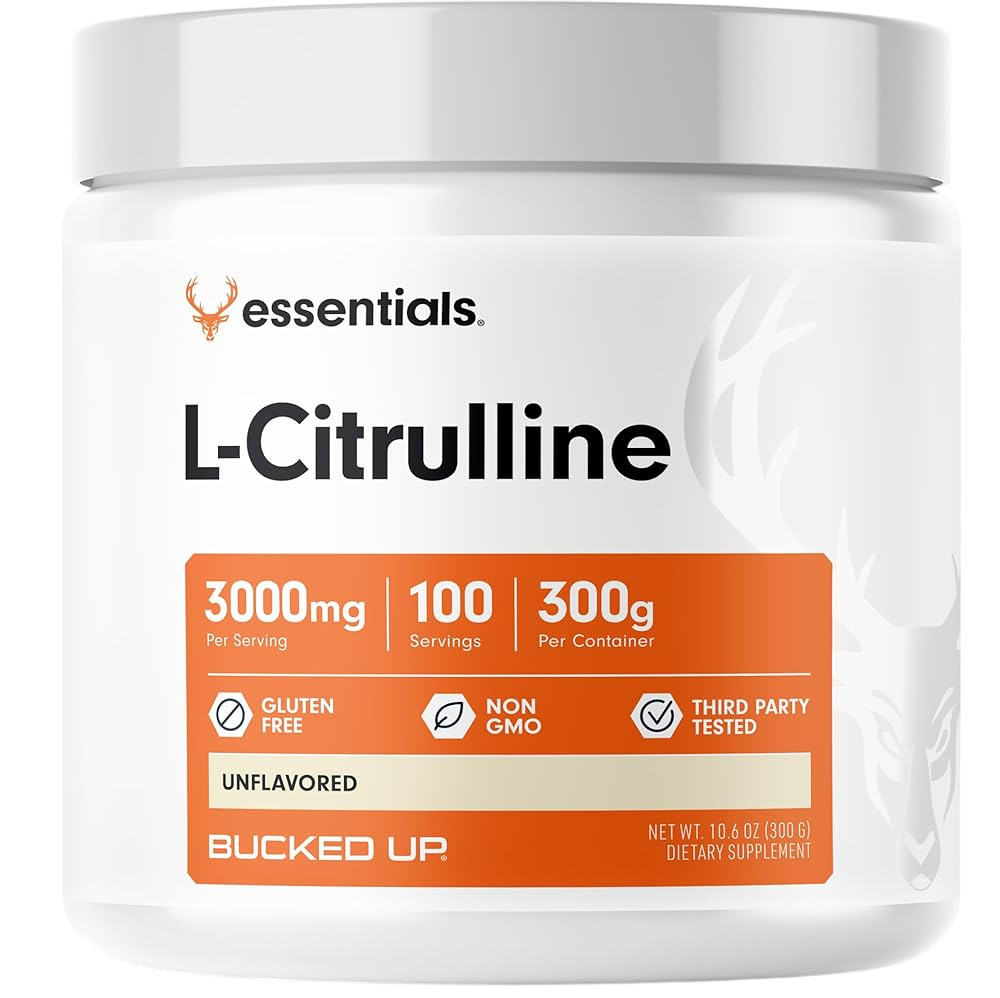
- You can test these nitric oxide benefits yourself with Bucked Up’s pure L-Citrulline, which provides a straightforward way to dial in your dose.1
Step 1: Why Nitric Oxide From Amino Acids Matters for Lifters
Nitric oxide acts as a signaling molecule that relaxes blood vessels and increases vasodilation. This response improves oxygen and nutrient delivery to working muscles during training. Key amino acids for nitric oxide production include L-Citrulline, which converts to L-Arginine in the kidneys, and Citrulline Malate, which combines L-Citrulline with malic acid in a 2:1 ratio to support energy production through the Krebs cycle.1
L-Arginine serves as the direct substrate for nitric oxide synthase enzymes, yet oral L-Arginine runs into major limits because of extensive first-pass metabolism. Taurine supports nitric oxide indirectly by helping upregulate endothelial nitric oxide synthase. Always talk with a healthcare professional before starting any supplementation protocol, especially if you have cardiovascular conditions or take medications. These statements have not been evaluated by the Food and Drug Administration, and these products are not intended to diagnose, treat, cure, or prevent any disease.
Step 2: How L-Citrulline Drives Nitric Oxide Production
The nitric oxide pathway through L-Citrulline follows a clear sequence that favors lifters.
1. Ingestion and Absorption: L-Citrulline absorbs intact through the small intestine without significant degradation.
2. Hepatic Bypass: Unlike L-Arginine, L-Citrulline avoids first-pass metabolism in the liver and gut, so more reaches circulation.
3. Renal Conversion: The kidneys convert L-Citrulline to L-Arginine through argininosuccinate synthase and lyase enzymes.
4. Sustained Substrate Availability: This pathway produces 2–3 times higher plasma arginine levels compared to direct L-Arginine supplementation.
5. Nitric Oxide Production: Elevated L-Arginine then serves as substrate for nitric oxide synthase enzymes, which supports sustained nitric oxide output.
The contrast with L-Arginine is significant. Approximately 70% of supplemental L-Arginine undergoes first-pass splanchnic extraction, which limits its impact on circulation. Citrulline Malate adds malic acid that supports ammonia detoxification and energy production.1 Recent research highlights strong performance outcomes, as studies show up to 53% more repetitions to failure, 40% less muscle soreness, and a 12% improvement in endurance performance.1
Step 3: L-Citrulline vs L-Arginine in Pre-Workouts
The pharmacokinetic profiles of these amino acids explain why many lifters favor L-Citrulline. L-Citrulline largely avoids presystemic elimination via intestinal arginase, while L-Arginine experiences heavy degradation before it reaches systemic circulation. This “L-arginine paradox” means direct arginine intake often fails to raise nitric oxide reliably, even though it is the direct substrate.
L-Citrulline creates a slower, longer-lasting rise in plasma arginine levels. Bailey et al. reported that L-Citrulline supplementation improves oxygen uptake kinetics and high-intensity exercise performance1, while L-Arginine did not show the same benefits. The renal conversion pathway supports steady nitric oxide substrate availability and tends to avoid the gastrointestinal discomfort that can appear with high-dose L-Arginine.
Given these advantages, effective pre-workout formulas often prioritize L-Citrulline over L-Arginine. Bucked Up applies this research with transparent dosing: 6g Citrulline Malate in Bucked Up and Woke AF pre-workouts, plus 4g pure L-Citrulline combined with Nitrosigine in Mother Bucker. AstraGin appears in these formulas to support absorption and help you use every gram listed on the label.1
Step 4: Dosing and Timing Blueprint for L-Citrulline
Clear dosing and timing help you get the most from L-Citrulline. For Citrulline Malate in a 2:1 ratio, 6–8g typically provides about 3.4–4.5g of pure L-Citrulline. Pure L-Citrulline doses usually range from 3–6g for general performance support, with some athletic protocols using higher amounts.1
Timing plays a major role. Take L-Citrulline 30–60 minutes before training to allow for absorption and renal conversion. Pharmacokinetic data show that a single 3g dose can raise plasma L-Arginine by 40–50% within 1–2 hours.1 New users can start around 3g and gauge tolerance, while more advanced lifters may stack L-Citrulline with glycerol or Nitrosigine for a stronger pump effect.1
Bodyweight in the 150–200 lbs range can influence fine-tuning, although the renal conversion pathway remains fairly consistent. Bucked Up offers several options. Bucked Up Pre supplies 6g Citrulline Malate with AstraGin and Beta-Alanine for balanced performance support. Mother Bucker focuses on a “Pump Trifecta” with 4g pure L-Citrulline, Nitrosigine, and Hydroprime Glycerol for lifters chasing advanced hypertrophy goals. Bucked Up also provides standalone Citrulline options so you can match your dose to your training plan.
Step 5: Choosing Forms and Solving Common L-Citrulline Issues
Your choice between pure L-Citrulline and Citrulline Malate should match your goals. Pure L-Citrulline focuses on maximizing nitric oxide substrate per gram. Citrulline Malate adds malic acid, which supports energy metabolism and ammonia buffering.1 A 2:1 ratio in quality Citrulline Malate products helps balance these effects.
Many issues trace back to a few common factors. Gastrointestinal discomfort can appear at higher doses, and splitting the dose or taking it with food often helps. If you tolerate the supplement but see little benefit, underdosing usually sits at the root of the problem, so check that labels show at least 6g of Citrulline Malate or 3g or more of pure L-Citrulline. Even with correct dosing, poor absorption can blunt results, which is why ingredients like AstraGin matter for improving utilization and addressing bioavailability gaps.
Hydration also becomes more important with L-Citrulline because increased vasodilation affects fluid distribution.1 If solid hydration does not resolve issues such as headaches or weak pumps, you may need to adjust timing, and some users respond better to a 60–90 minute pre-exercise window. Stop use and speak with a healthcare professional if headaches, dizziness, or lightheadedness persist, especially if you have naturally low blood pressure or use antihypertensive medications or PDE5 inhibitors.
Step 6: Measuring Results and Building Bucked Up Stacks
Tracking specific metrics helps you judge L-Citrulline effectiveness within 1–2 weeks. Look for more reps before failure, lower perceived exertion during working sets, fuller muscles during training, and shorter recovery time between exercises.1 Many lifters also notice increased vascularity after 7–14 days of consistent use.1
Stack design can then refine these results. Woke AF pairs 6g Citrulline Malate with 333mg caffeine for high-intensity endurance work, which can help counter stimulant-related vasoconstriction. Mother Bucker focuses on hypertrophy by combining several vasodilation pathways in its Pump Trifecta. Some lifters rotate phases that emphasize pure L-Citrulline for maximum nitric oxide focus with phases that emphasize Citrulline Malate for added energy support.
Additional stack ingredients can target specific needs. Glycerol supports cellular hydration and pump volume, while Nitrosigine offers another route for arginine pathway support. Transparent labels and clearly stated doses help you build these stacks with confidence, rather than relying on proprietary blends that hide actual amounts. Bucked Up’s open-label L-Citrulline and Citrulline Malate formulas give you a straightforward starting point for these research-backed combinations.
Frequently Asked Questions
Do amino acids boost nitric oxide production?
Specific amino acids play direct and indirect roles in nitric oxide synthesis. L-Citrulline converts to L-Arginine in the kidneys and supplies a steady substrate for nitric oxide synthase enzymes, which often works better than direct L-Arginine intake because of improved absorption and bioavailability. Taurine supports this system by helping upregulate endothelial nitric oxide synthase, while other amino acids contribute in smaller supporting roles across the nitric oxide pathway.
Which pre-workout ingredients increase nitric oxide most effectively?
L-Citrulline and Citrulline Malate rank among the most effective nitric oxide boosters in many pre-workout formulas.1 L-Citrulline avoids heavy first-pass metabolism and supports sustained L-Arginine elevation, while Citrulline Malate adds malic acid for extra energy metabolism support. Nitrosigine, an inositol-stabilized arginine silicate, offers another effective option and often appears alongside L-Citrulline. Glycerol contributes to pump quality through cellular hydration rather than direct nitric oxide production.
Citrulline Malate vs pure L-Citrulline for pumps
Both forms can enhance nitric oxide production and pumps, so the better fit depends on your priorities. Pure L-Citrulline delivers maximum nitric oxide substrate per gram, which suits lifters focused mainly on vasodilation and pump intensity. Citrulline Malate combines L-Citrulline with malic acid to support both nitric oxide and energy metabolism, which can aid pumps and endurance together. A 2:1 ratio in quality Citrulline Malate products helps balance these benefits.
What is an effective nitric oxide pre-workout dose?
Many users respond well to 6–8g of Citrulline Malate, which provides about 3.4–4.5g of pure L-Citrulline, or 3–6g of pure L-Citrulline taken 30–60 minutes before training. Research has tested doses up to 10g with good safety, although benefits often level off beyond about 8g for most lifters. Factors such as body weight in the 150–200 lbs range, training intensity, and personal tolerance all influence the ideal dose. A practical starting point is 3g pure L-Citrulline or 6g Citrulline Malate, followed by gradual adjustments based on your response.
L-Arginine vs L-Citrulline in pre-workout
L-Citrulline generally provides more reliable pre-workout nitric oxide support than L-Arginine. L-Arginine experiences extensive first-pass metabolism in the gut and liver, and about 70% can be degraded before it reaches systemic circulation. L-Citrulline avoids this bottleneck, converts to L-Arginine in the kidneys, and supports sustained plasma elevation. Research shows L-Citrulline can produce 2–3 times higher plasma arginine levels than equivalent L-Arginine doses, which translates into stronger nitric oxide support and exercise performance benefits.1
Conclusion: Dial In Your Pre-Workout for Better Pumps
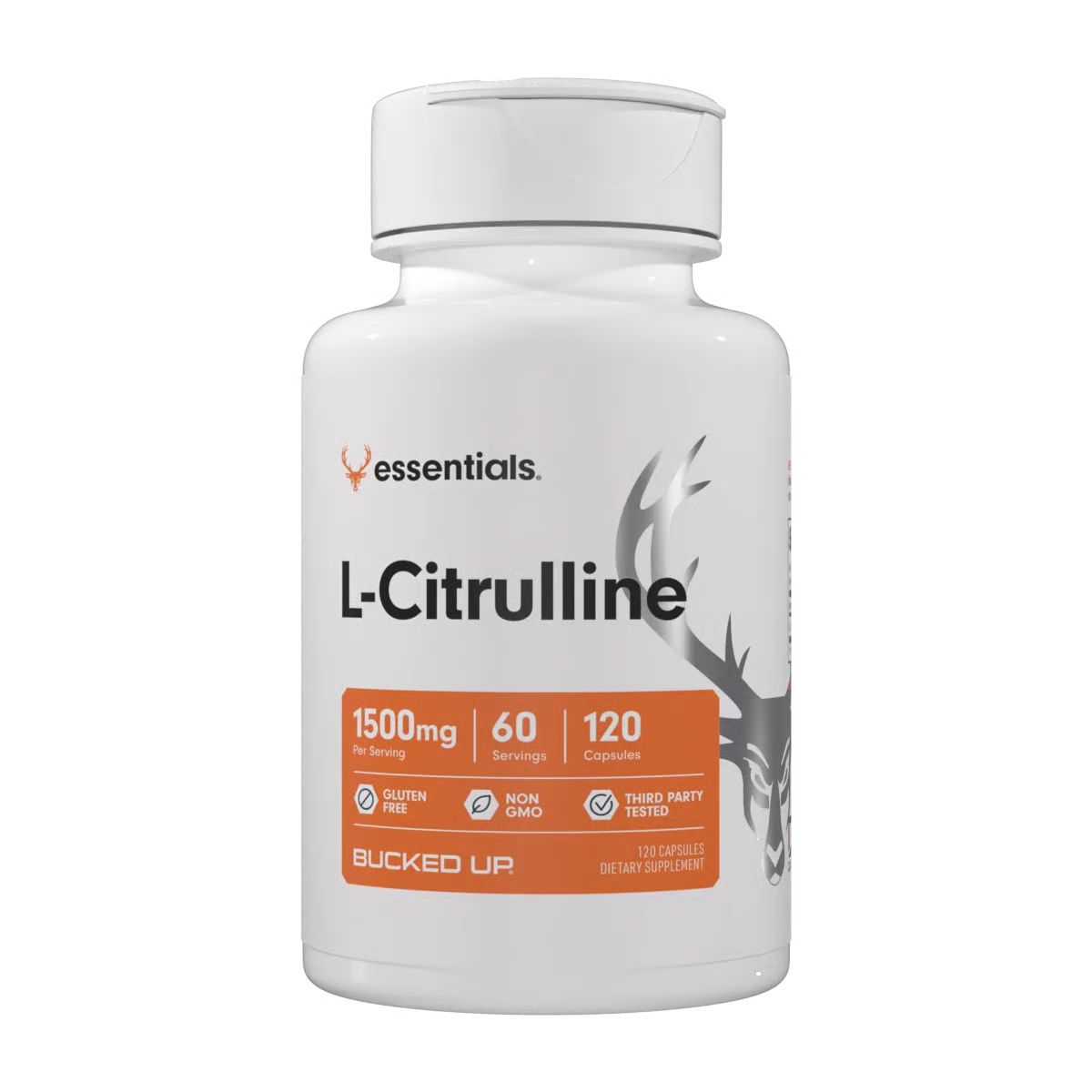
Targeted amino acids in pre-workout supplements can meaningfully support nitric oxide production, and L-Citrulline often leads that charge through its renal conversion to sustained L-Arginine levels. This step-by-step framework, from mechanisms to dosing and stacking, gives you a practical way to move from flat sessions to more productive training. Bucked Up’s transparent formulations supply clearly labeled doses and absorption support, whether you choose the 6g Citrulline Malate in Bucked Up Pre-Workout or the Pump Trifecta in Mother Bucker. You can also use Bucked Up’s pure L-Citrulline to customize your own nitric oxide-focused pre-workout routine.
1 The content provided in this article is for informational purposes only and is not medical advice. Consult with a medical professional before implementing any changes to your diet, health, or exercise routines.
Individual results will vary and are based on a combination of each individual’s diet, exercise, age, and health circumstances.
These statements have not been evaluated by the Food and Drug Administration. This product is not intended to diagnose, treat, cure or prevent any disease.
This article was written by Ryan Gardner, CEO of Bucked Up. As the maker of Bucked Up Protein Soda, we have a financial interest in this information. The views expressed are our own and should be read with that context in mind.