Last updated: April 22, 2026
Key Takeaways
- L-Citrulline often outperforms L-Arginine for endurance because it has higher bioavailability and sustains plasma arginine through renal conversion.1
- Studies using 6–8g L-Citrulline about 60 minutes before training report less fatigue, better VO2 max kinetics, and longer time-to-exhaustion in cycling and resistance work.1
- L-Arginine faces first-pass metabolism in the gut and liver, which can blunt effects and increase the risk of cramps and diarrhea during exercise.1
- Many athletes use 3–6g pure L-Citrulline or 6–8g Citrulline Malate, scaled by body weight in lbs, taken 60 minutes before endurance sessions.1
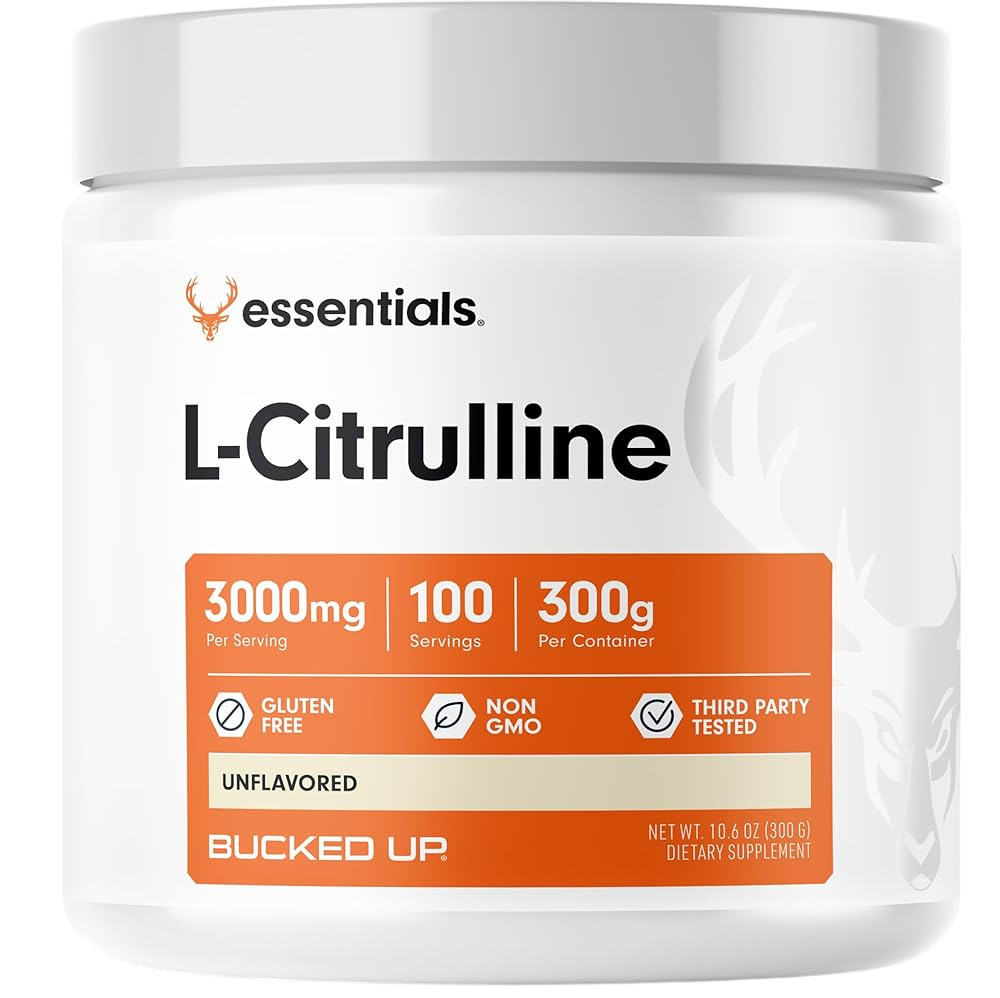
- Bucked Up L-Citrulline provides a straightforward way to get research-aligned purity and dosing for endurance-focused training.1
How Arginine and Citrulline Work Differently for Endurance
L-Arginine and L-Citrulline follow different metabolic pathways, which affects how well each supports endurance performance.1 These pathways influence absorption, blood levels of arginine, and nitric oxide production during training.
| Aspect | L-Arginine | L-Citrulline | Notes |
|---|---|---|---|
| Bioavailability | Reduced due to first-pass metabolism | Nearly 100% absorption into plasma | L-Citrulline |
| Plasma Arginine Elevation | Modest and inconsistent rises | Supplemental L-citrulline resulted in a marginal 86% increase in arginine flux in mice | L-Citrulline |
| Peak Timing | 30–60 minutes | 0.7–2 hours sustained | L-Citrulline |
| Metabolic Pathway | Gut/liver breakdown via arginase | Renal conversion via ASS/ASL enzymes | L-Citrulline |
L-Citrulline bypasses hepatic first-pass arginase catabolism, so more reaches systemic circulation intact.1 After absorption, citrulline travels to the kidneys and converts to L-Arginine through argininosuccinate synthase and lyase enzymes. This indirect route can maintain arginine levels longer than direct arginine intake, which faces breakdown in the intestinal wall and liver.1
Bucked Up includes research-aligned amounts of Citrulline Malate and Pure L-Citrulline in its formulas. Explore Bucked Up’s research-backed citrulline options for endurance-focused training.
What Endurance Studies Show About Citrulline and Arginine
Researchers have tested L-Citrulline and L-Arginine across different sports and performance markers, including strength endurance, cycling time trials, and high-intensity efforts.
| Study | Dose/Duration | Performance Improvement | Exercise Type |
|---|---|---|---|
| Pérez-Guisado & Jakeman 2010 | 8g Citrulline Malate | 53% increase in repetitions for the last set (S4′) of flat barbell bench presses at 80% 1RM1 | Resistance Training |
| Suzuki et al. 2016 | 2.4g L-Citrulline daily | 1.5% shorter cycling time1 | Cycling Time Trial |
| Bailey et al. 2015 | L-Citrulline daily | Improved VO2 uptake kinetics1 | High-Intensity Exercise |
L-Arginine research shows mixed outcomes for endurance. Some trials report increases in anaerobic threshold in cyclists, while effects on VO2 max often remain small and sometimes require antioxidant co-supplementation to appear.
Citrulline’s Role in Endurance and Fatigue
L-Citrulline supplementation improved physical performance in cyclists and reduced feelings of fatigue while improving concentration immediately after exercise.1 These results likely relate to mechanisms such as ammonia clearance and more efficient nitric oxide production during prolonged efforts.
Citrulline and VO2 Max Support
Bailey et al. demonstrated that L-citrulline supplementation improves muscle oxygenation and O₂ uptake kinetics, which can support better high-intensity exercise performance in humans.1
Using L-Arginine and L-Citrulline Together
Stacking both amino acids often adds little beyond what citrulline alone already provides, because citrulline converts to arginine efficiently. Citrulline malate (2:1 ratio) delivers both citrulline and malic acid for Krebs cycle support, which can support both nitric oxide production and energy metabolism.1
Practical Dosing and Timing for Endurance Athletes
Endurance athletes can tailor L-Citrulline intake to body weight in lbs, training style, and whether they use citrulline malate or pure L-Citrulline.
| Body Weight (lbs) | Citrulline Malate Dose | Pure L-Citrulline Dose | Timing |
|---|---|---|---|
| 150–170 | 6g | 3–4g | 60 minutes pre-exercise |
| 170–190 | 7g | 4–5g | 60 minutes pre-exercise |
| 190–200+ | 8g | 5–6g | 60 minutes pre-exercise |
Many endurance protocols use around 8g citrulline malate before training or a similar total daily intake of pure L-Citrulline. Taking citrulline 60–90 minutes before endurance exercise aligns with peak plasma arginine levels, which can support nitric oxide production during the session.
How Much L-Citrulline Supports Athletic Performance
Citrulline malate dosage ranges from 6–8 grams daily for maximum results, including support for exercise performance and endurance.1 Current evidence suggests that pushing doses much higher does not consistently improve results.
L-Arginine presents more dosing challenges for endurance athletes. Doses exceeding 6 grams taken 30–60 minutes pre-workout increase gastrointestinal issues during exercise without additional performance benefits.1
Safety and Side Effects for Endurance Athletes
L-Citrulline is possibly safe when taken by mouth for up to 2 months at doses of 1.5–5 grams daily and is usually well-tolerated, but some people might experience stomach discomfort or heartburn, while L-Arginine more commonly causes cramping and diarrhea at effective doses.1
Mayo Clinic reports that oral L-Arginine might cause nausea, abdominal pain, diarrhea, and bloating. High doses of L-Arginine can also cause loose stools, stomach cramps, and headaches.
Both amino acids may lower blood pressure through nitric oxide-mediated vasodilation.1 Athletes taking antihypertensive medications should talk with healthcare providers before adding these supplements.
Bucked Up Pre-Workouts Built Around Citrulline
Bucked Up approaches the arginine versus citrulline question with formulas designed to support endurance performance.1 The Bucked Up and Woke AF pre-workouts each include 6,000mg Citrulline Malate (2:1 ratio) plus AstraGin® for absorption support.1 This amount aligns with research-informed ranges often used for endurance-focused training.
For more advanced athletes, Mother Bucker provides 4,000mg Pure L-Citrulline along with Nitrosigine® and Hydroprime® Glycerol. By targeting vasodilation and intramuscular hydration through several pathways at once, this combination supports both blood flow and cellular hydration, which are key but distinct factors for endurance.1 Transparent ingredient labels also let athletes see exact amounts instead of guessing through proprietary blends.
This mix of research-aligned dosing and absorption support can help athletes who feel their workouts lack drive or sustained performance. Choose your Bucked Up pre-workout based on these endurance-focused formulations.
Matching Bucked Up Formulas to Specific Endurance Goals
Each Bucked Up pre-workout can fit a different endurance scenario. Runners who want steady energy without heavy stimulation may prefer the Non-Stimulant Pre-Workout with 6,000mg Citrulline Malate. Cyclists who need high-intensity power output can use Woke AF, which combines 333mg caffeine with the same citrulline dose.
Triathletes and experienced endurance athletes may gravitate toward Mother Bucker, which pairs Pure L-Citrulline with Nitrosigine® for robust pump support and Hydroprime® Glycerol for hydration support.
FAQ
Which is more effective, L-citrulline or L-arginine?
L-Citrulline often supports endurance performance more reliably because of its bioavailability and sustained arginine elevation.1 While L-Arginine breaks down in the gut and liver, L-Citrulline bypasses this first-pass metabolism and converts to arginine in the kidneys, which can result in higher and more stable plasma arginine levels.
Can you take L-citrulline and L-arginine together?
Combining L-Citrulline and L-Arginine usually offers little beyond what citrulline alone already provides. Since citrulline converts to arginine more efficiently than direct arginine intake, stacking both can create redundancy without clear performance gains. Citrulline malate often serves as a more targeted option by pairing citrulline with malic acid for both nitric oxide and energy metabolism support.
What is an effective dose of L-citrulline for endurance?
For endurance performance, many athletes use 6–8g of citrulline malate or 3–6g of pure L-Citrulline taken about 60 minutes before exercise. Doses can scale with body weight in lbs, with athletes over 190 lbs often using the higher end of the range. Intakes above roughly 10g daily rarely add benefits and may increase the chance of mild gastrointestinal discomfort.
Does L-citrulline help with running endurance?
L-Citrulline can support running endurance by improving oxygen uptake kinetics, reducing perceived fatigue, and aiding ammonia clearance.1 Studies report benefits for time-to-exhaustion, muscle soreness, and recovery between sessions.1 These effects relate to sustained nitric oxide production, which supports oxygen and nutrient delivery to working muscles.
Is L-citrulline safe for daily use?
L-Citrulline appears safe for daily use in healthy adults when taken at commonly recommended doses. Research has reported no serious adverse events at doses up to 15g daily. Compared with L-Arginine, citrulline less often causes gastrointestinal distress at effective amounts.1 Athletes with kidney disease or those using blood pressure medications should consult a healthcare provider before starting supplementation.
1 The content provided in this article is for informational purposes only and is not medical advice. Consult with a medical professional before implementing any changes to your diet, health, or exercise routines.
Individual results will vary and are based on a combination of each individual’s diet, exercise, age, and health circumstances.
These statements have not been evaluated by the Food and Drug Administration. This product is not intended to diagnose, treat, cure or prevent any disease.
This article was written by Ryan Gardner, CEO of Bucked Up. As the maker of Bucked Up Protein Soda, we have a financial interest in this information. The views expressed are our own and should be read with that context in mind.