Written by: Ryan Gardner, Owner, Managing Partner, CEO, Bucked Up
Key Takeaways
-
L-Arginine has poor oral bioavailability because first-pass metabolism in the gut and liver breaks down much of each dose. This can create inconsistent plasma arginine levels and unreliable pumps.
-
L-Citrulline bypasses first-pass metabolism in the liver, converts efficiently to L-Arginine in the kidneys, and raises plasma arginine levels more effectively than equal oral doses of L-Arginine.
-
Research supports 3–6 g of pure L-Citrulline or 6–8 g of Citrulline Malate 2:1 taken 40–60 minutes pre-workout for performance benefits such as enhanced blood flow and ammonia clearance.*1
-
Transparent labels with disclosed gram amounts, absorption-support ingredients like Astragin®, and goal-matched formulas matter when you want reliable nitric oxide support.*
-
Bucked Up offers several science-informed L-Citrulline options across its pre-workout line. Shop the full selection here and build a stack that fits your training.
The Pump Problem: Why Arginine Often Disappoints
Strong pumps depend on nitric oxide, a signaling molecule that relaxes vascular smooth muscle and widens blood vessels. Wider vessels allow more blood to reach working muscles, which delivers more oxygen, glucose, and other nutrients during each set. The pump feels good, but it also reflects active nutrient delivery.
Most early pre-workouts relied on L-Arginine to support nitric oxide production because it directly feeds nitric oxide synthase enzymes. That logic works on paper. In real life, oral L-Arginine runs into a bioavailability problem. Studies show wide variation in how much arginine reaches circulation after oral dosing, which makes precise dosing difficult. What you put in the scoop and what reaches your bloodstream can differ by a large margin.
This gap between label dose and blood levels sets up the need for a different approach that delivers more predictable pumps.
Why Bioavailability Drives Real-World Pumps: Arginine vs Citrulline
The main issue with L-Arginine is first-pass metabolism. Arginase enzymes in the gut and liver break down a significant portion of oral L-Arginine before it reaches systemic circulation. As a result, much of a standard dose can be degraded before it supports nitric oxide production. Plasma arginine spikes quickly, then drops, and the size of that spike varies from person to person.
L-Citrulline follows a different path. It absorbs well from the small intestine, bypasses hepatic first-pass metabolism, and travels to the kidneys. There, enzymes such as argininosuccinate synthase and argininosuccinate lyase convert it into L-Arginine.
Controlled studies show that L-Citrulline supplementation can raise plasma L-Arginine levels more effectively than equal oral doses of L-Arginine. Gram for gram, L-Citrulline can deliver more systemic arginine than L-Arginine itself. This pharmacokinetic advantage explains why many modern pre-workouts now favor citrulline over arginine as the primary pump ingredient.
L-Citrulline supplementation also increases markers of nitric oxide production, including the plasma arginine-to-ADMA ratio, urinary nitrate excretion, and cGMP excretion.1
L-Citrulline’s Metabolic Edge for Blood Flow and Pump
L-Citrulline supports nitric oxide production through a sustained renal conversion pathway instead of a single gut-dependent spike.
A randomized controlled trial found that L-Citrulline supplementation supported oxygen uptake kinetics and high-intensity exercise performance while L-Arginine did not, when both were compared with placebo.1 Sustained elevation of plasma arginine appears to give nitric oxide synthase enzymes a steadier substrate supply across the training session.
L-Citrulline also participates in the urea cycle, which converts ammonia, a byproduct of intense exercise and protein metabolism, into urea for excretion. By supporting ammonia clearance,* L-Citrulline may help limit exercise-induced ammonia buildup in skeletal muscle, a factor linked with central fatigue.1
Citrulline Malate adds another layer. The citrulline portion supports nitric oxide production and ammonia clearance,* while the malate (malic acid) portion acts as a Krebs Cycle intermediate that may support oxidative ATP production.*
Pure L-Citrulline and Citrulline Malate 2:1 share similar absorption and both bypass first-pass arginase metabolism. The main difference is composition and dose math. Citrulline Malate is only about two-thirds L-Citrulline by weight, so a 6 g dose of Citrulline Malate delivers roughly 4 g of actual L-Citrulline. Pure L-Citrulline gives more precise control for lifters who want exact gram amounts or specific stacking protocols.
The metabolic advantages described here explain why Bucked Up includes both Citrulline Malate and pure L-Citrulline across its pre-workout line. Explore Bucked Up’s L-Citrulline options to match your preferred format and dose.
Dialing In Your Dose: Practical Ranges and Timing
Research on L-Citrulline for workout performance points to a few consistent dosing patterns. Meta-analyses report that Citrulline Malate taken before exercise can support repetitions in resistance exercises compared with placebo.1 For pure L-Citrulline, studies show support for severe-intensity cycling exercise tolerance and total work completed versus placebo, while similar L-Arginine doses did not show the same effect.
Practical ranges based on the available literature:
-
Pure L-Citrulline: 3 to 6 g taken about 60 minutes before training. This range reflects doses that elevate plasma arginine in controlled studies, and L-Citrulline has been reported as well tolerated in healthy adults across this spectrum.
-
Citrulline Malate 2:1: 6 to 8 g taken 40 to 60 minutes pre-workout. Because Citrulline Malate is only two-thirds L-Citrulline by weight, this higher total dose delivers roughly 4 to 5.3 g of actual L-Citrulline, which lines up with the effective range for the pure form.
-
Timing: For acute performance support, 60 minutes pre-exercise is the most consistently studied window. This timing aligns with the 0.7 to 2 hour window for peak plasma L-Citrulline concentrations.
Individual response can vary. Training status, body weight in lbs, and baseline nitric oxide production all influence how a given dose feels. Many lifters start at the lower end of the range, then adjust based on pump quality, performance, and GI comfort.
How to Read Pre-Workout Labels for Pump Support
Clear labeling is the starting point when you evaluate a pre-workout for pump support. A disclosed ingredient amount matters more than a long list of names. Proprietary blends can list L-Citrulline without revealing the actual dose, which makes it hard to compare with research-backed ranges for performance support.* Use this framework when you scan labels:
-
Beginner or general gym-goer: Look for a disclosed Citrulline Malate 2:1 dose at or above 6 g, paired with Astragin® or a similar absorption-support ingredient. This setup supports nitric oxide production* and ammonia clearance* without complex stacking.
-
Strength-focused lifter: Pure L-Citrulline at 4 to 6 g offers tighter dose control and stacks well with other pump ingredients such as Nitrosigine®. Confirm that the label lists the exact gram amount, not just the ingredient name.
-
Stimulant-sensitive or late-night trainer: A stimulant-free pre-workout with a full Citrulline Malate dose still supports blood flow and nutrient delivery* without caffeine. The pump pathway operates independently from stimulant content.
-
Advanced athlete: Look for a multi-pathway pump stack. A common example is pure L-Citrulline plus a patented arginine silicate ingredient such as Nitrosigine® plus a glycerol ingredient for cellular hydration support.* Each ingredient targets a different part of the pump, so the combination covers more ground than any single ingredient.
Safety, Tolerability, and Common Myths
L-Citrulline shows a strong tolerability profile at doses used for performance support. L-Citrulline does not cause the gastrointestinal distress such as cramping or diarrhea that L-Arginine and ornithine can produce at large bolus doses.
Oral L-Arginine supplementation frequently causes significant gastrointestinal distress, including severe cramping and diarrhea, because unabsorbed arginine draws water into the intestines. Effective nitric oxide-supporting doses of L-Arginine often require 10 g or more, which can further increase GI burden.
Keep these practical tolerability points in mind:
-
The Citrulline Malate form is more acidic than pure L-Citrulline and may increase the likelihood of heartburn at doses used for exercise performance. If you experience this, pure L-Citrulline may be a better fit.
-
Mild GI discomfort occasionally reported with L-Citrulline often improves when you lower the dose or take it with a small carbohydrate-only snack.
-
Individuals with naturally low blood pressure, kidney conditions, or those taking blood pressure medications, nitrate medications, or PDE5 inhibitors should talk with a healthcare provider before using L-Citrulline, because its vasodilatory effects may interact with these conditions or medications.
-
Pregnant or breastfeeding individuals should consult a healthcare provider before use. Discontinue at least 2 weeks before any scheduled surgery and follow your provider’s guidance.
Bucked Up Pre-Workouts with Disclosed L-Citrulline Doses
The research above outlines what current evidence supports. Bucked Up applies these findings across its pre-workout line and discloses every gram on the label.
Bucked Up Pre-Workout and Woke AF both provide 6,000 mg of Citrulline Malate 2:1, which sits in the range studied for supporting repetitions in resistance exercise.*1 Woke AF pairs that same Citrulline Malate dose with 333 mg of caffeine.
High stimulant loads can promote vasoconstriction, so the full Citrulline Malate dose helps support vasodilation* alongside the stimulant content. Both formulas include Astragin®, which has been studied for its ability to support citrulline absorption.*
Mother Bucker targets advanced athletes with a different strategy. It uses 4,000 mg of pure L-Citrulline, leaving out malate to make room for more citrulline by weight. That citrulline dose stacks with Nitrosigine® and Hydroprime® Glycerol. Nitrosigine® supports blood flow* through a mechanism distinct from citrulline, and Hydroprime® Glycerol supports water uptake into muscle cells for cellular hydration.*
Bucked Up refers to this trio as the Pump Trifecta, because each ingredient supports the pump through a separate biological pathway. Astragin® appears here as well.
Non-Stimulant Pre-Workout includes 6,000 mg of Citrulline Malate 2:1 with zero caffeine. This formula works well for stimulant-sensitive lifters or late-night sessions where caffeine would interfere with sleep.
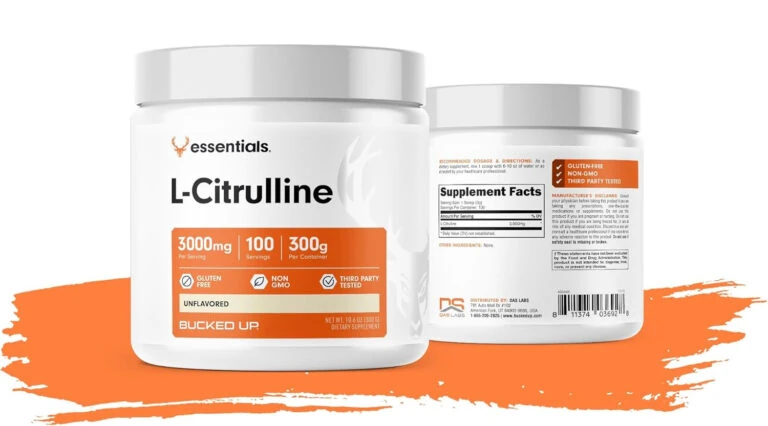
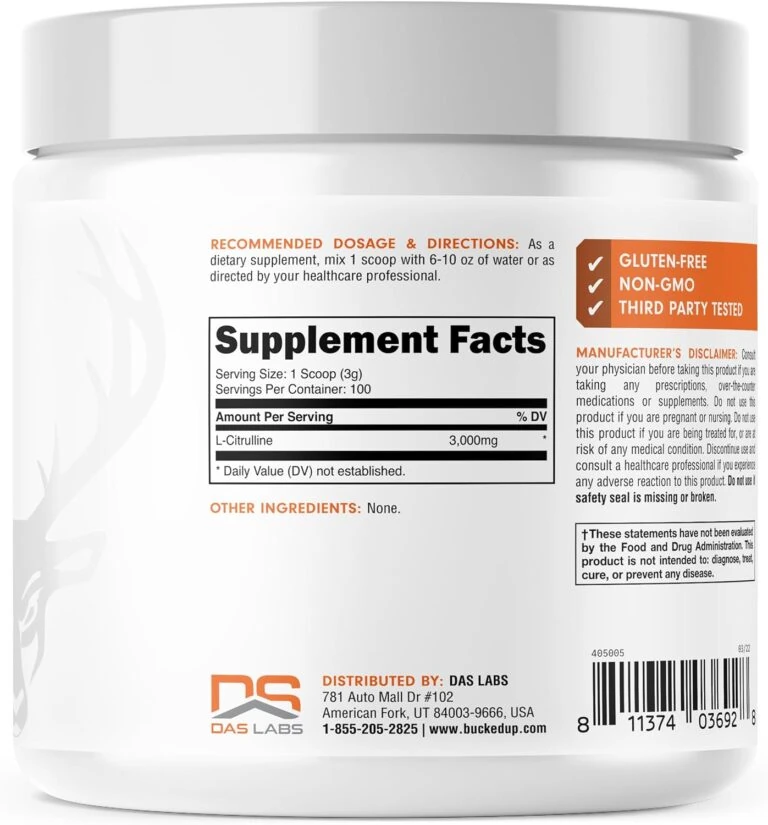
Lifters who prefer full control over their dose or custom stacks can use Bucked Up’s Pure L-Citrulline Powder (300 g), which delivers 3,000 mg per scoop of unflavored pure L-Citrulline. This standalone option contains no other active ingredients, so it fits easily into existing routines.
Every Bucked Up pre-workout lists exact L-Citrulline amounts on the label, whether the formula uses Citrulline Malate or the pure form. Shop the L-Citrulline collection to build your preferred pump stack.

Frequently Asked Questions
When should I take L-Citrulline relative to my workout?
For acute performance support, many studies use L-Citrulline taken about 60 minutes before training. Peak plasma concentrations usually appear within 0.7 to 2 hours after ingestion. If you take your dose too close to your session, systemic arginine levels may not peak until after your hardest sets.
If your pre-workout already contains Citrulline Malate or pure L-Citrulline, follow the product’s timing instructions, which typically recommend 30 to 60 minutes pre-workout.
What is the difference between pure L-Citrulline and Citrulline Malate for supporting muscle endurance?
Both forms share the same absorption pathway and bypass first-pass arginase metabolism. The key difference is composition. Citrulline Malate 2:1 combines L-Citrulline with malic acid, so only part of the total weight comes from citrulline.
As explained earlier, this ratio means you need a higher total dose of Citrulline Malate to match the L-Citrulline content of the pure form. Pure L-Citrulline delivers 100% L-Citrulline per gram, which simplifies dose precision.
The malic acid in Citrulline Malate is theorized to support Krebs Cycle energy production,* although current systematic reviews have not confirmed extra performance benefits beyond citrulline alone. For supporting muscle endurance,* both forms can work when you match the actual L-Citrulline content.
Can I stack L-Citrulline with other pump ingredients?
L-Citrulline stacks well with other pump ingredients for many lifters. It supports nitric oxide production* through the arginine-to-nitric oxide pathway.
Ingredients such as Nitrosigine® (arginine silicate) support blood flow* through a different route, and glycerol-based ingredients like Hydroprime® support cellular hydration.* Combining these ingredients targets several aspects of the pump at once, which explains the design of advanced formulas like Mother Bucker.
If you build your own stack with a standalone L-Citrulline powder, it usually mixes cleanly with most pre-workout bases. Always review total ingredient loads and talk with a healthcare provider if you combine multiple vasodilatory compounds or take prescription medications.
Who should consult a healthcare provider before using L-Citrulline?
Anyone with naturally low blood pressure, kidney conditions, or a history of cardiovascular concerns should speak with a healthcare provider before starting L-Citrulline.
Individuals taking blood pressure medications, including ACE inhibitors or beta-blockers, nitrate medications, PDE5 inhibitors, or anticoagulants should also consult a provider, because L-Citrulline’s vasodilatory effects may interact with these medications.
Pregnant or breastfeeding individuals should avoid use unless a healthcare provider has specifically approved it. If you have a scheduled surgery, discontinue L-Citrulline at least 2 weeks beforehand and follow your provider’s instructions.
Conclusion: Choosing Pump Ingredients That Match Your Goals
The arginine versus citrulline decision for better workout pumps centers on pharmacokinetics. Extensive first-pass metabolism limits L-Arginine’s ability to raise plasma arginine to useful levels at practical oral doses. L-Citrulline bypasses that bottleneck, converts to systemic arginine in the kidneys, and supports more sustained nitric oxide production* at doses that most lifters tolerate well.
A simple checklist helps when you compare pre-workouts. Look for disclosed gram amounts instead of proprietary blends, a Citrulline Malate dose at or above 6 g or a pure L-Citrulline dose between 3 and 6 g, an absorption-support ingredient, and a formula that matches your training goals and stimulant tolerance. From there, consistent training and nutrition do the rest.
Bucked Up applies this checklist across its pre-workout line, using disclosed doses of Citrulline Malate and pure L-Citrulline for nitric oxide support.* Browse Bucked Up’s L-Citrulline lineup to find a formula that fits your routine.
*These statements have not been evaluated by the Food and Drug Administration. This product is not intended to diagnose, treat, cure, or prevent any disease.
References
Schwedhelm, E., Maas, R., Freese, R., Jung, D., Lukacs, Z., Jambrecina, A., Spickler, W., Schulze, F., & Böger, R. H. (2008). Pharmacokinetic and pharmacodynamic properties of oral L-citrulline and L-arginine: Impact on nitric oxide metabolism. British Journal of Clinical Pharmacology, 65(1), 51–59. https://pmc.ncbi.nlm.nih.gov/articles/PMC2291275/
Moinard, C., Nicolis, I., Neveux, N., Darquy, S., Bénazeth, S., & Cynober, L. (2008). Dose-ranging effects of citrulline administration on plasma amino acids and hormonal patterns in healthy subjects: The Citrudose pharmacokinetic study. British Journal of Nutrition, 99(4), 855–862. https://pubmed.ncbi.nlm.nih.gov/17953788/
1 The content provided in this article is for informational purposes only and is not medical advice. Consult with a medical professional before implementing any changes to your diet, health, or exercise routines. Individual results will vary and are based on a combination of each individual’s diet, exercise, age, and health circumstances. These statements have not been evaluated by the Food and Drug Administration. This product is not intended to diagnose, treat, cure or prevent any disease.
This article was written by Ryan Gardner, CEO of Bucked Up. As the maker of Bucked Up Protein Soda, we have a financial interest in this information. The views expressed are our own and should be read with that context in mind.