Last updated: March 7, 2026
Key Takeaways
- L-Citrulline ranks as the top amino acid for strength training, delivering about 53% more reps through strong nitric oxide support and high bioavailability.
- BCAAs help recovery and reduce force decline but do not match citrulline’s pump and blood flow benefits for same-session performance.
- EAAs drive muscle protein synthesis but lack the nitric oxide support needed for big rep and pump increases.
- Beta-Alanine and Creatine pair well with L-Citrulline to support endurance, buffering, and power output in smart stacks.
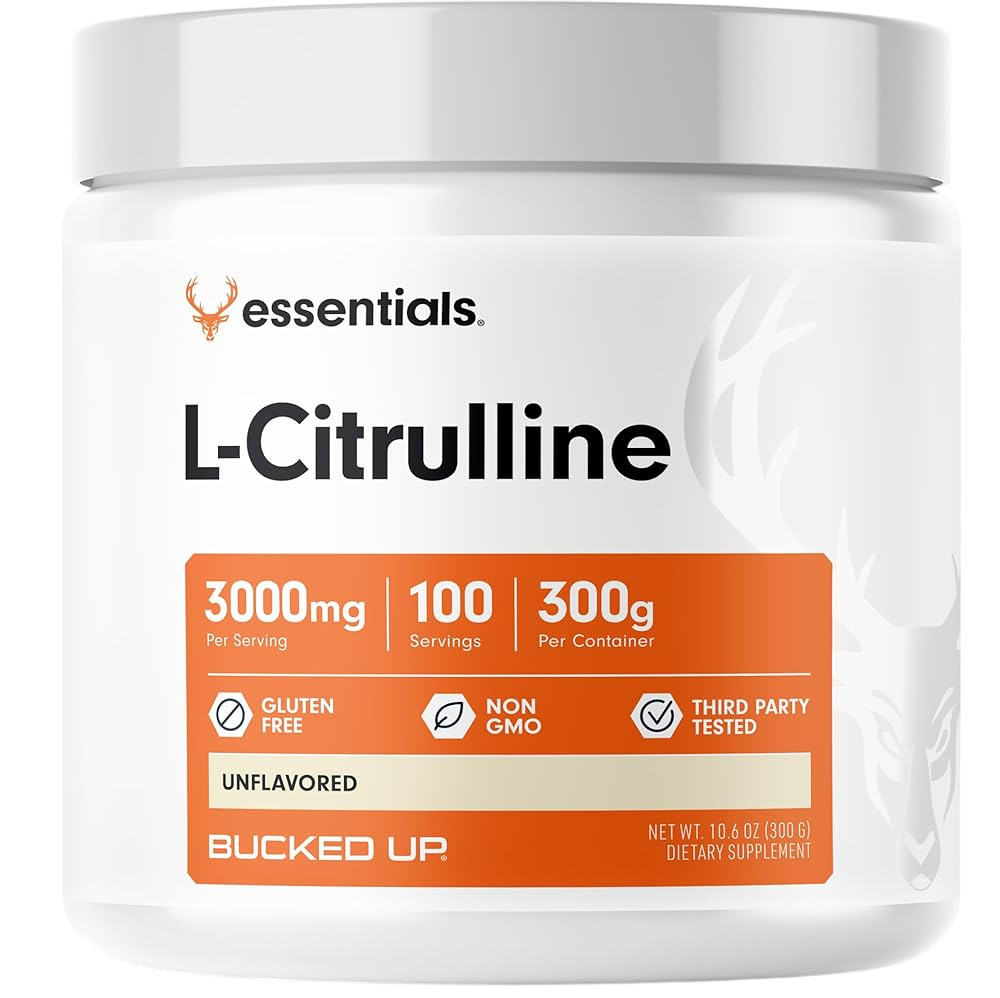
- Unlock higher performance with Bucked Up’s clinical-dose L-Citrulline lineup tailored to different training levels.
Top Amino Acids Ranked for Strength Training Performance
The top five amino acids for strength training performance, based on clinical data, are L-Citrulline, BCAAs, EAAs, Beta-Alanine, and Creatine. L-Citrulline sits at number one with studies showing up to 53% more reps per set. BCAAs come next for faster force recovery, followed by EAAs for complete muscle protein synthesis support. Beta-Alanine pairs well with citrulline for endurance, and Creatine adds a strong power and strength boost. This ranking focuses on ingredients that directly increase rep volume, reduce fatigue, and speed recovery between sets.
1. L-Citrulline: Nitric Oxide Leader for Up to 53% More Reps
L-Citrulline converts in the kidneys to L-Arginine, which then drives nitric oxide production. Higher nitric oxide levels widen blood vessels and improve blood flow to working muscles. This effect improves oxygen and nutrient delivery and supports stronger pumps and more total work per session. Citrulline malate increased reps to failure by 52.92% and reduced muscle soreness at an 8 g clinical dose.
The most effective protocol uses 6–8 g of Citrulline Malate about 60 minutes before training. A 12 g citrulline malate dose increased serum arginine by 88% at 60 minutes post-ingestion, showing a clear dose response. Bucked Up Pre-Workout delivers 6,000 mg Citrulline Malate in a 2:1 ratio, while Mother Bucker provides 4 g pure L-Citrulline with Nitrosigine for advanced pump and performance support.
2. BCAAs: Helpful for Recovery, Limited for Pure Strength
Branched-Chain Amino Acids support strength training mainly by reducing muscle breakdown and helping faster recovery. In one trial, the BCAA group showed force output decreased only 0–4 hours post-exercise compared to 0–72 hours in placebo. This pattern suggests quicker strength recovery after hard sessions. BCAAs, however, do not increase nitric oxide or blood flow in the way L-Citrulline does, so they fall short for immediate rep and pump benefits.
The same research found that BCAA supplementation at 6 g or 18 g significantly decreased peak power drop compared to placebo after resistance training. These improvements still remain modest next to L-Citrulline’s 53% rep increase. BCAAs work best as a supporting ingredient inside a pre, intra, or recovery formula rather than the main driver of performance.
3. EAAs: Complete Muscle Support Without Pump Benefits
Essential Amino Acids supply all nine amino acids required for muscle protein synthesis. This complete profile makes EAAs more effective for building muscle than BCAAs alone. EAAs are more effective than BCAAs for maximum muscle protein synthesis because they provide all essential amino acids, while BCAAs initiate but cannot sustain MPS alone. EAAs still do not increase nitric oxide in a meaningful way, so they do not create the same immediate performance and pump effects as citrulline.
4. Beta-Alanine: High-Rep Endurance Partner
Beta-Alanine pairs well with L-Citrulline by raising muscle carnosine levels, which buffer acid during high-rep sets. This buffering effect supports more reps before burning and fatigue set in. The familiar tingling sensation many lifters feel signals active carnosine synthesis. Bucked Up includes clinical Beta-Alanine doses across its pre-workouts, and Mother Bucker features the high-end 6.4 g dose for serious endurance support.
5. Creatine: Power and Strength Synergy With Citrulline
Creatine monohydrate remains the most studied and reliable ingredient for power and strength gains. When lifters combine creatine with L-Citrulline, creatine supports the phosphocreatine energy system while citrulline improves blood flow and nutrient delivery. This pairing supports heavier lifts, better performance across sets, and more total training volume in each workout.
|
Amino Acid |
Rep Increase |
Recovery (DOMS) |
Cost per Dose |
|
L-Citrulline |
53% |
40% less |
$0.50 |
|
BCAAs |
10–20% |
Moderate |
$0.40 |
|
EAAs |
MPS boost |
Good |
$0.60 |
Mid-Workout Recap: Top Aminos and Smart Stacks
L-Citrulline leads for immediate performance gains through nitric oxide and blood flow support, while BCAAs and EAAs shine more for recovery and muscle building. Citrulline Malate 2:1 suits lifters who want both performance and endurance support. Pure L-Citrulline works best for athletes chasing maximum pumps and vasodilation. Bucked Up uses clinical doses of science-backed ingredients, including Citrulline Malate and pure L-Citrulline, so you can match your product choice to your training style.
L-Citrulline vs BCAAs and Arginine for Strength Training
Head-to-head data shows L-Citrulline outperforms direct arginine supplementation because it has better bioavailability. L-Citrulline demonstrated superior bioavailability compared to L-Arginine and more effectively increased plasma arginine concentrations. Citrulline bypasses early breakdown in the liver, which keeps arginine levels higher for longer and supports sustained nitric oxide production.
BCAAs still help recovery, but cannot match citrulline’s direct performance impact. Research indicates that BCAA supplementation may reduce muscle soreness post-exercise, but evidence for strength, endurance, and body composition improvements remains inconsistent. L-Citrulline, by contrast, delivers consistent, measurable gains in reps and training volume.
Best L-Citrulline-Based Stacks for Lifting Performance
The most effective stacks place L-Citrulline at the center and add ingredients that cover other performance needs. Pairing citrulline with Beta-Alanine supports both blood flow and acid buffering during hard sets. Adding creatine strengthens the phosphocreatine system for explosive power and heavy lifts. Bucked Up formulas follow this model and combine clinical doses of multiple performance ingredients in one pre-workout.
Timing Your Amino Acids Around Workouts
Correct timing helps you get the most from each amino acid. L-Citrulline peaks in the blood about 60 minutes after ingestion, so pre-workout use works best. Interventions lasting 3–8 weeks were associated with significant increases in fat-free mass (FFM), which supports both short-term and long-term benefits from steady use.
|
Amino Acid |
Dose |
Timing |
For (lbs) |
|
Citrulline |
6–8 g |
60 min pre |
150–250 |
|
BCAAs |
6–18 g |
Intra |
All |
|
EAAs |
10–15 g |
Post |
All |
|
Beta-Alanine |
3.2–6.4 g |
Pre/Post |
All |
Athletes over 50 gain particular value from amino acid support. Subgroup analysis indicated fat mass reductions with more than 6 g per day and in participants over 40 years. These results highlight age-related benefits from consistent citrulline use.
Safety, Side Effects, and Ideal Users
L-Citrulline shows a strong safety record at recommended doses. Some people may notice mild stomach discomfort with single doses above 10 g, but typical 6–8 g doses are usually well tolerated. People with low blood pressure should speak with a healthcare professional because citrulline can widen blood vessels. Bucked Up’s GMP-certified manufacturing supports product purity and consistency for athletes who want strong pumps without harsh stimulant crashes.
Frequently Asked Questions
What is the best amino acid for lifting performance?
L-Citrulline stands out as the top amino acid for lifting performance because it strongly increases nitric oxide through conversion to arginine. Clinical research shows up to 53% more reps per workout with 8 g of Citrulline Malate. These results exceed the performance impact of BCAAs, EAAs, and other amino acids. Better blood flow improves oxygen and nutrient delivery to working muscles and supports higher training capacity.
What dosage of citrulline works best for strength training?
The most effective citrulline range for strength training sits between 6 g and 8 g taken about 60 minutes before lifting. Studies show that 8 g of Citrulline Malate produces the largest performance gains, while 12 g can raise serum arginine by 88% within one hour. For athletes between 150 and 250 pounds, 6 g acts as a solid starting point, and 8 g usually delivers peak benefits without extra side effects.
How does citrulline compare to BCAAs for strength gains?
Citrulline clearly outperforms BCAAs for immediate strength and rep increases. BCAAs help reduce force decline and support recovery for several hours after training. L-Citrulline, by contrast, delivers about 53% more reps through higher nitric oxide levels and better blood flow. BCAAs mainly limit muscle breakdown, while citrulline directly boosts performance during the workout through improved nutrient delivery and ammonia clearance.
When should I take amino acids around my workouts?
Timing depends on the amino acid and your goal. Take L-Citrulline about 60 minutes before training to match peak blood levels with your workout. Use BCAAs during training to help limit muscle breakdown. Take EAAs after lifting to support muscle protein synthesis. Use Beta-Alanine either pre or post-workout, because it works through daily loading rather than a single acute dose.
Are amino acids safe for athletes over 50?
Amino acids generally show strong safety profiles for athletes over 50 and can offer extra benefits. Research suggests greater fat mass reductions with citrulline doses above 6 g per day in people over 40. Blood pressure support and better endothelial function add cardiovascular advantages that matter more with age. L-Citrulline’s role in ammonia removal also grows more useful as metabolic efficiency slowly declines.
What makes Bucked Up different from other brands?
Bucked Up separates itself through clinical dosing, transparent labels, and smart ingredient stacking. Many brands hide low doses behind proprietary blends, but Bucked Up clearly lists 6,000 mg Citrulline Malate in core products and 4 g pure L-Citrulline in Mother Bucker. All formulas include Astragin to support citrulline absorption, and the 2:1 Citrulline Malate ratio adds malic acid for Krebs cycle support and energy production.
Conclusion: Put L-Citrulline First and Train With Bucked Up
The current evidence strongly supports L-Citrulline as the number one amino acid for strength training performance in 2026. Lifters see up to 53% more reps, about 40% less soreness, and better bioavailability than arginine. BCAAs and EAAs still play useful supporting roles, yet they cannot match citrulline’s direct impact on pumps, blood flow, and same-session performance.
Bucked Up covers a wide range of needs with its citrulline-focused lineup, from 6,000 mg Citrulline Malate in Bucked Up Pre-Workout to 4 g pure L-Citrulline plus Nitrosigine in Mother Bucker. Transparent labels, clinical dosing, and Astragin for absorption set these products apart from competitors that rely on vague proprietary blends.
Upgrade your training with amino acid support that delivers measurable results.