Written by: Ryan Gardner, Owner, Managing Partner, CEO, Bucked Up | Last updated: June 15, 2026
Key Takeaways
-
Citrulline and arginine work differently. Citrulline bypasses first-pass metabolism, converts to arginine in the kidneys, and supports more sustained nitric oxide production.*1
-
Build your stack around citrulline first: 3 to 6 g of pure L-citrulline or 6 to 8 g of citrulline malate 2:1, taken 30 to 60 minutes pre-workout.
-
Treat arginine as optional. Cap it at 2 to 3 g only after confirming stomach tolerance, since higher doses add cost with limited extra benefit once citrulline is already raising plasma arginine.
-
Use the stack consistently for 2 to 4 weeks. Regular daily intake supports more reliable changes in exercise tolerance, work capacity, and perceived pump than single-session use.
-
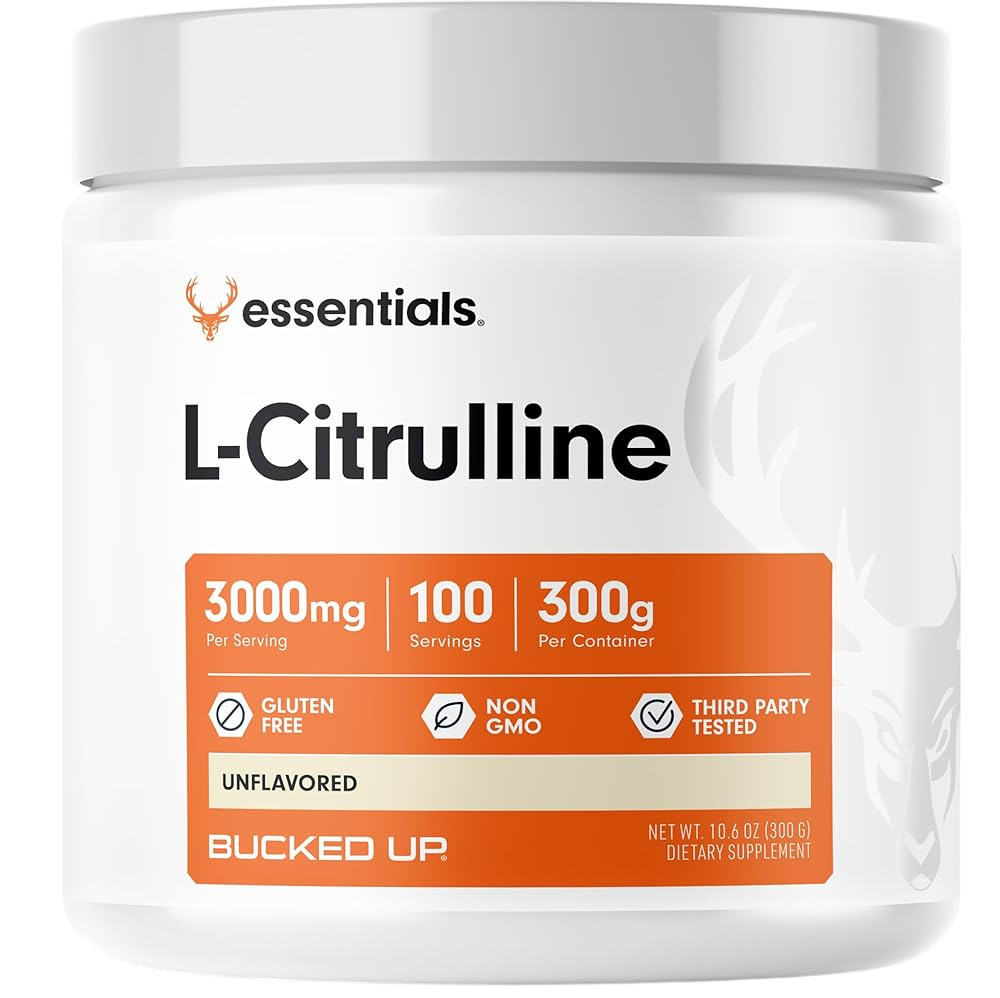
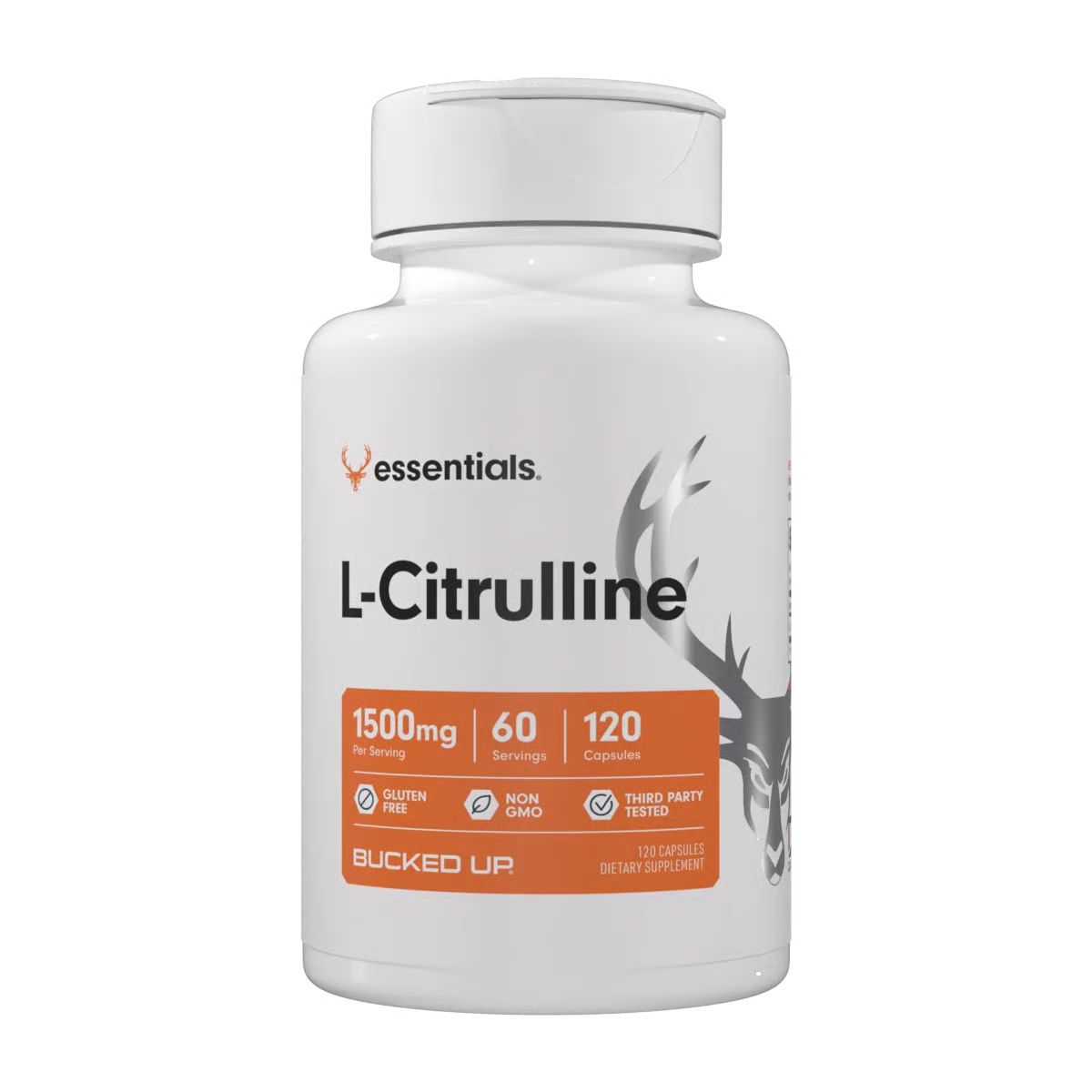
Choose transparent, research-aligned formulas like Bucked Up L-Citrulline so you know the exact dose and can support effective absorption for training performance.1
Step 1: Match Your Stack to Your Main Goal
Clear goals guide which form of citrulline you use and whether arginine belongs in your stack at all. Three common goals map to three different starting points, each with its own citrulline strategy.
If your priority is training pump and muscle endurance support,* citrulline malate 2:1 is a studied form for resistance exercise.1 If your priority is oxygen uptake and endurance output, pure L-citrulline taken consistently over several days has shown measurable results in cycling research.1
If your goal is daily nitric oxide support* without a strict pre-workout window, a split dose of 3 to 6 g of pure L-citrulline across morning and evening servings works as a practical baseline.1
Body weight, training intensity, and stomach sensitivity all influence where you start within the studied dose range. Lifters under 165 lbs who are new to citrulline can start at the lower end to assess tolerance before increasing.
Those training at high volume four or more times weekly, or those who have already used citrulline without noticeable effect, are better positioned to work toward the upper end because their workload and history justify a higher dose. Stomach sensitivity mainly affects arginine decisions, which Step 3 covers in more detail.
Step 2: Set Your Citrulline Base Dose
The citrulline base is the non-negotiable foundation of this stack. For acute performance support, 6 to 8 g of citrulline malate taken about one hour before exercise sits within the studied range, with approximately 1.76 g of citrulline malate providing 1 g of L-citrulline.1 For pure L-citrulline, the equivalent starting range is 3 to 6 g taken 30 to 60 minutes pre-workout.
Citrulline comes first because it reaches circulation more efficiently than arginine.1 L-citrulline exhibits approximately 97% oral bioavailability and reaches systemic circulation largely intact, whereas oral L-arginine undergoes substantial first-pass metabolism by arginase enzymes in the gut and liver (Schwedhelm et al., Br J Clin Pharmacol, 2008).
Citrulline bypasses that early breakdown, travels to the kidneys, and converts to arginine there, which supports a more sustained elevation of plasma arginine than direct arginine can provide.1 A 2019 meta-analytic review concluded that L-citrulline is approximately twice as potent as L-arginine for raising plasma arginine levels due to substantially lower first-pass metabolism.1
Label reading connects this science to what you actually drink. A product listing “citrulline malate” without a specified ratio may deliver far less active citrulline than the headline number suggests. In a 2:1 citrulline malate product per Bucked Up dosing notes, 1.76 g of citrulline malate provides about 1 g of pure L-citrulline, so a 6 g dose delivers roughly 3.4 g of L-citrulline.
Proprietary blends that hide exact gram amounts make it impossible to confirm you are reaching a studied dose. Bucked Up’s pre-workout formulas disclose exact gram amounts on the label, including 6,000 mg of Citrulline Malate 2:1 in the foundational Bucked Up and Woke AF formulas, and 4,000 mg of pure L-citrulline in Mother Bucker stacked with Nitrosigine® and Hydroprime® Glycerol. Astragin® appears across the line to support citrulline absorption.*1
Step 3: Use Arginine Sparingly and Only If It Suits You
Once you have a solid citrulline base, arginine becomes optional and, for many intermediate lifters, unnecessary. If you decide to include it, keep the dose between 2 and 3 g and only after confirming that your stomach handles that amount well.
The ceiling on arginine is mainly about comfort and practicality. Oral use of L-arginine may cause nausea, abdominal pain, diarrhea, and bloating, according to Mayo Clinic. Very high oral doses of 21 to 30 g/day have been associated with nausea, vomiting, and diarrhea (Evans et al., J Nutr Biochem, 2004). At 2 to 3 g, gastrointestinal risk stays low, and the dose adds a modest direct arginine substrate without interfering with the citrulline pathway you already built.
The bioavailability gap described in Step 2 also explains why higher arginine doses rarely make sense. Spending more on arginine above 3 g means paying for a substrate that largely gets degraded before it reaches circulation once citrulline has already elevated plasma arginine through the renal conversion pathway.
If arginine causes any gastrointestinal discomfort at 2 to 3 g, remove it entirely and rely on citrulline as your primary support. Consult a healthcare provider if discomfort continues.
Step 4: Time Your Dose and Track Your Response
Simple timing keeps this stack easy to follow. Peak plasma citrulline and arginine concentrations occur about one hour after oral ingestion of L-citrulline, which supports pre-exercise timing for an acute rise in nitric oxide precursors (Moinard et al., Br J Nutr, 2008).
Taking the stack 45 to 60 minutes before training on an empty stomach or with a small carbohydrate source works well for most people. If your stomach tends to be sensitive, a light carbohydrate snack can reduce nausea risk without meaningfully changing absorption.
Deliberate tracking turns this protocol into useful feedback. Change only one variable at a time: dose, timing, or form. Log total reps per set, perceived pump on a simple 1 to 10 scale, and any recovery notes in the 24 to 48 hours after training.
Multi-day L-citrulline supplementation of 6 g/day for 7 or more days supports exercise tolerance and work capacity more reliably than single acute pre-exercise doses, which shows that consistency matters more than perfect timing for chronic effects (Bailey et al., J Appl Physiol, 2015). Reassess after two to four weeks of steady use before making major changes.
Key Factors That Shape Your Arginine–Citrulline Plan
Several variables interact with the core protocol and deserve attention before you lock in your routine. Training goal influences form choice first. Citrulline malate 2:1 pairs citrulline’s nitric oxide support* with malic acid’s role as a Krebs Cycle intermediate for energy metabolism support,* while pure L-citrulline delivers 100% of the stated dose as active amino acid.1
Once you choose your form, workout timing becomes the next decision point. Your schedule determines whether a single pre-workout dose or a split daily dose fits better. That timing choice then connects to individual arginine tolerance, as covered in Step 3, which ultimately decides whether arginine belongs in your stack at all.
Serving size on the label is the key detail for confirming that you are within a studied dose range. Consistent use over weeks matters more than small tweaks to timing on any single training day.
Common Issues and Simple Fixes
Stomach upset shows up as the most frequent complaint and usually traces back to arginine, not citrulline. L-citrulline is generally well tolerated with no reported gastrointestinal side effects even at doses up to 15 g, whereas L-arginine is associated with cramping and diarrhea at effective doses of 10 g or more. If you notice stomach issues, lower or remove arginine before touching your citrulline dose.
Unrealistic expectations create the next common frustration. A single pre-workout dose of citrulline malate does not guarantee a noticeable performance change in one session. Most studies using a single pre-exercise dose of 8 g citrulline malate taken 45 to 60 minutes before exercise have not consistently supported performance improvements compared to placebo. Evidence is stronger for consistent daily use over multiple weeks.
Confusion between malate and pure forms often leads to under-dosing. If your label says “citrulline malate” without a 2:1 ratio disclosure, you may be getting much less active citrulline than the front number suggests. Read the label for exact gram disclosures and ratio details. Consult a healthcare provider for any persistent side effects or questions about medication interactions.
How to Measure Whether Your Stack Is Working
Objective markers to track include total reps completed across all sets in a workout, time to exhaustion on conditioning work, and total training volume per session over a four-week block. Subjective markers include perceived pump rated on a consistent scale, perceived recovery in the 24 to 48 hours after training, and any changes in motivation or focus during sessions.
A realistic two-to-four-week evaluation window applies to both citrulline and arginine. Single-variable changes keep your data clean. If you adjust citrulline dose and add arginine at the same time, you lose clarity about which change drove the result.
Hold one variable steady while testing the other. Wearable data such as resting heart rate trends or heart rate variability can add context, but treat those numbers as supporting information rather than your main outcome measures.
Advanced Tweaks for Experienced Lifters
Experienced lifters running high-volume hypertrophy blocks may benefit from splitting their citrulline dose. Taking half in the morning and half pre-workout can help sustain plasma arginine levels across a longer training day. Dividing L-citrulline doses across morning and evening may help sustain plasma arginine and nitric oxide levels throughout the day compared to a single bolus.
Endurance-focused blocks often pair better with pure L-citrulline taken consistently for seven or more days, based on current research. Cycling off citrulline during deload weeks is a reasonable way to reset, although strong evidence for tolerance at typical doses is lacking.
Advanced users who want multi-pathway nitric oxide support* can explore stacks that combine pure L-citrulline with Nitrosigine® and a glycerol compound for cellular hydration support,* which is the approach Bucked Up uses in Mother Bucker.1 Diet quality, sleep, and smart programming still drive most performance outcomes, with supplementation acting as support rather than a replacement.1
Frequently Asked Questions
Is it safe to take L-citrulline and L-arginine together every day?
For many healthy adults, combining L-citrulline at 3 to 6 g daily with a low arginine dose of 2 to 3 g appears generally well tolerated in available research. L-citrulline has been studied at doses up to 15 g in healthy adults without reported adverse events.
Low-dose L-arginine is usually associated with only occasional mild stomach upset in clinical trials. Daily use over several weeks is where evidence for sustained nitric oxide support* is strongest.
Always consult a healthcare provider before starting any daily supplementation protocol, especially if you take blood pressure medications, nitrate medications, or other prescription drugs, because L-citrulline’s vasodilatory effects may interact with those medications.*
These statements have not been evaluated by the Food and Drug Administration. These products are not intended to diagnose, treat, cure, or prevent any disease.*
What is the best timing for taking this stack before a workout?
Taking the stack 45 to 60 minutes before training lines up with the one-hour pharmacokinetic window described in Step 4. An empty stomach or a small carbohydrate snack both work for most users. For those with stomach sensitivity, the small carbohydrate option usually feels more comfortable.
For ongoing nitric oxide support,* consistent daily use matters more than perfect pre-workout timing, so a missed window does not waste the day. Taking your dose at another consistent time still contributes to the cumulative effect.*
Why does citrulline malate list a higher gram amount than pure L-citrulline but deliver less active citrulline?
Citrulline malate combines L-citrulline with malic acid. In a 2:1 citrulline malate product per Bucked Up dosing notes, about 56.8% of the total weight is actual L-citrulline. A label showing 6 g of citrulline malate 2:1 therefore delivers roughly 3.4 g of active L-citrulline.
Pure L-citrulline delivers 100% of the stated dose as the active amino acid, which keeps label math simple. When evaluating any citrulline product, look for the ratio disclosure and calculate the true citrulline content instead of relying only on the front gram number. Bucked Up discloses exact gram amounts on all product labels, including the 2:1 ratio designation where it applies.
Who should avoid stacking arginine and citrulline?
Individuals who are pregnant or breastfeeding should avoid L-citrulline supplementation or speak with a healthcare provider first, because reliable safety data is limited for those groups. Individuals with kidney conditions should consult a healthcare provider before using higher doses, since impaired renal function can affect L-citrulline metabolism.
Those with naturally low blood pressure should also seek medical guidance, as L-citrulline’s vasodilatory effects may compound with their baseline. Anyone scheduled for surgery should discontinue L-citrulline at least two weeks beforehand and follow their provider’s instructions.
Anyone taking blood pressure medications, nitrate medications, or phosphodiesterase-5 inhibitors should consult a healthcare provider before adding either amino acid.*
How long does it take to notice results from a citrulline and arginine stack?
A two-to-four-week evaluation window gives a realistic picture of changes in training performance, perceived pump, and recovery. Single-session effects from a pre-workout dose can occur but are not guaranteed by current research, especially with citrulline malate used once.
Multi-day supplementation at 6 g/day of pure L-citrulline has shown measurable improvements in exercise tolerance and work capacity in studies lasting seven or more days. Tracking objective markers such as total reps per session and subjective markers such as perceived pump on a consistent scale provides the clearest view of how the protocol works for your individual response.*
Conclusion: Turn This Stack into a Repeatable Routine
An effective arginine and citrulline stack follows a simple order: citrulline first at a studied dose, arginine second at a conservative and optional level, consistent timing, and patient evaluation over weeks instead of single sessions. The pharmacokinetic case for this order is well documented.
L-citrulline bypasses first-pass metabolism, converts to arginine in the kidneys, and supports a more sustained elevation of plasma arginine than direct arginine supplementation can provide.* Low-dose arginine can add a modest direct substrate, but it does not replace citrulline as the foundation.
Label transparency acts as your main filter when choosing products. Exact gram disclosures, a clear citrulline-to-malate ratio, and the inclusion of an absorption support ingredient like Astragin® signal a formula built for real performance rather than label hype. These transparency standards, outlined in Step 2, help you line up what is in your scoop with what the research actually supports.
*These statements have not been evaluated by the Food and Drug Administration. These products are not intended to diagnose, treat, cure, or prevent any disease.
1 The content provided in this article is for informational purposes only and is not medical advice. Consult with a medical professional before implementing any changes to your diet, health, or exercise routines. Individual results will vary and are based on a combination of each individual’s diet, exercise, age, and health circumstances. These statements have not been evaluated by the Food and Drug Administration. This product is not intended to diagnose, treat, cure or prevent any disease.
This article was written by Ryan Gardner, CEO of Bucked Up. As the maker of Bucked Up Protein Soda, we have a financial interest in this information. The views expressed are our own and should be read with that context in mind.