Written by: Ryan Gardner, Owner, Managing Partner, CEO, Bucked Up | Last updated: June 15, 2026
Key Takeaways
-
Pure L-citrulline base bypasses first-pass metabolism and converts to L-arginine in the kidneys. This supports more sustained nitric oxide production than direct L-arginine supplementation.*1
-
Research-supported dosing for pure L-citrulline ranges from 3 to 6 g daily. Peak plasma levels typically occur within 0.7 to 2 hours after ingestion.
-
Always verify exact gram disclosure on labels. Avoid products listing “Citrulline Malate Blend” without a clear milligram or gram count.
-
Citrulline malate delivers roughly 57% active citrulline by weight, while pure base provides 100% active ingredient. Your choice depends on whether you also want malic acid for Krebs cycle support.*
-
Bucked Up offers transparent, single-ingredient pure L-citrulline powder with disclosed gram counts. Explore Bucked Up Pure L-Citrulline Powder if you want clear nitric oxide support labeling.*
What You Will Get From This Guide
This guide uses a six-part evaluation framework covering definition, mechanism, use cases, dosing protocols, label evaluation criteria, and safety considerations.
By the end, you will know the pharmacokinetic difference between pure L-citrulline base and citrulline malate, how to read a supplement label for red flags, what a research-supported daily dosing protocol looks like, and which Bucked Up formats are worth considering if transparent labeling and disclosed gram counts matter to you. The focus stays on science and a practical checklist you can actually use.
The Market Has Shifted Toward Transparent Amino Acid Labels
The amino acid supplement category is no longer a niche space. The global food amino acids market was valued at $32.69 billion in 2024 and is projected to reach $63.83 billion by 2035, with the sports nutrition segment growing at roughly 10% annually. Inside that growth, a meaningful consumer shift is underway. Experienced lifters are moving away from proprietary blends toward single-ingredient powders where every gram is disclosed.
The reason is straightforward. A label that says “Citrulline Malate Blend” tells you nothing about whether you are getting 2 g or 8 g of active citrulline. Lifters who understand the research want the number on the label, not a marketing name. To evaluate those numbers in a useful way, you need to understand what pure L-citrulline actually is and how it works in the body.
Pure L-Citrulline Base: Definition and Scientific Background
Pure L-citrulline base is the free-form amino acid without any bound malic acid. The body produces it naturally, primarily in the intestines and liver. It is also found in watermelon (Citrullus lanatus) and plays a dual role in human physiology: it participates in the urea cycle and serves as a precursor to L-arginine for nitric oxide synthesis.*1
Reaching even 3 g of citrulline from food alone would require roughly 2.2 to 3.3 lbs of watermelon per day. That intake is impractical for anyone trying to dial in a performance protocol. Supplementation becomes the realistic route to ergogenic doses.
The pharmacokinetic case for pure L-citrulline over direct L-arginine supplementation is well-documented. Oral L-citrulline is well-absorbed from the small intestine and largely evades first-pass hepatic metabolism, a bottleneck that significantly limits the systemic availability of orally ingested L-arginine due to arginase enzyme activity in the gut and liver.
Absorbed citrulline is transported to the kidneys, where argininosuccinate synthase and argininosuccinate lyase convert it into L-arginine. This process produces a more sustained elevation of circulating L-arginine than direct supplementation provides.
How Pure L-Citrulline Supports Nitric Oxide and Performance
L-citrulline bypasses the gut and liver, arrives at the kidneys intact, and then converts to L-arginine. That L-arginine becomes substrate for nitric oxide synthase (NOS) enzymes, which produce nitric oxide.*1 Nitric oxide supports the relaxation of vascular smooth muscle, which supports vasodilation and blood flow to active tissues.*1
Oral L-citrulline produces a more sustained elevation of plasma arginine than an equivalent dose of L-arginine, making it the more efficient precursor for nitric oxide production.* Peak plasma concentrations of L-citrulline typically occur within 0.7 to 2 hours after ingestion.
Here is the practical contrast between pure L-citrulline base and citrulline malate on nitric oxide substrate delivery:*
-
Pure L-citrulline base: 100% of the listed weight is active citrulline. A 3 g dose delivers 3,000 mg of citrulline directly available for renal conversion to L-arginine.*
-
Citrulline malate (2:1 ratio): Approximately 1.76 g of citrulline malate (2:1) provides 1 g of pure L-citrulline, meaning roughly 57% of the listed weight is actual citrulline. A label claiming 6 g of citrulline malate (2:1) delivers roughly 3.4 g of L-citrulline, with the remaining portion as malic acid, which supports the Krebs cycle and may contribute to energy metabolism and ammonia clearance.*
-
Why this matters for dosing: If you are targeting the research-supported 3 to 6 g range of active citrulline, you need to account for this conversion. A 6 g dose of pure base delivers 6 g of citrulline, while you would need roughly 10.5 g of citrulline malate (2:1) to match that amount.
L-citrulline also participates in the urea cycle and supports ammonia clearance during intense exercise.*1 Elevated ammonia is implicated in central fatigue. Some research suggests citrulline may support lower blood lactate concentrations during training.*1
You can add pure L-citrulline powder directly to your pre-workout routine to support sustained arginine levels and nitric oxide production.*1 Consider Bucked Up Pure L-Citrulline if you want a single-ingredient option with disclosed dosing.*
Who Pure L-Citrulline Powder Fits Best
Pure L-citrulline powder does not function as a one-size-fits-all purchase. Different lifters and athletes use it for different reasons.
-
Lifters focused on hypertrophy and pump: Those who want to dial in a specific citrulline dose without malic acid in the mix may prefer pure base powder for its dosing flexibility and straightforward substrate delivery.*1
-
High-volume training athletes: Individuals running multiple sessions per week or stacking citrulline with other nitric oxide ingredients, such as Nitrosigine®, may find pure base powder easier to titrate within a broader stack.*1
-
Stim-sensitive individuals: Pure L-citrulline powder contains no stimulants. It works as a practical option for those who want pump and blood flow support* without caffeine, or who train at night and need a stimulant-free protocol.1
-
Beginners building a supplement foundation: A single-ingredient powder with a disclosed gram count gives a transparent starting point for anyone learning to evaluate labels before committing to a full pre-workout formula.
Forms, Formats, and a Practical Pure L-Citrulline Dosing Plan
Powder versus capsule mainly comes down to convenience. Capsules offer portability and no mixing. Powder offers flexible dosing, easy stacking with other ingredients, and typically a lower cost per gram at higher serving sizes.
Research-supported dosing ranges for pure L-citrulline are 3 to 6 g per day, with 6 to 8 g per day for citrulline malate. For acute pre-exercise use, taking citrulline approximately 60 minutes before training aligns with the pharmacokinetic window for peak plasma concentrations. For daily vascular support,*1 3 to 6 g per day of pure L-citrulline is a common protocol, sometimes split as 2 g three times daily with meals.
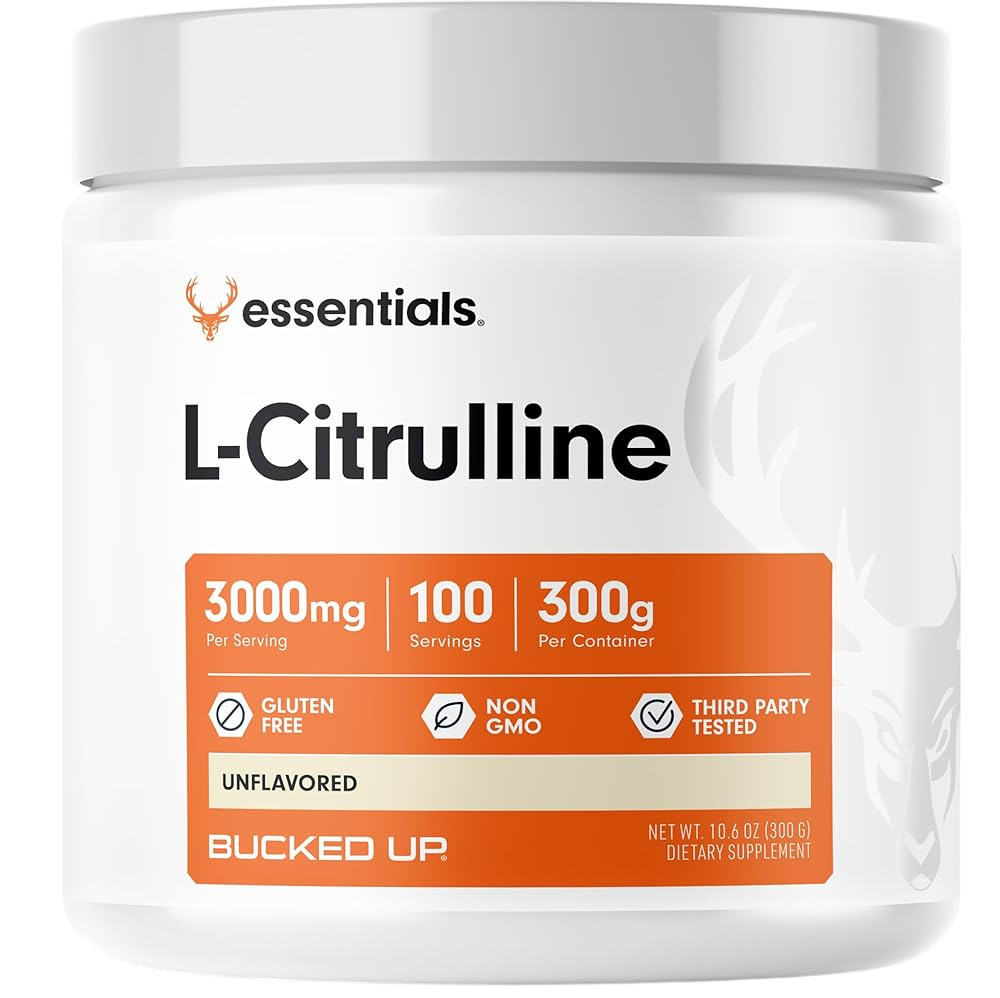
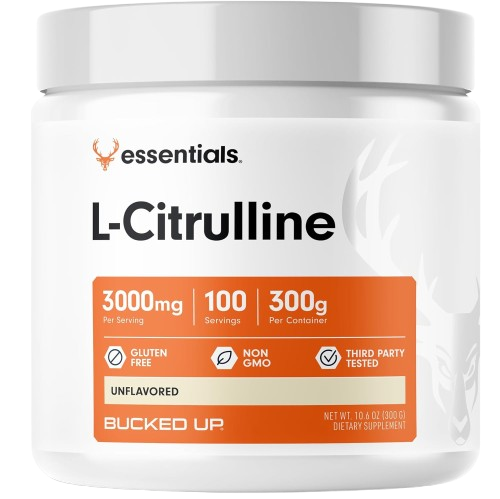
Bucked Up’s 300 g pure L-citrulline powder delivers 3,000 mg (3 g) of pure L-citrulline per scoop, unflavored, with no additional active ingredients. That format makes it straightforward to hit a 3 g single dose pre-workout or stack two scoops for a 6 g daily protocol. One scoop equals one clean, disclosed dose, with no hidden malic acid weight inflating the number on the label.
Evaluation Checklist: Reading a Pure L-Citrulline Label
This checklist separates a transparent product from a dusted one. Apply it to any pure L-citrulline powder before purchasing.
-
Exact gram disclosure: The label should state the precise milligram or gram amount of L-citrulline per serving. “Citrulline Malate Blend” with no gram count signals a problem.
-
Form identification: Confirm whether the product contains pure L-citrulline base or citrulline malate. If it is malate, the ratio, ideally 2:1, should be stated so you can calculate actual citrulline content.
-
Absence of fillers and undisclosed additives: A single-ingredient powder should list one active ingredient. Maltodextrin, silicon dioxide, or other flow agents may appear as inactive ingredients, but the active ingredient count should stay at one.
-
Third-party testing or manufacturing standard disclosure: Look for GMP-certified manufacturing disclosure. Third-party testing certifications, such as NSF or Informed Sport, provide an additional layer of verification that the label matches the contents.
-
Sourcing transparency: Some brands disclose the origin or supplier of their citrulline. This practice is not universal, but it acts as a positive signal for brands that include it.
Bucked Up’s 300 g pure L-citrulline powder meets these criteria with a clear 3,000 mg per scoop listing and single-ingredient profile. For lifters who want citrulline as part of a complete pre-workout stack rather than a standalone powder, Mother Bucker applies the same labeling transparency.
It discloses 4,000 mg of pure L-citrulline alongside Nitrosigine® and Hydroprime® Glycerol for a multi-pathway approach to pump and blood flow support,*1 plus Astragin®, which is studied to support citrulline absorption.*1 See how Bucked Up Pure L-Citrulline Powder aligns with this label checklist.*
Challenges, Misunderstandings, and Limitations
A few misconceptions circulate in the pure L-citrulline category that deserve direct clarification.
“More is always better.” Sports nutrition studies commonly use L-citrulline doses of 3 to 10 g per serving, and higher acute doses up to 15 g have been reported as safe in short-term studies. Gastrointestinal discomfort becomes more likely at very high single doses. The 3 to 6 g range for pure base covers the research-supported window while helping limit unnecessary GI risk for most users.
“Citrulline malate and pure L-citrulline are interchangeable.” They function differently. The malate component adds Krebs cycle support*1 and ammonia clearance benefits,*1 which helps explain why citrulline malate is well-studied for endurance and resistance training volume. Pure base delivers more citrulline per gram of powder, which matters when the primary goal is nitric oxide substrate delivery.*1 Neither form works as a universal choice. The better fit depends on training goals.
“L-arginine is equivalent.” The pharmacokinetic data does not support this view. As discussed earlier, L-arginine’s first-pass degradation makes it a less efficient nitric oxide precursor than L-citrulline at equivalent oral doses.*
Safety, Regulation, and Quality Standards
L-citrulline has a well-documented tolerability profile. L-citrulline has self-affirmed GRAS (Generally Recognized as Safe) status for oral use, and daily doses up to approximately 10 g have been generally well-tolerated in trials lasting from one week to several months.
Reported side effects are usually mild and infrequent. They include gastrointestinal upset, heartburn, which appears more often with the malate form due to its acidity, and occasional headaches in sensitive individuals.
Certain populations should consult a healthcare provider before using L-citrulline. These include individuals with naturally low blood pressure, those with serious kidney conditions, anyone taking blood pressure medications such as ACE inhibitors, beta-blockers, or nitrates, those using PDE5 inhibitors, and anyone scheduled for surgery within two weeks.
L-citrulline-based supplements must never be combined with PDE5 inhibitors or nitrate medications due to the risk of a severe drop in blood pressure. Always consult your healthcare provider before starting any new supplement protocol, particularly if you are managing a health condition or taking prescription medications.
In the United States, L-citrulline supplements are regulated as dietary supplements under the Dietary Supplement Health and Education Act (DSHEA) of 1994. The FDA does not pre-approve dietary supplements before they reach market.
Manufacturers remain responsible for ensuring product safety and that any structure or function claims are truthful and substantiated. Bucked Up products are manufactured in GMP-certified facilities in the USA.
*These statements have not been evaluated by the Food and Drug Administration. This product is not intended to diagnose, treat, cure, or prevent any disease.
Bucked Up focuses on a science-informed approach to nitric oxide support,*1 with disclosed gram counts and no proprietary blends hiding the active ingredient. Start with Bucked Up Pure L-Citrulline Powder if you want a GMP-manufactured, single-ingredient option.*
Frequently Asked Questions
What is pure L-citrulline base, and how is it different from citrulline malate?
Pure L-citrulline base is the free-form amino acid with no bound compounds. Every gram on the label is active citrulline. Citrulline malate is a compound of L-citrulline and malic acid, typically in a 2:1 ratio, meaning roughly two-thirds of the listed weight is citrulline and one-third is malic acid. The malate form adds Krebs cycle and ammonia clearance support,* while pure base delivers more citrulline per gram for those focused specifically on nitric oxide substrate delivery.*
How much pure L-citrulline should I take daily?
The research-supported range is 3 to 6 g daily for pure L-citrulline. See the dosing protocol section above for full details and timing guidance. Always start at the lower end of the range and assess tolerance before increasing.
When is the best time to take pure L-citrulline powder?
For training performance support,* approximately 60 minutes before exercise is the most common timing used in research. For daily vascular support,* timing is more flexible and can be split across meals. Because pure L-citrulline powder contains no stimulants, it can be taken at any time of day, including evening sessions, without affecting sleep.
Can I stack pure L-citrulline powder with a pre-workout?
Stacking pure L-citrulline with a pre-workout is common for lifters who want a specific citrulline dose on top of a formula. Before stacking, check the citrulline content already present in your pre-workout to avoid exceeding the upper end of the research-supported range.
Bucked Up’s Mother Bucker already contains 4,000 mg of pure L-citrulline alongside Nitrosigine® and Hydroprime® Glycerol, so additional pure citrulline powder may not be necessary with that formula. Always consult your healthcare provider if you have questions about your specific protocol.
Are there any side effects or populations who should avoid L-citrulline?
L-citrulline is generally well-tolerated at doses studied for performance support. Mild gastrointestinal discomfort is the most commonly reported side effect, particularly at higher single doses. Individuals with naturally low blood pressure, serious kidney conditions, or those taking blood pressure medications, nitrates, or PDE5 inhibitors should consult a healthcare provider before use.
Pregnant or breastfeeding individuals should also consult a healthcare provider, as safety data in those populations is limited. Discontinue use at least two weeks before any scheduled surgery and follow your healthcare provider’s guidance.
Conclusion and Key Takeaways
Evaluating pure L-citrulline powder for nitric oxide support comes down to a few core factors. You need to understand the pharmacokinetic difference between pure base and citrulline malate, confirm the exact gram count on the label, match the dose to the research-supported 3 to 6 g daily range, verify manufacturing standards and third-party testing where available, and know which populations should consult a healthcare provider before use.
Pure L-citrulline base bypasses first-pass metabolism, converts to L-arginine in the kidneys, and supports a sustained elevation of plasma L-arginine for nitric oxide synthesis.* Citrulline malate adds malic acid for Krebs cycle and ammonia clearance support.*
Neither form works as a universal choice. The right option depends on training goals and how the product fits into a broader supplement protocol. Labels that disclose exact gram counts and avoid proprietary blends give you the information you need to make that call with confidence.
*These statements have not been evaluated by the Food and Drug Administration. This product is not intended to diagnose, treat, cure, or prevent any disease.
References
Stanfield, B. (2024). Nitric oxide supplements: Benefits, forms, dosing, and side effects. Dr. Stanfield. https://drstanfield.com/blogs/articles/nitric-oxide-supplements-benefits-forms-dosing-and-side-effects
1 The content provided in this article is for informational purposes only and is not medical advice. Consult with a medical professional before implementing any changes to your diet, health, or exercise routines. Individual results will vary and are based on a combination of each individual’s diet, exercise, age, and health circumstances. These statements have not been evaluated by the Food and Drug Administration. This product is not intended to diagnose, treat, cure or prevent any disease.
This article was written by Ryan Gardner, CEO of Bucked Up. As the maker of Bucked Up Protein Soda, we have a financial interest in this information. The views expressed are our own and should be read with that context in mind.