Written by: Ryan Gardner, Owner, Managing Partner, CEO, Bucked Up
Key Takeaways
-
Many nitric oxide capsule products hide L-citrulline amounts inside proprietary blends, so you cannot confirm whether effective doses are present.
-
Pure L-citrulline suits capsules because it is stable, non-hygroscopic, and delivers nearly 100% citrulline by weight without conversion math.
-
L-citrulline raises plasma arginine levels more efficiently than direct L-arginine supplementation because it bypasses first-pass metabolism in the liver.1
-
Research-supported doses typically use several grams daily, and consistent multi-day use shows more reliable exercise tolerance support than single pre-workout doses.
-
For transparent nitric oxide support without proprietary blends, choose Bucked Up L-Citrulline so you know exactly what you get in every serving.
How L-Citrulline Works and Why Capsule Form Matters
L-citrulline is a non-essential alpha-amino acid produced naturally in the intestines and liver. It also occurs in watermelon (Citrullus lanatus), which is where it was first isolated and where its name originates. In supplements, L-citrulline functions as a precursor to L-arginine, which then serves as the substrate for nitric oxide synthesis via Nitric Oxide Synthase (NOS) enzymes. Nitric oxide supports relaxation of vascular smooth muscle, which supports blood flow and nutrient delivery to active tissue.*1
Reaching a research-examined dose from food alone is impractical. Getting 3g of citrulline from watermelon would require roughly 2.2 to 3.3 lbs of watermelon per day. Supplementation closes that gap in a practical way.
Capsule format matters for a specific reason. Pure L-citrulline is non-hygroscopic and stable in capsule or tablet form, whereas L-citrulline malate is hygroscopic, tends to clump, and is generally unsuitable for capsule-based products. A capsule product labeled “L-citrulline” should therefore contain pure L-citrulline at close to 100% by weight. A capsule product labeled “citrulline malate” requires conversion math to determine actual citrulline content, and the physical stability of that form in a capsule is a legitimate formulation concern.
Capsules also make daily non-stimulant use straightforward. There is no mixing, no flavor, and no commitment to a full pre-workout stack. For users who want to support nitric oxide production* without caffeine or other active ingredients, a pure L-citrulline capsule offers a clean, stackable option.
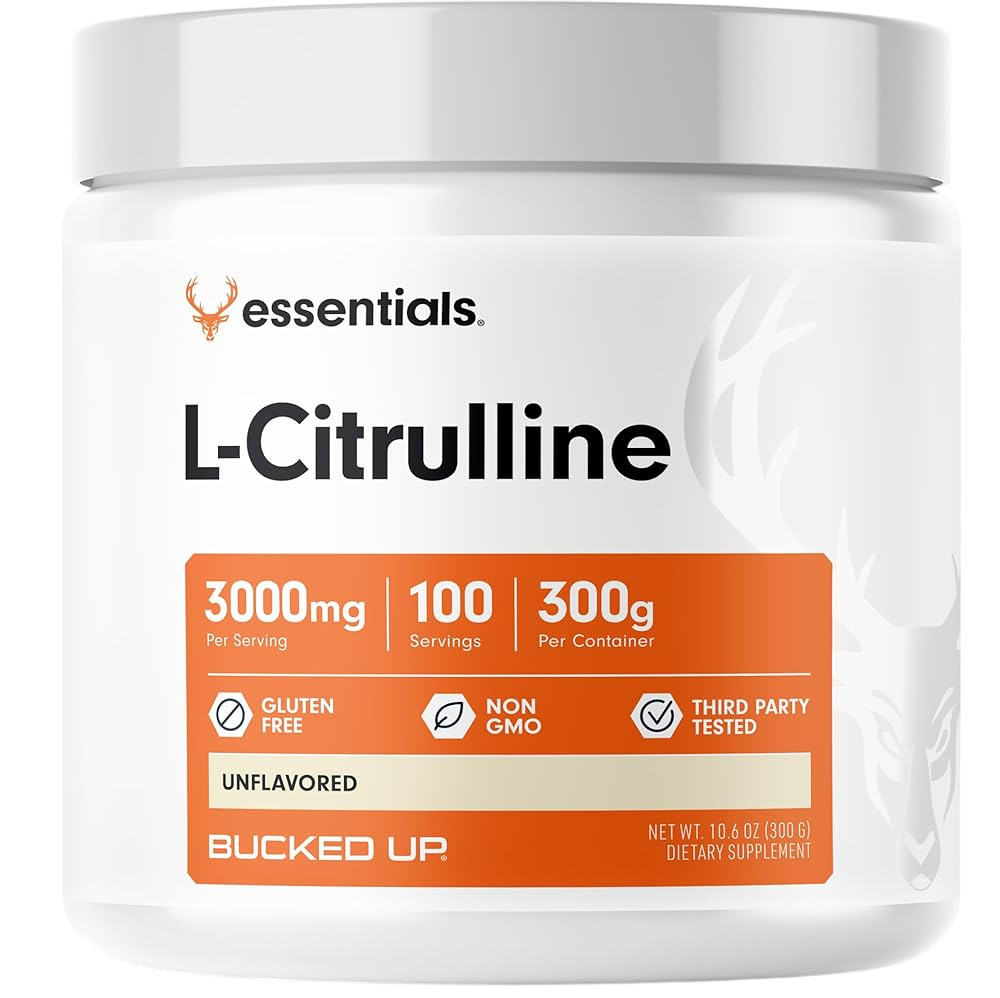
Explore Bucked Up L-Citrulline Capsules for simple, non-stimulant nitric oxide support.
L-Citrulline and L-Arginine: What Happens After You Swallow
L-citrulline often outperforms direct L-arginine supplementation for supporting systemic nitric oxide because of what happens between your mouth and your bloodstream.
Oral L-arginine is significantly degraded by arginase enzymes in the gut and liver during first-pass metabolism, which limits how much reaches systemic circulation. L-citrulline is efficiently absorbed in the small intestine via amino acid transporters and largely bypasses hepatic first-pass metabolism.1 Once absorbed, it travels to the kidneys, where it converts to L-arginine through the enzymes argininosuccinate synthase and argininosuccinate lyase.
This pathway means L-citrulline raises blood arginine levels more efficiently than oral L-arginine supplementation because it is not degraded by arginase during first-pass metabolism.1 Citrulline supplementation can therefore raise plasma arginine levels more effectively than L-arginine.
Plasma citrulline and arginine concentrations rise after oral ingestion. That pattern supports the common recommendation to take L-citrulline roughly 60 minutes before exercise.
Anyone evaluating a nitric oxide capsule that lists L-arginine as its primary ingredient rather than L-citrulline should keep this pharmacokinetic limitation in mind. L-citrulline bypasses first-pass metabolism, which supports better systemic availability than L-arginine.*
Typical L-Citrulline Dosing Ranges in Research
Given L-citrulline’s absorption profile, the next step is understanding how much research typically uses. Dose ranges in the L-citrulline literature vary by form and goal. Key thresholds from examined studies include:
-
Resistance exercise support: 6,000 to 8,000mg of citrulline malate (2:1), taken 45 to 60 minutes pre-workout, is a commonly cited performance dose. Because citrulline malate is approximately 56.6% citrulline by weight, an 8g serving yields roughly 4.5g of actual citrulline.
-
Daily general use (pure L-citrulline): Research commonly examines doses of a few grams once daily. Higher daily doses can produce greater plasma arginine elevation but may increase the risk of gastrointestinal side effects such as bloating or diarrhea.
-
Exercise tolerance (multi-day protocol): Studies show that daily L-citrulline supplementation over multiple days can support exercise tolerance and total work completed during severe-intensity cycling compared with placebo.1
-
Safety ceiling: Daily citrulline intake up to 10g/day has generally been well tolerated in examined populations.
Multi-day L-citrulline supplementation has shown benefit for exercise tolerance in small studies, while single pre-exercise doses including citrulline malate have shown mixed results in some well-controlled trials. Consistent use appears to matter more than any single acute dose.
How Multi-Ingredient Nitric Oxide Capsules Are Typically Built
Multi-ingredient nitric oxide capsule products are common on retail shelves and Amazon. Huge Supplements Magnify is one frequently cited example. These products usually combine L-citrulline with additional vasodilatory or blood-flow-supporting compounds such as L-arginine, beetroot extract, pine bark extract, or other nitrate sources.
The core formulation challenge for any multi-ingredient capsule is capsule count versus dose. A single capsule holds a limited amount of powder. If a product includes six or seven active ingredients in a four-capsule serving, the per-ingredient dose is constrained by simple math. Many retail capsule products use lower doses of L-citrulline than those shown to be effective in examined studies.
Proprietary blends compound this problem. When a label lists a “Nitric Oxide Matrix: 2,500mg” without disclosing individual ingredient weights, you cannot verify whether the L-citrulline content reaches any examined threshold. Products labeled “2:1 L-citrulline malate” can also have variable actual citrulline content due to differences in labeling and manufacturing practices. That variability exists even when a product discloses the form. In a proprietary blend, the variability becomes invisible.
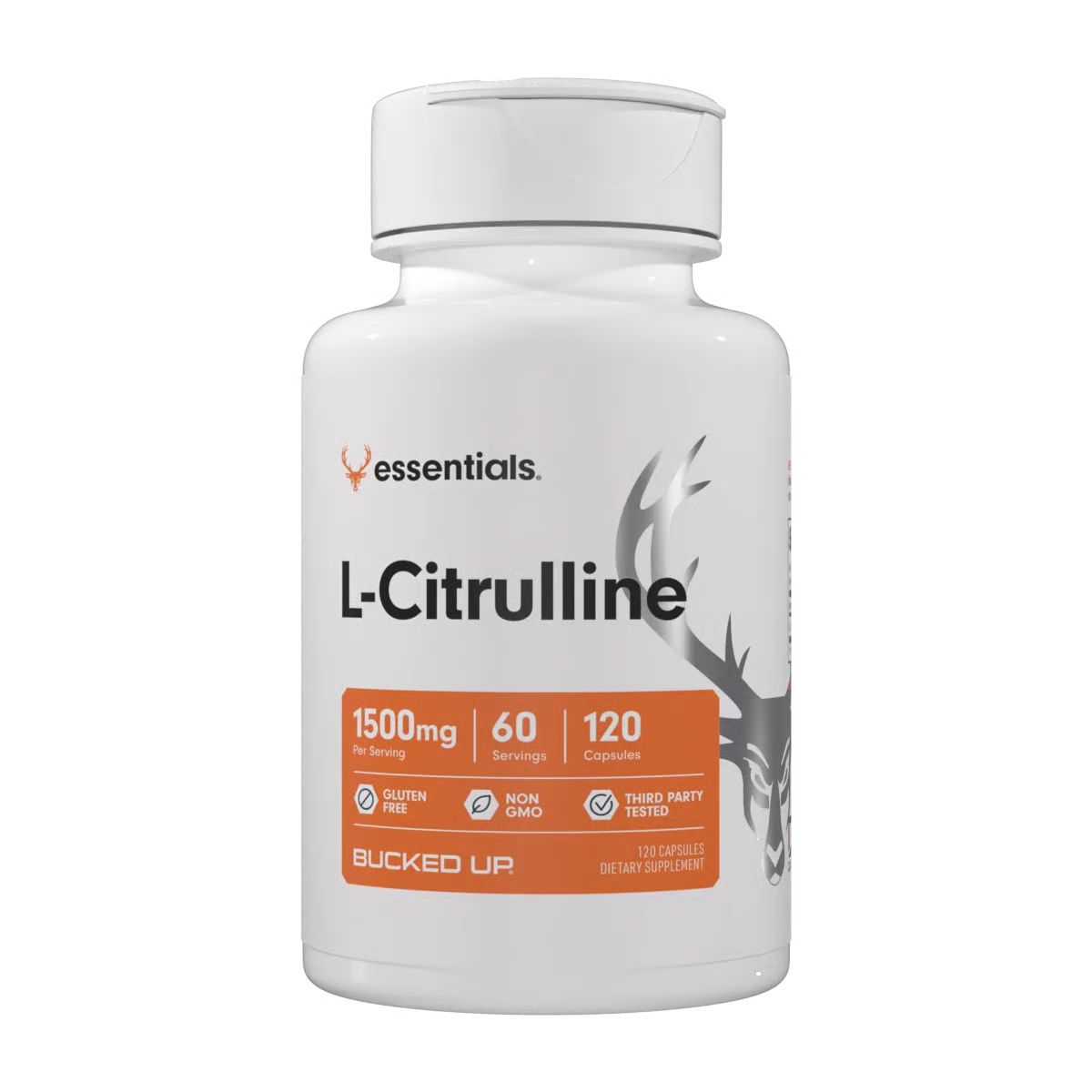
A single-ingredient capsule with a disclosed per-capsule dose removes that ambiguity. You know the form, you know the weight, and you can calculate whether the serving reaches a dose the research has examined. See how Bucked Up L-Citrulline Capsules provide a clearly labeled single-ingredient option. Bucked Up L-Citrulline Capsules deliver 750mg of pure L-citrulline per capsule with a fully disclosed label and no proprietary blend. For users who want an advanced pre-workout stack, the Mother Bucker pre-workout pairs 4,000mg of pure L-citrulline with Nitrosigine® and Hydroprime® Glycerol for multi-pathway nitric oxide and cellular hydration support.*
Daily Use and Stacking: Common L-Citrulline Questions
Can L-citrulline capsules be taken every day? Yes. As noted in the dosing section, examined populations have generally tolerated daily doses up to 10g over periods ranging from one week to several months, though gastrointestinal discomfort can occur. The multi-day protocol data also suggests consistent daily use supports nitric oxide production* more reliably than single acute doses.1 Consult your healthcare provider before beginning any daily supplementation protocol, particularly if you take blood pressure medications, nitrate medications, or PDE5 inhibitors, because L-citrulline’s vasodilatory effects may compound with those agents.
Can pure L-citrulline capsules be stacked with a pre-workout? Pure L-citrulline capsules are a non-stimulant, single-ingredient product, which makes stacking straightforward. Users who train with a pre-workout that already contains citrulline malate should account for the combined citrulline load to avoid exceeding comfortable daily totals. Users who train with a stimulant-only pre-workout that contains no citrulline can add L-citrulline capsules to support nitric oxide production* without adding caffeine or other active ingredients.
Does the form of citrulline matter when choosing a capsule? For capsule products specifically, form matters for two reasons: dose calculation and physical stability. Pure L-citrulline’s non-hygroscopic properties make it the more suitable choice for capsule formulations, as discussed earlier. A capsule labeled “pure L-citrulline” delivers close to 100% citrulline by weight. A capsule labeled “citrulline malate” requires the conversion math discussed earlier to determine actual citrulline content per serving.
How to Read L-Citrulline Capsule Labels
Label details determine whether a nitric oxide capsule product can realistically match research doses. When evaluating magnify nitric oxide capsules with L-citrulline, focus on a few connected checkpoints.
-
Disclosed per-capsule dose: Start by confirming how much citrulline you get in each capsule. The label should state milligrams of L-citrulline per capsule, not just per serving, so you can adjust dose without guessing.
-
Form identification: Once you know the amount, confirm the form. “Pure L-citrulline” and “L-citrulline malate” are not interchangeable on a label. If it is the malate form, apply the earlier conversion to understand how much actual citrulline you receive.
-
No proprietary blend obscuring citrulline content: These checks only work if the manufacturer discloses individual ingredient amounts. If citrulline appears inside a blend with a single total weight, the individual dose is unknown.
-
Absorption support ingredients: Astragin® is one ingredient studied to support citrulline absorption.*1 Its presence on a label signals that the formulator considered bioavailability, not just raw dose.
-
Stimulant status: Confirm whether the product contains caffeine or other stimulants if non-stimulant daily use is your goal.
-
Manufacturing standards: Products manufactured in GMP-certified facilities meet defined quality and consistency standards for supplement production.
How to Choose an L-Citrulline Capsule You Can Trust
The research on L-citrulline is real, the pharmacokinetics are well characterized, and the dosing thresholds are documented. The gap between what the research examines and what many capsule products actually deliver usually comes down to label details, not the underlying science.
Anyone evaluating nitric oxide capsule options should start with the label. Confirm the form, confirm the per-capsule dose, and confirm whether the serving reaches a dose the research has examined. Reputable L-citrulline capsule products should be standardized to a disclosed per-serving amount and avoid proprietary blends that obscure actual citrulline content.
Multi-ingredient formulas can offer additional support mechanisms, but only when each ingredient appears at a disclosed dose that research has examined. A formula with six ingredients at undisclosed amounts is not automatically more effective. It is simply harder to verify.
Pure L-citrulline capsules with a disclosed dose, no proprietary blend, and absorption support provide a transparent entry point into nitric oxide support.* Bucked Up L-Citrulline Capsules deliver 750mg of pure L-citrulline per capsule with a fully disclosed label. See Bucked Up L-Citrulline Capsules for a clearly labeled nitric oxide support option.
*These statements have not been evaluated by the Food and Drug Administration. This product is not intended to diagnose, treat, cure, or prevent any disease.
Frequently Asked Questions
What is the difference between pure L-citrulline and citrulline malate in capsule products?
Pure L-citrulline delivers close to 100% citrulline by weight per capsule. Citrulline malate is a compound of L-citrulline and malic acid, typically in a 2:1 ratio. As noted earlier, this means you need to apply the ~56.6% conversion to understand how much actual citrulline you are getting. For capsule formulations specifically, pure L-citrulline is also the more physically stable form due to the moisture-absorption issues with malate noted earlier. When evaluating a capsule product, identifying which form is present and applying the correct conversion is the first step to understanding whether the serving reaches a dose the research has examined. Bucked Up L-Citrulline Capsules use pure L-citrulline at 750mg per capsule with a fully disclosed label, so no conversion math is required.
How long does it take for L-citrulline capsules to support nitric oxide production?
Plasma citrulline and arginine concentrations rise after oral ingestion of L-citrulline. This pattern explains why the standard timing recommendation is to take L-citrulline roughly 60 minutes before exercise for acute pre-workout use. For daily non-stimulant use, the multi-day protocol data suggests that consistent supplementation over seven or more days may support nitric oxide production more reliably than any single acute dose. Users taking L-citrulline capsules for general daily support rather than acute pre-workout use can take them at any consistent time. Always consult your healthcare provider before beginning a new supplementation protocol, particularly if you take prescription medications.*
Can I stack L-citrulline capsules with a pre-workout that already contains citrulline?
Stacking is possible, but the combined citrulline load from both products should be tracked. If your pre-workout contains 6,000mg of citrulline malate (providing approximately 3,400mg of actual L-citrulline) and you add two L-citrulline capsules at 750mg each, the total citrulline intake for that session is approximately 4,900mg. That total falls within the range of doses examined in the research and is generally well tolerated. Users with gastrointestinal sensitivity should start at lower combined doses and adjust. Bucked Up L-Citrulline Capsules are a single-ingredient, stimulant-free product designed for this kind of flexible stacking. For users who want an advanced pre-workout nitric oxide stack in a single product, the Mother Bucker pre-workout combines 4,000mg of pure L-citrulline with Nitrosigine® and Hydroprime® Glycerol for multi-pathway support.*
Why do many nitric oxide capsule products use proprietary blends instead of disclosing individual ingredient doses?
Proprietary blends allow manufacturers to list multiple ingredients under a single total weight without disclosing how much of each ingredient is present. This practice is legal under current FDA labeling rules for dietary supplements, but it prevents consumers from verifying whether any individual ingredient reaches a dose the research has examined. For L-citrulline specifically, the gap between a disclosed clinical dose and a token “dusting” can be significant. A product listing “Nitric Oxide Matrix: 2,000mg” with L-citrulline as one of five ingredients could contain anywhere from a few hundred milligrams to the full 2,000mg of citrulline. There is no way to know from the label alone. Choosing a product with fully disclosed per-ingredient doses removes that uncertainty.*
Are there any safety considerations for daily L-citrulline capsule use?
L-citrulline is generally well tolerated at doses examined in research, with a milder side-effect profile than equivalent L-arginine doses. Gastrointestinal discomfort such as nausea, bloating, or diarrhea is the most commonly reported side effect and is more likely at higher single doses. Individuals with naturally low blood pressure should consult a healthcare provider before use, because L-citrulline’s vasodilatory effects may compound with their baseline. L-citrulline may also compound the effects of blood pressure medications, nitrate medications, and PDE5 inhibitors, so anyone taking those medications should consult their healthcare provider before adding L-citrulline supplementation. Pregnant or breastfeeding individuals should avoid use or consult a healthcare provider. Individuals with kidney conditions should consult a healthcare provider before use, as impaired renal function can affect L-citrulline metabolism.*
References
Bailey, S. J., Blackwell, J. R., Lord, T., Vanhatalo, A., Winyard, P. G., & Jones, A. M. (2015). L-citrulline supplementation improves O2 uptake kinetics and high-intensity exercise performance in humans. Journal of Applied Physiology, 119(4), 385–395. https://pubmed.ncbi.nlm.nih.gov/26023227/
1 The content provided in this article is for informational purposes only and is not medical advice. Consult with a medical professional before implementing any changes to your diet, health, or exercise routines. Individual results will vary and are based on a combination of each individual’s diet, exercise, age, and health circumstances. These statements have not been evaluated by the Food and Drug Administration. This product is not intended to diagnose, treat, cure or prevent any disease.
This article was written by Ryan Gardner, CEO of Bucked Up. As the maker of Bucked Up Protein Soda, we have a financial interest in this information. The views expressed are our own and should be read with that context in mind.