Written by: Ryan Gardner, Owner, Managing Partner, CEO, Bucked Up
Key Takeaways
- Many arginine supplements fall short for pump support because first-pass metabolism in the gut and liver breaks down much of the dose before it reaches circulation.
- L-citrulline bypasses most first-pass metabolism, then converts in the kidneys to raise plasma arginine levels and support nitric oxide production for better blood flow.*1
- Transparent labels with clearly listed gram amounts help you check if a product uses research-supported L-citrulline doses between 3-8g, while proprietary blends hide whether effective quantities are present.
- Form choice affects your results: pure L-citrulline allows precise dosing, citrulline malate adds potential energy support from malic acid, and advanced stacks combine multiple pathways for vascular function.*
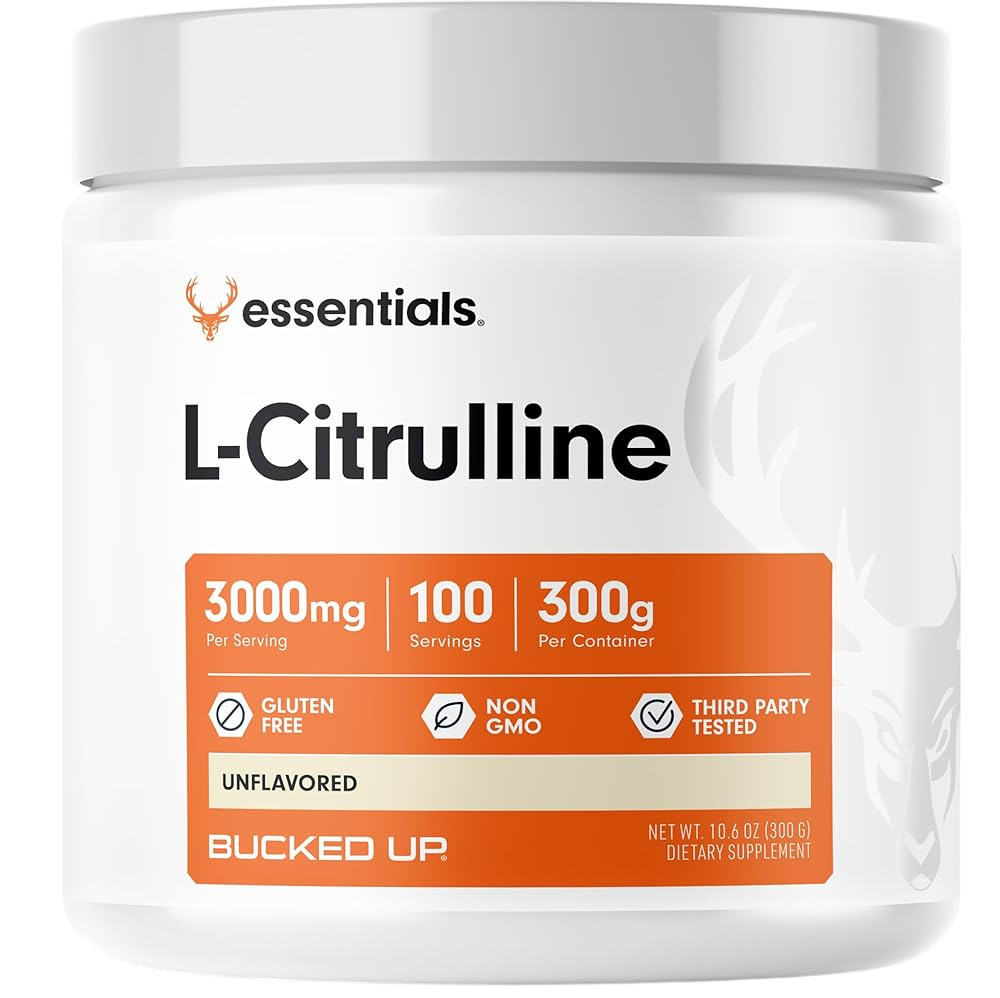
- For a transparent option, Bucked Up L-Citrulline 300 Grams provides clearly labeled dosing and absorption support ingredients for targeted nitric oxide support.
The Problem: Flat Workouts and Hidden Pump Ingredients
Many regular lifters rely on high-stimulant pre-workouts that deliver jittery energy but weak pumps. Formulas that lean on L-arginine or hide L-citrulline inside proprietary blends often sit at the center of this issue, because users cannot see if effective amounts are present.
Research demonstrates that oral L-arginine supplementation faces significant first-pass metabolism limitations, with much of the amino acid degraded in the gut and liver before it reaches systemic circulation. This pharmacokinetic barrier helps explain why arginine-heavy pre-workouts often fail to deliver noticeable pump effects even when labels list large milligram amounts.
Proprietary blends create a second problem by obscuring whether products contain meaningful levels of nitric oxide precursors. Without disclosed gram amounts, lifters cannot tell if they are getting research-supported doses or trace quantities that are unlikely to create a real physiological effect.
The Solution: L-Citrulline Reaches the Kidneys for Reliable Nitric Oxide Support
L-citrulline is a non-essential amino acid that avoids many of the first-pass metabolism issues that limit L-arginine supplementation. Unlike arginine, which undergoes significant hepatic degradation, L-citrulline is efficiently absorbed from the small intestine and transported to the kidneys, where argininosuccinate synthase and argininosuccinate lyase convert it to L-arginine.
This pathway produces higher and more sustained plasma L-arginine concentrations than direct arginine intake. The increased arginine availability then supports nitric oxide synthesis through nitric oxide synthase enzymes, which promotes vasodilation and improved blood flow to working muscles.*1
L-citrulline also plays a role in the urea cycle and supports ammonia clearance during intense exercise.1 This dual mechanism may help reduce exercise-induced ammonia buildup in skeletal muscle, which is implicated in central fatigue. At the same time, it supports vascular function that helps deliver nutrients to active tissue.*
Comparing Forms for Your Goals: Pure L-Citrulline, Citrulline Malate 2:1, and Stacked Blends
Understanding how L-citrulline works in the body makes form selection an important decision. Different options can fit different training styles and preferences.
Pure L-citrulline delivers 100% active amino acid, which keeps dose calculations simple and allows precise control over daily intake. This format works well for lifters who want to titrate their dose or stack L-citrulline with other targeted ingredients.
Citrulline malate combines L-citrulline with malic acid in a 2:1 ratio, so about 1.76g of citrulline malate provides 1g of pure L-citrulline. The malic acid component may support energy metabolism through its role as a Krebs Cycle intermediate, which can offer combined support for vasodilation and cellular energy production.*1
Advanced formulations often stack pure L-citrulline with complementary ingredients such as Nitrosigine (inositol-stabilized arginine silicate) and glycerol compounds. Each component targets a different aspect of blood flow or cellular hydration, creating a multi-pathway approach to vascular support and pump.*
How to Evaluate Transparent Pre-Workout and Pump Formulas
Evaluating nitric oxide boosters starts with the label, not the marketing copy. Look first for clearly disclosed gram amounts instead of proprietary blends that group several ingredients under a single total.
Research-supported L-citrulline doses typically fall between 3-8 grams, and studies using 6-8g of citrulline malate report significant improvements in resistance training performance1. Products that list L-citrulline without a specific amount, or that use doses below 3g, are unlikely to create meaningful physiological changes.
Effective evaluation also includes understanding when to take L-citrulline for acute performance support. L-citrulline reaches peak plasma concentrations within 0.7 to 2 hours after ingestion, so taking it 30-60 minutes before training aligns blood flow support with your working sets.* This timing detail also helps you check whether a product’s usage directions match its pharmacokinetics.
Formulations that include absorption enhancers can further support results. Ingredients such as AstraGin (astragalus and panax notoginseng extract) may help L-citrulline bioavailability, which can increase the impact of each gram consumed.*1 Products like Bucked Up L-Citrulline 300 Grams use this type of approach by pairing transparent dosing with absorption support.
Real-World Use Cases: Matching L-Citrulline Dosing to Your Training
Beginning lifters who want a noticeable pump often start with 6g of citrulline malate, which provides about 3.4g of pure L-citrulline plus malic acid for potential energy support. This dose sits near the range where research shows measurable changes in blood flow markers.*1
Lifters who rely on high-stimulant pre-workouts face a different challenge, because caffeine can cause vasoconstriction that works against pump ingredients. These users may respond better to higher L-citrulline intake, such as 6-8g of citrulline malate equivalent, to help maintain vasodilation alongside elevated stimulant use.*1
Advanced athletes who use pure powder or capsule forms gain flexibility to adjust dosing and stack with other nitric oxide precursors. Pure L-citrulline supports gradual dose escalation and easy pairing with ingredients like Nitrosigine for combined blood flow support.* A standalone product such as Bucked Up L-Citrulline 300 Grams can fit well into this type of customized stack.
Safety, Medical Considerations, and What to Expect
L-citrulline shows a favorable safety profile at research-supported doses, with mild gastrointestinal issues reported as the most common side effects, especially above 10g per day. These effects can include nausea, bloating, or digestive discomfort, and often improve when users lower the dose or take it with food.
People with low blood pressure, heart conditions, kidney disease, or those using cardiovascular medications should talk with a healthcare provider before starting nitric oxide support supplements.* L-citrulline should not be combined with PDE-5 inhibitors or nitrate medications because of the risk of dangerous blood pressure drops.
Realistic expectations help with long-term consistency. L-citrulline supports blood flow and nutrient delivery rather than providing the immediate stimulation associated with caffeine.* Effects may feel subtle at first, and many lifters notice clearer benefits after consistent use as training adaptations accumulate.
*This statement has not been evaluated by the Food and Drug Administration. This product is not intended to diagnose, treat, cure, or prevent any disease.
Conclusion: Choose Transparent Labels for Evidence-Based Pump Support
Effective nitric oxide support depends on understanding how ingredients move through the body, checking for transparent dosing, and selecting forms that match your training style. L-citrulline’s ability to bypass much of first-pass metabolism positions it as a practical option compared to direct arginine intake for supporting systemic nitric oxide production.*
Quality formulations clearly list gram amounts, use research-aligned doses, and may include absorption enhancers to support bioavailability. By focusing on these evidence-based criteria instead of marketing hype, lifters can choose products that support their performance goals with less guesswork. A transparent standalone option such as Bucked Up L-Citrulline 300 Grams can make it easier to build and adjust a pump-focused stack.
Frequently Asked Questions
Below are common questions about L-citrulline dosing, forms, and how to use it around training.
How much L-citrulline should I take for gym performance?
The research-supported range mentioned earlier runs from 3-8 grams of L-citrulline or 6-8 grams of citrulline malate, taken about 30-60 minutes before training. Many studies that report performance benefits use 6g of citrulline malate, which provides roughly 3.4g of pure L-citrulline. Start at the lower end to assess tolerance, because daily amounts above 10g can cause digestive discomfort for some people.
What is the difference between L-citrulline and citrulline malate?
Pure L-citrulline contains only the active amino acid, so every gram on the label reflects a gram of L-citrulline. Citrulline malate pairs L-citrulline with malic acid in a 2:1 ratio, and about 1.76g of citrulline malate yields 1g of pure L-citrulline. The malic acid portion may support energy metabolism through the Krebs Cycle, which can appeal to lifters who focus on endurance or longer training sessions.
Why is L-citrulline better than L-arginine for nitric oxide support?
As explained earlier, L-citrulline’s main advantage comes from its metabolic pathway. It avoids much of the gut and liver breakdown that limits oral L-arginine, then converts to arginine in the kidneys instead. This process produces higher and more sustained plasma arginine levels, which supports nitric oxide production and blood flow more effectively than direct arginine intake for many users.
Can I take L-citrulline with other pre-workout ingredients?
L-citrulline pairs well with most common pre-workout ingredients, including caffeine, beta-alanine, and creatine. Many advanced formulas stack L-citrulline with other nitric oxide precursors such as Nitrosigine, along with absorption enhancers like AstraGin. Avoid combining L-citrulline with PDE-5 inhibitors or nitrate medications because of blood pressure risks, and consult a healthcare provider if you use cardiovascular drugs.
How long does it take to feel the effects of L-citrulline?
Based on the peak plasma timing discussed earlier, taking L-citrulline 30-60 minutes before training supports acute performance benefits. Many lifters notice changes in blood flow and pump within the first few sessions, while others experience clearer differences after several consistent workouts as training adaptations build. Unlike caffeine, L-citrulline tends to feel more subtle and steady than immediately stimulating.
1 The content provided in this article is for informational purposes only and is not medical advice. Consult with a medical professional before implementing any changes to your diet, health, or exercise routines.
Individual results will vary and are based on a combination of each individual’s diet, exercise, age, and health circumstances.
These statements have not been evaluated by the Food and Drug Administration. This product is not intended to diagnose, treat, cure or prevent any disease.
This article was written by Ryan Gardner, CEO of Bucked Up. As the maker of Bucked Up Protein Soda, we have a financial interest in this information. The views expressed are our own and should be read with that context in mind.