Written by: Ryan Gardner, Owner, Managing Partner, CEO, Bucked Up
Key Takeaways
-
Many pre-workouts under-dose L-Citrulline or rely on poorly absorbed L-Arginine, which can leave workouts feeling flat and waste money.
-
L-Citrulline bypasses first-pass metabolism and supports a more sustained rise in plasma arginine and nitric oxide than direct L-Arginine.1
-
Research most often uses 6–8 g of Citrulline Malate (2:1) or 3–6 g of pure L-Citrulline per day, taken about 60 minutes before training.
-
Fully disclosed labels that list exact citrulline amounts, not proprietary blends, make it possible to reach effective doses consistently.
-
Ready to hit studied doses every session? Shop Bucked Up’s pure L-Citrulline and experience the pump you have been missing.
The Problem: Under-Dosed Nitric Oxide Supplements and Flat Workouts
The supplement industry has a dusting problem. Dusting means listing an ingredient on a label at a dose too low to produce any studied effect, often hidden inside a proprietary blend where individual amounts never appear. L-Citrulline is one of the most commonly dusted ingredients in pre-workout formulas.
These products look impressive on the label and do very little in the gym. Lifters who want support for muscle pump*, muscle endurance*, and recovery from intense training* often cycle through products and blame their body, when the real issue is the dose.1
A second, related problem comes from products that still rely on L-Arginine as the primary nitric oxide precursor. Oral L-Arginine exhibits incomplete bioavailability due to substantial first-pass extraction by intestinal and hepatic arginases. That limitation is built into the molecule itself, and marketing language cannot change that reality.
How L-Citrulline Actually Supports Nitric Oxide Production*
L-Citrulline is a non-essential alpha-amino acid produced naturally in the body and found in foods like watermelon, cucumbers, and squash. In supplements, its value comes from a clear pharmacokinetic advantage over L-Arginine.
Where L-Arginine is significantly degraded by arginase enzymes in the gut and liver before it reaches systemic circulation, L-Citrulline bypasses first-pass metabolism and is transported to the kidneys, where it is converted into L-Arginine through the enzymes argininosuccinate synthase and argininosuccinate lyase. This pathway supports a more sustained elevation in plasma L-Arginine than direct L-Arginine supplementation.1 That means more substrate for nitric oxide synthesis via Nitric Oxide Synthase (NOS) enzymes.
Nitric oxide supports the relaxation of vascular smooth muscle cells, which supports blood flow* and the delivery of oxygen, glucose, and metabolic substrates to active skeletal muscle.1 That process drives the pump*, so the form and dose of your nitric oxide precursor matter.
Beyond supporting blood flow, L-Citrulline also functions as a key intermediate in the urea cycle, which converts ammonia, a byproduct of protein metabolism and intense exercise, into urea for excretion. By supporting ammonia clearance*, L-Citrulline may help reduce exercise-induced ammonia accumulation in skeletal muscle, which is associated with central fatigue.1 L-Citrulline exhibits high oral bioavailability and is absorbed intact in the small intestine without significant hepatic first-pass metabolism.
When L-Citrulline is combined with Malic Acid to form Citrulline Malate, the malate component may add a benefit related to energy production. Malic acid is an intermediate in the Krebs Cycle (TCA Cycle), which is central to aerobic ATP production. The malate component is theorized to support oxidative ATP production and phosphocreatine recovery, which may support muscle endurance* and reduce fatigue.1
Bucked Up promotes a dosing of science-backed ingredients, including Citrulline Malate and pure L-Citrulline. Explore Bucked Up’s L-Citrulline lineup and choose a formula that fits your training style.
Studied Dosing Thresholds for L-Citrulline Nitric Oxide Support*
Most nitric oxide supplements fall short at the dose level. The research on L-Citrulline is substantial and points to specific thresholds that matter for muscle endurance* and recovery from intense training*.
For resistance training, human trials most often use 6 to 8 g of Citrulline Malate (2:1), taken approximately 30 to 60 minutes before exercise.1 Because Citrulline Malate contains only 56.6% citrulline by weight, an 8 g dose of citrulline malate delivers approximately 4.5 g of actual citrulline. This detail matters when reading labels. A product listing 4 g of Citrulline Malate delivers roughly 2.3 g of actual L-Citrulline, which falls below the studied range.
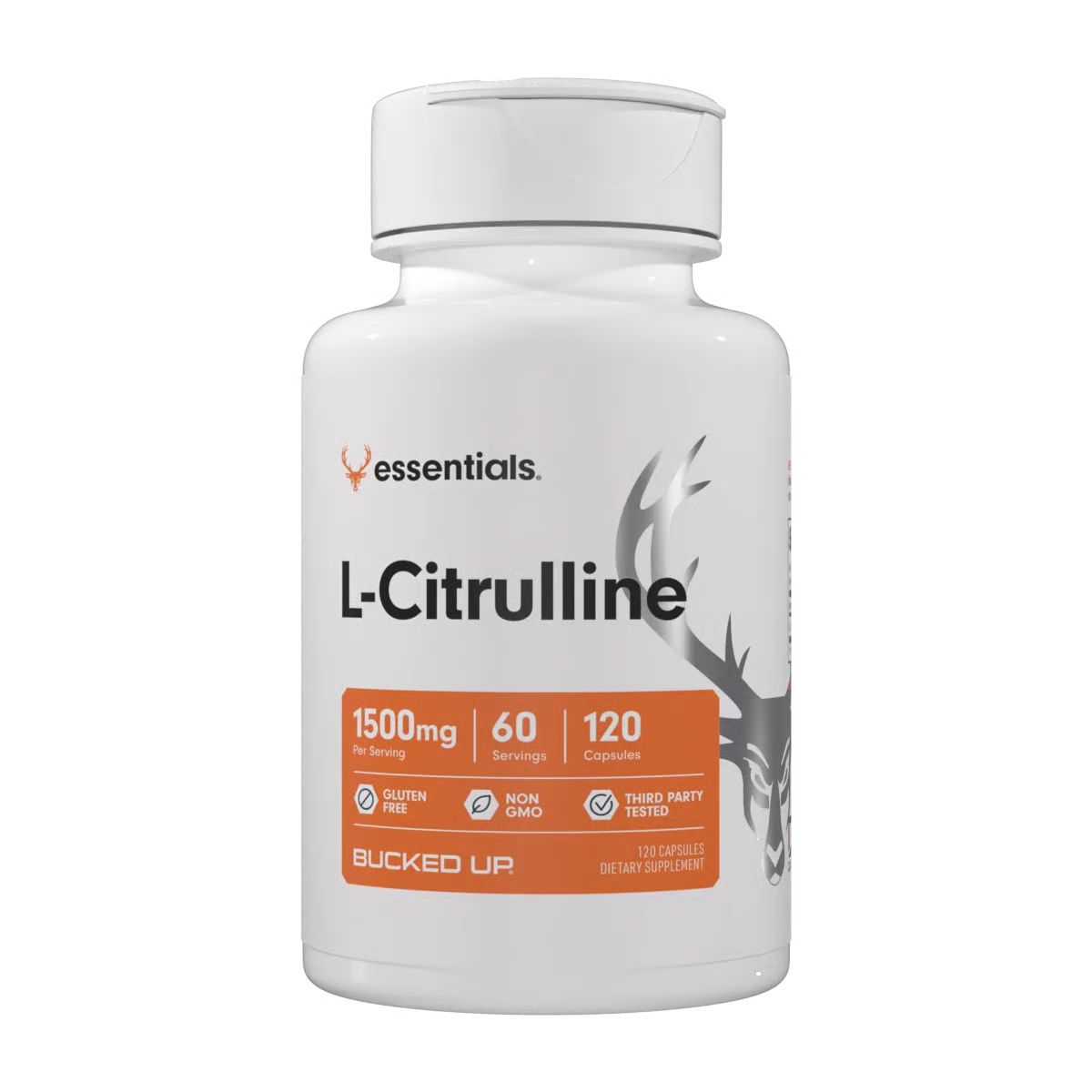
For pure L-Citrulline, research generally supports 3 to 6 g per day for nitric oxide production* and exercise performance*.1 Citrulline supplementation can increase the plasma arginine/ADMA ratio, urinary nitrate excretion, and cGMP excretion, which indicates support for nitric oxide production.
Timing matters as well. This 60-minute pre-exercise window aligns with peak plasma concentrations of both citrulline and arginine, which supports the timing guidance for acute performance.
Multi-day L-Citrulline supplementation can improve exercise tolerance and total work completed in some studies, while single pre-exercise doses of either pure L-Citrulline or Citrulline Malate show more variable results. Consistent daily use at studied doses appears to support more reliable outcomes than sporadic supplementation.
Comparing Your L-Citrulline Sources: Food, Standalone, and Blends
Most people get L-Citrulline from three places: food sources, standalone supplements, and pre-workout blends. Each option trades off dose precision, convenience, and stacking flexibility.
Food sources like watermelon contain L-Citrulline, but reaching even 3 g from food alone would require roughly 2.2 to 3.3 lbs of watermelon per day. That intake is impractical for most athletes who want to hit studied dosing thresholds consistently before training.
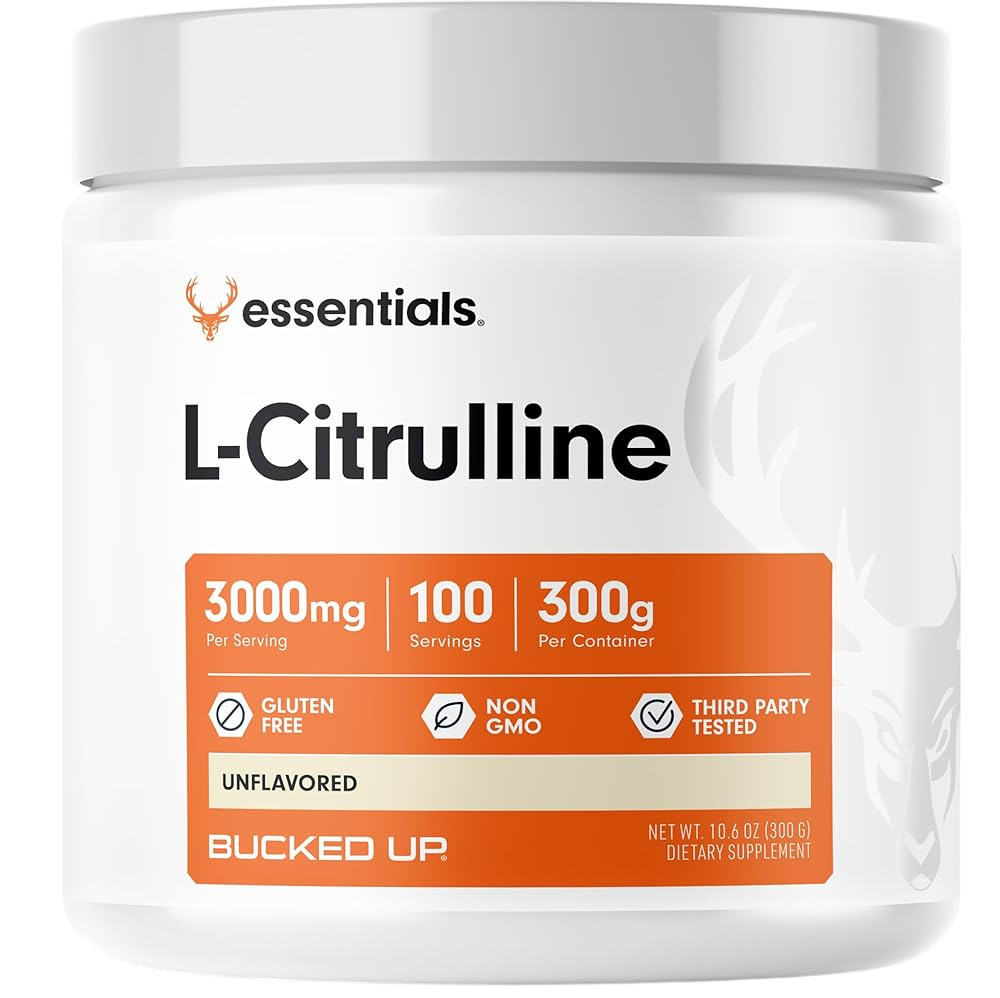
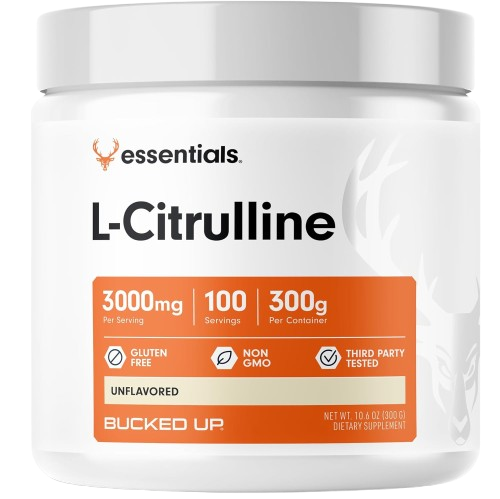
Standalone L-Citrulline powders and capsules offer the highest dose precision. Pure L-Citrulline delivers 100% of the stated dose as the active amino acid, whereas Citrulline Malate products require consumers to adjust for the malic acid component to determine actual citrulline intake. For athletes running high-dose stacking protocols or who want to control their exact citrulline intake independently of other pre-workout ingredients, a standalone powder offers the most flexibility.
If you prefer convenience over dose customization, pre-workout blends that fully disclose their L-Citrulline content offer the advantage of stacking citrulline with complementary ingredients, such as caffeine for energy, beta-alanine for buffering lactic acid, and AlphaSize® for focus, in a single serving. Label transparency remains the critical variable. A pre-workout that discloses 6,000 mg of Citrulline Malate (2:1) is fundamentally different from one that lists a “Pump Matrix 4,000 mg” without breaking out individual doses.
Bucked Up discloses the full citrulline dose on every label. The foundational Bucked Up Pre-Workout and Woke AF Pre-Workout each contain 6,000 mg of Citrulline Malate (2:1), which sits at the studied threshold for nitric oxide production* and muscle endurance*. Mother Bucker takes a different approach, stacking 4,000 mg of pure L-Citrulline with Nitrosigine® and Hydroprime® Glycerol for a multi-pathway approach to blood flow* and cellular hydration. Every formula in the line includes Astragin®, which is studied to support citrulline absorption*.1 Explore Bucked Up’s fully disclosed L-Citrulline formulas and match them to your training goals.
How to Evaluate Nitric Oxide Supplement Labels
Evaluating nitric oxide supplements without a transparent framework leads to wasted money because many products obscure the information you need to verify studied doses. The framework below focuses on the variables that determine whether a product can realistically deliver the effects seen in research.
Ingredient form. Identify whether the product uses pure L-Citrulline or Citrulline Malate. If it lists Citrulline Malate, check whether the ratio appears on the label, with 2:1 as the standard. Third-party testing has identified frequent inaccuracies in stated citrulline-to-malate ratios in commercial products, with some delivering substantially less citrulline than labeled.
Disclosed serving sizes. Look for the actual gram amount of L-Citrulline or Citrulline Malate per serving, not just a blend total. If the label shows a proprietary blend with a combined weight, you cannot determine whether the citrulline dose meets the studied threshold.
Label transparency. A fully disclosed label lists every ingredient with its individual dose. This detail is essential for deciding whether a product reaches studied dosing thresholds for nitric oxide production* and muscle endurance*.
Timing guidance. The product should provide clear pre-exercise timing instructions. For acute performance support, L-Citrulline is typically taken about 60 minutes before intense physical activity.
Intended use case. Decide whether you want a standalone citrulline supplement for stacking flexibility, a Citrulline Malate formula for combined vasodilation and energy metabolism support, or an advanced stack pairing pure L-Citrulline with additional nitric-oxide-supporting ingredients. Align the formula with your training goals and your tolerance for other active ingredients.
Safety, Limitations, and Common Misconceptions
L-Citrulline is generally well tolerated at doses studied for performance support. Gastrointestinal side effects are the most commonly reported, including nausea, diarrhea, bloating, stomach pain, and heartburn. These effects appear more often at very high single doses, such as 10 g or more, and are less common at the 6 to 8 g Citrulline Malate range used in exercise performance research.
Headaches occur less frequently and relate to the vasodilatory effects of increased nitric oxide in sensitive individuals.
Several groups should talk with a healthcare provider before using L-Citrulline or any nitric oxide precursor supplement. People with naturally low blood pressure should exercise caution because L-Citrulline’s vasodilatory effects may compound with their baseline. Individuals with serious kidney conditions should avoid high doses, since impaired renal function affects L-Citrulline metabolism. Nitric oxide precursor supplements should be discontinued at least two weeks before any scheduled surgery due to possible effects on blood pressure regulation during procedures. Safety is not established in pregnancy and breastfeeding, so a healthcare provider’s guidance is essential.
Drug interactions deserve careful attention. L-Citrulline may compound the effects of blood-pressure-lowering medications, nitrate medications, and phosphodiesterase-5 (PDE5) inhibitors through additive vasodilatory effects. Always consult a healthcare provider before combining L-Citrulline with any prescription medications.
One common misconception is that L-Citrulline and L-Arginine are interchangeable on a gram-for-gram basis. As noted earlier, L-Arginine’s first-pass metabolism limit its bioavailability to roughly 21%, whereas L-Citrulline bypasses this degradation pathway entirely. Choosing a product based on L-Arginine content rather than L-Citrulline content often leads to disappointing results.
Reader Scenarios: How Different Athletes Choose Nitric Oxide Support in 2026
The lifter chasing the pump. A 185 lb intermediate lifter trains four days per week and has never felt a noticeable pump from previous pre-workouts. Their priority is a fully disclosed Citrulline Malate dose at or above 6 g per serving, taken 60 minutes before training. They want to understand what they are taking and why, instead of trusting a proprietary blend.
The high-stim athlete concerned about vasoconstriction. An experienced athlete uses high-caffeine pre-workouts and notices that heavy stimulant loads can work against blood flow support. They look for a formula that pairs a full Citrulline Malate dose with the stimulant stack, so vasodilatory support from citrulline is not undermined by the stimulant load.
The science-focused bodybuilder who wants the advanced stack. A 210 lb competitive bodybuilder has used standard Citrulline Malate formulas for years and wants to explore multi-pathway nitric oxide support. They research combinations of pure L-Citrulline with Nitrosigine® and a glycerol compound to support blood volume and cellular hydration alongside vasodilation.
The stim-sensitive athlete training at night. A 140 lb athlete trains after 8 PM and cannot use caffeine without disrupting sleep. They prioritize a stimulant-free formula that still delivers a full Citrulline Malate dose for nitric oxide production* and muscle endurance* without any stimulant ingredients.
Frequently Asked Questions
What is the most effective nitric oxide supplement?
No single ingredient or product works best for everyone, because responses vary with training status, diet, and baseline nitric oxide levels. Research consistently supports L-Citrulline over L-Arginine as a nitric oxide precursor because L-Citrulline bypasses first-pass metabolism and supports a more sustained elevation in plasma L-Arginine. For exercise performance, human trials most often use Citrulline Malate (2:1) at 6 to 8 g per serving and pure L-Citrulline at 3 to 6 g per day. Products that fully disclose these doses on the label let you verify whether you reach the studied threshold. Stacking L-Citrulline with complementary ingredients like Nitrosigine® and a glycerol compound creates a more advanced multi-pathway approach studied for blood flow and cellular hydration support.
Do nitric oxide boosters really work?
Effectiveness depends heavily on the ingredient, the dose, and the form. L-Citrulline has a substantial body of peer-reviewed research supporting its role in nitric oxide production, blood flow support, and muscle endurance at studied doses.1 The key variable is whether your product actually delivers a dose within the studied range. A product listing 2 g of Citrulline Malate in a proprietary blend does not provide the same physiological substrate as a product disclosing 6 g of Citrulline Malate (2:1). Multi-day supplementation at studied doses, such as 6 g per day for at least 7 days, appears to support more consistent outcomes than single pre-exercise doses alone. Products that rely primarily on L-Arginine face a structural bioavailability limitation that L-Citrulline does not share.
Is it bad to take nitric oxide every day?
Daily use of L-Citrulline at studied doses is generally well tolerated in healthy adults. Most research on L-Citrulline spans weeks to months without reporting serious adverse events at doses in the 3 to 8 g per day range. Gastrointestinal discomfort is the most commonly reported side effect and appears more often at very high single doses above 10 g. Daily use may support more consistent outcomes than sporadic pre-workout dosing, since multi-day supplementation protocols have shown more reliable effects in some exercise performance studies. Individuals with low blood pressure, kidney conditions, or those taking blood-pressure-lowering medications, nitrates, or PDE5 inhibitors should consult a healthcare provider before daily use. Discontinue use at least two weeks before any scheduled surgery and follow your healthcare provider’s guidance.
How does L-Citrulline compare to beetroot or nitrate-based supplements?
Beetroot-derived nitrate supplements work through a different pathway, moving from dietary nitrate to nitrite to nitric oxide, while L-Citrulline converts to L-Arginine and then supports NOS-mediated nitric oxide synthesis. A 2024 randomized, double-blind, placebo-controlled crossover trial with 20 elite male rowers found that one week of daily co-supplementation with 6 g citrulline plus 3.5 g beetroot extract produced no significant between-condition differences in respiratory exchange ratio, energy expenditure, or performance metrics. The researchers concluded that longer supplementation periods and higher doses may be required to influence whole-body energy metabolism in elite athletes. For most recreational lifters and athletes, L-Citrulline at studied doses remains the more extensively researched standalone option for nitric oxide production and muscle endurance support. Beetroot supplements also carry a potential increased risk of calcium oxalate kidney stones due to high oxalate content, which matters for individuals with a history of kidney stones.
Conclusion: Use These Principles to Choose Nitric Oxide Supplements
Effective nitric oxide supplements in 2026 are not the ones with the flashiest label or the longest ingredient list. They are the products that disclose a full, studied dose of L-Citrulline or Citrulline Malate, use a form with established bioavailability, and give you enough information to confirm that the label matches what research actually studied.
The core principles are straightforward. Choose L-Citrulline over L-Arginine for better bioavailability and more sustained plasma arginine elevation. Look for 6 to 8 g of Citrulline Malate (2:1) or 3 to 6 g of pure L-Citrulline per serving, fully disclosed on the label. Take it 60 minutes before training for acute performance support and consider daily use at studied doses for more consistent outcomes. Avoid proprietary blends that hide individual ingredient amounts. Always consult a healthcare provider if you take medications or have any underlying health conditions.
Shop L-Citrulline products with fully disclosed, studied doses and apply these evaluation principles to your next training cycle.
*These statements have not been evaluated by the Food and Drug Administration. This product is not intended to diagnose, treat, cure, or prevent any disease.
References
Allerton, T. D., Proctor, D. N., Stephens, J. M., Dugas, T. R., Spielmann, G., & Irving, B. A. (2018). L-Citrulline supplementation: Impact on cardiometabolic health. Nutrients, 10(7), 921. https://pmc.ncbi.nlm.nih.gov/articles/PMC6683098
Gough, L. A., Sparks, S. A., McNaughton, L. R., Higgins, M. F., Newbury, J. W., Trexler, E., Faghy, M. A., & Bridge, C. A. (2021). A critical review of citrulline malate supplementation and exercise performance. European Journal of Applied Physiology, 121(12), 3283–3295. https://pubmed.ncbi.nlm.nih.gov/34417881
1 The content provided in this article is for informational purposes only and is not medical advice. Consult with a medical professional before implementing any changes to your diet, health, or exercise routines. Individual results will vary and are based on a combination of each individual’s diet, exercise, age, and health circumstances. These statements have not been evaluated by the Food and Drug Administration. This product is not intended to diagnose, treat, cure or prevent any disease.
This article was written by Ryan Gardner, CEO of Bucked Up. As the maker of Bucked Up Protein Soda, we have a financial interest in this information. The views expressed are our own and should be read with that context in mind.