Written by: Ryan Gardner, Owner, Managing Partner, CEO, Bucked Up
Key Takeaways for Timing L-Citrulline
- Taking L-Citrulline 45 to 60 minutes before training lines up peak plasma levels with your workout for blood flow support.*1
- Citrulline Malate 2:1 and Pure L-Citrulline each offer specific advantages, so match the form to your goal and stacking style.
- Effective pre-workout servings usually land around 6g Citrulline Malate 2:1 or 3 to 4g Pure L-Citrulline, based on studied ranges.*
- Using L-Citrulline on an empty stomach or with a light meal supports faster absorption, while heavy meals can slow the timing window.
- For transparent labels and multiple L-Citrulline formats, shop Bucked Up L-Citrulline here and build a protocol that fits your training.
Why Pre-Workout Timing Matters for L-Citrulline Results
L-Citrulline is a non-essential amino acid that bypasses first-pass liver metabolism and converts to L-Arginine in the kidneys, which then supports nitric oxide production.* Timing matters because of pharmacokinetics. Peak plasma concentrations of both L-Citrulline and L-Arginine occur about one hour after oral ingestion, based on data from Moinard C et al. (Br J Nutr, 2008). Take it too late and you train before the conversion pathway peaks. Take it too early and the window may be closing before your last working set.
To apply this timing window effectively, you first need to understand which form of L-Citrulline you are using, because the two dominant forms deliver different amounts of the active amino acid per gram. Two forms dominate the pre-workout market. Citrulline Malate 2:1 pairs L-Citrulline with Malic Acid, a Krebs Cycle intermediate theorized to support aerobic ATP production alongside vasodilation support.* Pure L-Citrulline delivers 100% of the amino acid with no Malic Acid, which suits advanced stacking protocols. Knowing your form and dose sets the base for any timing plan.
Step 1: Pick the L-Citrulline Form That Fits Your Training
Citrulline Malate 2:1 is the form studied most often for resistance training and endurance support.*1 It appears in Bucked Up Pre-Workout, Woke AF, and the Non-Stimulant Pre-Workout, with 6,000mg per serving. The Malic Acid component supports the energy side of the equation, while the Citrulline supports blood flow.*1 For lifters who want a single scoop that covers both vasodilation support and ammonia clearance support,*1 Citrulline Malate 2:1 offers a simple solution.
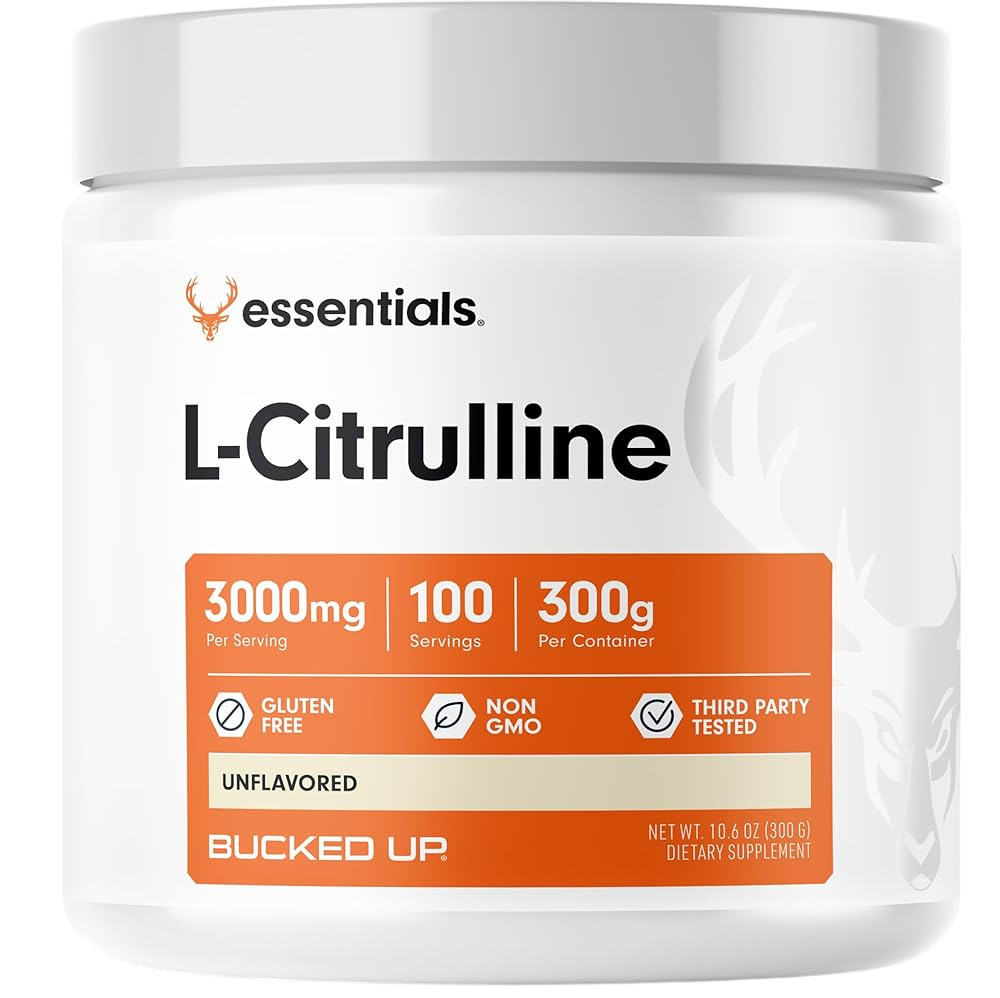
Pure L-Citrulline works well for athletes running higher-dose stacks or anyone who wants precise control over citrulline intake without Malic Acid. Bucked Up’s L-Citrulline Powder (300g) delivers 3,000mg per scoop of unflavored Pure L-Citrulline that mixes into any beverage. Mother Bucker stacks 4,000mg of Pure L-Citrulline with Nitrosigine® and Hydroprime® Glycerol for a multi-pathway approach to blood flow and cellular hydration support.*1 If you are stacking or want to dial in an exact dose on top of a pre-workout base, Pure L-Citrulline powder gives you that level of control.
Step 2: Match Your Dose to the Timing Window
Dose and timing work together. 1.76g of Citrulline Malate 2:1 provides about 1g of pure L-Citrulline, so a 6,000mg serving of Citrulline Malate 2:1 delivers roughly 3.4g of pure L-Citrulline equivalent. Studies on resistance training performance have used 6 to 8g of Citrulline Malate, which provides around 3.4 to 4.5g of L-Citrulline, taken about 30 to 60 minutes before exercise. For Pure L-Citrulline, studied servings for performance support usually fall in the 3 to 4g range per session.*1
The practical takeaway is simple. If your label shows 6,000mg of Citrulline Malate 2:1, you sit at the studied threshold for performance support.*1 If it shows 2,000mg or hides the amount inside a proprietary blend, the math likely does not favor you. Read the label carefully. The grams are either listed or they are not.
Step 3: Choose Empty Stomach or With Food
L-Citrulline has high oral bioavailability of about 97%, with efficient small-intestine absorption and minimal hepatic first-pass metabolism (Bahri S et al., Nutrition, 2013). That high absorption rate means the empty-stomach-versus-with-food decision matters less for L-Citrulline than for some other compounds. Practical details still influence how the timing window lines up with your training.
Taking L-Citrulline on an empty stomach or with a light meal supports faster gastric transit and can create a cleaner absorption window before training. A heavy meal slows gastric emptying, which can delay peak plasma concentrations relative to your workout start. For most lifters training within 60 to 90 minutes of their last meal, taking L-Citrulline alongside or just after a light pre-workout snack works well. For fasted morning sessions, taking it 45 to 60 minutes before training on an empty stomach usually lines up with the pharmacokinetic window. If you notice digestive discomfort, a small amount of food with the dose often helps, and you should talk with your healthcare provider if issues continue.
Step 4: Take L-Citrulline 30 to 60 Minutes Before Training
The 30 to 60 minute window is the core answer for when to take L-Citrulline before a workout. Schwedhelm E et al. (Br J Clin Pharmacol, 2008) confirmed rapid absorption and conversion of oral L-Citrulline to Arginine in humans, with peak plasma concentrations around 60 minutes after ingestion, consistent with the earlier data. Taking your dose 45 to 60 minutes before your first working set positions peak plasma L-Arginine availability during the highest training demand.
The 30 minute side of the window can still work for lighter sessions or when your warm-up pushes hard sets later into the session. For longer or more intense workouts, aiming closer to 60 minutes is the more conservative and well-supported choice. Building a consistent pre-workout routine around this window removes one of the biggest variables behind week-to-week changes in results.
Key Variables That Shape Your Timing Plan
Your training goal guides which form and dose make sense. Endurance-focused athletes and those who prioritize ammonia clearance support* often favor Citrulline Malate 2:1. Advanced athletes who want maximum blood flow support* and cellular hydration support* may lean toward the Pure L-Citrulline stack in Mother Bucker.
Your workout schedule shapes timing as well. Morning fasted training, afternoon sessions after several meals, and late-night workouts all create different absorption contexts. Adjust your intake relative to your last meal instead of only watching the clock. Stacking with other ingredients, especially Astragin®, which appears across the Bucked Up pre-workout line and is studied to support citrulline absorption,*1 can support the bioavailability of every gram on the label. Clear label information is the final variable. If the label does not list exact gram amounts of L-Citrulline or Citrulline Malate, you cannot apply any timing framework with real confidence.
Fixing Common L-Citrulline Timing Problems
Inconsistent timing is the most common reason results change from week to week. When you take your pre-workout 20 minutes before training one day and 75 minutes before the next, your plasma concentrations peak at very different points relative to your session, which explains the inconsistent performance. To remove this variable, pick a window, such as 45 to 60 minutes, and protect it across every training day.
Mixing L-Citrulline with high-fiber foods or large meals right before training can slow gastric transit and shift the absorption window, which is why keeping the pre-workout meal light matters if you train within 90 minutes. Digestive discomfort at high doses sometimes occurs, especially at single servings above 10g. If you notice discomfort, adjust one variable at a time by reducing the dose, adding a small amount of food, or extending the gap between intake and training so you can see which change helps. Avoid changing several factors at once, and talk with your healthcare provider if discomfort continues.
How to Track Your Progress With L-Citrulline
A simple workout log gives you a clear view of whether your timing protocol works. Track total reps per set on your main compound lifts, your perceived exertion on a 1 to 10 scale, and quick notes on pump quality and recovery between sets. Keep this up for three to four weeks before you decide what to change.
L-Citrulline’s support for nitric oxide* and ammonia clearance* depends on consistent intake, because steady dosing maintains the substrate availability your body uses.1 Expect patterns in your log after two to four weeks of consistent timing, not after a single workout.
Advanced L-Citrulline Protocols for Experienced Lifters
Some experienced athletes use L-Citrulline daily instead of only around workouts to maintain baseline plasma L-Arginine availability. Studied daily servings often fall in the 3 to 6g range of Pure L-Citrulline per day in healthy adults.*1 For athletes training twice per day or stacking several high-volume days, a daily dose alongside the pre-workout serving can support the nitric oxide pathway* across the full training week.
For those using Bucked Up’s Pure L-Citrulline Powder, the 3,000mg per scoop format makes daily dosing straightforward. You can stack it with your pre-workout on training days and take it on its own on rest days if your plan calls for daily use. Adjust based on your training schedule, and consult your healthcare provider before you significantly increase total daily intake.
Frequently Asked Questions
Is L-Citrulline safe for daily use?
L-Citrulline is generally well tolerated at doses studied for performance support, and it often has a milder side-effect profile than L-Arginine.*1 Daily use in the 3 to 6g range of Pure L-Citrulline has been studied in healthy adults. Mild gastrointestinal discomfort, such as nausea or bloating, can appear at very high single doses. People with kidney conditions, naturally low blood pressure, or those taking blood pressure medications, nitrate medications, or PDE5 inhibitors should talk with a healthcare provider before use. Pregnant or breastfeeding individuals should avoid use or consult a healthcare provider first.
What is the difference between Citrulline Malate 2:1 and Pure L-Citrulline?
Citrulline Malate 2:1 combines L-Citrulline and Malic Acid in a 2-to-1 ratio by weight. The Malic Acid component is a Krebs Cycle intermediate theorized to support aerobic ATP production alongside the vasodilation support from Citrulline.*1 Because of the Malic Acid content, Citrulline Malate 2:1 delivers less pure L-Citrulline per gram than the standalone form, as explained in the dosing section above. Pure L-Citrulline delivers 100% of the amino acid with no Malic Acid, so it is more efficient on a per-gram basis for direct nitric oxide pathway support.*1 Citrulline Malate 2:1 appears in Bucked Up Pre-Workout, Woke AF, and the Non-Stimulant Pre-Workout. Pure L-Citrulline appears in Mother Bucker and in the standalone L-Citrulline Powder.
When should I consult a healthcare provider about L-Citrulline?
Consult a healthcare provider before using L-Citrulline if you have naturally low blood pressure, kidney conditions, or are pregnant or breastfeeding. Also talk with a healthcare provider if you take blood pressure medications such as ACE inhibitors or beta-blockers, nitrate medications, PDE5 inhibitors, or anticoagulant and antiplatelet drugs, because L-Citrulline’s vasodilatory effects may interact with these. Discontinue use at least two weeks before any scheduled surgery and follow your healthcare provider’s guidance.
Can I stack L-Citrulline with other pre-workout ingredients?
Yes. L-Citrulline is commonly stacked with other pre-workout ingredients and is designed to work alongside them. In Mother Bucker, Pure L-Citrulline is stacked with Nitrosigine® for multi-pathway blood flow support* and Hydroprime® Glycerol for cellular hydration support,* forming what Bucked Up calls the Pump Trifecta. Astragin® appears across the Bucked Up pre-workout line and is studied to support citrulline absorption.* L-Citrulline also pairs well with Beta-Alanine, which supports lactic acid buffering,*1 and caffeine for energy support.*1 The key is knowing the exact gram amounts of each ingredient on the label so you can evaluate the stack with confidence instead of guessing at doses hidden in a proprietary blend.
Conclusion: Use Clear Timing for Consistent L-Citrulline Support
The framework stays simple. Pick your form based on your training goal, such as Citrulline Malate 2:1 for combined vasodilation and ammonia clearance support,* or Pure L-Citrulline for advanced stacking. Confirm that your dose matches studied thresholds, such as 6g of Citrulline Malate 2:1 or 3 to 4g of Pure L-Citrulline. Time your intake 45 to 60 minutes before training and factor in your last meal. Track your results for three to four weeks before making changes, and you will have a clear view of how L-Citrulline fits your routine.
Unclear labels are what usually break this framework. Undisclosed amounts inside proprietary blends turn every timing calculation into a guess. Bucked Up lists every gram, includes Astragin® across the pre-workout line to support absorption,* and offers both Citrulline Malate 2:1 and Pure L-Citrulline formats so you can match your protocol. The science is available, the doses are listed, and the timing is yours to refine.
*These statements have not been evaluated by the Food and Drug Administration. This product is not intended to diagnose, treat, cure, or prevent any disease.
1 The content provided in this article is for informational purposes only and is not medical advice. Consult with a medical professional before implementing any changes to your diet, health, or exercise routines.
Individual results will vary and are based on a combination of each individual’s diet, exercise, age, and health circumstances.
These statements have not been evaluated by the Food and Drug Administration. This product is not intended to diagnose, treat, cure or prevent any disease.
This article was written by Ryan Gardner, CEO of Bucked Up. As the maker of Bucked Up Protein Soda, we have a financial interest in this information. The views expressed are our own and should be read with that context in mind.