Written by: Ryan Gardner, Owner, Managing Partner, CEO, Bucked Up
Key Takeaways
-
L-Citrulline follows a multi-step conversion pathway, so timing, dose, and form determine whether you feel real nitric oxide and pump support.*1
-
Use pure L-Citrulline when you want maximum pump per gram. Choose Citrulline Malate 2:1 when you also want endurance support from the malate component.*1
-
Take 3–6 g pure L-Citrulline or 6–8 g Citrulline Malate daily. Multi-day use supports more reliable performance changes than single pre-workout doses.*1
-
Dose 45–60 minutes before training, ideally on an empty stomach, and keep using it on rest days to help maintain plasma arginine levels.*1
-
Ready to build a consistent routine? Explore Bucked Up L-Citrulline options and align your protocol with the research-backed ranges.
How L-Citrulline Timing Affects Nitric Oxide and Pump
L-Citrulline does not behave like caffeine, which hits the bloodstream quickly and feels obvious. It follows a conversion pathway: oral L-Citrulline is absorbed in the small intestine, transported to the kidneys, converted into L-Arginine, and that L-Arginine then serves as the substrate for nitric oxide synthesis via Nitric Oxide Synthase enzymes. This relay takes time. Peak plasma citrulline and arginine concentrations occur in the hours after oral ingestion, so “take it before your workout” only works when you define when and under what conditions.
Timing across days also shapes results. A trial found that L-Citrulline supported improvements in exercise tolerance and total work completed during severe-intensity cycling compared to placebo (Bailey et al., J Appl Physiol, 2015), while some well-controlled trials using only single pre-exercise doses did not show reliable performance benefits. This contrast supports a protocol that treats L-Citrulline as a daily ingredient, not just a one-off pre-workout add-on.
Step 1: Match Pure L-Citrulline or Citrulline Malate 2:1 to Your Goal
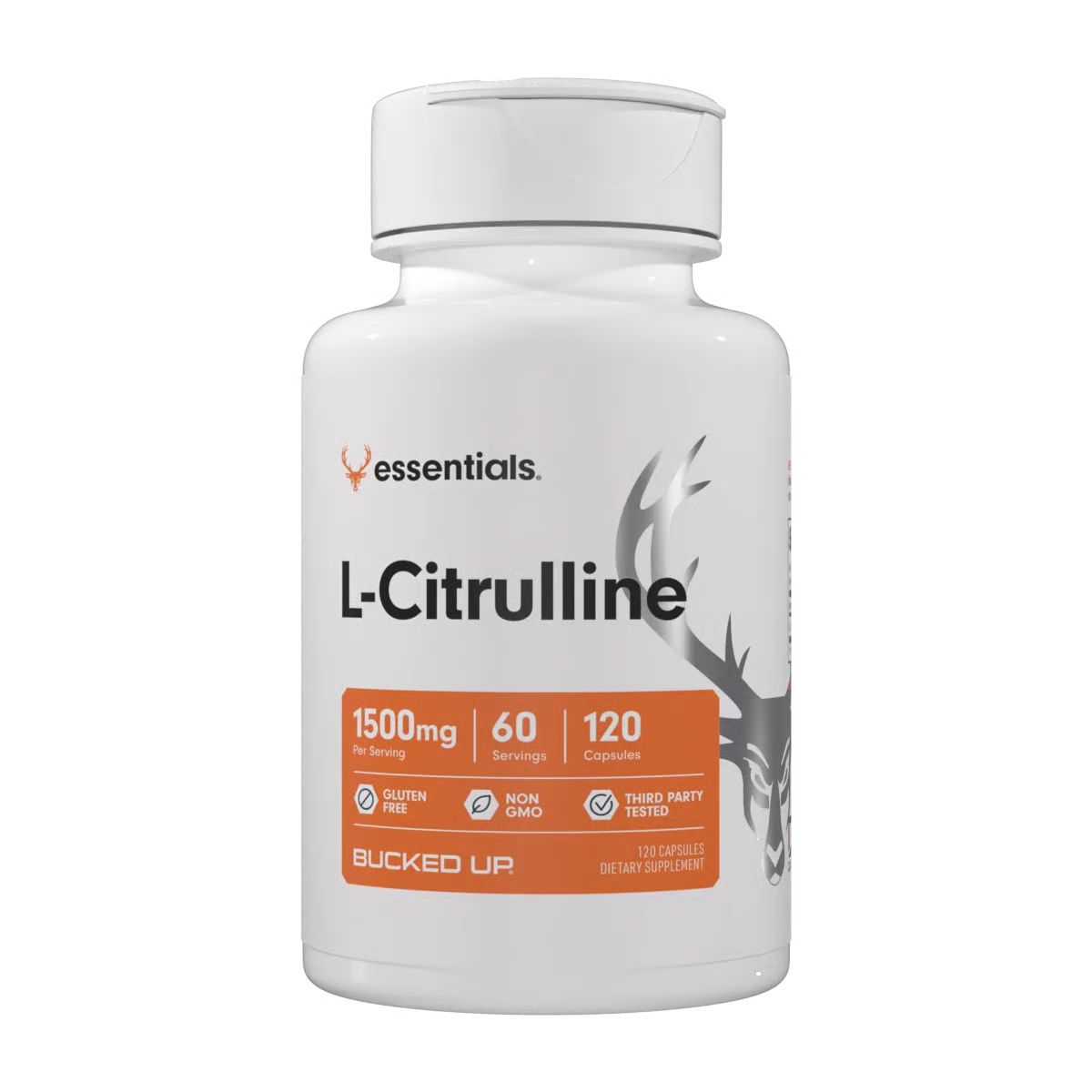
Pure L-Citrulline provides 100% of its labeled weight as L-Citrulline, which creates a direct route to nitric oxide support.*1 Citrulline Malate 2:1 combines L-Citrulline with Malic Acid, a Krebs Cycle intermediate theorized to support aerobic ATP production alongside vasodilation support.*1 In a typical 2:1 citrulline malate product, 1.76 g provides approximately 1 g of pure L-Citrulline, so a 6 g dose of citrulline malate delivers roughly 3.4 g of pure L-Citrulline.
If your primary goal is pump and blood flow support,*1 pure L-Citrulline gives you more citrulline per gram. If you also want endurance support, the malate component introduces a theorized energy-metabolism angle. To see how this plays out in real formulas, Bucked Up foundational pre-workouts (Bucked Up and Woke AF) use 6,000 mg Citrulline Malate 2:1 for a dual-pathway approach. Mother Bucker uses 4,000 mg Pure L-Citrulline stacked with Nitrosigine® and Hydroprime® Glycerol for advanced nitric oxide and cellular hydration support.*1 Neither route is inherently wrong. The real mistake is choosing a form without understanding how much actual L-Citrulline you get per gram.
When you compare products, look for labels that clearly list form and amount so you can align your choice with these goals. Bucked Up discloses exact forms and doses across its pre-workout line, including both Citrulline Malate and Pure L-Citrulline, which makes matching to research protocols more straightforward.
Step 2: Lock In the Right Dose (3–6 g Pure or 6–8 g Malate)
Dose often determines whether an L-Citrulline protocol feels effective. For chronic circulatory or vascular support, 3–6 g per day of pure L-Citrulline is the commonly referenced range, often divided across the day.* For exercise performance support, the Bailey et al. 2015 trial used daily L-Citrulline supplementation and recorded measurable changes in exercise tolerance.
On the Citrulline Malate side, 6–8 g of citrulline malate taken approximately one hour before training is the most common research-referenced acute protocol. However, evidence for single-dose acute performance benefits is mixed. Acute-dose trials using 8 g citrulline malate before high-intensity or resistance exercise found no improvements in performance or fatigue compared with placebo. This inconsistency supports a clear pattern: daily supplementation over multiple days outperforms single pre-workout doses for exercise tolerance support. Dose matters, and duration often matters more.
Step 3: Take L-Citrulline 30–60 Minutes Before Training
The most practical timing window for workout benefits in a single session is 30–60 minutes before training. L-Citrulline taken 30–45 minutes prior to workouts supports nitric oxide production, which supports blood flow, nutrient delivery, and oxygen delivery to muscles during intense exercise.*1 Given the plasma concentration curve discussed earlier, dosing 45–60 minutes before your first working sets positions you near peak levels when training begins.
Stomach contents also play a role. L-Citrulline is typically well-tolerated on an empty stomach and may absorb more readily when taken this way, though individuals with sensitive digestion may prefer taking it with food. Published data does not show a dramatic drop in bioavailability with food, but faster absorption on an emptier stomach fits general amino acid pharmacokinetics. If your digestion allows, use a fasted state or a light pre-workout snack and take L-Citrulline 45–60 minutes before training. Bucked Up includes Astragin® across the pre-workout line, which is studied to support citrulline absorption,*1 helping reduce variability from day-to-day digestive changes.
Step 4: Use Split Doses on Rest Days for Ongoing Support
Rest days still count for L-Citrulline. The performance data that holds up most consistently comes from daily supplementation protocols, not training-day-only use. Dividing daily L-Citrulline doses across the day, such as morning and evening, may help sustain blood arginine and nitric oxide levels throughout the day rather than relying on a single training-day dose.*1
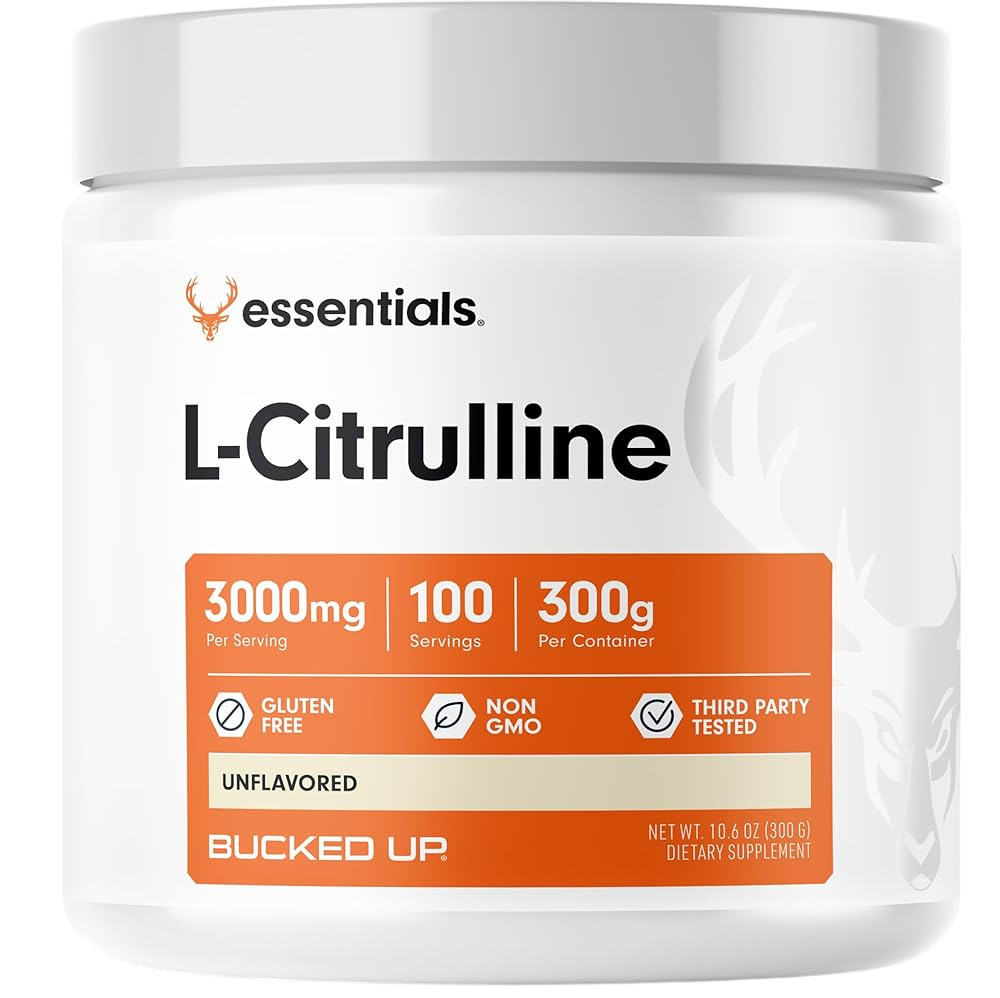
A simple rest-day plan using Bucked Up’s Pure L-Citrulline Powder looks like one 3 g scoop in the morning and one 3 g scoop in the evening, mixed into any beverage. This pattern supports elevated plasma arginine across the day and aligns with the multi-day protocols used in 7-day trial literature. Skipping rest days effectively resets your progress each weekend and makes Monday’s pump feel inconsistent.
Step 5: Add Stacks After You Know Your Baseline
Stacking L-Citrulline with other nitric-oxide-supporting ingredients can increase the effect, but it also adds more variables. Run pure L-Citrulline or Citrulline Malate alone for at least one week before adding Nitrosigine®, Hydroprime® Glycerol, or other vasodilation-supporting compounds. This approach clarifies your baseline response, confirms GI tolerance at your target dose, and gives you a clear reference when you later add a stack.
Once baseline is established, Mother Bucker’s Pump Trifecta (4,000 mg Pure L-Citrulline plus Nitrosigine® plus Hydroprime® Glycerol) represents an advanced-tier strategy, supporting nitric oxide production, blood flow, and cellular hydration through multiple biological pathways.*1 To support bioavailability of this multi-ingredient stack, Astragin® is included to support absorption of every gram on the label.*1 Before using any stacking protocol, consult your healthcare provider if you combine L-Citrulline with prescription medications, particularly blood pressure medications, nitrate medications, or PDE5 inhibitors, because additive vasodilatory effects represent a known interaction risk.
How to Read L-Citrulline Labels with Confidence
Effective product selection starts with a clear label. Each L-Citrulline product should list the exact gram amount per serving, the specific form (pure L-Citrulline or Citrulline Malate with ratio specified), and any absorption-supporting ingredients. Products that hide “Citrulline” inside a proprietary blend without a disclosed gram amount make it impossible to confirm whether the dose reaches the ranges used in performance research. L-Citrulline malate contains only approximately 56.6% citrulline by weight, so an 8 g dose of citrulline malate delivers roughly 4.5 g of actual L-Citrulline. That math becomes crucial when you try to mirror a research protocol.
Fixing Common L-Citrulline Timing Mistakes
Several predictable timing errors limit results. The most common mistake is dosing too close to training, under 30 minutes before, which means plasma arginine is still rising when your workout ends. A second mistake is using L-Citrulline only on training days and skipping rest days, which prevents the cumulative plasma arginine elevation seen in multi-day trials. A third mistake involves treating L-Citrulline and L-Arginine as interchangeable. L-Citrulline raises plasma arginine levels more efficiently than direct oral L-Arginine supplementation because it bypasses arginase-mediated degradation during first-pass metabolism in the gut and liver. Moving from Arginine to L-Citrulline changes the pharmacokinetic profile rather than making a lateral swap.
How to Track Pump and Performance Changes
Progress tracking works best when you combine subjective and objective data. Rate pump quality from 1–10 each session, and track objective markers such as total reps per workout, time to exhaustion on cardio, or weight moved each week. Log both for the first 14 days of a consistent L-Citrulline protocol.
If pump scores do not change after 7 days of daily use at 6 g pure or 6–8 g malate, revisit your timing window and stomach-content strategy before adjusting dose. If objective performance markers remain flat after 14 days, confirm that you have followed a true multi-day protocol, including rest days. Each lifter should evaluate these variables personally rather than relying on external scoring systems.
Advanced Stacking Ideas for Experienced Lifters
Experienced lifters who have plateaued on standard Citrulline Malate can experiment with a Mother Bucker-style stack. This approach uses Pure L-Citrulline paired with Nitrosigine® for multi-pathway nitric oxide support* and Hydroprime® Glycerol for intramuscular hydration support.* The combination targets vasodilation and cellular water uptake at the same time, which differs from using Citrulline Malate alone.
Sports-nutrition doses of L-Citrulline commonly range from 3 to 8 g per serving,1 with evidence supporting improvements in plasma arginine, nitric oxide metabolites, vasodilation, and muscular endurance in resistance training.*1 Lifters who want to explore these advanced stacks can review Bucked Up’s transparent formulas, including Mother Bucker and standalone L-Citrulline, and then tailor stacks to their own tolerance and goals.
Frequently Asked Questions
Is L-Citrulline safe for daily use?
L-Citrulline is generally well-tolerated at doses studied for performance support, and daily use aligns with the multi-day protocols that show the most consistent results in exercise performance literature. Mild gastrointestinal discomfort, including nausea or bloating, may appear at very high single doses above 10 g. At the 3–6 g daily range referenced in performance research, side effects occur infrequently. Consult your healthcare provider before beginning daily supplementation, particularly if you have kidney conditions, naturally low blood pressure, or are pregnant or breastfeeding.
Should I take L-Citrulline in the morning or before bed?
On training days, take your primary dose 45–60 minutes before your workout to match the peak plasma arginine window. On rest days, splitting the daily dose between morning and evening supports more sustained plasma arginine levels across the day. Taking L-Citrulline before bed is not specifically contraindicated, but vasodilatory effects provide the most value when paired with physical activity, so morning or pre-workout timing usually makes more sense for performance goals.
Can I take L-Citrulline without exercising?
Yes. L-Citrulline supports nitric oxide production and blood flow whether or not you train that day.*1 Daily supplementation on rest days formed part of the protocol that produced measurable exercise tolerance improvements in the Bailey et al. 2015 trial, not just training-day use. For general vascular support in healthy adults, 3–6 g of pure L-Citrulline daily appears frequently in the literature.*1
How long does L-Citrulline take to kick in?
Peak plasma citrulline and arginine concentrations occur after oral ingestion, which supports the 45–60 minute pre-workout recommendation. Most people notice subjective pump and blood flow effects within 30–60 minutes of dosing.1 For cumulative performance changes, research points toward consistent daily use before exercise tolerance shifts become clear. Single-dose effects and multi-day effects represent different phenomena, so expecting dramatic one-time results from a compound that performs best with consistency often leads to disappointment.
Who should avoid L-Citrulline?
Individuals with serious kidney conditions should avoid high doses and consult a healthcare provider, because impaired renal function affects L-Citrulline’s conversion pathway. Those with naturally low blood pressure should also consult a healthcare provider before use, since L-Citrulline’s vasodilatory effects may compound their baseline. Pregnant or breastfeeding individuals should avoid use or seek medical guidance, because reliable safety data for these groups remains limited. Anyone scheduled for surgery should discontinue L-Citrulline at least two weeks beforehand and follow medical advice. L-Citrulline may interact with blood pressure medications, nitrate medications, and PDE5 inhibitors, so always speak with your healthcare provider before combining L-Citrulline with prescription medications.
Does L-Citrulline interact with blood-pressure or nitrate medications?
Yes. L-Citrulline may compound the effects of blood-pressure-lowering medications, including ACE inhibitors and beta-blockers, which can cause blood pressure to drop lower than intended. Concurrent use with nitrate medications can create excessive vasodilation and a severe drop in blood pressure. These interactions appear in pharmacology literature and should be taken seriously. Always consult your healthcare provider before using L-Citrulline if you take any of these medication classes.
What does the current research say about timing and performance?
Research on timing shows a nuanced picture. As discussed in the dosing section, single pre-exercise doses of citrulline malate have produced inconsistent performance outcomes in well-controlled resistance exercise trials. Multi-day L-Citrulline protocols show more consistent support for exercise tolerance and work capacity in endurance-focused trials. The practical takeaway is clear: timing within a session matters for acute blood flow support, and daily consistency across the week, including rest days, plays an even larger role.
Will L-Citrulline keep me awake at night?
L-Citrulline itself is not a stimulant and does not contain caffeine or other alertness-promoting compounds. It does not directly disrupt sleep. If you experience sleep issues while using a pre-workout that contains L-Citrulline and caffeine, the caffeine is the likely driver, not the L-Citrulline. Bucked Up’s Non-Stimulant Pre-Workout includes 6,000 mg Citrulline Malate 2:1 without caffeine, which can suit evening training sessions where sleep quality matters.
Conclusion: Turn L-Citrulline into a Repeatable Protocol
The most effective timing to take L-Citrulline for workout benefits functions as a protocol rather than a single rule. Dose 45–60 minutes before training on an empty or lightly fed stomach for acute blood flow support,*1 use it daily including rest days for cumulative exercise tolerance support,*1 and select the form and dose that match the research so your label math lines up with your goals. Generic advice often skips these variables, which explains why results feel inconsistent from person to person.
Bucked Up focuses on transparent, research-aligned dosing for both Citrulline Malate and Pure L-Citrulline, so you can apply these timing and dosing strategies with clarity. Start with a clear L-Citrulline formula and build the protocol that fits your training.
*These statements have not been evaluated by the Food and Drug Administration. This product is not intended to diagnose, treat, cure, or prevent any disease.
References
Moinard, C., Nicolis, I., Neveux, N., Darquy, S., Bénazeth, S., & Cynober, L. (2008). Dose-ranging effects of citrulline administration on plasma amino acids and hormonal patterns in healthy subjects: the Citrudose pharmacokinetic study. British Journal of Nutrition, 99(4), 855-862. https://pubmed.ncbi.nlm.nih.gov/17953788/
1 The content provided in this article is for informational purposes only and is not medical advice. Consult with a medical professional before implementing any changes to your diet, health, or exercise routines. Individual results will vary and are based on a combination of each individual’s diet, exercise, age, and health circumstances. These statements have not been evaluated by the Food and Drug Administration. This product is not intended to diagnose, treat, cure or prevent any disease.
This article was written by Ryan Gardner, CEO of Bucked Up. As the maker of Bucked Up Protein Soda, we have a financial interest in this information. The views expressed are our own and should be read with that context in mind.