Last updated: April 22, 2026
Key Takeaways: L-Citrulline for Real-World Training
- L-citrulline increases nitric oxide by steadily converting to arginine, which supports blood flow and nutrient delivery during workouts.1
- Supplementation can increase reps to failure by up to 53%, improve endurance, and ease post-workout muscle soreness.1
- Most lifters see results with 3–5 g pure L-citrulline or 6–8 g citrulline malate, taken 30–60 minutes before training.1
- Citrulline malate adds malic acid for ATP support, which suits endurance and volume work, while pure L-citrulline focuses on pump and vascularity.1
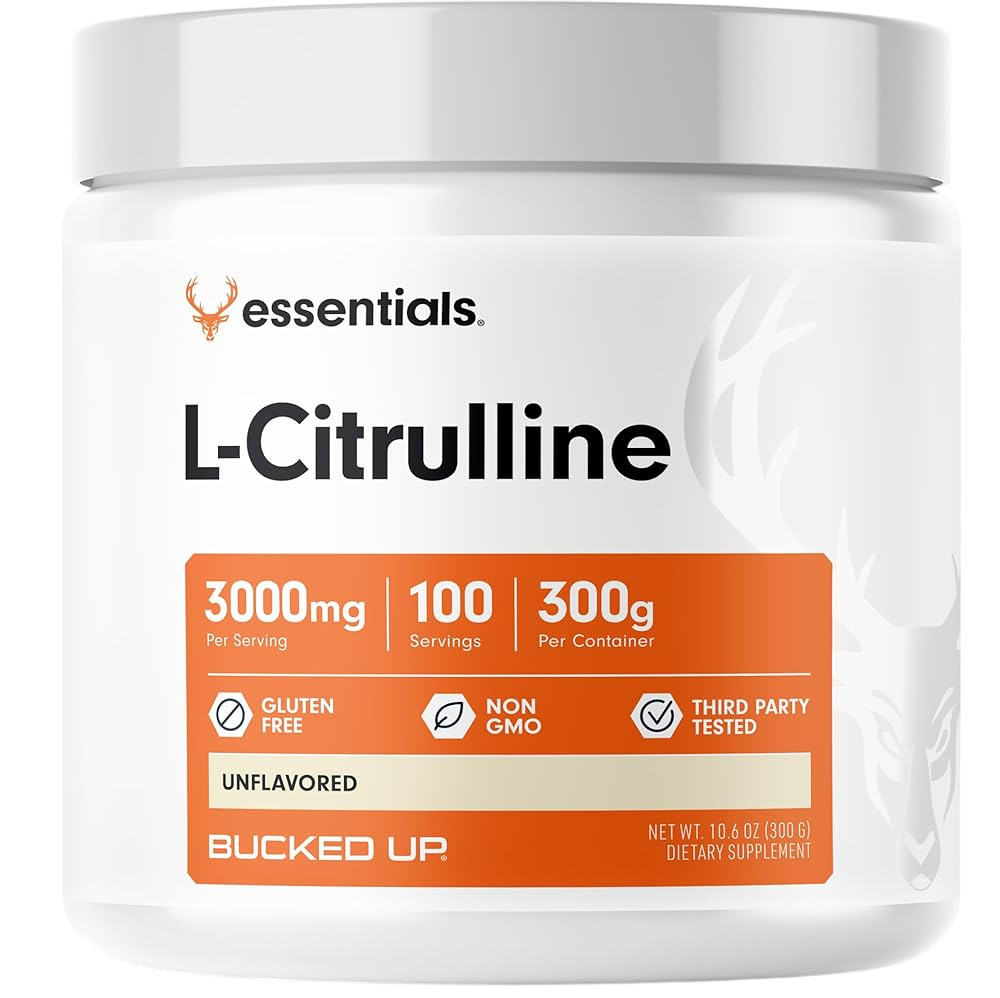
- For a convenient option, explore Bucked Up’s L-Citrulline, which includes absorption enhancers to support performance.1
Executive Summary & Practical Framework
L-citrulline can increase repetitions to failure by up to 53% and reduce post-exercise muscle soreness by about 40%.1 Most people do well with 6–8 grams of citrulline malate or 3–5 grams of pure L-citrulline taken 30–60 minutes before a workout. This guide explains how L-citrulline works, what the research shows, how to dose it, and how Bucked Up formulas support absorption with clinically studied ingredients.1
Current Supplement Trends in Nitric Oxide Support
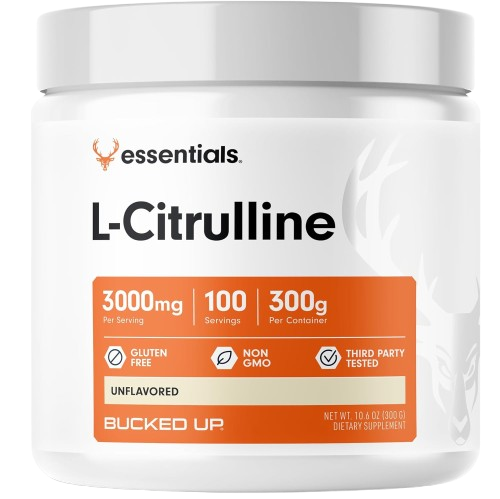
Transparent labeling has increased demand for nitric oxide precursors with clearly stated doses and proven bioavailability. Pure L-citrulline and citrulline malate now serve as the main options, and each form fits different training styles and goals. Many newer formulas also include absorption enhancers such as AstraGin® to support how well your body uses these ingredients, which sets up the science behind citrulline’s unique pathway.
How L-Citrulline Works in Your Body
L-citrulline, first isolated from watermelon, acts as a non-essential amino acid that bypasses first-pass liver metabolism and converts to L-arginine in the kidneys. This route creates more sustained increases in plasma arginine levels than direct arginine supplementation. Higher arginine levels then support nitric oxide production.1
The conversion process uses argininosuccinate synthase and lyase enzymes to generate L-arginine, which serves as the direct substrate for endothelial nitric oxide synthase. Peak plasma concentrations appear about 0.7–2 hours after ingestion. In performance settings, cycling studies report around 12% improvements in time to exhaustion with L-citrulline use.1
Recent meta-analyses show mixed results for short-term endurance benefits. A 2023 systematic review in the Journal of the International Society of Sports Nutrition did not find consistent acute endurance improvements. Longer-term protocols, however, show more reliable changes in vascular function and performance.
How L-Citrulline Supports Workout Performance
L-citrulline supports performance through several clear mechanisms that affect strength, endurance, and recovery.1
More Reps Before Failure: Research reports up to 53% more total repetitions across multiple sets during resistance training when lifters use 8 grams of citrulline malate.1 This extra volume can translate into greater training stimulus over time.
Better Endurance Capacity: The endurance gains seen in cycling studies support sustained power output during longer efforts.1 Athletes can maintain intensity for more time before fatigue sets in.
Less Muscle Soreness: Citrulline malate can reduce delayed-onset muscle soreness by about 40% two days after training.1 This effect helps you recover between sessions and return to heavy or high-volume work sooner.
Support for Ammonia Clearance: As a key intermediate in the urea cycle, L-citrulline helps convert ammonia byproducts into urea for excretion. Lower ammonia levels may reduce central fatigue during intense training blocks.1
L-Citrulline for Pump: Forms, Dosing, and Timing
Dosing looks different for pure L-citrulline and citrulline malate because each form contains a different amount of active citrulline and additional compounds.
Effective L-Citrulline Amounts for Most Lifters
Performance data supports 3–5 grams per day of pure L-citrulline or 6–8 grams of citrulline malate for training benefits.1 With a 2:1 citrulline malate ratio, 8 grams delivers about 4.5 grams of actual L-citrulline.
Comparing L-Citrulline and Citrulline Malate Doses
| Form | Acute Pre-Workout Dose | Daily Dose | Citrulline Content | Best For |
|---|---|---|---|---|
| Pure L-Citrulline | 3–5 g | 3–6 g | 100% | Pump and vascularity |
| Citrulline Malate 2:1 | 6–8 g | 6–8 g | ~56% | Reps and endurance |
Citrulline for HIIT: Dosing and Timing
For high-intensity interval training, take citrulline malate about one hour before exercise to support recovery and endurance.1 A 150-lb lifter can start with 3 grams of pure L-citrulline and increase slowly based on response and tolerance.
Citrulline malate combines L-citrulline with malic acid, which participates in the Krebs cycle and supports ATP production. This pairing supports vasodilation through nitric oxide and energy metabolism through aerobic pathways.1
Why Bucked Up’s L-Citrulline Line Stands Out
Bucked Up formulas use citrulline compounds at doses that align with current research and pair them with absorption enhancers to support bioavailability.1 The flagship Bucked Up and Woke AF pre-workouts each provide 6 grams of citrulline malate 2:1, which matches the commonly studied range for performance support.1 These clear labels contrast with some proprietary blends that can list ingredients without revealing exact amounts.
The Mother Bucker formula includes 4 grams of pure L-citrulline with Nitrosigine® and Hydroprime® glycerol to create a pump-focused matrix that targets several vasodilation pathways.1 AstraGin® appears across the line to support citrulline absorption and help you get the most from each listed dose.1
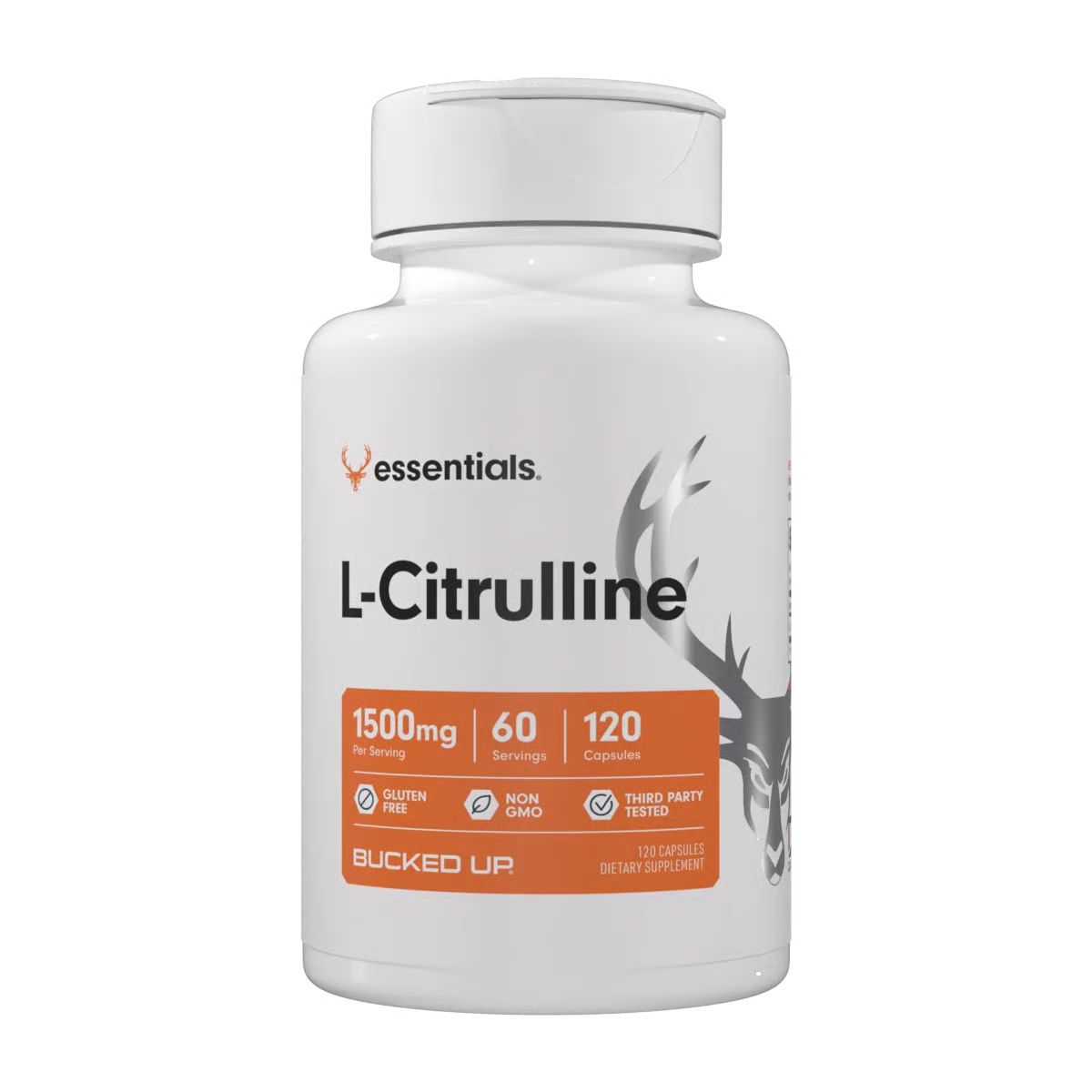
All products are manufactured in GMP-certified US facilities to support consistent quality and potency. Powder versions allow flexible dosing, while capsule options offer pre-measured servings for lifters who prefer quick, no-scoop convenience.
Implementation Tips and Smart Stacking
Start at the lower end of the dosing range to gauge your own tolerance, especially if you have a sensitive stomach. After you understand how your body responds, you can add other ingredients. Pure L-citrulline pairs well with beta-alanine for muscular endurance and with caffeine for energy and focus without working against vasodilation.1
For a 180-lb lifter, 4 grams of citrulline malate or 2.5 grams of pure L-citrulline offers a conservative first step. This starting point lets you assess pump, performance, and digestion before moving toward the higher end of the range or adding stacks.
Take citrulline 30–60 minutes before training to allow time for absorption and conversion to arginine. Consistent daily use can support lifters in high-volume phases, since chronic supplementation protocols show more reliable vascular changes than one-off doses.1
Common Issues and Safety Notes
L-citrulline shows a strong safety profile at typical performance doses.1 In clinical settings, people tolerated up to 15 grams of L-citrulline over eight hours without reported side effects, although very high single doses above 10 grams can cause digestive discomfort.1
People using antihypertensive medications should talk with a healthcare professional, since citrulline can also lower blood pressure.1 Those with severe kidney impairment should avoid L-citrulline because the kidneys play a central role in citrulline–arginine metabolism.
AstraGin® in Bucked Up products helps address common absorption challenges. This support can help users reach their desired effects at moderate doses and may reduce the need to push into higher ranges that sometimes cause digestive issues.1
Frequently Asked Questions
How much citrulline should I take for workouts?
For pre-workout use, most people take 6–8 grams of citrulline malate or 3–5 grams of pure L-citrulline about 30–60 minutes before training. Begin with the lower end of the range to check your tolerance, especially if you are new to citrulline.
What is the dosing difference between pure L-citrulline and citrulline malate?
Citrulline malate contains about 56% L-citrulline by weight, and the rest is malic acid. Eight grams of citrulline malate provides roughly 4.5 grams of actual L-citrulline. Pure L-citrulline contains only the active amino acid, so you can use a lower total gram amount for the same citrulline intake.
When should I take citrulline for pump effects?
Take citrulline 30–60 minutes before your workout so your body has time to absorb it and convert it to arginine. Peak plasma levels appear within 0.7–2 hours after ingestion, which lines up well with most training sessions.
Is it safe to combine citrulline with caffeine in pre-workouts?
Citrulline and caffeine can be used together and often complement each other in pre-workout formulas. Citrulline supports blood flow and pump, while caffeine supports alertness and energy.1 Bucked Up products balance these ingredients to support performance without sacrificing either effect.
How long does it take to feel citrulline working?
Many users notice pump and reduced fatigue within 30–60 minutes of taking citrulline.1 For longer-term benefits such as vascular support and consistent performance changes, daily use for 7–14 days usually provides more noticeable results.1
Conclusion: Putting L-Citrulline to Work in Your Training
Most lifters who use citrulline for performance take 6–8 grams of citrulline malate or 3–5 grams of pure L-citrulline about 30–60 minutes before training. Your choice between forms depends on your goals, since citrulline malate supports energy metabolism and volume work, while pure L-citrulline focuses on concentrated vasodilation and pump.1
Bucked Up’s clear labeling and use of absorption-support ingredients help you get the full benefit of each listed citrulline dose.1 Find the L-citrulline option that fits your routine and supports your next training phase.
1 The content provided in this article is for informational purposes only and is not medical advice. Consult with a medical professional before implementing any changes to your diet, health, or exercise routines.
Individual results will vary and are based on a combination of each individual’s diet, exercise, age, and health circumstances.
These statements have not been evaluated by the Food and Drug Administration. This product is not intended to diagnose, treat, cure or prevent any disease.
This article was written by Ryan Gardner, CEO of Bucked Up. As the maker of Bucked Up Protein Soda, we have a financial interest in this information. The views expressed are our own and should be read with that context in mind.