Last updated: April 22, 2026
Key Takeaways
- L-Citrulline boosts nitric oxide by converting to L-Arginine in the kidneys, bypassing liver metabolism for higher bioavailability than L-Arginine.1
- It supports a recycling pathway that activates the eNOS enzyme, promoting sustained vasodilation and smooth muscle relaxation.1
- Research shows 3g L-Citrulline raises plasma arginine more effectively than 6g L-Arginine, which supports blood flow and endurance.1
- Typical effective dosing is 3–6g pure L-Citrulline or 6–8g Citrulline Malate taken pre-workout for pumps and performance.1
- Experience these benefits with Bucked Up’s pure L-Citrulline, formulated to deliver the research-backed doses outlined above.1
How L-Citrulline Drives Nitric Oxide and Vasodilation
L-Citrulline activates nitric oxide production through a four-step pathway that supports strong bioavailability and sustained effects.1
1. Intestinal Absorption Evades First-Pass Liver Metabolism
L-Citrulline demonstrates nearly 100% absorption into plasma, avoiding the extensive degradation that limits oral L-Arginine effectiveness.1 In contrast, the gastrointestinal tract and liver metabolize a significant portion of ingested L-Arginine, severely limiting its systemic availability and making it a less efficient nitric oxide precursor.
2. Renal Conversion via Argininosuccinate Enzymes
L-Citrulline is converted to L-Arginine in the kidneys via argininosuccinate synthase and argininosuccinate lyase enzymes as part of the urea cycle. The kidneys are the primary site of L-citrulline to L-arginine conversion, releasing arginine directly into systemic circulation.
3. Arginine Fuels Endothelial Nitric Oxide Synthase
Endothelial nitric oxide synthase (eNOS) uses L-arginine as its direct substrate to generate nitric oxide (NO), producing L-citrulline as a metabolic byproduct. This creates a recycling pathway where argininosuccinate synthase (ASS) and argininosuccinate lyase (ASL) convert L-citrulline back to L-arginine, supporting ongoing NO production.
4. Nitric Oxide Triggers Smooth Muscle Relaxation
Nitric oxide (NO) has a half-life of only a few seconds and signals vascular smooth muscle relaxation, causing vasodilation. This process activates soluble guanylyl cyclase (sGC), raising cyclic GMP levels, which promotes vessel dilation and enhanced nutrient delivery.
The following comparison highlights how L-Citrulline raises plasma arginine more efficiently than direct L-Arginine supplementation.
Plasma Arginine Comparison: L-Citrulline vs L-Arginine
| Dose | Plasma Peak Increase | Source |
|---|---|---|
| 3g L-Citrulline | significantly above baseline | increased arginine availability |
| 6g L-Arginine | modest increase from baseline | Only approximately 20% of ingested L-Arginine reaches peripheral circulation |
A single 3g dose of L-Citrulline can raise plasma L-Arginine levels within 1–2 hours.1
Citrulline vs Arginine: Pharmacokinetic Comparison
The pharmacokinetic advantages of L-Citrulline over L-Arginine come from its unique metabolic pathway. In mice, L-citrulline raises plasma arginine levels approximately 100% more efficiently than an equal dose of oral L-arginine (from basal 109 μmol/L to 214 μmol/L vs. 159 μmol/L) by avoiding arginase-mediated degradation.1
L-Citrulline supplementation increases plasma arginine levels and improves nitric oxide metabolism by bypassing liver arginase via intracellular conversion in endothelial cells1, while L-Arginine faces extensive hepatic degradation.
Recent meta-analyses provide human outcome data on L-Citrulline. Luo et al. (Frontiers in Nutrition, 2025) meta-analysis confirms L-Citrulline supplementation improves flow-mediated dilation (FMD) by 1.81% (95% CI: 0.76 to 2.85, p=0.0007) in middle-aged and older adults and significantly reduces ankle-brachial pulse wave velocity (BA-PWV), a measure of arterial stiffness, by −1.11 m/s (95% CI: −1.37 to −0.85 m/s) in subgroup analysis.1
L-Citrulline effectively addresses the “arginine paradox” where cells increase NO production despite adequate circulating arginine levels, highlighting intracellular arginine recycling via citrulline as key to NO synthesis. These pharmacokinetic advantages, including superior bioavailability and sustained plasma elevation, directly inform optimal dosing strategies.
Practical L-Citrulline Dosing and Forms
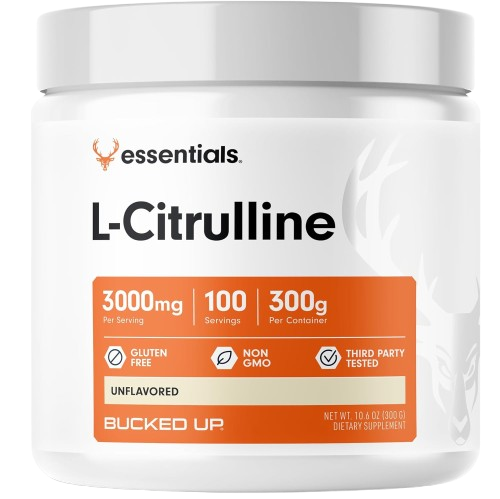
Effective L-Citrulline supplementation starts with matching the dose and form to your training goals. Pure L-Citrulline works well at 3–6g daily for general nitric oxide support, while Citrulline Malate 2:1 typically requires 6–8g pre-workout for performance benefits.1
The malate component explains the higher dose requirement for Citrulline Malate. It provides additional advantages through Krebs cycle support, helping convert fats and carbohydrates into ATP for sustained energy.1 L-Citrulline is well-tolerated up to 15g without GI side effects, although many users find lower doses sufficient.1
Beyond choosing dose and form, timing plays a major role in acute performance benefits. Peak plasma concentrations occur within 0.7 to 2 hours post-ingestion, which makes 60-minute pre-exercise timing a strong target for maximizing vasodilation during training.
Safety considerations include mild gastrointestinal discomfort at doses above about 10g and potential blood pressure interactions.1 Individuals taking antihypertensive medications or those with naturally low blood pressure should consult healthcare providers before supplementation.
Applying these dosing principles in real life works best with products formulated at research-supported levels.
Bucked Up Formulations That Apply These Mechanisms
Bucked Up harnesses L-Citrulline’s vasodilation mechanisms through transparent, high-dose formulations designed for different training intensities. The foundational Bucked Up Pre-Workout contains 6,000mg Citrulline Malate 2:1, which aligns with research-supported dosing for enhanced blood flow and endurance.1
Athletes seeking maximum pump intensity often benefit from multi-pathway approaches.1
Absorption support helps Bucked Up products deliver their listed doses effectively. Every pre-workout includes Astragin®, which can increase citrulline absorption and support bioavailability.1 This approach helps more of the labeled dose reach systemic circulation for nitric oxide production.
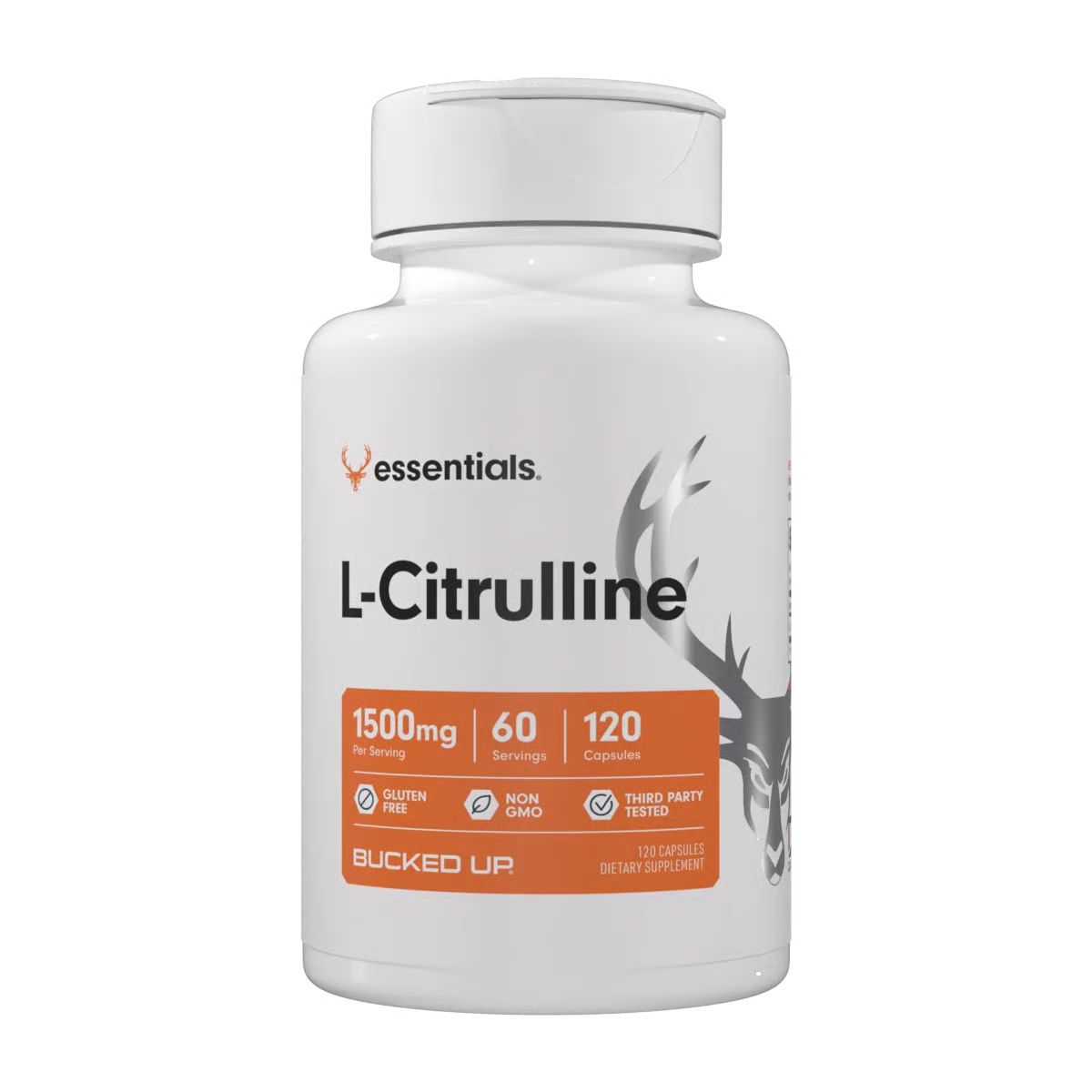
Explore Bucked Up’s L-Citrulline formulations, designed with the absorption support and dosing strategies discussed above.
Frequently Asked Questions
How long does it take L-Citrulline to produce nitric oxide?
L-Citrulline begins converting to L-Arginine within 1–2 hours of ingestion, reaching the peak concentrations discussed in the dosing section. Nitric oxide production follows shortly after this conversion, which is why the 60-minute pre-workout window often proves effective.
Which is better for vasodilation, L-Arginine or L-Citrulline?
L-Citrulline supports vasodilation more consistently than L-Arginine for many users because it bypasses first-pass liver metabolism. Research shows L-Citrulline raises plasma arginine levels about 100% more efficiently than equal doses of L-Arginine, which supports more sustained nitric oxide production and blood vessel dilation.1
Does citrulline cause vasodilation?
L-Citrulline promotes vasodilation through its conversion to L-Arginine, which serves as the substrate for nitric oxide synthase. The resulting nitric oxide signals vascular smooth muscle relaxation, which widens blood vessels and improves blood flow to active tissues.1
What is the difference between Citrulline Malate and pure L-Citrulline?
Pure L-Citrulline provides 100% active ingredient for direct nitric oxide support.1 Citrulline Malate combines L-Citrulline with malic acid in a 2:1 ratio, and the malate component supports the Krebs cycle for enhanced ATP production, which many athletes find helpful for endurance-focused training sessions.1
What is the best dose for muscle pumps?
The doses discussed earlier, such as 6–8g Citrulline Malate or 3–6g Pure L-Citrulline, provide sufficient substrate for sustained nitric oxide production throughout training sessions. These ranges also remain well-tolerated by most users.1
Conclusion
L-Citrulline’s nitric oxide support comes from its renal conversion pathway that bypasses liver degradation, which helps deliver sustained arginine elevation and vasodilation. Clear knowledge of these mechanisms makes it easier to dial in supplement timing and dosing for training performance.
Start supporting your nitric oxide pathway with Bucked Up’s research-backed L-Citrulline options.1
1 The content provided in this article is for informational purposes only and is not medical advice. Consult with a medical professional before implementing any changes to your diet, health, or exercise routines.
Individual results will vary and are based on a combination of each individual’s diet, exercise, age, and health circumstances.
These statements have not been evaluated by the Food and Drug Administration. This product is not intended to diagnose, treat, cure or prevent any disease.
This article was written by Ryan Gardner, CEO of Bucked Up. As the maker of Bucked Up Protein Soda, we have a financial interest in this information. The views expressed are our own and should be read with that context in mind.