Key Takeaways for Using Citrulline Before You Train
-
More lifters now look for fully disclosed gram amounts on pre-workout labels instead of hidden proprietary blends.
-
L-citrulline raises nitric oxide more effectively than L-arginine because it bypasses first-pass liver metabolism and elevates plasma arginine.1
-
Research-backed doses cluster around 3–6 g of pure L-citrulline or 6–8 g of citrulline malate, taken about 60 minutes before training.
-
Pure L-citrulline delivers 100% active ingredient by weight, while citrulline malate (2:1) supplies about 56% citrulline, so label math matters.
-
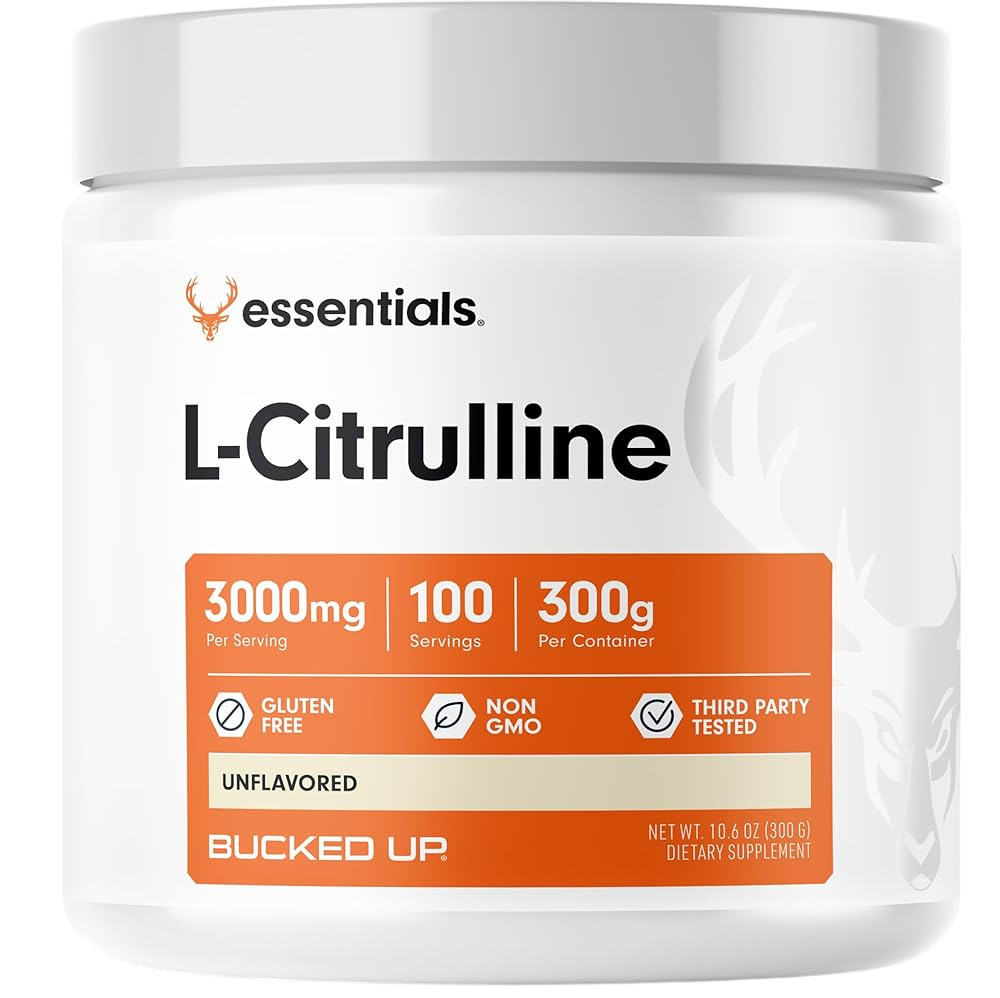
Shop Bucked Up’s clinically dosed L-Citrulline supplements to support transparent, research-aligned nitric-oxide production.1
What L-Citrulline Is and How It Supports Nitric Oxide Production
L-citrulline is a non-essential alpha-amino acid that your body produces naturally, mainly in the intestines and liver. It also occurs in foods, especially watermelon (Citrullus lanatus), where it was first identified. Cucumbers, squash, and muskmelon provide smaller amounts. Hitting 3 grams of citrulline from food alone would require roughly 2.2 to 3.3 lbs of watermelon per day, which is not realistic for a pre-workout routine.
In supplement form, L-citrulline acts as a precursor for nitric oxide through a specific metabolic pathway.1 Unlike L-arginine, which arginase enzymes in the gut and liver break down before much reaches circulation, oral L-citrulline bypasses first-pass hepatic metabolism and is efficiently converted into L-arginine in the kidneys via argininosuccinate synthase and argininosuccinate lyase. This conversion supports a more sustained rise in plasma L-arginine.1 Nitric oxide synthase (NOS) enzymes then use arginine to generate nitric oxide, which signals vascular smooth muscle cells to relax.1 That relaxation supports vasodilation and blood flow to active tissues.1
This metabolic advantage has been confirmed in controlled research. A pharmacokinetic study by Schwedhelm et al. (2008) demonstrated that oral L-citrulline produces a more sustained elevation of plasma arginine than an equivalent dose of L-arginine, largely because it avoids the first-pass extraction that limits arginine’s systemic availability. Peak plasma L-citrulline concentrations usually appear within 45 to 90 minutes after ingestion.
How L-Citrulline Supports Blood Flow and Exercise Performance
Higher nitric oxide availability mainly affects training through vasodilation and ammonia clearance.1 These two mechanisms connect directly to how your sets feel and how long you can sustain effort.
Vasodilation supports the delivery of oxygen, glucose, and other substrates to working muscle during exercise. Citrulline converts in the kidneys to arginine, producing larger and more sustained increases in plasma arginine and nitric oxide than direct arginine supplementation, which promotes vasodilation and blood flow to working muscles. That process underlies the “pump” many resistance-trained athletes notice with effective pre-workout formulas.1 The effect reflects real nutrient delivery, not just a cosmetic change.
L-citrulline also participates in the urea cycle, which converts ammonia, a byproduct of protein metabolism and hard training, into urea for excretion. By supporting ammonia clearance, L-citrulline may help limit exercise-induced ammonia buildup in skeletal muscle, which is linked to central fatigue.1 Some studies also suggest support for lower blood lactate levels during intense efforts.1
On performance outcomes, studies using 8 g of citrulline malate have reported support for total repetitions to muscular failure across multiple resistance-training sets compared to placebo.1 Doses of 6 to 8 g of L-citrulline or equivalent, taken about 60 minutes before training, are associated with modest support for endurance and resistance performance in multi-set protocols and some evidence for reduced post-exercise muscle soreness.1
Studied Dosing Ranges and Timing for Pre-Workout Use
Most pre-workout labels miss the dosing ranges used in research. The evidence for acute exercise performance support centers on a few clear targets.
-
Pure L-citrulline: 3 to 6 g per serving, taken about 60 minutes before training.
-
Citrulline malate (2:1 ratio): 6 to 8 g per serving, taken about 60 minutes before training. At this ratio, 1.76 g of citrulline malate provides roughly 1 g of pure L-citrulline.
-
Timing: Most studies use a 60-minute pre-exercise window, which lines up peak plasma arginine with the start of training.
-
Chronic vascular support (daily use in healthy adults): 3 to 6 g of pure L-citrulline per day, often split into multiple doses such as 2 g three times daily with meals.
Creatine depends on tissue saturation through steady use. Citrulline works more as an acute performance support ingredient,1 so timing relative to your workout matters more than it does for saturation-based compounds.
Pure L-Citrulline vs. Citrulline Malate 2:1: What Each Form Delivers
The form of citrulline you choose changes how much active ingredient you actually get per scoop. Understanding that difference helps you match labels to the dosing ranges above.
Pure L-citrulline delivers 100% of its labeled weight as the active amino acid. L-citrulline shows oral bioavailability around 97% and absorbs efficiently in the small intestine via amino acid transporters, reaching peak plasma levels about one hour after ingestion with minimal hepatic first-pass metabolism.1 A 3 g dose of pure L-citrulline therefore provides 3 g of the active compound.
Citrulline malate (2:1) pairs L-citrulline with malic acid, a Krebs cycle intermediate that may support aerobic ATP production and phosphocreatine recovery. However, citrulline malate at a 2:1 ratio contains only about 56.6% citrulline by weight. An 8 g serving delivers roughly 4.5 g of actual L-citrulline. A label that lists 6 g of citrulline malate at this ratio provides about 3.4 g of active citrulline, not 6 g.
Label accuracy adds another layer. Independent testing of citrulline malate products has found variability between labeled and actual citrulline content, which reflects both ratio ambiguity and manufacturing differences.
On whether malate itself adds extra performance benefit, a 2021 systematic review (Gough et al., Eur J Appl Physiol) reported that adding malate has not clearly improved exercise performance compared with an equivalent dose of pure L-citrulline. Malate remains interesting for energy metabolism, but a distinct additive performance effect has not been firmly demonstrated.
The practical takeaway is simple. Both forms can support nitric oxide production when you match the actual citrulline content to researched ranges. Pure L-citrulline keeps the math straightforward, while citrulline malate requires adjusting for the malate fraction.
How to Read a Pre-Workout Label for Real Citrulline Content
Checking a pre-workout label for citrulline content comes down to four quick questions before you buy.
1. Is the label fully disclosed? Proprietary blends list ingredients without individual gram amounts. A fully disclosed label that shows the exact grams of citrulline per serving lets you compare that number to the researched dosing ranges. Third-party certification programs such as Informed-Sport and NSF International have grown among premium brands as a response to concerns about label accuracy.
2. Which form appears on the label, and at what amount? “Citrulline malate” and “L-citrulline” do not match gram for gram. Use the conversion covered earlier. A label claiming 6 g of citrulline malate delivers roughly 3.4 g of L-citrulline when the ratio is 2:1. Confirm that the listed form and ratio support the amount of active citrulline you want.
3. Is the ratio disclosed for citrulline malate? A label that lists “citrulline malate” without a ratio such as 2:1 or 1:1 prevents you from calculating actual citrulline content. Clear ratio disclosure signals basic transparency.
4. Does the formula include absorption-support ingredients? Compounds such as AstraGin® are studied for their ability to support citrulline absorption and bioavailability. Seeing them on a fully disclosed label suggests the formulator considered delivery, not just total grams.
To see how this looks in practice, review fully disclosed labels that let you verify exactly how much citrulline and support ingredients you get per serving.
Common Misconceptions About Citrulline Sources and Dosing
Misconception 1: “All citrulline is equal.” Form, ratio, and label accuracy all influence how much active L-citrulline a serving delivers. Pure L-citrulline provides 100% of the stated dose as the active amino acid, while citrulline malate products may deliver only a fraction of the labeled amount depending on ratio accuracy. Checking the form and disclosed ratio helps you avoid assuming two products with the same headline gram amount are equivalent.
Misconception 2: “Higher single doses are always better.” The evidence supports a dosing range, not unlimited escalation. Gastrointestinal discomfort such as nausea, bloating, and cramps appears more often with very high single doses around 10 g or more.1 Staying within the researched ranges discussed earlier helps balance potential performance support with a lower risk of GI issues.
Safety Considerations and Typical Side Effects
L-citrulline is generally well tolerated at doses used for performance support and often produces fewer side effects than L-arginine at similar levels. Mild, infrequent effects can include gastrointestinal discomfort such as nausea, bloating, cramps, or heartburn, especially with very high single doses. Some people also report headaches, likely related to vasodilation.
People with naturally low blood pressure, serious kidney conditions, or those who are pregnant or breastfeeding should talk with a healthcare provider before using L-citrulline. The ingredient may amplify the effects of blood-pressure-lowering medications, nitrate drugs, or phosphodiesterase-5 inhibitors. Anyone taking prescription medication should consult a healthcare professional before adding L-citrulline. Stop use at least two weeks before any scheduled surgery and follow your provider’s guidance.
Frequently Asked Questions About Citrulline Pre-Workout Use
Can L-citrulline be taken daily, or only on training days?
L-citrulline can be used every day. For acute exercise performance support, taking it about 60 minutes before training remains the most studied approach. For general cardiovascular support in healthy adults, research has used 3 to 6 g of pure L-citrulline per day, sometimes split into multiple doses. L-citrulline does not require a loading phase like creatine, but consistent daily use may support baseline nitric oxide availability.
How long does it take for L-citrulline to work before a workout?
Peak plasma L-citrulline levels usually appear 45 to 90 minutes after ingestion. A 60-minute pre-workout window is the most common protocol in studies and lines up peak plasma arginine with the start of training.
Is 3 g of L-citrulline enough, or do I need more?
Three grams of pure L-citrulline sits at the lower end of the range described earlier. Some studies have used 6 g or more for more noticeable support of blood flow and performance. The right dose depends on training intensity, individual response, and whether the formula includes absorption-support ingredients. Matching your dose to protocols used in studies that resemble your goals offers a practical guide.
Can I mix L-citrulline powder with coffee or a caffeinated drink?
Pure L-citrulline powder is unflavored and water-soluble, so it mixes easily into most beverages, including coffee. No established negative interaction between L-citrulline and caffeine has been reported. Some research suggests caffeine may cause mild vasoconstriction at higher doses, while L-citrulline supports vasodilation, which helps explain why many pre-workout formulas pair these ingredients.
Does citrulline malate perform better than pure L-citrulline for resistance training?
Current evidence does not clearly show that citrulline malate outperforms an equivalent dose of pure L-citrulline for resistance training. A 2024 comparison study (Martin-Olmedo et al., Int J Sport Nutr Exerc Metab) in 43 healthy resistance-trained adults found no strength or endurance advantage for citrulline malate over matched pure L-citrulline. The malate component may support energy metabolism through the Krebs cycle, but consistent additive performance benefits have not been demonstrated. Both forms support nitric oxide production when dosed to deliver similar amounts of active L-citrulline.
Key Takeaways for Choosing Evidence-Based Pre-Workout Formulas
Research on L-citrulline supports a clear framework for choosing pre-workout products. For acute performance support, doses cluster around 3 to 6 g of pure L-citrulline or 6 to 8 g of citrulline malate, taken roughly 60 minutes before training. Form matters because citrulline malate delivers less active L-citrulline per gram than pure L-citrulline, and ratio accuracy can vary by product. Transparent labels with disclosed gram amounts let you confirm that a formula lands within studied ranges. Absorption-support ingredients such as AstraGin® help bridge the gap between what appears on the label and what your body absorbs.
Bucked Up’s approach centers on full ingredient disclosure across its pre-workout line. Foundational formulas include 6,000 mg of Citrulline Malate (2:1), while Mother Bucker features 4,000 mg of Pure L-Citrulline stacked with Nitrosigine® and Hydroprime® Glycerol, with AstraGin® included across the line to support absorption. For lifters who want to compare their citrulline intake to research, a clearly disclosed label provides the starting point.
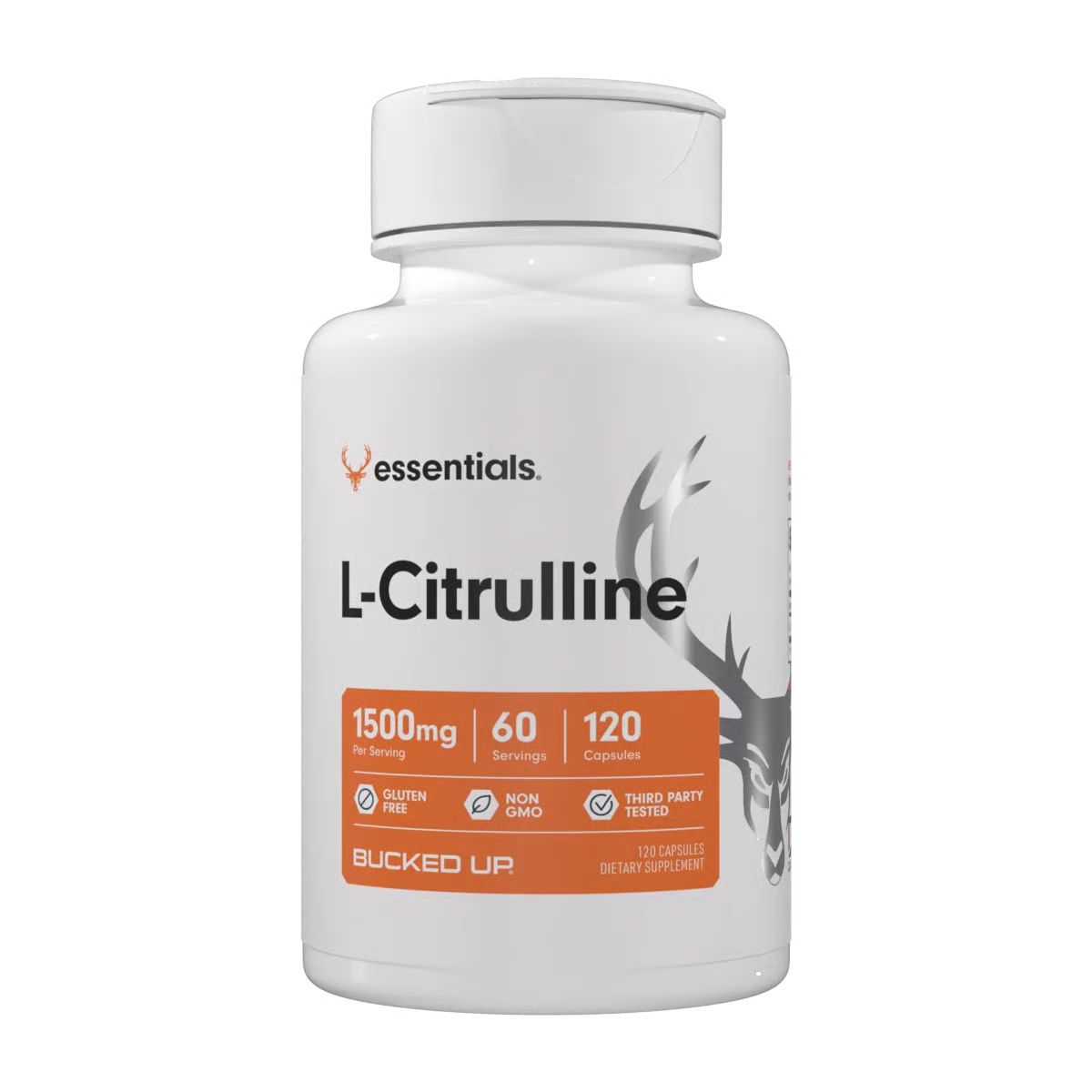
Bucked Up promotes a science-backed approach to dosing, including Citrulline Malate and Pure L-Citrulline. Choose your L-Citrulline formula using the dosing ranges and label criteria outlined in this guide.
*These statements have not been evaluated by the Food and Drug Administration. This product is not intended to diagnose, treat, cure, or prevent any disease.
References
Schwedhelm, E., Maas, R., Freese, R., Jung, D., Lukacs, Z., Jambrecina, A., Spickler, W., Schulze, F., & Böger, R. H. (2008). Pharmacokinetic and pharmacodynamic properties of oral L-citrulline and L-arginine: Impact on nitric oxide metabolism. British Journal of Clinical Pharmacology, 65(1), 51–59. https://drstanfield.com/blogs/articles/nitric-oxide-supplements-benefits-forms-dosing-and-side-effects
Gough, L. A., Sparks, S. A., McNaughton, L. R., Higgins, M. F., Newbury, J. W., Trexler, E., Faghy, M. A., & Bridge, C. A. (2021). A critical review of citrulline malate supplementation and exercise performance. European Journal of Applied Physiology, 121(12), 3283–3295. https://drstanfield.com/blogs/articles/l-citrulline-benefits-forms-dosing-and-side-effects
1 The content provided in this article is for informational purposes only and is not medical advice. Consult with a medical professional before implementing any changes to your diet, health, or exercise routines. Individual results will vary and are based on a combination of each individual’s diet, exercise, age, and health circumstances. These statements have not been evaluated by the Food and Drug Administration. This product is not intended to diagnose, treat, cure or prevent any disease.
This article was written by Ryan Gardner, CEO of Bucked Up. As the maker of Bucked Up Protein Soda, we have a financial interest in this information. The views expressed are our own and should be read with that context in mind.