Key Takeaways: Why L-Citrulline Outperforms L-Arginine
- L-citrulline delivers 100% bioavailability, while L-arginine reaches only 40–50% because gut and liver enzymes break it down.
- Citrulline creates longer-lasting nitric oxide support and produces about 2x higher plasma arginine levels than direct arginine.
- Citrulline supports energy, endurance, and powerful muscle pumps without the GI distress and crashes often linked to arginine.
- Most lifters see strong results with 6–8g citrulline malate or 3–6g pure L-citrulline, taken 30–60 minutes before training.
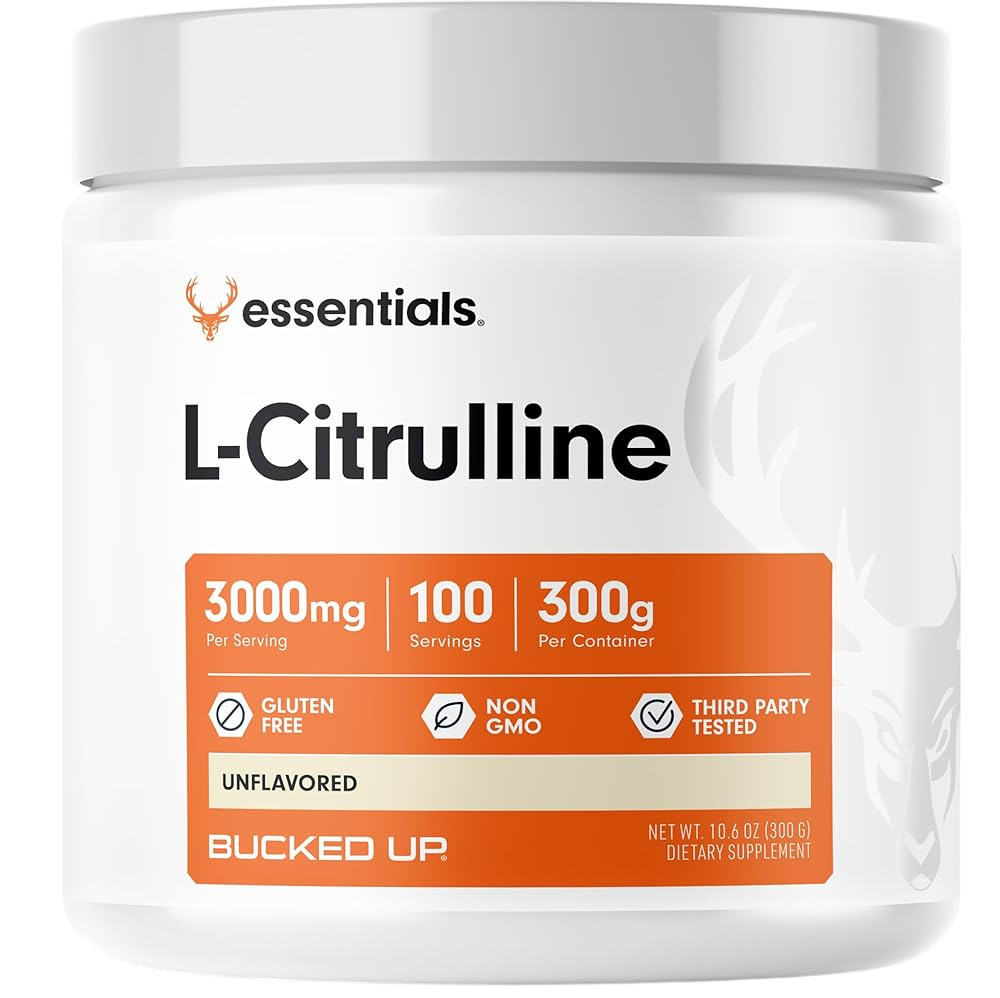
- Clinically dosed Bucked Up L-Citrulline helps you chase bigger pumps, better energy, and stronger performance.
How Arginine and Citrulline Work in Your Body
L-arginine acts as a direct precursor to nitric oxide, yet it runs into a major roadblock in the gut and liver. Arginase enzymes break a large portion of arginine down during first-pass metabolism, which limits its bioavailability to roughly 40–50%. L-citrulline, first isolated from watermelon, follows a more efficient route. It bypasses liver breakdown and converts to L-arginine in the kidneys through the urea cycle. This pathway allows citrulline to reach 100% intestinal absorption while also helping with ammonia removal and energy support. Citrulline malate pairs L-citrulline with malic acid, which supports the Krebs cycle and ATP production for added training endurance.
Why Citrulline Wins for Nitric Oxide and Training Energy
Clear pharmacokinetic differences show why citrulline outperforms arginine for sustained nitric oxide production and workout energy.
|
Metric |
L-Arginine |
L-Citrulline |
Clinical Evidence |
|
Bioavailability |
40-50% |
100% |
PMC meta-analyses |
|
Plasma Arginine Peak |
Rapid/low |
2x higher/sustained |
NIH studies |
|
NO Duration |
Short (GI distress) |
0.7-2hrs peak |
2025 reviews |
L-citrulline’s pathway supports stronger vasodilation, better oxygen and glucose delivery, and more consistent nitric oxide output. L-citrulline bypasses gut and liver arginase breakdown, which improves arginine bioavailability and sustains NO production compared to L-arginine. The malate in citrulline malate further supports ATP production through the Krebs cycle activity. This combination helps extend endurance and delay fatigue during intense training sessions.
Citrulline vs Arginine for Nitric Oxide Support
Citrulline stands out as the stronger choice for nitric oxide support because of its metabolic advantages. Arginine still provides direct NO precursor activity, yet first-pass liver metabolism and arginase breakdown sharply limit its impact. Both supplements are associated with improved endothelial-dependent vasodilation and moderate blood pressure reductions, especially at daily doses ≥6g. Even with that overlap, citrulline’s ability to bypass hepatic breakdown and maintain elevated plasma arginine levels makes it more reliable for steady nitric oxide production and vascular benefits.
Energy, Pumps, and Endurance: How Citrulline Outperforms Arginine
Most athletes chasing bigger pumps and steady energy notice better results with citrulline. Its higher bioavailability translates into stronger blood flow and improved hemodynamics during training. L-citrulline offers higher bioavailability, a longer plasma half-life for sustained NO support, and better GI tolerance at high doses (>6g) than L-arginine. This extended blood flow helps deliver nutrients, supports fuller muscle pumps, and reduces perceived fatigue. Arginine’s weaker absorption and higher risk of gastrointestinal distress at effective doses make it harder to use consistently for performance.
Bucked Up uses clinical dosing of science-backed ingredients, including Citrulline Malate and pure L-Citrulline. Find the L-Citrulline option that matches your training goals.
Dialing In Your Citrulline Dose and Timing
Smart dosing and timing help you get the most from citrulline. Optimal dosing for L-citrulline in pre-workouts is 6–8 grams or more for strong NO support in resistance exercise. For pure L-citrulline, 3–6g works well for nitric oxide support. Citrulline malate usually requires 6–8g to match that citrulline content because of the 2:1 ratio. Most people see best results when taking L-citrulline 30–60 minutes before training, with timing adjusted for GI comfort and workout length. Arginine often needs higher doses, yet poor absorption and more frequent GI issues limit its real-world effectiveness.
Side Effects, Safety Tips, and Smart Stacks
Citrulline generally offers better tolerability than arginine. Pure L-citrulline causes fewer GI issues than citrulline malate, although mild discomfort can appear at higher doses. L-arginine has low oral bioavailability (40–50%) due to liver arginase breakdown, and high doses (>6g) often cause GI upset. People with low blood pressure or those using antihypertensive medications should approach both supplements carefully. Citrulline stacks well with other performance ingredients, which makes it a strong fit for comprehensive pre-workout formulas like Bucked Up.
Why Bucked Up Delivers High-Impact L-Citrulline
Bucked Up focuses on transparent, clinically dosed citrulline formulas that deliver noticeable results. Bucked Up Pre-Workout and Woke AF each provide 6,000mg of Citrulline Malate at a 2:1 ratio, which hits the clinical threshold for strong nitric oxide support. Mother Bucker targets advanced athletes with 4,000mg of pure L-citrulline plus Nitrosigine® and Hydroprime® Glycerol, creating a powerful pump matrix that outperforms single-ingredient products.
Every formula includes Astragin® to support citrulline absorption and overall effectiveness. Many competitors hide low doses in proprietary blends, while Bucked Up lists full clinical dosing to deliver intense pumps and steady training energy.
Bucked Up uses clinical dosing of science-backed ingredients, including Citrulline Malate and pure L-Citrulline. Choose your ideal L-Citrulline formula and push toward peak performance.
Frequently Asked Questions
Which ingredient supports nitric oxide better, L-arginine or L-citrulline?
L-citrulline supports nitric oxide production more effectively because it reaches 100% bioavailability and avoids liver breakdown. L-arginine still acts as a direct NO precursor, yet first-pass metabolism limits how much reaches circulation. Citrulline converts to arginine in the kidneys and maintains plasma arginine levels at roughly twice the level of direct arginine intake. This pattern leads to more consistent and longer-lasting nitric oxide support.
Can you use arginine and citrulline together?
Arginine and citrulline can be combined, although citrulline should anchor any nitric oxide stack. The pairing may offer both faster and longer-lasting NO support, with arginine acting quickly and citrulline extending the effect. Many athletes still see the best balance of results and comfort from citrulline alone because of its absorption advantage. Bucked Up formulas use research-backed ratios and absorption aids to support this synergy when both appear together.
What is the best citrulline dosage for muscle pumps?
Most people achieve strong pumps with 6–8g of citrulline malate or 3–6g of pure L-citrulline taken 30–60 minutes before training. This range supplies enough substrate for steady nitric oxide production across most workouts. Higher doses may help advanced lifters or those with greater tolerance, yet starting within this range makes it easier to judge personal response and comfort.
Is L-arginine or L-citrulline better for blood flow?
L-citrulline supports blood flow more consistently because it keeps plasma arginine elevated and nitric oxide production active for longer. Arginine can still improve blood flow in the short term, yet its effects fade quickly due to rapid metabolism and clearance. Citrulline’s longer half-life and resistance to breakdown support steady vasodilation and better circulation during extended training, which makes it the preferred choice for ongoing blood flow support.
Do L-arginine and L-citrulline have side effects?
L-citrulline is usually well tolerated and only occasionally causes mild digestive discomfort at very high doses. L-arginine more often triggers nausea, cramping, or diarrhea, especially at the higher doses needed for performance benefits. Both ingredients can lower blood pressure, so people with hypotension or those on blood pressure medications should speak with a healthcare provider before use. Citrulline’s better tolerability makes it the safer option for most athletes.
Conclusion: Why Most Athletes Choose L-Citrulline
Current research strongly favors L-citrulline over L-arginine for steady energy, nitric oxide support, and exercise performance. Citrulline’s higher bioavailability, longer plasma elevation, and solid tolerability profile make it a reliable choice for athletes who want consistent results. Bucked Up’s clinically dosed L-citrulline formulas help you chase measurable performance gains without the common drawbacks linked to arginine-heavy products.