Last updated: April 22, 2026
Key Takeaways for Pumps and Performance
- Citrulline outperforms arginine because it bypasses gut and liver breakdown, which supports steadier plasma arginine levels.1
- Research links citrulline to 53% more reps, 12% longer endurance, and up to 40% less muscle soreness compared to placebo.1
- Citrulline Malate (6–8g) and Pure L-Citrulline (3–6g) support strong nitric oxide output with minimal GI issues up to 15g.1
- Arginine breaks down quickly and often causes GI distress at doses over 9g, so it tends to be less reliable for pumps.1
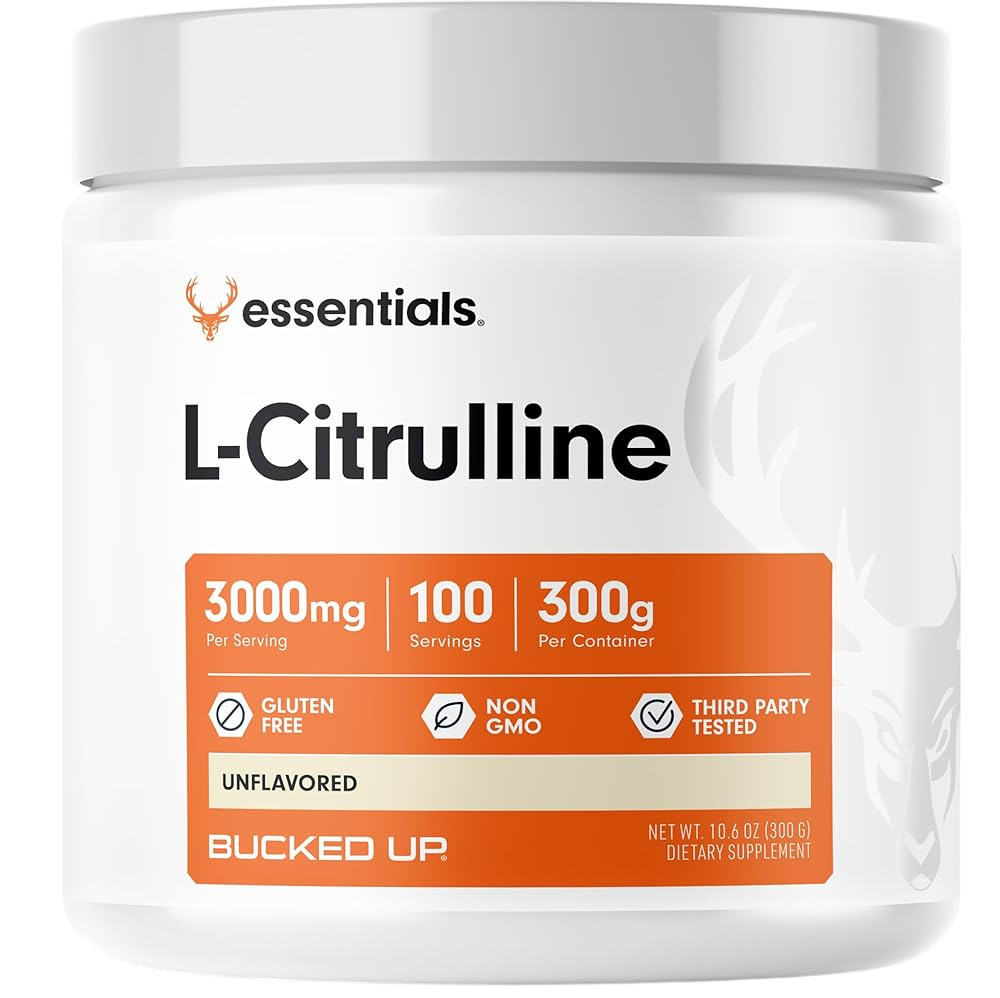
- Experience stronger pumps with Bucked Up’s L-Citrulline in research-supported doses.1
How Citrulline and Arginine Work in Your Body
L-Arginine acts as a direct precursor to nitric oxide, but it struggles when taken by mouth. Arginase enzymes in the gut and liver break down a large portion of oral arginine before it reaches your bloodstream, which limits sustained nitric oxide production.
L-Citrulline follows a different route that works more efficiently. Originally isolated from watermelon (Citrullus lanatus), this non-essential amino acid bypasses early liver metabolism and converts to arginine in the kidneys. This pathway supports longer-lasting increases in plasma arginine than direct arginine supplementation.1
Two main forms appear in supplements. Pure L-Citrulline delivers 100% citrulline content. Citrulline Malate combines citrulline with malic acid in a 2:1 ratio. The malate portion supports ATP production through the Krebs cycle and helps buffer ammonia during intense training.1
Citrulline vs Arginine Head-to-Head: The Comparison Table
The table below compares citrulline and arginine on the factors that matter most for pumps and performance: bioavailability, how long plasma arginine stays elevated, and typical side effects at effective doses.
| Aspect | L-Citrulline | L-Arginine |
|---|---|---|
| Bioavailability | ~100% (liver bypass) | Variable (subject to first-pass metabolism) |
| Plasma Arginine Peak | L-Citrulline supplementation (1500 mg bid) produces approximately 1.5-fold higher plasma arginine AUC (421 µmol h l⁻¹) than equimolar sustained-release L-arginine (1600 mg bid, 289 µmol h l⁻¹) after one week | Short |
| Pump/NO Duration | Longer (endurance +53% reps @8g Malate) | May show shorter duration |
| Side Effects | Mild GI (well-tolerated to 15g) | L-Arginine commonly causes GI distress at single doses >9 g in adults |
Research consistently highlights these differences in bioavailability and plasma arginine response. Dembicki’s 2025 review confirmed that L-citrulline has superior bioavailability compared to L-arginine and more effectively increases plasma arginine concentrations.1
Why Citrulline Usually Beats Arginine for Nitric Oxide
The key difference comes from how each amino acid moves through your body. Citrulline enters the urea cycle and converts to arginine in the kidneys, which avoids the heavy first-pass metabolism that affects oral arginine. This process supports sustained arginine availability.
Arginine runs into problems as soon as you ingest it. Arginase enzymes in the intestinal lining and liver rapidly break down much of the dose before it reaches circulation. This creates the “arginine paradox,” where higher doses do not reliably produce higher plasma arginine levels.
Research demonstrates that citrulline supplementation increases plasma arginine concentrations to a greater extent (35%) than equivalent arginine supplementation. This supports more consistent nitric oxide production during training.1
These bioavailability differences explain why effective pre-workout formulas often prioritize citrulline over arginine. Bucked Up applies this research by using research-supported dosing of ingredients like Citrulline Malate and Pure L-Citrulline. Explore Bucked Up’s L-Citrulline options to support your training goals.
How Citrulline Supports Real-World Performance
Endurance research shows clear benefits from citrulline use. Cyclists taking L-citrulline demonstrated 12% longer time to exhaustion compared to placebo, which suggests improved stamina during hard efforts.1
Resistance training data also looks promising. Athletes consuming 8g citrulline malate performed 53% more repetitions to failure across multiple sets compared to placebo.1 In practical terms, this often means about 1–2 extra reps per set during heavy work.
Recovery markers improve as well. Studies report up to 40% reductions in delayed onset muscle soreness when athletes use citrulline malate compared to placebo.1 The malate portion likely contributes by supporting ATP regeneration and ammonia clearance during the urea cycle.
Form choice shapes these outcomes. Citrulline Malate 2:1 supports both nitric oxide production and energy metabolism. Pure L-Citrulline focuses on maximum citrulline content per gram for targeted vasodilation.
Bucked Up Citrulline Formulas for Different Training Styles
Bucked Up uses transparent labels with disclosed doses tailored to different training needs and experience levels.
The foundational Bucked Up and Woke AF pre-workouts provide 6,000 mg Citrulline Malate 2:1, paired with Astragin® for improved absorption. This setup suits lifters chasing pumps and endurance-focused athletes who want steady performance support. The 2:1 ratio supplies effective citrulline while adding malic acid for energy production.
More advanced athletes often choose Mother Bucker’s focused stack of 4,000 mg Pure L-Citrulline with Nitrosigine® and Hydroprime® Glycerol. This “Pump Trifecta” targets vasodilation through several pathways, which can create stronger pump effects than using a single ingredient alone.
Users frequently report strong pumps with the pure powder options and describe Bucked Up pre-workouts as delivering noticeable fullness during training.1 These experiences align with the disclosed dosing strategy.
Practical Dosing, Stacking, and Safety Guidelines
Effective citrulline use starts with the right dose and form. Research supports 6–8g Citrulline Malate taken 30–60 minutes pre-exercise, providing approximately 3.4–4.5g actual citrulline. For Pure L-Citrulline, 3–6g daily offers similar benefits with a higher citrulline content per gram.1
Timing also matters. Peak plasma levels appear within a few hours after ingestion, so pre-workout dosing works well for training benefits. Unlike arginine, citrulline usually does not require split doses throughout the day because of its stronger bioavailability and sustained effect.
Strategic stacking amplifies citrulline’s benefits when used correctly. For example, Astragin® can increase citrulline absorption, which helps you get more from each serving. In contrast, adding arginine to a citrulline formula may create competitive absorption issues that reduce overall effectiveness. Bucked Up’s formulations apply these principles with ingredient combinations designed to enhance absorption while avoiding unnecessary overlap.
Safety data favors citrulline over arginine at higher doses. Clinical studies demonstrate citrulline tolerance up to 15g daily with minimal gastrointestinal effects, while L-Arginine commonly causes GI distress at single doses >9 g in adults.1 Anyone using blood pressure medication should speak with a healthcare professional first, since citrulline’s vasodilatory effects can interact with those drugs.1
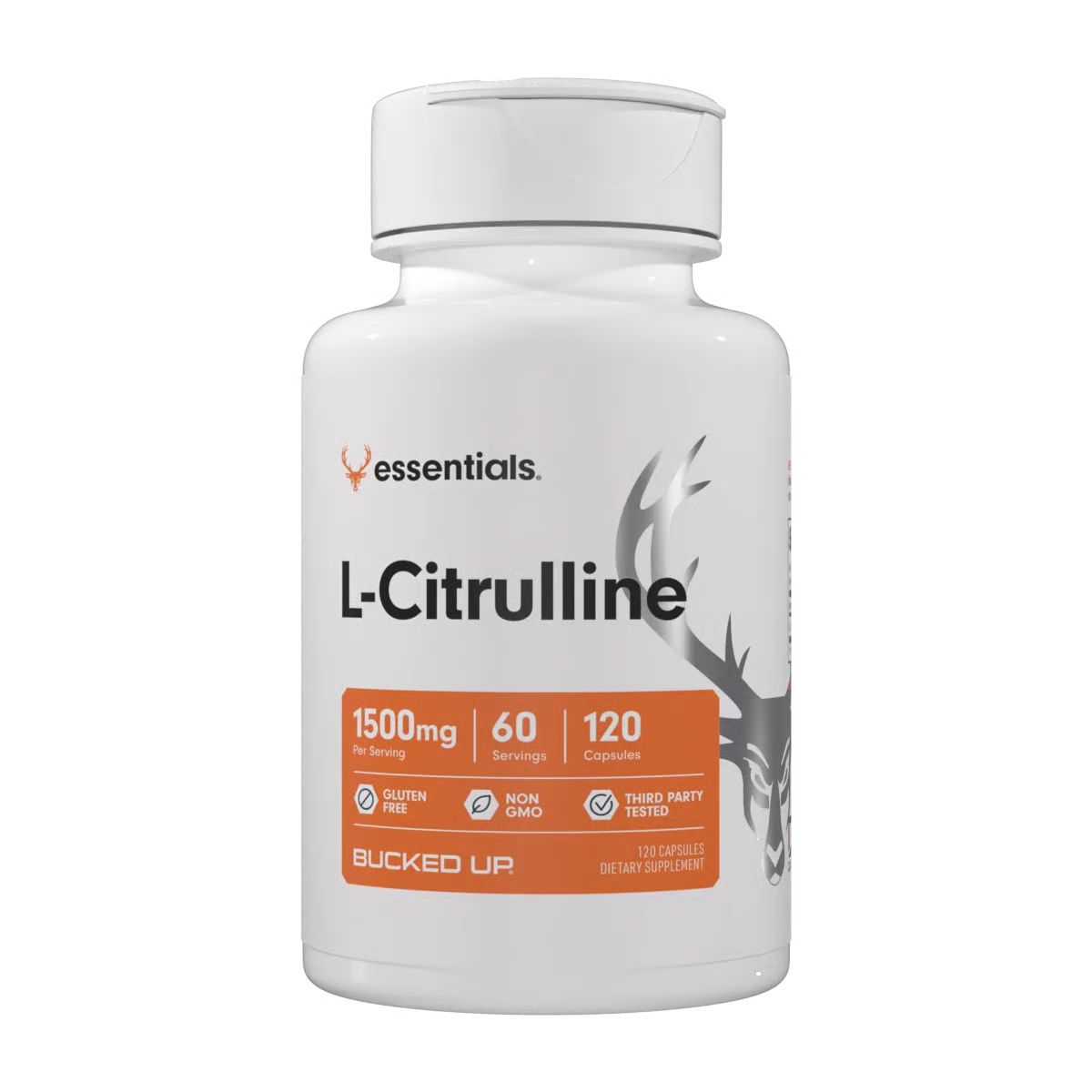
Bucked Up relies on research-supported dosing of ingredients like Citrulline Malate and Pure L-Citrulline. Review Bucked Up’s L-Citrulline lineup to match your dosing preferences.
Citrulline vs Arginine Decision Checklist
Use this checklist to choose a nitric oxide strategy that fits your training:
- Want pumps that last through your workout? → Consider citrulline.
- Struggle with GI issues from current pre-workouts? → Try citrulline.
- Prefer transparent labels over proprietary blends? → Pick products with clearly listed citrulline amounts.
- Looking for research-supported dosing? → Aim for 6–8g Citrulline Malate or 3–6g Pure L-Citrulline.
- Train late and avoid stimulants? → Use citrulline-based non-stimulant formulas.
- Want better absorption and consistency? → Choose formulas enhanced with Astragin®.
- Ready for more advanced pump support? → Explore Pure L-Citrulline stacked with Nitrosigine®.
For lifters who value disclosed dosing and research-aligned ingredients, Bucked Up’s citrulline-based formulas provide a straightforward option.
Conclusion: Why Many Lifters Choose Citrulline for Pumps
Current evidence supports citrulline as a strong choice for nitric oxide support, sustained pumps, and performance. Comprehensive research analysis confirms citrulline’s superior bioavailability and more effective plasma arginine increases compared to direct arginine supplementation.
Citrulline’s kidney conversion pathway avoids the heavy first-pass metabolism that limits arginine. This supports steadier nitric oxide production across your training session. The performance data, including more repetitions, longer endurance, and less soreness, shows how these mechanisms translate into better sessions and faster progress.
Bucked Up focuses on research-supported dosing and transparent labels so you can match your intake to the amounts used in studies. Whether you go with 6,000 mg Citrulline Malate in Bucked Up pre-workouts or the Pure L-Citrulline stack in Mother Bucker, you get clearly stated ingredient amounts.
Consistent citrulline use can make a noticeable difference in pump quality and training volume. Bucked Up uses research-supported dosing of science-backed ingredients, including Citrulline Malate and Pure L-Citrulline. Find the L-Citrulline option that fits your routine and performance goals.
FAQ: Citrulline vs Arginine for Pumps and Nitric Oxide
Is L-Citrulline or Citrulline Malate Better for Pumps?
Both forms support strong pump effects compared to arginine, but they play slightly different roles. Citrulline Malate 2:1 combines citrulline with malic acid, which supports nitric oxide production and ATP generation. The malate portion also helps buffer ammonia and supports energy metabolism during hard sets. Pure L-Citrulline delivers maximum citrulline per gram, which suits lifters who want focused vasodilation. Research indicates that both forms outperform arginine for sustained pump effects, with Citrulline Malate offering extra support for endurance-style training.
Will Citrulline Give You a Pump?
Citrulline can support strong pump sensations by boosting nitric oxide production and improving muscle blood flow.1 The pump feeling comes from increased blood volume in working muscles as blood vessels widen. Citrulline’s higher bioavailability keeps arginine levels elevated, which supports ongoing nitric oxide synthesis during your workout. Studies show that citrulline use can increase training volume, reduce fatigue, and heighten pump intensity compared to placebo.1 Most people feel the effects within 30–60 minutes, and they usually last through the session.
What Is an Effective Nitric Oxide Booster?
Research points to citrulline as an effective single-ingredient nitric oxide booster because it raises and maintains plasma arginine more reliably than arginine itself.1 Formulas that stack citrulline with ingredients like Nitrosigine® and absorption enhancers such as Astragin® can provide added benefits beyond citrulline alone. The crucial factor is dose. Aim for 6–8g Citrulline Malate or 3–6g Pure L-Citrulline instead of the small amounts often found in proprietary blends. Transparent labels help you confirm that you are getting research-aligned servings.
Can I Take L-Arginine and L-Citrulline Together?
Using arginine and citrulline together is usually unnecessary and may be less efficient. Citrulline already converts to arginine in the kidneys and offers better bioavailability, so extra arginine rarely adds much benefit.1 The combination can also create competitive absorption in the gut, which may reduce the effectiveness of both. Research generally shows that citrulline alone performs better than arginine alone or arginine–citrulline blends. For most lifters, focusing on adequate citrulline dosing works better than stacking it with arginine.
How Long Does It Take for Citrulline to Work?
Citrulline usually starts working within 30–60 minutes after you take it. Peak plasma levels appear between about 0.7 and 2 hours. Because citrulline’s effects last longer than arginine’s, benefits often cover your entire workout instead of fading quickly. For timing, take citrulline 30–60 minutes before training to line up peak levels with your working sets. You do not need a long loading phase. Well-timed doses on training days are enough for most people.
1 The content provided in this article is for informational purposes only and is not medical advice. Consult with a medical professional before implementing any changes to your diet, health, or exercise routines.
Individual results will vary and are based on a combination of each individual’s diet, exercise, age, and health circumstances.
These statements have not been evaluated by the Food and Drug Administration. This product is not intended to diagnose, treat, cure or prevent any disease.
This article was written by Ryan Gardner, CEO of Bucked Up. As the maker of Bucked Up Protein Soda, we have a financial interest in this information. The views expressed are our own and should be read with that context in mind.