Last updated: April 22, 2026
Key Takeaways: L-Citrulline vs L-Arginine
- L-citrulline raises nitric oxide more effectively than L-arginine, delivering about 35% higher plasma arginine levels at higher doses.1
- L-citrulline bypasses first-pass metabolism in the gut and liver and converts to arginine in the kidneys for longer-lasting effects.1
- Studies show 8g citrulline malate can boost reps by 53%, extend endurance by 12%, and ease post-workout muscle soreness.1
- L-citrulline is typically better tolerated and causes fewer GI issues than L-arginine, making it practical for daily use up to 9g.1
- Maximize pumps and performance with research-validated citrulline dosing from Bucked Up tailored for serious training.1
How L-Citrulline and L-Arginine Drive Nitric Oxide
The main difference between L-arginine and L-citrulline lies in how your body processes them. L-arginine directly feeds nitric oxide synthase (NOS) enzymes to produce nitric oxide, but approximately 70% of supplemental L-arginine undergoes first-pass metabolism in the gut and liver, which sharply limits how much reaches circulation.1
L-citrulline follows a more efficient route. L-citrulline circumvents hepatic degradation and is converted to L-arginine primarily in the kidneys, which produces higher systemic arginine levels.1 Peak plasma concentrations occur within 0.7-2 hours post-ingestion. This timing supports sustained nitric oxide production, stronger vasodilation, and better ammonia buffering during training.1 The table below shows how these different pathways affect arginine levels, timing, and overall availability:
| Pathway | Plasma Arginine Increase | Peak Time | Bioavailability |
|---|---|---|---|
| L-Arginine | Low sustained levels | 1-2 hours | Poor due to first-pass metabolism |
| L-Citrulline | About 35% higher plasma arginine concentrations than L-arginine at highest supplementation levels | 0.7-2 hours | Higher due to kidney conversion |
Head-to-Head Performance: Benefits, Dosages, and Limits
Current research points to clear performance advantages for L-citrulline.1 Studies show 8g citrulline malate increased repetitions to failure by 53%, while L-arginine often shows weaker results because of limited absorption.1
Endurance data follow a similar pattern. Cyclists taking L-citrulline demonstrated 12% longer time to exhaustion compared to placebo.1 L-citrulline has also been linked with reduced delayed onset muscle soreness (DOMS).1 These differences become clearer when you compare both amino acids across key training metrics:
| Metric | L-Arginine | L-Citrulline | Effective Dosage |
|---|---|---|---|
| Nitric Oxide Boost | Lower uptake, more GI issues | More sustained arginine levels | 6-8g malate pre-workout |
| Exercise Performance | Limited evidence | Up to 53% more reps | 8g malate (about 4.5g pure) |
| DOMS Reduction | Modest or inconsistent benefits | Associated with less soreness | 6-8g malate daily |
| Blood Pressure | Modest effects | More notable at 6g+ daily | 3-6g pure daily |
Performance, Recovery, and Vascular Health in Real Life
Recent trials give practical context for how L-citrulline can support training. Pérez-Guisado and Jakeman’s 2010 randomized controlled trial demonstrated that 8g citrulline malate enhanced anaerobic performance and relieved post-exercise muscle soreness.1 The malate component supports the Krebs cycle and ATP production, while citrulline maintains nitric oxide synthesis across the session.1
Endurance athletes see related benefits. Bailey et al.’s 2015 study, which documented the endurance improvements mentioned earlier, also found that L-citrulline improved muscle oxygenation during high-intensity efforts.1 The ammonia buffering effects of citrulline help reduce central fatigue during prolonged exercise and repeated bouts.1
Beyond athletic performance, L-citrulline’s nitric oxide pathway also supports vascular health in other contexts. Regarding erectile dysfunction support, a preliminary trial found that 1.5g daily of L-citrulline for one month improved erection hardness in men with mild ED, with 50% progressing from mild to normal function.1 L-citrulline’s steady arginine supply may provide more consistent vascular support than L-arginine’s variable absorption.1
Choosing L-Citrulline or L-Arginine for Nitric Oxide and Stacking
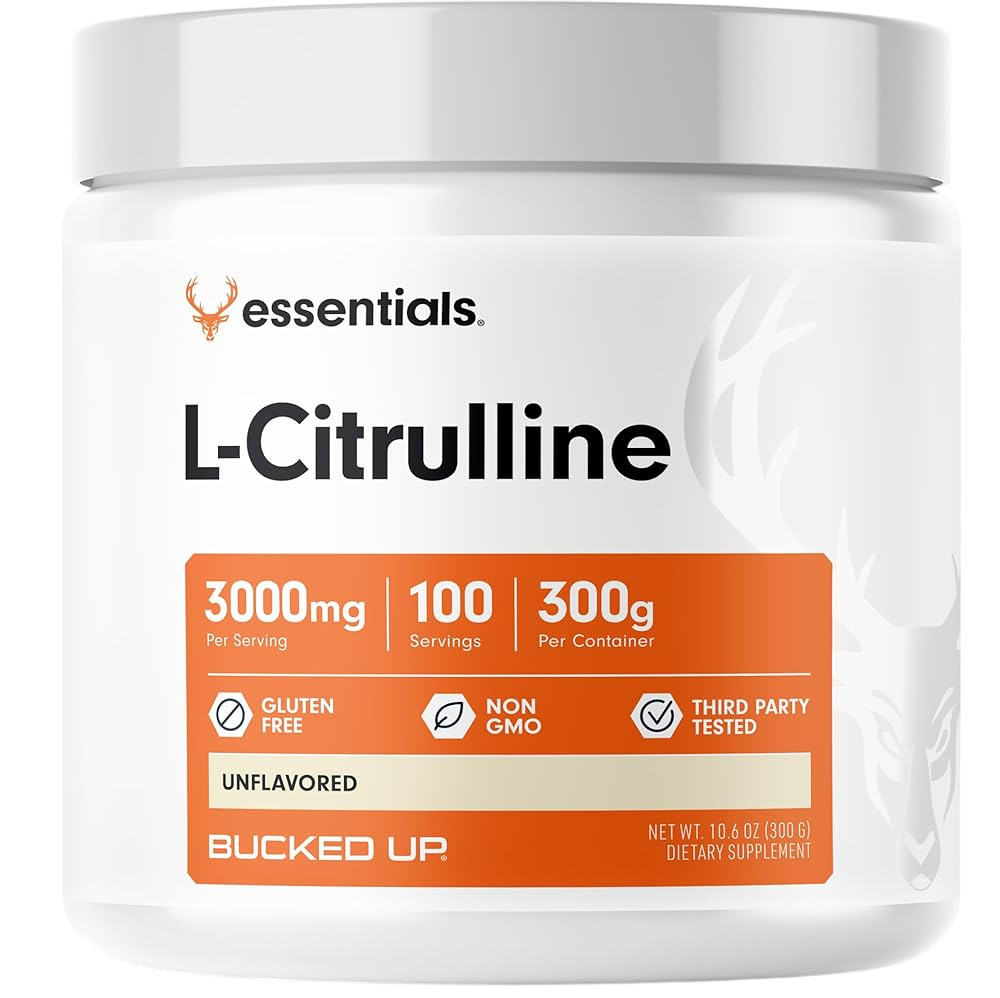
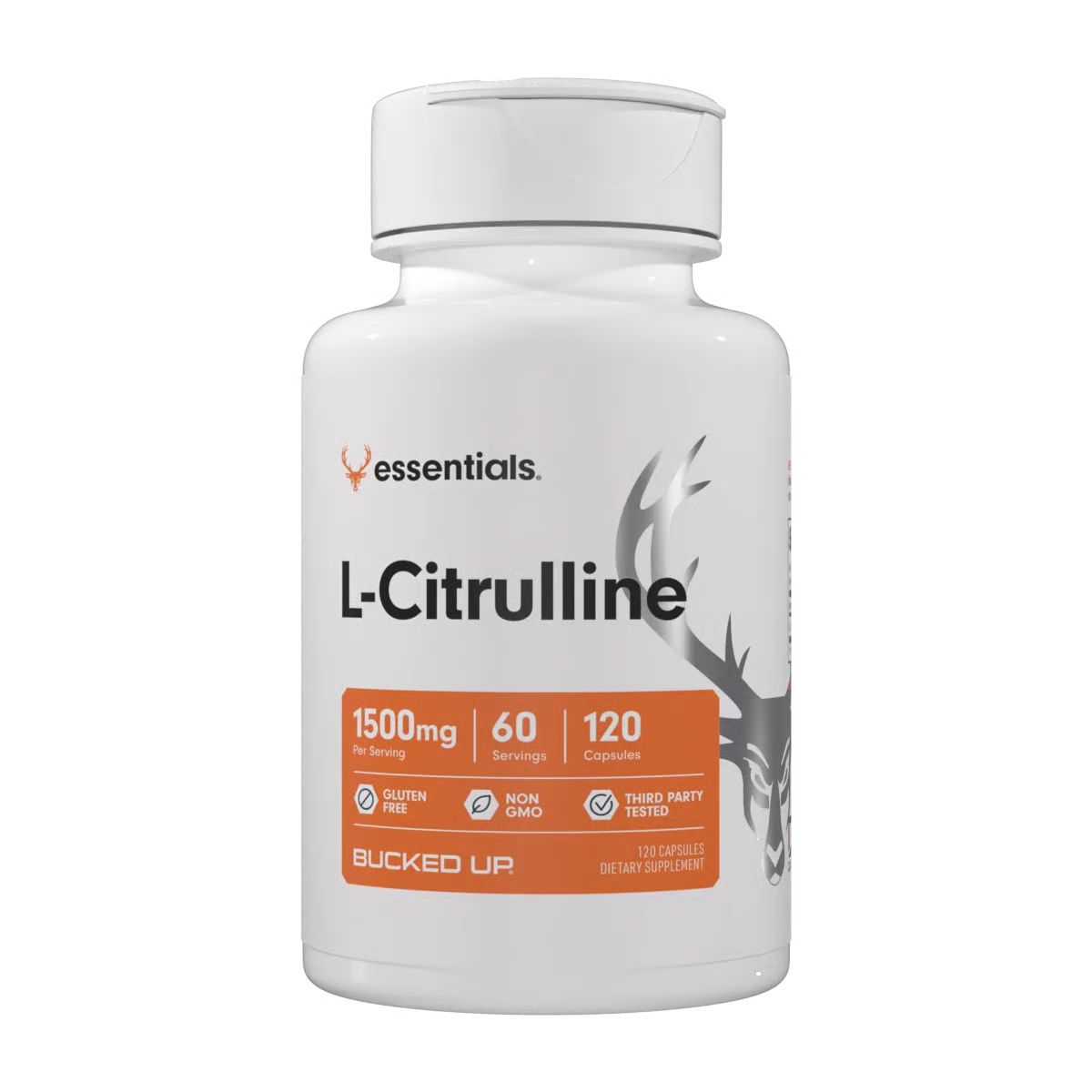
Current evidence supports L-citrulline as a strong option for nitric oxide production, and smart stacking can build on that base. Bucked Up’s transparent formulations let you choose between citrulline malate for pump and buffering or pure L-citrulline for advanced stacking strategies.
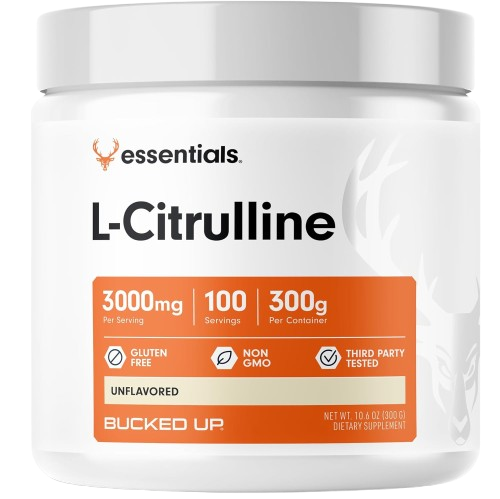
Bucked Up avoids proprietary blends and clearly lists ingredient amounts. Both Bucked Up Pre-Workout and Woke AF include 6g citrulline malate 2:1 for combined pump support and lactic acid buffering.1 For more advanced users, Mother Bucker pairs 4g pure L-citrulline with Nitrosigine and Astragin to support absorption and multiple nitric oxide pathways.1
Product selection works best when it matches your experience and stimulant tolerance. If you are new to pre-workouts, Bucked Up Pre-Workout offers 200mg caffeine and foundational pump support so you can build tolerance gradually.1 Once you adapt to stimulants, Woke AF increases caffeine to 333mg while maintaining similar vascular support. For experienced athletes who want more advanced nitric oxide support, Mother Bucker combines several NO-focused ingredients in one formula.
Safety, Side Effects, and Who L-Citrulline Fits Best
Both amino acids are generally well-tolerated, but they differ in side effect patterns. L-arginine can cause nausea, stomach pain, diarrhea, and bloating, particularly at higher doses.1 This digestive distress can limit how much L-arginine people can comfortably take. In contrast, L-citrulline is well-tolerated at dosages of 1.5-9g daily for up to 9 months, which makes it more practical for consistent daily use.1
Special precautions apply to both supplements, especially for people with medical conditions. L-arginine may interact with blood pressure medications, nitrates, and PDE5 inhibitors, potentially causing dangerous blood pressure drops.1 L-arginine can worsen asthma symptoms and may trigger herpes outbreaks in susceptible individuals.
Given these possible interactions and health considerations, individuals with low blood pressure, kidney disorders, or upcoming surgery should talk with a healthcare provider before using either amino acid. Bucked Up’s transparent labeling shows exact citrulline doses, helping you and your healthcare provider make informed supplementation decisions.
Stacking L-Arginine and L-Citrulline: When It Makes Sense
Combining both amino acids is generally considered safe for most healthy adults, yet L-citrulline usually works better as the main nitric oxide booster. Research shows that L-arginine combined with antioxidants like Pycnogenol can provide synergistic benefits. Even in those stacks, citrulline’s absorption advantage makes it a strong foundation.
A practical approach uses L-citrulline as the base and adds ingredients that support absorption or open additional nitric oxide pathways. Bucked Up’s formulations follow this strategy by pairing citrulline with Astragin for improved uptake and other performance-focused compounds that complement nitric oxide support.
Frequently Asked Questions
Which is better for muscle pumps: L-arginine or L-citrulline?
L-citrulline generally supports muscle pumps more effectively because it raises and sustains plasma arginine more reliably.1 L-arginine undergoes significant first-pass metabolism in the gut and liver, while L-citrulline bypasses this breakdown and maintains steadier nitric oxide production across your workout.
What is the optimal dosage for nitric oxide production?
For pre-workout pump support, 6-8g of citrulline malate, which provides about 3.4-4.5g pure L-citrulline, taken 30-60 minutes before training is commonly used in studies.1 For ongoing cardiovascular support, many protocols use 3-6g of pure L-citrulline daily to maintain steady benefits.1
How does Bucked Up compare to other citrulline supplements?
Bucked Up focuses on clear labeling and ingredients that support absorption, such as Astragin. Bucked Up clearly displays effective doses like 6g citrulline malate 2:1 or 4g pure L-citrulline in advanced formulations. Some other products can use proprietary blends, which makes it harder to know exact citrulline amounts.
Is L-citrulline better than L-arginine for erectile dysfunction?
L-citrulline often provides more consistent support for erectile function because it maintains a steadier nitric oxide pathway.1 Research indicates that 1.5g daily can improve erection quality in some men with mild ED, while L-arginine’s variable absorption can limit its impact on vascular function.
Is stacking L-arginine and L-citrulline safe?
Using both amino acids together is generally considered safe when dosed responsibly. L-citrulline should usually remain the primary ingredient because of its absorption and tolerance profile. Start with L-citrulline as your base, add L-arginine only if needed, and monitor for any digestive discomfort or changes in blood pressure.
Conclusion: Where L-Citrulline Fits in Your Routine
Current scientific evidence supports L-citrulline as a strong option over L-arginine for nitric oxide production, exercise performance, and sustained vascular support.1 Its kidney-based conversion pathway improves availability, supports fuller pumps, and tends to be easier on digestion than direct L-arginine supplementation. For athletes and active individuals who want nitric oxide benefits, L-citrulline can be a research-backed choice that fits well into both pre-workout and daily routines.
1 The content provided in this article is for informational purposes only and is not medical advice. Consult with a medical professional before implementing any changes to your diet, health, or exercise routines.
Individual results will vary and are based on a combination of each individual’s diet, exercise, age, and health circumstances.
These statements have not been evaluated by the Food and Drug Administration. This product is not intended to diagnose, treat, cure or prevent any disease.
This article was written by Ryan Gardner, CEO of Bucked Up. As the maker of Bucked Up Protein Soda, we have a financial interest in this information. The views expressed are our own and should be read with that context in mind.