Last updated: April 22, 2026
Key Takeaways: L-Citrulline vs L-Arginine
- L-citrulline raises nitric oxide more effectively than L-arginine by bypassing first-pass metabolism and increasing plasma arginine about 35% more.1
- Citrulline supports sustained muscle pumps, with studies showing up to 53% more reps to failure and 12% longer endurance time than placebo.1
- Recovery support includes about 40% less muscle soreness (DOMS), likely from improved blood flow and faster metabolite clearance.1
- Common effective dosing: 6-8g citrulline malate or 3-5g pure L-citrulline taken 30-60 minutes before training, with fewer GI issues than high-dose arginine.1
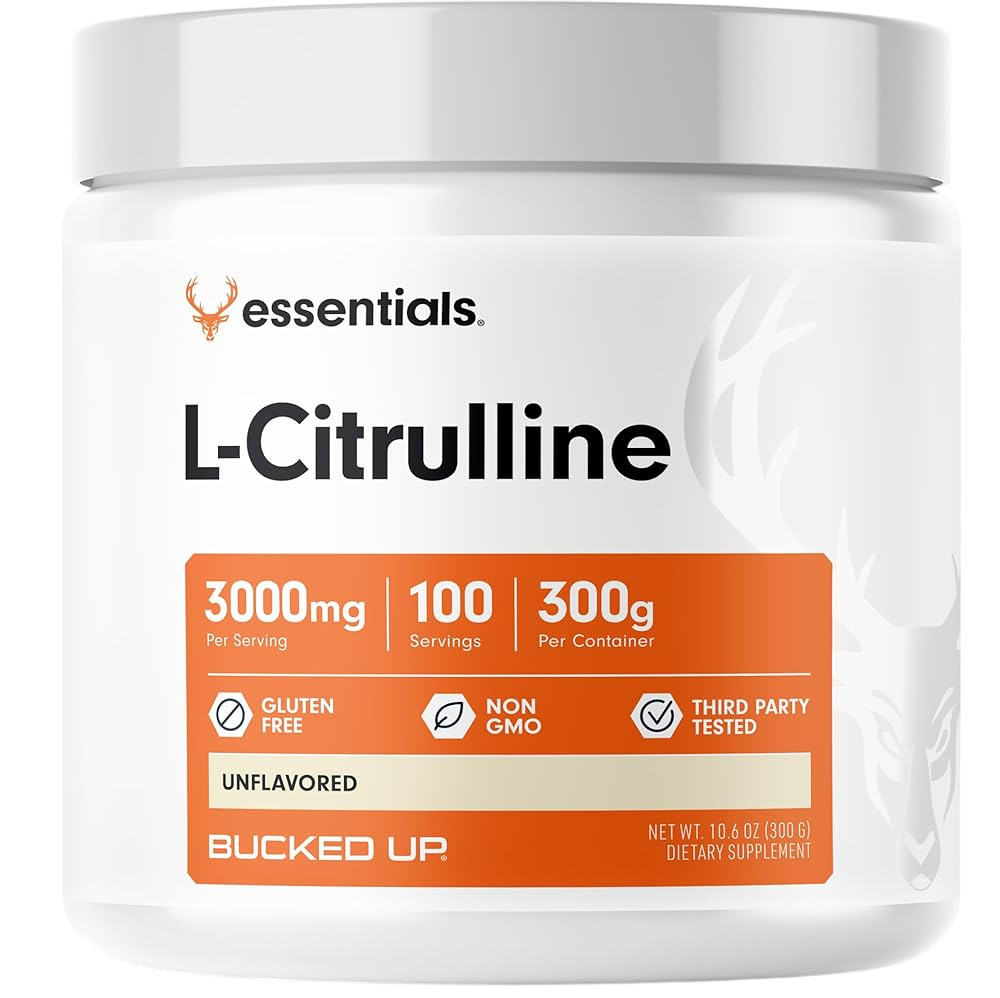
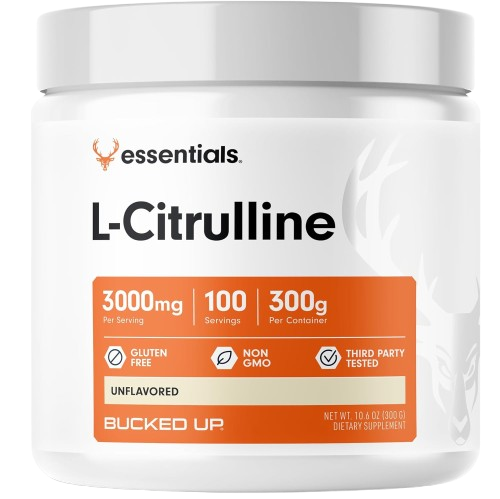
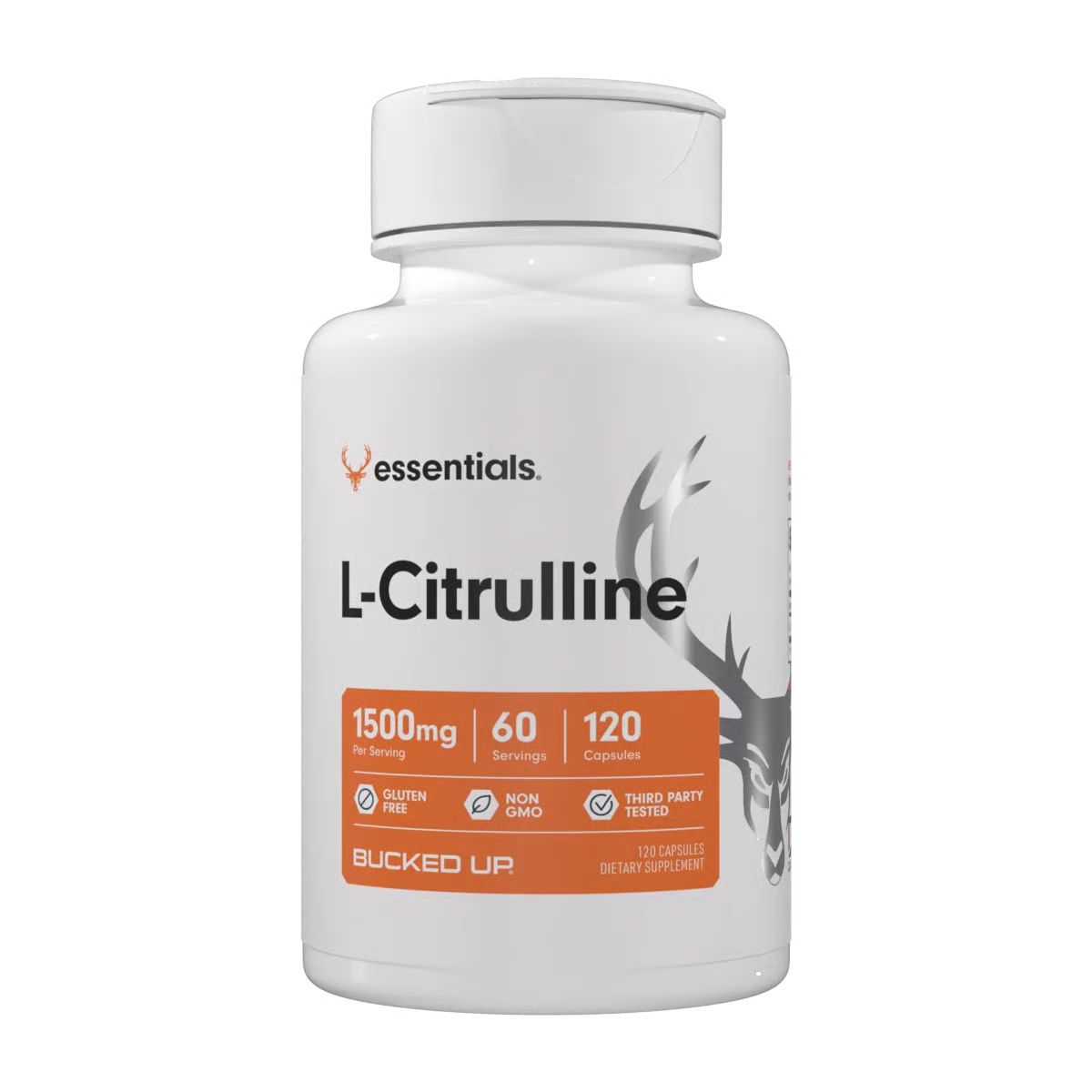
- You can experience these effects with Bucked Up’s pure L-Citrulline, formulated for consistent pumps and performance.1
How L-Citrulline and L-Arginine Support Nitric Oxide
The main difference between L-citrulline and L-arginine comes from how your body processes each amino acid. L-arginine faces significant first-pass degradation in the small intestine, which limits how much reaches your bloodstream to support nitric oxide production.
L-citrulline follows a different path. It absorbs efficiently in the intestines and then converts to arginine in the kidneys, avoiding the heavy first-pass breakdown that affects arginine. This kidney-based conversion keeps plasma arginine elevated for longer and supplies a more consistent substrate for nitric oxide synthesis.
The comparison below shows how citrulline’s absorption curve and plasma response differ from arginine’s faster spike and decline pattern.
| Metric | L-Citrulline | L-Arginine |
|---|---|---|
| Absorption Peak | 0.7-2 hours, sustained | 1-2 hours, rapid decline |
| Plasma Arginine Rise | Significant increase | Baseline increase |
| Nitric Oxide Efficiency | Prolonged | Limited, short-lived |
This pharmacokinetic profile positions L-citrulline as a strong option compared to L-arginine when you want sustained nitric oxide support and consistent workout performance.1
Workout Performance: L-Citrulline vs L-Arginine
L-citrulline shows measurable effects across several exercise performance markers. Studies using 8g of citrulline malate reported a 53% increase in repetitions performed to failure during resistance training compared to placebo.1 This improvement appeared mainly in the later sets, when fatigue usually limits performance.
Endurance training also benefits from citrulline. Cyclists supplementing with L-citrulline showed about 12% longer time to exhaustion and better power output during cycling tests.1 The amino acid’s role in ammonia detoxification likely supports these gains by reducing fatigue during prolonged efforts.
Citrulline also supports recovery. The same study that reported more reps to failure also found about a 40% reduction in delayed onset muscle soreness (DOMS) at 24 to 48 hours after training.1 Improved blood flow and faster removal of metabolic byproducts likely contribute to this effect.
The table below summarizes how current evidence compares L-citrulline and L-arginine for pumps, endurance, and recovery.
| Benefit | L-Citrulline Evidence | L-Arginine Evidence |
|---|---|---|
| Muscle Pumps | +53% reps to failure | Inconsistent results |
| Endurance | +12% cycling time | Minimal improvement |
| Recovery | -40% muscle soreness | Limited evidence |
The malate portion in citrulline malate may add further support by feeding the Krebs cycle, which can help ATP production and energy metabolism during training. These combined L-citrulline benefits explain why many serious lifters and endurance athletes look for citrulline-focused formulas.
Dialing In Dosages, Timing, and Forms
Effective L-citrulline dosing follows different guidelines than typical arginine protocols. Research supports 6-8g of citrulline malate, which provides about 3.4-4.5g of pure citrulline, taken 30-60 minutes before training for performance benefits.1
Pure L-citrulline uses lower gram amounts because it is more concentrated. A 3-5g serving often matches the effects of 6-8g citrulline malate.1 L-arginine usually needs higher doses, around 6-24g, to produce modest effects, which raises the chance of digestive discomfort.1
The table below outlines typical dosing approaches for common training goals.
| Goal | L-Citrulline Dose/Timing | L-Arginine Dose/Timing | Notes |
|---|---|---|---|
| Weight Training | 6-8g Malate, 60min pre | 6-12g, 30-60min pre | Focus on pumps and late-set strength |
| Endurance | 3-5g Pure, 60min pre | 3-6g, 30-60min pre | Supports sustained effort vs short spikes |
Bucked Up aligns its formulas with these patterns. Bucked Up and Woke AF pre-workouts each include 6g citrulline malate. Mother Bucker uses 4g pure L-citrulline plus Nitrosigine, and all three formulas include AstraGin to support absorption.1 This approach answers the common question about using L-arginine and L-citrulline together by centering citrulline as the main nitric oxide driver and keeping arginine content relatively low.
Side Effects and Safety: L-Citrulline vs L-Arginine
L-citrulline and L-arginine show different tolerability profiles, especially at higher, performance-focused doses. L-citrulline generally appears well tolerated across multiple studies.1
The table below compares how often common side effects appear for each amino acid at studied doses.
| Side Effect | L-Citrulline Incidence | L-Arginine Incidence | Source |
|---|---|---|---|
| GI Nausea/Diarrhea | Mild, infrequent up to 15g | Can occur at high doses | Clinical trials |
| Hypotension | Rare, dose-dependent | Reported | Safety reviews |
Both amino acids call for caution if you take blood pressure medications or ED drugs, because combined vasodilation can lower blood pressure more than expected. Citrulline often provides a smoother onset of effects than arginine, which some users may find easier to tolerate.
Bucked Up’s formulas aim to support tolerance by using measured doses and well-studied ingredients, so you can pursue nitric oxide benefits while limiting common downsides.1
Stacking Strategies and Bucked Up’s Pre-Workouts
These safety and performance differences shape how athletes stack L-citrulline and L-arginine. Many lifters use citrulline as their main nitric oxide support and keep arginine intake relatively modest, since citrulline already sustains arginine levels without as many digestive issues.
Bucked Up’s pre-workout lineup reflects this approach through its ingredient design. The original Bucked Up pre-workout provides 6g citrulline malate with AstraGin to support absorption, which suits beginners and everyday gym-goers who want dependable pumps and endurance without heavy stimulants.1
Woke AF keeps the same citrulline dose but layers in higher stimulant content. This pairing helps maintain vasodilation even when caffeine might otherwise narrow blood vessels.
For more advanced users, Mother Bucker combines 4g pure L-citrulline with Nitrosigine and HydroPrime glycerol. Its combination of pure L-citrulline, Nitrosigine, and glycerol supports blood flow, pump density, and hydration through complementary mechanisms.1
The fully disclosed labels, with no proprietary blends, let you see exact doses and stack confidently with other products.
Matching Bucked Up Formulas to Your Goals
Your training style, stimulant tolerance, and body weight all influence which L-citrulline setup fits best. Lifters chasing their first noticeable pump often start with Bucked Up’s 6g citrulline malate, which supports vasodilation without aggressive stimulant levels.
As tolerance grows and caffeine intake climbs, some users notice more vasoconstriction from stimulants. At that stage, Woke AF’s mix of 6g citrulline malate with 333mg caffeine can help maintain pumps while still delivering a strong energy kick.
Experienced bodybuilders who pay close attention to vasodilation and stacking often move toward Mother Bucker. Its combination of pure L-citrulline, Nitrosigine, and glycerol supports blood flow, pump density, and hydration through complementary mechanisms.1
For individuals between about 150 and 250 lbs, these formulas offer scalable support, from better nutrient delivery to higher training volume and smoother recovery, when used alongside a solid program and nutrition plan.1
FAQ
Which is better for nitric oxide, L-citrulline or L-arginine?
L-citrulline often stands out for nitric oxide support because of its metabolic pathway. L-arginine experiences heavy breakdown in the gut and liver, while citrulline bypasses much of that and converts to arginine in the kidneys. This route raises plasma arginine levels about 35% more effectively than direct arginine supplementation, which supplies more raw material for nitric oxide production.1 Bucked Up applies this research by centering precise citrulline dosing in its pre-workout formulas.
Can you take L-arginine and L-citrulline together?
You can combine L-arginine and L-citrulline, although many stacks use citrulline as the main nitric oxide support. A common approach uses about 3-6g citrulline with no more than 2-3g arginine. Many users still find citrulline alone effective, since it sustains arginine levels while typically causing fewer digestive issues.1 Bucked Up’s products emphasize citrulline for this reason.
What are the main downsides of L-arginine?
L-arginine’s main drawbacks include low oral bioavailability from extensive gut and liver metabolism, a higher chance of gastrointestinal side effects at effective doses, and relatively short-lived nitric oxide elevation.1 These factors can make L-arginine less consistent for workout support compared to L-citrulline, which tends to provide steadier and more tolerable effects for many users.
Citrulline malate vs pure L-citrulline: which should you choose?
Citrulline malate and pure L-citrulline each bring specific advantages. Citrulline malate adds malic acid, which supports the Krebs cycle and may help energy production, so many endurance-focused athletes favor it. Pure L-citrulline delivers more citrulline per gram and offers flexible stacking with other pump or performance ingredients.1 Bucked Up includes both forms across its lineup so you can match your choice to your training style and preferences.
L-citrulline offers several advantages over L-arginine for nitric oxide support and workout performance, including better bioavailability, longer-lasting effects, and generally smoother tolerability.1 Bucked Up’s research-informed formulas aim to deliver these benefits through clear, effective dosing across multiple pre-workout options.
1 The content provided in this article is for informational purposes only and is not medical advice. Consult with a medical professional before implementing any changes to your diet, health, or exercise routines.
Individual results will vary and are based on a combination of each individual’s diet, exercise, age, and health circumstances.
These statements have not been evaluated by the Food and Drug Administration. This product is not intended to diagnose, treat, cure or prevent any disease.
This article was written by Ryan Gardner, CEO of Bucked Up. As the maker of Bucked Up Protein Soda, we have a financial interest in this information. The views expressed are our own and should be read with that context in mind.