Last updated: April 22, 2026
Key Takeaways: L-Citrulline for Strength, Endurance, and Recovery
- L-Citrulline outperforms L-Arginine by bypassing gut and liver breakdown, delivering about 35% higher plasma arginine levels for sustained nitric oxide production.1
- Research shows 8g Citrulline Malate can increase total reps by 53% and reduce muscle soreness by 40% at 24–48 hours post-exercise.1
- Endurance benefits include improved oxygen kinetics, reduced perceived exertion, and better exercise tolerance, especially with consistent daily use.1
- Typical performance dosing is 6–8g Citrulline Malate or 3–6g pure L-Citrulline taken 30–60 minutes before training, with peak effects around 0.7–2 hours.1
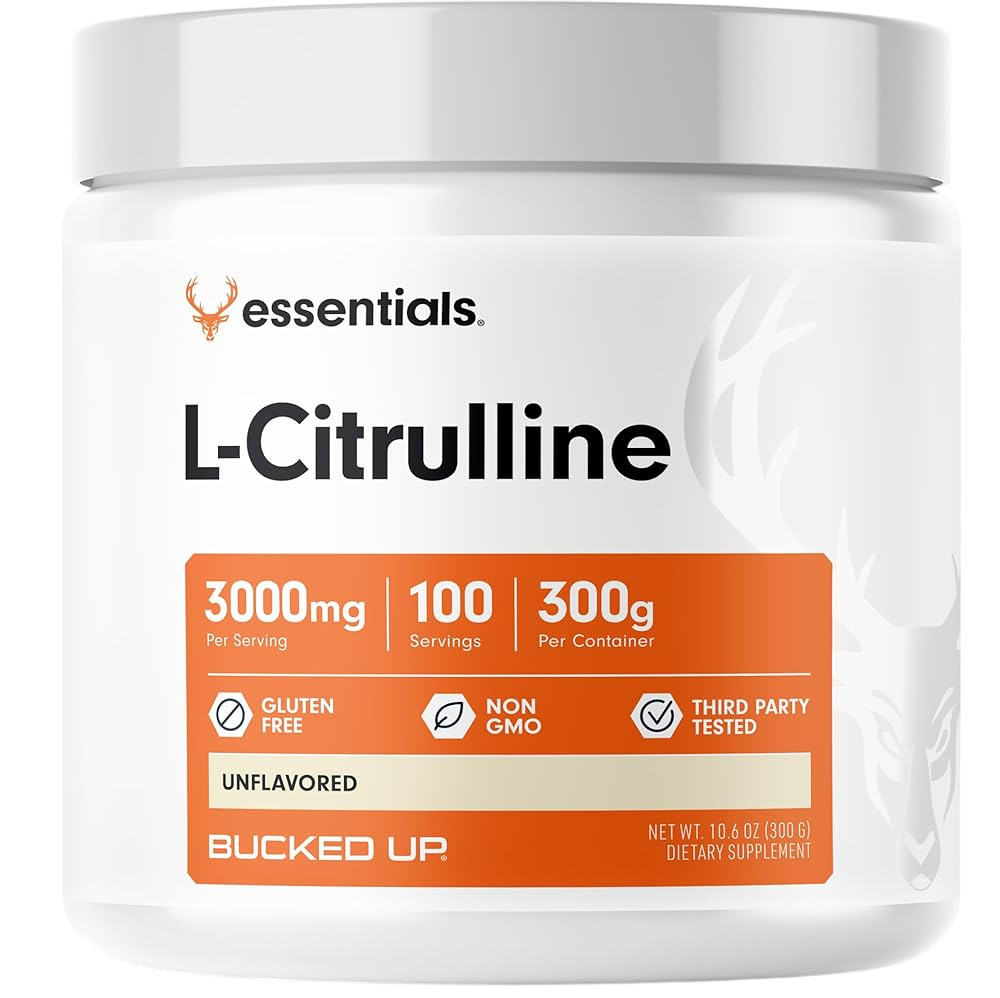
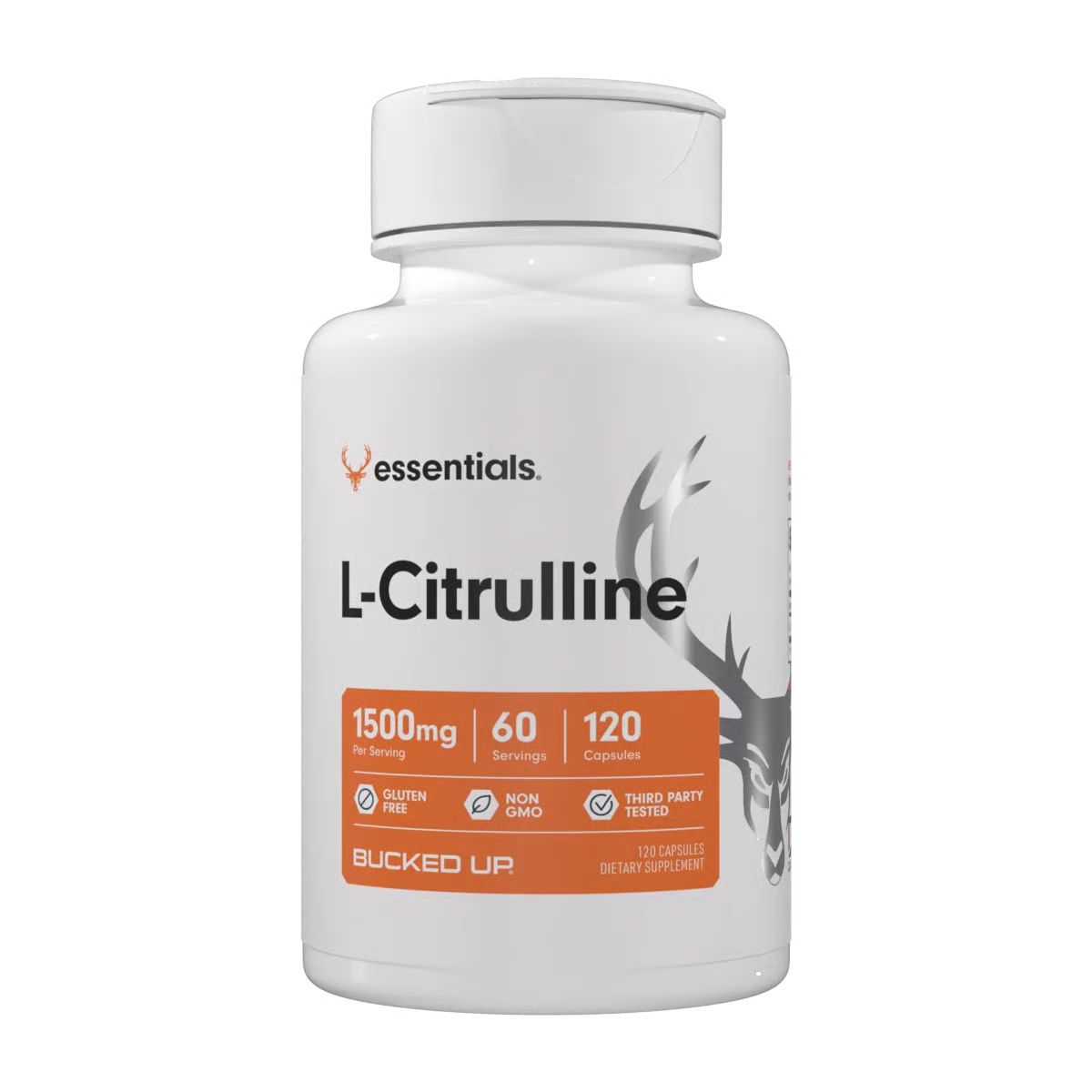
- Most healthy adults tolerate performance doses well; try Bucked Up’s pure L-Citrulline if you want a straightforward way to apply research-backed dosing.1
L-Citrulline vs L-Arginine for Nitric Oxide and Performance
L-Arginine supplementation faces a fundamental absorption problem. Approximately 40–50% of oral L-Arginine undergoes degradation by arginase enzymes in the intestinal mucosa and hepatic first-pass metabolism before reaching systemic circulation. This significantly limits its effectiveness for performance enhancement.
L-Citrulline avoids much of this breakdown because of its different pharmacokinetics. After oral ingestion, L-Citrulline absorbs well from the small intestine and largely evades first-pass metabolism in the liver. The kidneys then convert absorbed L-Citrulline into L-Arginine through argininosuccinate synthase and lyase enzymes. L-Citrulline supplementation produces approximately 35% higher plasma arginine concentrations compared to equal doses of direct L-Arginine supplementation.1 Peak plasma concentrations occur within 0.7 to 2 hours after ingestion.
When combined with malic acid to form Citrulline Malate, the malate component supports the Krebs Cycle for aerobic ATP production and phosphocreatine recovery.1 This dual mechanism supports both nitric oxide production and cellular energy metabolism.1 These advantages set the stage for potential improvements in strength, endurance, and recovery.1
Explore Bucked Up’s L-Citrulline options with transparent, research-backed dosing
Does L-Citrulline Improve Performance? Research Highlights
Research demonstrates measurable performance changes with L-Citrulline supplementation across multiple training modalities. The evidence covers resistance training, endurance exercise, and recovery-related outcomes.1
| Study/Year | Dose/Form | Outcome | Key Finding |
|---|---|---|---|
| Perez-Guisado 2010 | 8g Citrulline Malate | Reps to failure | +53% total reps |
| Perez-Guisado 2010 | 8g Citrulline Malate | Muscle soreness | -40% DOMS at 24–48hrs |
| Bailey 2015 | L-Citrulline | Endurance | Improved O2 kinetics |
A 2025 comprehensive review by Dembicki et al. analyzing 43 studies found that L-citrulline supplementation was associated with improved endothelial-dependent vasodilation, moderate blood pressure reductions especially at daily doses ≥6g, and benefits in VO₂ kinetics, reduced perceived exertion, and enhanced exercise tolerance.1 The authors also noted that measurable performance improvements can vary by protocol, population, and training status.
A 2023 systematic review and meta-analysis published in the Journal of the International Society of Sports Nutrition examined the effects of citrulline on endurance performance in young healthy adults. The findings highlight how dosing strategies, training modality, and individual response influence outcomes.
L-Citrulline Dosage for Strength, Endurance, and Daily Use
L-Citrulline dosing depends on your training goals and the supplement form you choose. Effective dosages for performance typically range from 3–6 grams daily.1
For resistance training, many protocols use 6–8g of Citrulline Malate (providing about 3.4–4.5g of L-Citrulline) taken 30–60 minutes before exercise. For daily supplementation focused on vascular support or endurance, 3–6g of pure L-Citrulline is common. The 2:1 ratio in Citrulline Malate means 1.76g provides approximately 1g of pure L-Citrulline.
Timing L-Citrulline: Onset and Chronic Effects
As noted earlier, citrulline reaches peak plasma levels within 0.7–2 hours. Chronic L-citrulline supplementation (typically 14 days or longer) is necessary for beneficial vascular effects, as acute ingestion shows inconsistent effects on nitric oxide production and vasodilation.1 Consistent daily intake supports more reliable changes in blood flow and related performance markers.
Food sources cannot realistically provide performance-level doses. Obtaining 3g of citrulline requires consuming 2.2–3.3 pounds of watermelon daily, so supplementation offers a more practical option for athletes and serious lifters.
L-Citrulline Supplements: How Bucked Up Fits Into Your Stack
Some supplements use proprietary blends that hide actual ingredient amounts, which makes it harder to confirm whether you are hitting effective doses. Bucked Up addresses this by using fully disclosed formulations that align with research-backed dosing ranges.
Bucked Up offers multiple L-Citrulline options tailored to different training needs. For standard pre-workout support, Bucked Up Pre-Workout and Woke AF each provide 6g Citrulline Malate 2:1, with caffeine levels of 200mg and 333mg respectively. For users seeking higher nitric oxide support, Mother Bucker combines 4g pure L-Citrulline with Nitrosigine® and AstraGin® at 400mg caffeine.
In this setup, AstraGin® can enhance citrulline absorption, while Nitrosigine® supports nitric oxide production through a different pathway. These combinations target several performance factors at once, including nitric oxide production, cellular hydration, and nutrient uptake.1
Shop Bucked Up’s citrulline formulations with clearly disclosed ingredient amounts
Citrulline Malate Benefits, Safety, and Smart Use
At the performance doses discussed earlier (3–6g daily), L-Citrulline is generally safe for healthy adults with no major side effects reported.1 L-Citrulline has demonstrated good tolerability in supplementation studies.
Mild gastrointestinal discomfort may occur with doses above 10g.1 Individuals with severe kidney disease should avoid L-Citrulline because the kidney plays a central role in citrulline-arginine-nitric oxide metabolism.1 Those taking antihypertensive medications or nitrates should use caution due to potential additive blood pressure-lowering effects.1
Consult a healthcare provider before use if you take medications for blood pressure or erectile dysfunction. Pregnant and breastfeeding women should avoid supplementation because safety data remain limited.
FAQ: Practical Questions About L-Citrulline
Does L-Citrulline improve performance?
Research shows mixed but promising results. The 2010 Perez-Guisado study reported a 53% increase in total repetitions with 8g Citrulline Malate, while several endurance studies report improvements in oxygen kinetics and time to exhaustion.1 Individual responses vary, and chronic supplementation often appears more effective than single acute doses.
What is an effective L-Citrulline dosage for performance?
For resistance training, many lifters use 6–8g of Citrulline Malate taken 30–60 minutes before exercise. For daily supplementation, 3–6g of pure L-Citrulline is common. Start at the lower end of the range to assess tolerance, especially if you are new to pre-workout or nitric oxide support products.
What are Citrulline Malate benefits compared to pure L-Citrulline?
Citrulline Malate combines L-Citrulline with malic acid, which supports the Krebs Cycle for energy production. This pairing may provide extra support for endurance and fatigue resistance beyond nitric oxide enhancement alone. Pure L-Citrulline offers more citrulline per gram, which can help if you want precise control over your citrulline intake.
Can you take too much L-Citrulline?
Doses above 10g may cause gastrointestinal discomfort such as nausea, bloating, or diarrhea. Most performance-related benefits occur within the 3–8g range.1 Higher doses do not always deliver greater benefits and may increase the chance of side effects.
When should I take L-Citrulline for best results?
Take L-Citrulline 30–60 minutes before training if you want acute performance support. For ongoing vascular and endurance benefits, consistent daily supplementation for at least 14 days appears more effective than occasional single doses.
Performance plateaus from fatigue, reduced repetitions, and poor endurance have research-backed strategies. L-Citrulline supplementation addresses these challenges through more reliable nitric oxide production and ammonia handling compared to direct arginine supplementation.1 Evidence supports meaningful improvements in training capacity when you follow appropriate dosing protocols and give the supplement time to work.1
Start with Bucked Up’s L-Citrulline to put these research-backed protocols into practice
1 The content provided in this article is for informational purposes only and is not medical advice. Consult with a medical professional before implementing any changes to your diet, health, or exercise routines.
Individual results will vary and are based on a combination of each individual’s diet, exercise, age, and health circumstances.
These statements have not been evaluated by the Food and Drug Administration. This product is not intended to diagnose, treat, cure or prevent any disease.
This article was written by Ryan Gardner, CEO of Bucked Up. As the maker of Bucked Up Protein Soda, we have a financial interest in this information. The views expressed are our own and should be read with that context in mind.