Written by: Ryan Gardner, Owner, Managing Partner, CEO, Bucked Up | Last updated: June 24, 2026
Key Takeaways
-
Many nitric oxide supplements hide actual L-Citrulline doses inside proprietary blends, so label transparency becomes essential for athletes who want measurable results.
-
L-Citrulline often outperforms L-Arginine because it bypasses first-pass metabolism and delivers higher plasma arginine levels for nitric oxide production and blood flow support.*1
-
Knowing the difference between pure L-Citrulline and Citrulline Malate (2:1) matters, since each form delivers a different amount of active L-Citrulline per gram listed on labels.
-
Effective protocols typically use 3 to 8 grams of L-Citrulline or 6 to 8 grams of Citrulline Malate taken 45 to 60 minutes pre-workout, with multi-day use often producing more consistent benefits than single doses.
-
Explore Bucked Up’s L-Citrulline options to see how transparent labeling supports informed dosing decisions for your training.
How Nitric Oxide Supplements Support Performance
Nitric oxide supplements do not deliver nitric oxide directly. They supply amino acid precursors that your body converts into nitric oxide through enzymatic pathways. Nitric oxide is a gaseous signaling molecule that supports relaxation of vascular smooth muscle, which supports vasodilation and blood flow.* Athletes often use these products pre-workout to support nutrient and oxygen delivery to active muscle tissue.*1
The dominant precursor in many modern formulations is L-Citrulline, not L-Arginine. Oral L-Arginine is significantly degraded by arginase enzymes in the gut and liver before it reaches systemic circulation. L-Citrulline bypasses that first-pass metabolism, gets absorbed from the small intestine, and is converted into L-Arginine in the kidneys.
This pathway produces a more sustained rise in plasma L-Arginine available for nitric oxide synthesis.*1 Peak plasma concentrations of L-Citrulline typically occur within 0.7 to 2 hours after ingestion, so timing influences performance support.
The commonly studied effective dose range for L-Citrulline in athletic contexts is 3 to 10 grams per serving. Resistance-training research frequently uses 6 to 8 grams of Citrulline Malate (2:1) or 3 to 5 grams of pure L-Citrulline taken about 45 to 60 minutes before exercise.
A 2015 study by Bailey et al. reported that 6 grams per day of pure L-Citrulline for seven days supported a 12% improvement in exercise tolerance and 7% more total work during severe-intensity cycling compared to placebo, while the same dose of L-Arginine did not provide that benefit.1
Forms of L-Citrulline and What to Look for on Labels
L-Citrulline appears in three primary formats: pure powder, capsules, and pre-workout blends. Pure powder offers flexible dosing and is unflavored, so you can stack it with other ingredients. Capsules provide convenience and precise per-capsule dosing without any mixing. Pre-workout blends combine L-Citrulline with energy, focus, and endurance ingredients in a single serving.
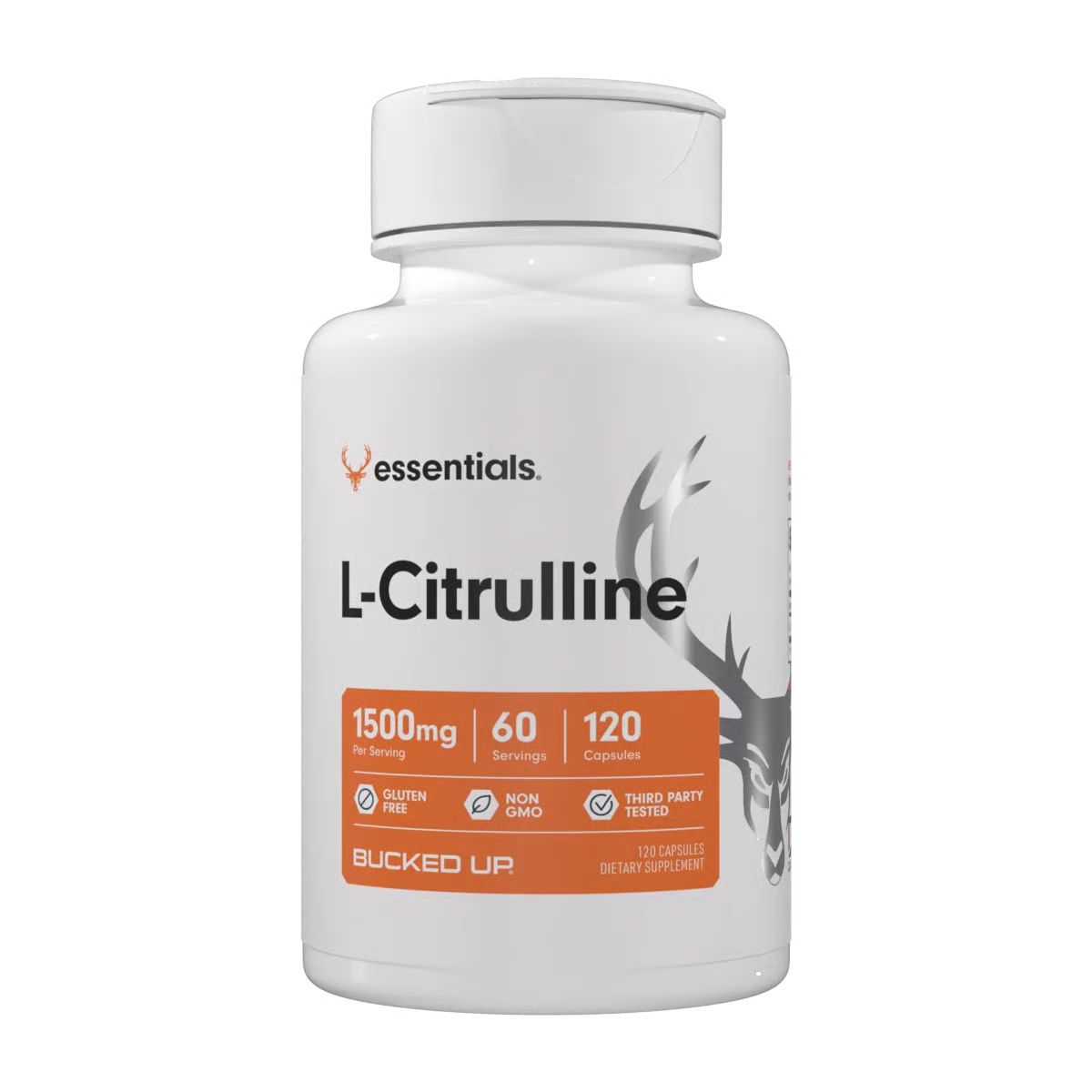
The label distinction that confuses many athletes is the difference between pure L-Citrulline and Citrulline Malate. Citrulline Malate is a compound of L-Citrulline and Malic Acid, typically in a 2:1 ratio. This ratio means that a supplement listing 6 grams of Citrulline Malate (2:1) delivers approximately 3.4 grams of actual L-Citrulline, with the remainder as Malic Acid.
Malic Acid is a Krebs Cycle intermediate that may support aerobic energy production*, yet this composition difference means the numbers are not interchangeable.1 When a label lists “6g Citrulline Malate” and you compare it to a product listing “6g Pure L-Citrulline,” you are not looking at equal amounts of the active amino acid.
When you read any label, check three details. Confirm the specific form listed (pure L-Citrulline or Citrulline Malate). Note the ratio if Citrulline Malate appears. Then see whether the gram amount is disclosed per serving or hidden inside a proprietary blend total. A disclosed gram amount sets the baseline for any serious evaluation.
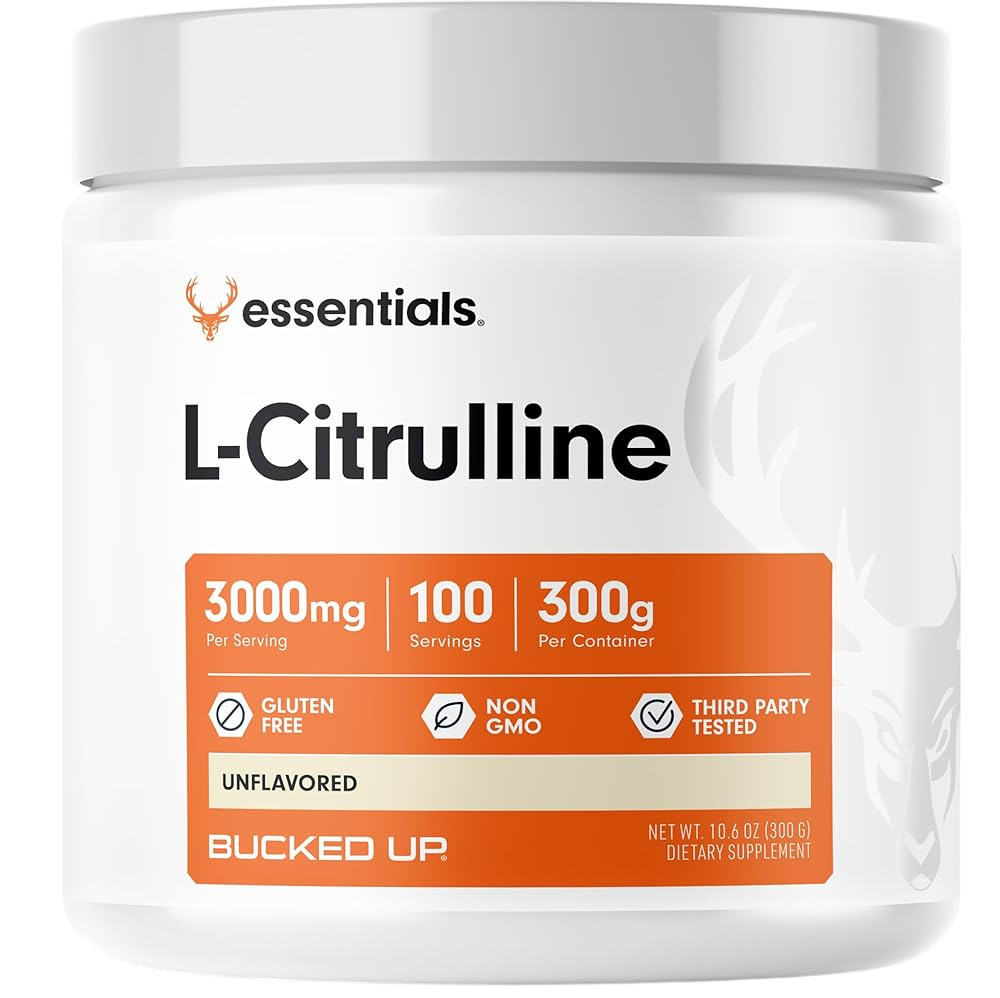
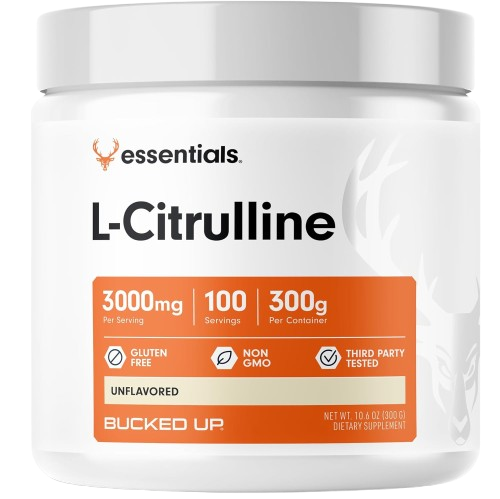
Bucked Up’s Pure L-Citrulline Powder delivers 3,000mg of pure L-Citrulline per scoop with full label transparency, which illustrates the kind of clearly disclosed dosing this label-reading approach highlights.
Timing, Serving Sizes, and Smart Stacking
For acute performance support, many athletes take L-Citrulline about 60 minutes before intense physical activity. This schedule lines up with the 0.7 to 2-hour window for peak plasma concentrations. For daily cardiovascular function support in healthy adults, research has examined 3 to 6 grams of pure L-Citrulline per day, sometimes split into two servings.
Stacking L-Citrulline with complementary ingredients can refine a pre-workout strategy. Nitrosigine, a patented arginine silicate, supports blood flow through a pathway that differs from L-Citrulline, so the two can form a logical pairing for multi-pathway nitric oxide support.*1 Glycerol, especially high-concentration forms like Hydroprime, supports cellular hydration and plasma volume, which can amplify pump effects alongside vasodilation.*1
Astragin, a patented absorption compound, is studied for its ability to support citrulline absorption and bioavailability, which may help more of the disclosed dose reach circulation.*1
These stacking strategies can strengthen a supplementation plan, yet expectations still need to stay realistic. Research results on L-Citrulline are not uniform. Multiple controlled trials using single pre-exercise doses of 8 grams of Citrulline Malate found no improvements in performance compared to placebo, and systematic reviews note that single-dose supplementation has not produced reliable benefits across all protocols.
Multi-day loading protocols and individual variability in response both matter. The science supports L-Citrulline as a meaningful tool, not a guaranteed outcome.
Who Typically Uses L-Citrulline and When to Get Guidance
Athletes who most often explore nitric oxide supplements include competitive and recreational lifters focused on hypertrophy support. Endurance athletes who want to support oxygen delivery and time-to-exhaustion also use these products. High-stim pre-workout users sometimes add L-Citrulline to balance the vasoconstrictive tendency of high caffeine loads with a strong vasodilatory ingredient.*1
Certain situations call for medical input before using L-Citrulline. Individuals with naturally low blood pressure or kidney conditions, or those with a history of cardiovascular concerns, should speak with a healthcare provider first. Anyone taking blood pressure medications, nitrate medications, or phosphodiesterase-5 inhibitors also needs guidance, since L-Citrulline’s vasodilatory effects may interact with these therapies.
Pregnant or breastfeeding individuals should consult a healthcare provider before use. If you are scheduled for surgery, discontinue L-Citrulline at least two weeks beforehand and follow your provider’s instructions.
Safety, Side Effects, and Testing Standards
L-Citrulline is generally well-tolerated at doses studied for performance support. Oral L-Citrulline at doses up to 15 grams has appeared in research with no adverse events in healthy adults, which contrasts with the gastrointestinal side effects often seen at effective doses of L-Arginine.1
At very high single doses, such as 10 grams or more, some individuals report nausea, bloating, or headaches related to vasodilation. Starting with a lower dose and assessing tolerance offers a practical approach. Always consult your healthcare provider if you experience persistent side effects.
For competitive athletes who follow anti-doping rules, third-party testing becomes a core evaluation criterion. The U.S. Anti-Doping Agency (USADA) recommends that athletes use supplements certified by a recognized third-party program, such as NSF Certified for Sport or Informed Sport, because supplement labels alone do not guarantee the absence of banned substances.
Manufacturing in GMP-certified facilities supports quality and consistency standards. Third-party banned-substance testing adds a separate layer of assurance for athletes in tested sports.
How to Compare Nitric Oxide Supplement Brands
When you compare nitric oxide supplement brands for athletic use, four criteria provide the most practical guidance: ingredient disclosure, dose per serving, cost per effective serving, and testing certifications.
Ingredient disclosure means every active ingredient and its gram amount appear individually on the label, not hidden inside a proprietary blend total. Without disclosed amounts, you cannot judge whether a product delivers a dose that matches studied ranges.
Dose per serving depends on knowing the form (pure L-Citrulline or Citrulline Malate 2:1) and applying the ratio math explained earlier. This step matters because Citrulline Malate and pure L-Citrulline provide different amounts of the active amino acid per gram listed, so comparisons must account for form rather than headline numbers alone.
Cost per effective serving comes from dividing the product price by the number of servings, then checking whether the dose per serving falls within studied ranges. A lower-priced product with a disclosed 1 to 2 gram dose can end up costing more per effective gram than a higher-priced product with a disclosed 6 gram dose.
Testing certifications carry special weight for competitive athletes. A brand that manufactures in GMP-certified facilities and pursues third-party banned-substance certification offers a higher level of assurance than one that skips these steps.
Bucked Up can stand out in this framework through its approach to ingredient disclosure, since all ingredient amounts appear on the label across its pre-workout line. For dose per serving, the foundational formulas (Bucked Up Pre-Workout, Woke AF, Non-Stimulant Pre-Workout) use 6,000mg of Citrulline Malate (2:1), while Mother Bucker provides 4,000mg of pure L-Citrulline stacked with Nitrosigine and Hydroprime Glycerol.
On the testing and quality criterion, all products are manufactured in GMP-certified facilities in the USA. As noted in the standalone powder example earlier, this 3,000mg-per-scoop specification gives athletes precise control over their L-Citrulline dosing protocol.
Frequently Asked Questions
How long does it take to feel the effects of L-Citrulline?
For acute pre-workout use, many athletes take L-Citrulline about 60 minutes before exercise to match the peak plasma window. Some people notice pump and blood flow support during the first workout. Others feel more consistent results after several days of use. Individual response varies with training intensity, diet, hydration, and baseline nitric oxide status.
Should L-Citrulline be taken every day or only on training days?
Both patterns appear in the research. Daily use at 3 to 6 grams of pure L-Citrulline has been studied for general cardiovascular function support in healthy adults. For performance-specific goals, many protocols focus on taking it 45 to 60 minutes before training sessions.
Some athletes combine these strategies, using a maintenance dose on rest days and a pre-workout dose on training days. There is no single universally correct schedule, so consulting a healthcare provider for personalized guidance makes sense.
What is the practical difference between pure L-Citrulline and Citrulline Malate for athletes?
Pure L-Citrulline delivers 100% of the gram amount as the active amino acid, which simplifies dosing protocols focused on nitric oxide support and vasodilation. Citrulline Malate (2:1) delivers about 67% L-Citrulline and 33% Malic Acid per gram.
The Malic Acid component is a Krebs Cycle intermediate theorized to support aerobic ATP production and ammonia clearance during exercise. Athletes focused mainly on pump and blood flow support may prefer pure L-Citrulline for dosing precision. Athletes who also want potential endurance and energy metabolism support may choose Citrulline Malate (2:1), as long as the label clearly discloses the gram amount and ratio.
When should an athlete consult a healthcare provider before using L-Citrulline?
Consultation is advisable for anyone with naturally low blood pressure, kidney conditions, or a history of cardiovascular concerns. It also matters for anyone taking blood pressure medications, nitrate medications, or phosphodiesterase-5 inhibitors, since L-Citrulline’s vasodilatory effects may interact with these.
Pregnant or breastfeeding individuals should not use L-Citrulline without healthcare provider approval. If you are preparing for surgery, discontinue use at least two weeks beforehand and follow your provider’s guidance.
Conclusion: Using L-Citrulline with Confidence
A useful nitric oxide supplement comparison for athletes starts with disciplined label reading. Disclosed gram amounts, correct form identification, dose alignment with studied ranges, and third-party testing credentials help separate a well-built product from a well-marketed one.
No supplement replaces consistent training, nutrition, and recovery. A properly dosed L-Citrulline product can support the blood flow and nutrient delivery that help make those training sessions more productive.*
Bucked Up promotes a science-focused approach to dosing with full label transparency, including Citrulline Malate and pure L-Citrulline across its pre-workout line. Review Bucked Up’s L-Citrulline formulations to apply the dosing and transparency criteria outlined in this guide.
*These statements have not been evaluated by the Food and Drug Administration. This product is not intended to diagnose, treat, cure, or prevent any disease.
1 The content provided in this article is for informational purposes only and is not medical advice. Consult with a medical professional before implementing any changes to your diet, health, or exercise routines. Individual results will vary and are based on a combination of each individual’s diet, exercise, age, and health circumstances. These statements have not been evaluated by the Food and Drug Administration. This product is not intended to diagnose, treat, cure or prevent any disease.
This article was written by Ryan Gardner, CEO of Bucked Up. As the maker of Bucked Up Protein Soda, we have a financial interest in this information. The views expressed are our own and should be read with that context in mind.