Last updated: March 22, 2026
Key Takeaways
- L-Citrulline boosts athletic performance by increasing nitric oxide for blood flow, clearing ammonia to reduce fatigue, and supporting ATP when paired with malate.
- Clinical studies show 53% more reps in resistance training and 12% longer cycling endurance with 6–8g doses.
- L-Citrulline outperforms L-Arginine because it has higher bioavailability and bypasses liver metabolism for sustained nitric oxide production.
- Most athletes see best results with 6–8g Citrulline Malate taken about 60 minutes pre-workout, which is safe for daily use in healthy adults.
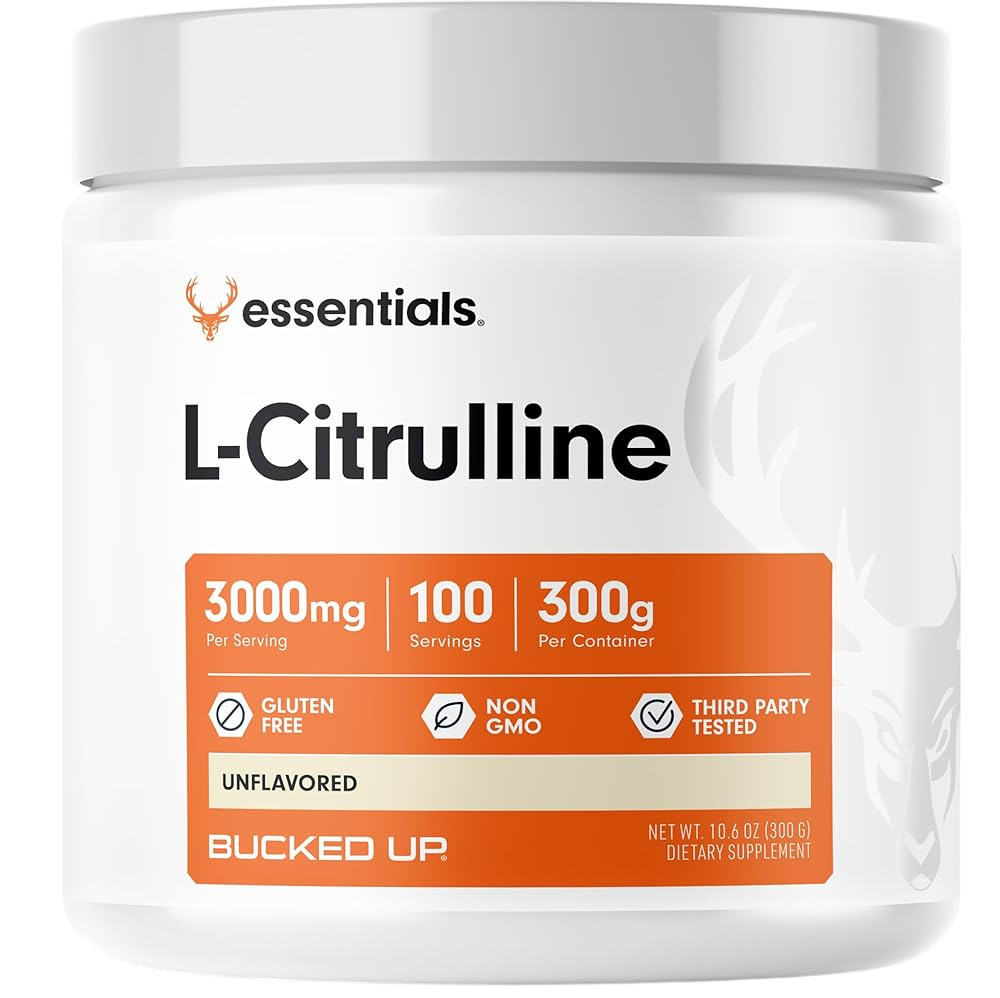
- Choose Bucked Up’s clinically-dosed L-Citrulline with Astragin® to improve absorption and support consistent performance gains.
Executive Summary: How L-Citrulline Works and Where Bucked Up Stands Out
L-Citrulline improves athletic performance through three primary mechanisms. It enhances nitric oxide for vasodilation and oxygen delivery, supports ammonia detoxification to reduce exercise-induced fatigue, and boosts ATP production when combined with malic acid. Clinical research demonstrates impressive performance gains, including 53% more repetitions in resistance training and 12% longer cycling endurance with proper dosing. The most effective protocol uses 6–8g of Citrulline Malate taken about 60 minutes before exercise. Bucked Up emphasizes clinical transparency with precisely dosed formulations that feature Citrulline Malate plus Astragin® for better absorption, so every listed gram contributes to measurable results.
Why L-Citrulline Replaced Arginine for Nitric Oxide Support
L-Citrulline represents a major upgrade in nitric oxide supplementation. This non-essential amino acid, first isolated from watermelon, bypasses the liver’s destructive enzymes and converts to L-Arginine in the kidneys. That metabolic pathway makes L-Citrulline more effective than direct L-Arginine supplementation for sustained nitric oxide production.
This superior efficacy has driven the supplement industry away from proprietary blends that hide ineffective doses and toward transparent labels with clinically effective amounts. L-citrulline demonstrates superior bioavailability compared to L-arginine, more effectively increasing plasma arginine concentrations and delivering consistent performance benefits.
|
Aspect |
L-Citrulline |
L-Arginine |
|
Bioavailability |
High (kidney conversion) |
Low (gut/liver breakdown) |
|
NO Boost Duration |
Sustained (1–2 hour peak) |
Short, transient |
|
Performance Outcomes |
+53% reps, +12% endurance |
Inconsistent |
How L-Citrulline Boosts Performance
Nitric Oxide and Vasodilation for Blood Flow and Oxygen Delivery
Citrulline enhances and prolongs arginine availability, amplifying NO-mediated vasodilation, nutrient delivery, and muscle performance during exercise. This vasodilation increases blood vessel diameter, which improves oxygen and nutrient delivery to working muscles and supports faster removal of waste products.
Ammonia Clearance to Delay Fatigue
L-Citrulline plays a central role in the urea cycle, where it helps convert toxic ammonia into urea for excretion. CIT supplementation benefits performance through enhanced ammonia clearance, improved oxygen and nutrient delivery to muscles, and reduced perception of exertion. This mechanism directly counters central fatigue so athletes can maintain higher intensity for longer periods.
Citrulline Malate and Krebs Cycle Support for Endurance
L-Citrulline paired with malic acid delivers dual performance benefits. The malate component participates in the Krebs Cycle, which supports aerobic ATP production and phosphocreatine recovery. This combination improves blood flow and cellular energy production, so it works especially well for endurance athletes and lifters who train with high volume.
Clinical Evidence: What the Research Shows for Athletes
Research consistently supports L-Citrulline’s performance benefits across strength and endurance sports. Studies using 8g of Citrulline Malate validate the repetition gains highlighted earlier, showing 53% more repetitions performed to muscular failure during resistance exercise compared to placebo. Clinical study (Bailey et al., 2015) showed L-citrulline supplementation reduced blood pressure, improved VO₂ kinetics, and high-intensity exercise performance.
Beyond strength gains, endurance athletes see strong results as well. Cyclists demonstrate the endurance improvements mentioned earlier, extending time-to-exhaustion by 12% while also improving power output. Additional research reports a 40% reduction in delayed onset muscle soreness two days post-exercise, which speeds recovery between sessions. Supplementation is associated with benefits in VO₂ kinetics, reduced perceived exertion, and enhanced exercise tolerance.
Dialing In Your Citrulline Dose: Forms, Timing, and Stacks
Effective L-Citrulline use starts with choosing the right form and dose. Pure L-Citrulline typically works best at 3–6g per serving, while Citrulline Malate in a 2:1 ratio needs 6–8g to deliver an equivalent 3.4–4.5g of citrulline.
Both L-citrulline and L-arginine supplements were associated with improved endothelial-dependent vasodilation and moderate blood pressure reductions, especially at daily doses ≥6 g. To maximize these benefits, timing matters because peak plasma concentrations occur within 60–120 minutes, so pre-workout dosing is crucial.
Many advanced athletes build on this foundation with strategic stacking. They pair L-Citrulline with ingredients like Beta-Alanine for lactic acid buffering, Nitrosigine® for additional blood flow support, and Astragin® for improved absorption. This targeted combination enhances the pump and helps sustain performance throughout longer training sessions.
Why Athletes Choose Bucked Up for L-Citrulline
Bucked Up designs its L-Citrulline products around real exercise physiology and athlete feedback. The flagship Bucked Up Pre-Workout delivers 6g of Citrulline Malate (2:1), which hits the clinical threshold for nitric oxide support while also feeding the Krebs Cycle for energy production.
High-tolerance athletes often prefer Woke AF, which keeps the same 6g Citrulline Malate dose and adds 333mg caffeine to support focus and intensity while countering stimulant-related vasoconstriction. The premium Mother Bucker formula includes 4g Pure L-Citrulline alongside Nitrosigine® and Hydroprime® Glycerol, creating a “pump trifecta” that supports vasodilation through several pathways.
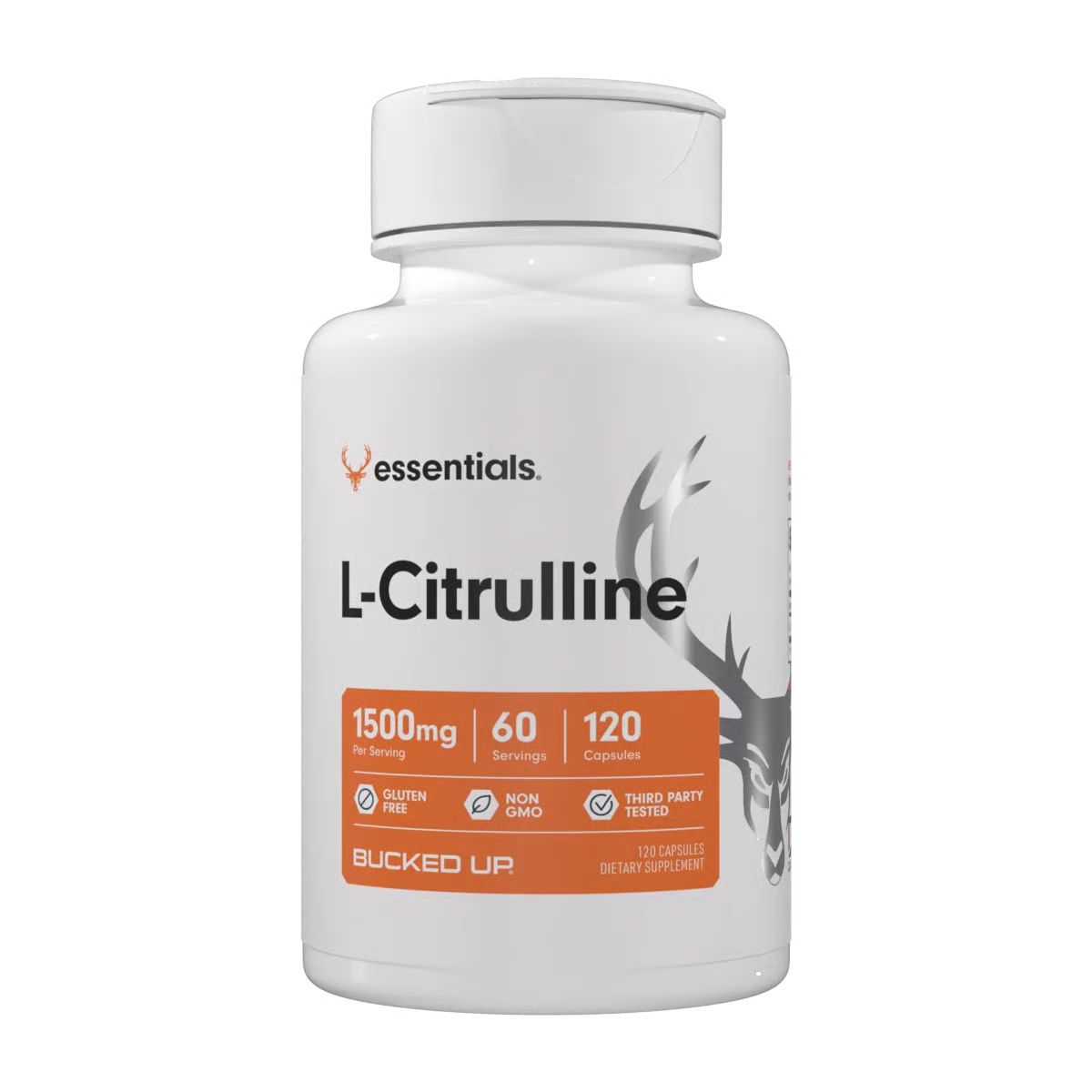
Every Bucked Up formula includes Astragin® to support citrulline absorption and improve bioavailability. This focus on clear labels and clinical dosing separates Bucked Up from competitors that rely on proprietary blends with underdosed ingredients.
L-Citrulline Safety, Side Effects, and Myths
L-Citrulline shows an excellent safety profile at performance-enhancing doses. All included clinical trials showed good participant compliance with L-citrulline supplementation and no reported drug-related adverse events. Some people may notice mild gastrointestinal discomfort at doses above 10g, and a few experience headaches related to vasodilation.
Avoid L-citrulline in pregnancy, nursing mothers, severe kidney disease, and patients taking antihypertensive medications or nitrates due to potential additive blood pressure-lowering effects. Athletes should also stop use about two weeks before scheduled surgery because of possible blood pressure interactions.
Several myths still surround L-Citrulline. Many people assume L-Arginine offers the same benefits, and others believe all citrulline products work equally well. Current research clearly supports L-Citrulline’s superior bioavailability and highlights the need for clinical dosing to achieve meaningful performance gains.
FAQ: L-Citrulline for Athletic Performance
How does L-Citrulline improve endurance?
L-Citrulline improves endurance through several connected pathways. It increases nitric oxide production, which promotes vasodilation and better oxygen delivery to working muscles. It also supports ammonia detoxification through the urea cycle, which reduces the buildup of fatigue-inducing metabolites. When used as Citrulline Malate, it further supports the Krebs Cycle for ATP production, directly fueling longer and harder efforts.
What is the best dosage for athletic performance?
Most athletes perform best with 6–8g of Citrulline Malate in a 2:1 ratio or 3–6g of Pure L-Citrulline, taken about 60 minutes before exercise. This schedule allows peak plasma levels to line up with your training session. Daily doses of 6g or more show the most consistent benefits for blood pressure support and performance in clinical research.
How does L-Citrulline compare to L-Arginine for performance?
L-Citrulline generally outperforms L-Arginine for athletic use because it offers better bioavailability. L-Arginine is heavily metabolized by gut and liver enzymes before it reaches circulation, which limits its impact. L-Citrulline bypasses this first-pass metabolism and converts to L-Arginine in the kidneys, creating higher and more sustained plasma arginine levels, stronger nitric oxide production, and more reliable performance benefits.
When should I take L-Citrulline for workouts?
Most lifters and endurance athletes get the best results when they take L-Citrulline about 60 minutes before training. This window allows time for absorption, conversion to L-Arginine in the kidneys, and a rise to peak plasma concentrations as the workout begins. Taking it on an empty stomach can improve absorption, although those with sensitive digestion may prefer a small snack.
Is L-Citrulline safe for daily use?
L-Citrulline is considered safe for daily use at performance doses of 3–6g for most healthy adults. Clinical trials report strong tolerance and very few side effects. People with low blood pressure, kidney issues, or those using blood pressure medications should talk with a healthcare provider before starting supplementation. Pregnant and nursing women should avoid use because safety data remain limited.
Conclusion: Turn L-Citrulline Science into Real-World Performance
L-Citrulline offers a science-backed way for athletes to increase performance and endurance. Its ability to bypass liver metabolism, sustain nitric oxide production, and support several performance pathways makes it a powerful tool for serious training. Proper clinical dosing delivers measurable results, including more repetitions, longer endurance, and faster recovery between sessions.