Last updated: April 22, 2026
Key Takeaways
- L-Citrulline boosts nitric oxide by converting to arginine in the kidneys, bypassing first-pass metabolism for steadier vasodilation and blood flow.1
- It helps reduce exercise fatigue by clearing ammonia through the urea cycle and, in citrulline malate form, supporting energy production.1
- Research with 6–8 gram doses shows better endurance cycling, up to 53% more resistance-training reps, and less muscle soreness.1
- L-Citrulline can outperform L-arginine for absorption, tolerance, and duration of arginine elevation when taken 60–90 minutes pre-workout.1
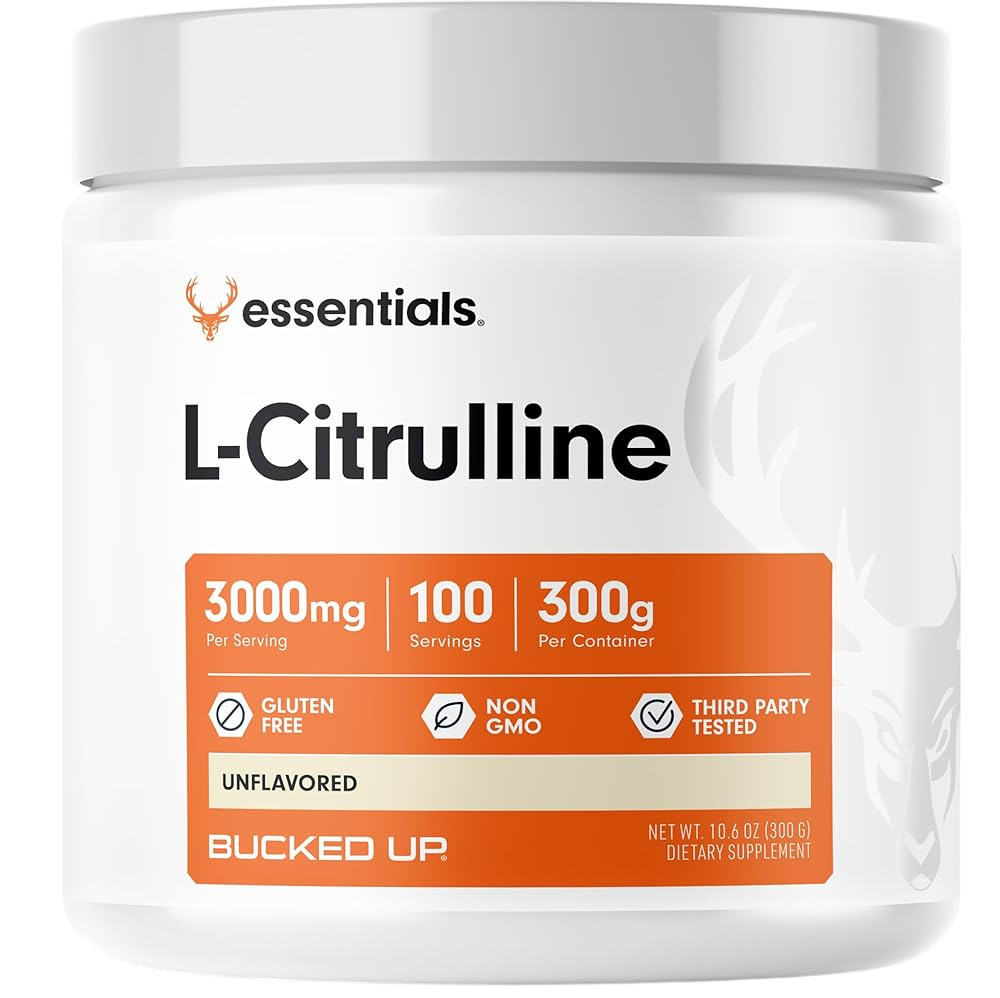
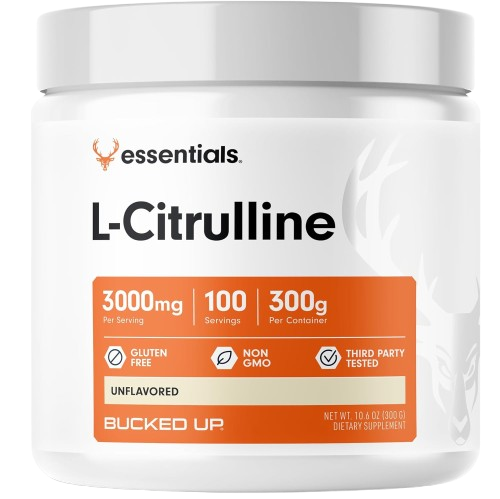
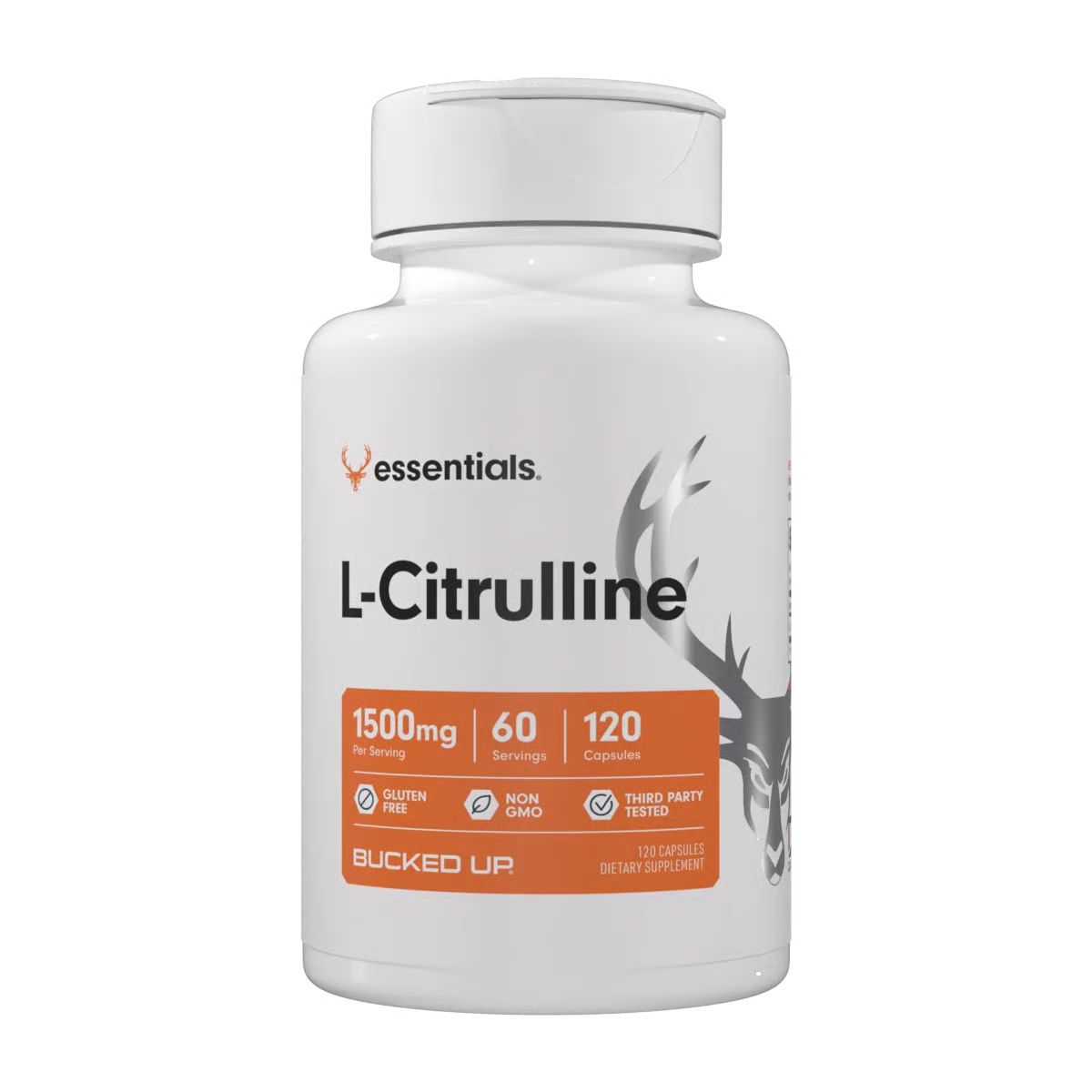
- Bucked Up’s pure L-Citrulline offers a straightforward way to apply these research-backed dosing strategies.1
L-Citrulline for Performance: What This Guide Covers
This guide walks through how L-Citrulline works, how to dose it, and how to use it in real training. You will see how L-Citrulline at 3–10 grams raises plasma arginine and nitric oxide metabolites, supports vasodilation, and improves muscular endurance.1 The sections then cover timing, pure L-Citrulline versus citrulline malate, and how transparent formulas like Bucked Up’s 6-gram protocols line up with current research. The article finishes with safety notes and quick answers to common athlete questions.
The Move Toward Endurance-Focused Pre-Workouts
Supplement companies now focus more on endurance support and label transparency. Many athletes want ingredients with human data instead of heavy proprietary blends. Modern pre-workouts often feature amino acids like L-Citrulline that target fatigue in both cycling and resistance training.
This shift reflects growing awareness of bioavailability and steady performance support rather than short stimulant spikes. Athletes increasingly look for products that help them train longer and recover faster. L-Citrulline fits this need through its combined roles in nitric oxide production and ammonia removal.
How L-Citrulline Boosts Nitric Oxide and Reduces Fatigue
L-Citrulline is a non-essential amino acid first isolated from watermelon. It plays several roles that matter for performance. L-Citrulline converts to L-arginine in the kidneys, bypassing intestinal and liver first-pass metabolism, and that arginine then serves as the direct substrate for nitric oxide synthesis. This pathway helps maintain plasma arginine more reliably than taking L-arginine itself.
The performance benefits come from three connected mechanisms:
- Nitric oxide support: L-Citrulline increases nitric oxide, a signaling molecule that relaxes blood vessels and supports vasodilation, which can improve blood flow to working muscles.1
- Ammonia clearance: L-Citrulline participates in the urea cycle and helps convert toxic ammonia into urea for excretion. Lower ammonia levels can delay fatigue during hard efforts.1
- Energy metabolism support: In citrulline malate, the malate portion feeds into the Krebs cycle, which supports ATP production and phosphocreatine recovery between bouts of work.1
These mechanisms show up in performance data. Perez-Guisado & Jakeman (2010) reported that 8 grams of citrulline malate increased bench press repetitions by 52.92% versus placebo and cut muscle soreness by 40% at 24 hours.1 Cycling studies also report better performance and less post-exercise fatigue with L-Citrulline.1
Is L-Citrulline Effective for Endurance Athletes?
Controlled trials support L-Citrulline for endurance-style efforts. Bailey et al. (2015) found that L-Citrulline improved oxygen uptake kinetics, enhanced high-intensity exercise performance, and reduced blood pressure.1 Suzuki et al. (2016) showed that oral L-Citrulline improved cycling time-trial performance in trained men.1
These endurance effects extend into resistance training, where muscles face similar fatigue from repeated efforts. Vårvik et al. (2021) reported in a systematic review and meta-analysis that acute citrulline malate supplementation improved repetition performance during strength training.1 Glenn et al. (2017) found that 8 grams of citrulline malate improved upper- and lower-body submaximal weightlifting performance, allowing greater total work.1
L-Citrulline vs L-Arginine for Performance
L-Citrulline often provides a more practical way to raise arginine and nitric oxide than direct L-arginine. Schwedhelm et al. (2008) showed that oral L-Citrulline increased plasma arginine and nitric-oxide–dependent signaling more effectively than L-arginine by bypassing presystemic elimination.1
Key pharmacokinetic points include:
- Absorption: L-Arginine undergoes about 40–50% splanchnic extraction, while L-Citrulline largely avoids intestinal and liver extraction.1
- Duration: L-Citrulline reaches peak plasma levels around 42 minutes for 2, 5, and 10 gram doses and 56 minutes for 15 grams, with arginine remaining elevated for several hours.
- Tolerance: Studies report good tolerance up to 15 grams of L-Citrulline without common GI issues seen with L-arginine, such as cramping and diarrhea.1
Citrulline Malate and Pure L-Citrulline for Different Athletes
Athletes can match the form of citrulline to their main training style. Endurance athletes such as cyclists and runners often use 6–8 grams of citrulline malate. The malate portion supports sustained energy production through the Krebs cycle.
Bodybuilders and strength athletes may favor 3–6 grams of pure L-Citrulline for a strong pump and vasodilation focus.1 Bucked Up supports both approaches by including citrulline malate in foundational pre-workouts and pure L-Citrulline for more advanced stacks.
L-Citrulline Dosage for Endurance and Strength
Dosing varies by form and goal, but several ranges appear consistently in the literature. Performance Lab suggests 6–8 grams per day of pure L-Citrulline or about 8 grams per day of citrulline malate (2:1) before training to support endurance and reduce perceived exertion. Clinical trials often use 6–8 grams of citrulline malate or 3–5 grams of pure L-Citrulline to improve time to exhaustion, increase repetitions, and reduce soreness.1
How Long L-Citrulline Takes to Kick In
Timing L-Citrulline around its plasma peak helps you feel the full effect during training. The 6–8 gram ranges described above generally work best when taken before exercise. Research recommends taking L-Citrulline or citrulline malate 60–90 minutes pre-workout to match peak arginine levels.1 Performance Lab notes that 30–60 minutes pre-workout can also work, especially with daily use during high-volume phases.
The table below summarizes common protocols by goal, showing how form, dose, and timing line up with specific outcomes.
| Goal | Form/Dose | Timing | Research Support |
|---|---|---|---|
| Endurance Performance | 6–8g Citrulline Malate 2:1 | 60–90 min pre-exercise | Bailey et al. 2015 |
| Resistance Training | 8g Citrulline Malate | 60 min pre-workout | Perez-Guisado 2010 |
| Vasodilation | 3–5g Pure L-Citrulline | 20–30 min pre-training | Schwedhelm et al. 2008 |
Bucked Up’s L-Citrulline and Pre-Workout Lineup
Bucked Up designs its citrulline formulas to match these research-backed ranges. The flagship Bucked Up Pre-Workout provides 6,000 mg of citrulline malate (2:1) plus AstraGin® for absorption support, which aligns with endurance and strength protocols.1 Woke AF uses the same 6,000 mg citrulline malate dose and adds 333 mg of caffeine, pairing vasodilation support with stimulant energy.1
For more advanced users, Mother Bucker includes 4,000 mg of pure L-Citrulline with Nitrosigine® and HydroPrime® glycerol. This “pump trifecta” targets vasodilation and cell hydration through several pathways.1 The lineup gives athletes options that match different training styles and stacking preferences.
Avoid These Common L-Citrulline Mistakes
Several frequent errors can blunt L-Citrulline’s impact. Many products use only 1–2 grams, which falls below most research-backed ranges and limits results from the start. Even with enough citrulline, taking it right before training instead of 60–90 minutes ahead can reduce arginine levels during your session.
Form choice also matters. Some athletes still rely on L-arginine products despite data favoring L-Citrulline for bioavailability. Finally, formulas that skip absorption aids such as AstraGin® may deliver less citrulline to the bloodstream, even at higher doses. Paying attention to dose, timing, form, and supporting ingredients helps you avoid these pitfalls.
L-Citrulline Safety and Interactions
Studies report that L-Citrulline is well absorbed and well tolerated, with no side effects clearly linked to its use at 2.4–5 grams per day for 7 days or single 8 gram doses.1 For healthy adults, 3–6 grams daily generally falls within a safe range.
Certain situations call for extra caution. Combining L-Citrulline with blood pressure medications or nitrates can lower blood pressure too much, and pairing it with PDE5 inhibitors like sildenafil may increase hypotension risk.1 People with severe kidney impairment should avoid L-Citrulline because the kidney is central to the citrulline–arginine–nitric oxide pathway. Bucked Up products are produced in GMP-certified facilities to support consistent quality.
Using L-Citrulline to Support Your Endurance
L-Citrulline offers a science-backed way to support performance through nitric oxide production, ammonia clearance, and better oxygen delivery.1 Research shows benefits for both endurance and resistance training when you match dose and timing to the protocols used in studies.1
L-Citrulline FAQs for Athletes
Is L-Citrulline good for endurance athletes?
L-Citrulline supports endurance athletes through several pathways. Research links it to better oxygen uptake, longer time to exhaustion, and lower perceived effort during long efforts.1 The amino acid converts to L-arginine in the kidneys, which then produces nitric oxide and improves blood flow and oxygen delivery.
L-Citrulline also helps clear ammonia that builds up during extended sessions and contributes to fatigue. Cycling research shows improved performance and less post-exercise fatigue, which makes L-Citrulline useful for sports that demand sustained output.
What is the optimal L-Citrulline dosage for performance?
Many studies support 6–8 grams of citrulline malate or 3–6 grams of pure L-Citrulline for performance.1 The right dose depends on your goals and the form you choose. Citrulline malate adds malic acid for energy support, which suits endurance work, while pure L-Citrulline focuses on vasodilation that many strength athletes like.
Most trials that show clear performance gains use doses in these ranges, and higher amounts do not always add more benefit. Factors such as body weight in lbs and individual tolerance can shape your exact dose, but these ranges give a solid starting point.
When should I take L-Citrulline for best results?
Taking L-Citrulline 60–90 minutes before training usually aligns with peak arginine levels. This window gives time for absorption and conversion in the kidneys so that plasma levels are high when you begin your session. Peak effects often appear around 1 hour after ingestion and can last for several hours.
Taking it too close to your workout may not allow enough time for conversion, while taking it very early may mean levels start to fall mid-session. For daily use, taking it at a consistent time helps maintain a steady pattern.
Do bodybuilders benefit from L-Citrulline supplementation?
Bodybuilders can benefit from L-Citrulline for pumps, training volume, and recovery.1 Increased blood flow delivers more nutrients and oxygen while helping remove metabolic waste. Research links citrulline use to more repetitions to failure and less soreness after lifting.
The vasodilation effect also contributes to the full, pumped feeling many bodybuilders want. Pure L-Citrulline and higher-dose citrulline malate both work in this setting and are often combined with other pump-support ingredients.
Can I combine L-Citrulline with caffeine safely?
L-Citrulline and caffeine can be used together in pre-workouts for most healthy adults. Caffeine stimulates the central nervous system and may cause some vasoconstriction, while L-Citrulline supports vasodilation and blood flow. Many pre-workout formulas pair these ingredients for both energy and pump.
People who are sensitive to stimulants should start with lower caffeine doses when combining the two. This approach allows you to gauge your own response before moving toward higher-intensity stacks.
1 The content provided in this article is for informational purposes only and is not medical advice. Consult with a medical professional before implementing any changes to your diet, health, or exercise routines.
Individual results will vary and are based on a combination of each individual’s diet, exercise, age, and health circumstances.
These statements have not been evaluated by the Food and Drug Administration. This product is not intended to diagnose, treat, cure or prevent any disease.
This article was written by Ryan Gardner, CEO of Bucked Up. As the maker of Bucked Up Protein Soda, we have a financial interest in this information. The views expressed are our own and should be read with that context in mind.