
The Benefits and Considerations of L-Citrulline Supplementation

What Not to Mix With L-Citrulline: Meds & Supplements

Written by: Ryan Gardner, Owner, Managing Partner, CEO, Bucked Up

Key Takeaways on Safe L-Citrulline Use

  • L-citrulline supports nitric oxide production and vasodilation, so it can interact with medications and supplements that affect blood pressure or vascular tone.1
  • People with impaired kidney or liver function should talk with a healthcare provider before using L-citrulline because the kidneys convert L-citrulline to L-arginine.
  • Pregnant or breastfeeding individuals should avoid L-citrulline due to limited safety data and no clearly established safe dose ranges.
  • L-citrulline supplementation should usually be paused at least two weeks before scheduled surgery to avoid potential interference with blood pressure control during procedures.
  • For healthy adults cleared by their healthcare provider, Bucked Up offers transparent, fully disclosed L-citrulline products with Astragin® for supported absorption, so you can explore Bucked Up’s transparent L-Citrulline options.1

How L-Citrulline Interacts with Vasodilators and Blood Pressure Support

L-citrulline supports vasodilation by raising plasma L-arginine levels, which provides more substrate for nitric oxide synthesis.1 Combining citrulline with antihypertensive medications or phosphodiesterase inhibitors may cause an excessive and potentially dangerous drop in blood pressure due to enhanced vasodilation via nitric oxide.

Several broad categories of medications affect vascular tone or blood pressure through their own mechanisms. Mayo Clinic identifies nonsteroidal anti-inflammatory drugs (NSAIDs) such as ibuprofen and naproxen sodium as agents that can affect kidney function and blood pressure. Certain herbal supplements also carry vascular effects. Cleveland Clinic cardiologist Luke Laffin, MD, notes that yohimbe has reported side effects including increased blood pressure and increased heart rate, and that even supplements considered “natural” are not automatically safe.

The practical takeaway is direct. If you take any medication or supplement that affects blood pressure or vascular function, talk with your healthcare provider before adding L-citrulline to your stack. The additive vasodilatory effects are not just theoretical. L-citrulline may interact with antihypertensive medications, theoretically raising the risk of excessively low blood pressure.

*These statements have not been evaluated by the Food and Drug Administration. This product is not intended to diagnose, treat, cure, or prevent any disease.

Kidney Function, L-Arginine Conversion, and L-Citrulline Safety

The kidneys play an active role in L-citrulline metabolism. They serve as the primary conversion site. The kidneys convert circulating L-citrulline to L-arginine via argininosuccinate synthetase and argininosuccinate lyase, so impaired renal function can alter citrulline handling and arginine production.

Individuals with serious hepatic or renal impairment lack a formally defined maximum safe dose, so medical supervision is advised in these populations. If your kidney function is anything other than healthy and normal, consult your healthcare provider before using L-citrulline in any form or dose.

*These statements have not been evaluated by the Food and Drug Administration. This product is not intended to diagnose, treat, cure, or prevent any disease.

L-Citrulline Use During Pregnancy and Breastfeeding

Pregnancy and breastfeeding introduce unique physiological changes, and the data on L-citrulline in these settings is sparse. Citrulline supplements should be avoided during pregnancy and breastfeeding due to insufficient safety data: “Similar to most supplements, there is not enough data on the safety of citrulline in pregnant or breastfeeding people. For this reason, it’s best to avoid taking citrulline supplements if you are pregnant or breastfeeding.”

Safe doses of L-citrulline during pregnancy and breastfeeding have not been established; women who are pregnant or nursing should avoid supplementation or consult a physician before use. Treat this as a situation where you either skip L-citrulline or use it only under direct medical guidance.

Surgery Timing and When to Pause L-Citrulline

L-citrulline’s effects on vascular tone create a specific concern around surgical procedures. Some sources recommend discontinuing L-citrulline supplementation at least 2 weeks before scheduled surgery due to potential interference with blood pressure control.

If you have any surgical procedure coming up, talk with your healthcare provider about when to pause L-citrulline and any other supplements that affect vascular function. Your surgical team needs accurate information about everything you take so they can manage your care safely.

Safe Stacking: L-Citrulline with Stimulants and Herbal Supplements

L-citrulline often appears in pre-workout formulas alongside other performance ingredients. Most combinations in a well-formulated pre-workout are designed with that in mind. The concern grows when people layer additional standalone supplements on top of a pre-workout that already contains L-citrulline, especially other vasodilatory or stimulant compounds.

Guarana supplements and energy drinks containing guarana can increase heart rate and potentially affect blood pressure due to their high caffeine content, per Cleveland Clinic cardiologist Luke Laffin, MD. Stacking multiple high-caffeine products with vasodilatory ingredients without understanding the combined load creates a scenario worth reviewing with your healthcare provider.

Caffeine is not the only stimulant that raises interaction concerns. Asian ginseng may increase sympathetic nervous system activity, heart rate, and blood pressure, according to Cleveland Clinic cardiologist Luke Laffin, MD. Beyond stimulants, certain herbs affect blood pressure through other pathways. Mayo Clinic lists licorice (Glycyrrhiza glabra) and ephedra (ma-huang) as herbal supplements that can raise blood pressure or interfere with blood pressure medicines.

The principle stays consistent across these examples. Consult your healthcare provider before combining L-citrulline with any supplement that carries its own cardiovascular or vascular effects. Once you receive clearance, using products with fully disclosed labels removes at least one layer of uncertainty when you map out your total intake.

Transparent L-Citrulline Dosing and Astragin® Support at Bucked Up

For healthy adults who have consulted their healthcare provider and received clearance, the next step is choosing products that make interaction assessment easier. Transparent labeling matters here because you cannot accurately track your total L-citrulline intake if some labels hide doses in proprietary blends.

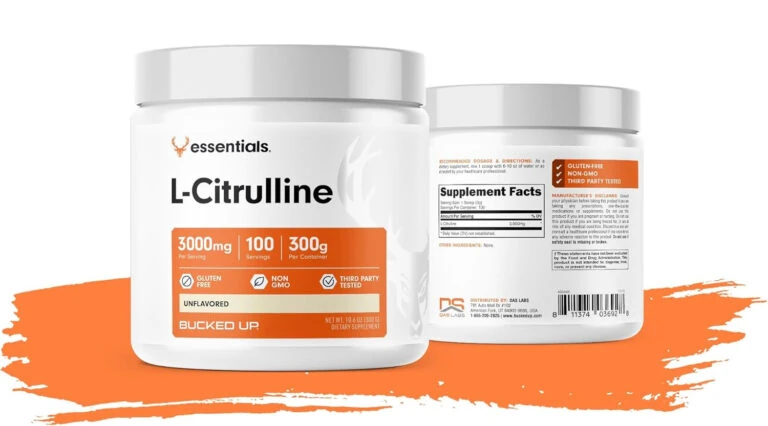
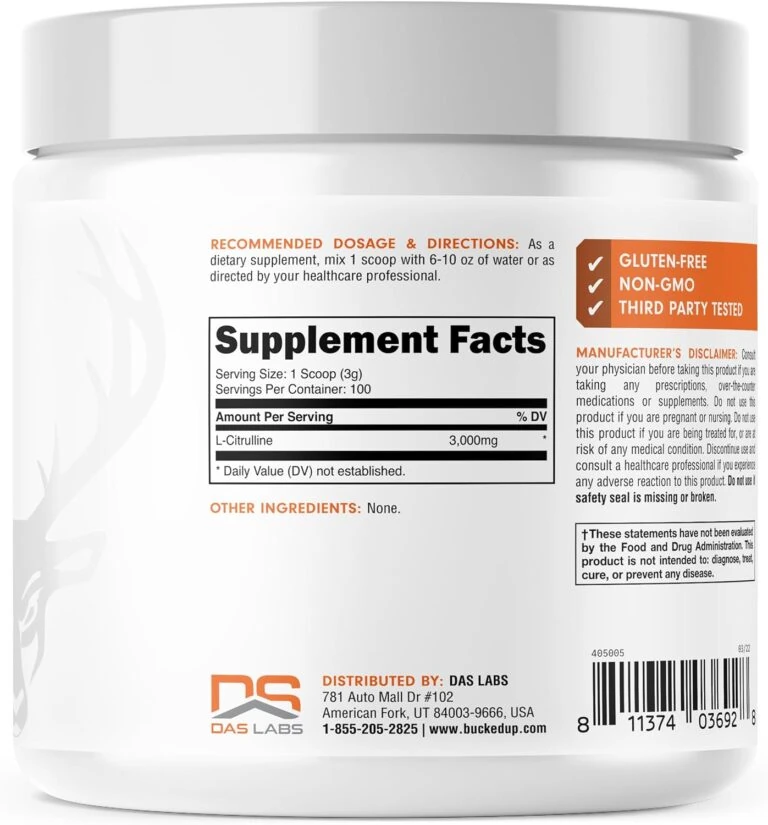
Bucked Up discloses every gram on the label across the entire pre-workout line. L-Citrulline Powder (300g) delivers 3,000mg of Pure L-Citrulline per scoop in an unflavored powder format, giving athletes clear control over their dose. L-Citrulline Capsules provide 750mg of Pure L-Citrulline per capsule for people who prefer a precise, portable format. Both are standalone products with no additional active ingredients, so they are straightforward to evaluate in the context of your overall stack.

Bucked Up L-Citrulline 3000mg Powder, Essentials (100 Servings)

Within the pre-workout line, Bucked Up Pre-Workout and Woke AF each contain 6,000mg of Citrulline Malate (2:1), the form studied for supporting both nitric oxide production* and ammonia clearance* during training.1 Non-Stimulant Pre-Workout carries the same 6,000mg Citrulline Malate dose for athletes who train without caffeine. Mother Bucker uses a different strategy, pairing 4,000mg of Pure L-Citrulline with Nitrosigine® and Hydroprime® Glycerol for a combined approach to supporting blood flow* and cellular hydration*.1

Every product in the Bucked Up pre-workout line includes Astragin®, which is studied to support citrulline absorption and bioavailability*.1 The practical value of Astragin® in a safety context is that it supports the body’s ability to use the disclosed dose, instead of pushing people toward higher intakes to compensate for poor absorption. Knowing the exact gram amount on the label and knowing that absorption is supported by Astragin® gives cleared, healthy adults a more predictable starting point for their stack.

Products are manufactured in GMP-certified facilities in the United States, which reflects adherence to manufacturing quality standards.

*These statements have not been evaluated by the Food and Drug Administration. This product is not intended to diagnose, treat, cure, or prevent any disease.

Conclusion: Using L-Citrulline Safely and Transparently

L-citrulline supports nitric oxide production* and vasodilation* through a well-documented metabolic pathway.1 That same mechanism creates meaningful interaction considerations with medications and supplements that affect blood pressure, vascular tone, or kidney function. The categories covered here, including vasodilators, kidney function, pregnancy and breastfeeding, surgical timing, and supplement stacking, all point to the same core action: involve your healthcare provider before combining L-citrulline with other products.

General information about mechanisms and categories provides helpful context. It does not replace individualized medical guidance. Your healthcare provider has access to your full medication list, health history, and lab values. This article does not.

For healthy adults who have received clearance, choosing a product with fully disclosed ingredient amounts removes guesswork from the equation. Bucked Up’s transparent labeling across the pre-workout line, combined with Astragin® absorption support*, reflects a formulation philosophy built for people who read labels and want to know exactly what they are taking.

Bucked Up promotes a science-informed approach to L-citrulline dosing, including Citrulline Malate and Pure L-Citrulline. You can find your L-Citrulline solution at Bucked Up and discuss those exact doses with your healthcare provider.

Bucked Up L-Citrulline 1500mg Per Serving | 100 Servings (200 Capsules)

*These statements have not been evaluated by the Food and Drug Administration. This product is not intended to diagnose, treat, cure, or prevent any disease.

Frequently Asked Questions

Can L-citrulline be taken safely with other pre-workout supplements?

For healthy adults cleared by their healthcare provider, L-citrulline is commonly included in pre-workout formulas alongside ingredients like beta-alanine, caffeine, and focus compounds. The concern appears when additional standalone supplements with their own vascular or stimulant effects are layered on top of a pre-workout that already contains L-citrulline. Before adding any new supplement to a stack that includes L-citrulline, consult your healthcare provider to evaluate the combined load on your cardiovascular system. Choosing products with fully disclosed labels, such as those from Bucked Up, makes that conversation with your provider more straightforward because you can account for every gram.

Why does L-citrulline require special consideration around blood pressure medications?

L-citrulline supports vasodilation by raising plasma L-arginine levels, which provides more substrate for nitric oxide synthesis. Nitric oxide relaxes vascular smooth muscle, widens blood vessels, and supports blood flow. Medications that also affect blood pressure or vascular tone operate through their own mechanisms. When two or more vasodilatory influences are combined, the cumulative effect on blood pressure can exceed what either would produce alone. That combined effect can result in blood pressure that drops lower than intended. This is why consulting your healthcare provider before combining L-citrulline with any medication or supplement that affects blood pressure remains essential, not optional.

What is Astragin® and why does it matter for L-citrulline supplementation?

Astragin® is a patented ingredient studied to support the absorption and bioavailability of certain nutrients, including L-citrulline.1 Bucked Up includes Astragin® across its pre-workout line because citrulline that is not absorbed cannot support the outcomes you are training for. From a practical standpoint, Astragin® supports the body’s ability to utilize the disclosed dose on the label, which means the gram amount you read is the gram amount your body has the best opportunity to use. This matters for athletes who want to stay within studied dose ranges instead of escalating their intake to compensate for absorption variability.

Is there a difference between Citrulline Malate and Pure L-Citrulline for safety purposes?

Both forms deliver L-citrulline as the active component, but they differ in composition. Citrulline Malate (2:1) combines L-citrulline with malic acid, a Krebs Cycle intermediate studied for its role in supporting energy metabolism. Pure L-Citrulline delivers 100% L-citrulline with no additional compounds. From a safety and interaction standpoint, the L-citrulline component is the relevant factor in both forms. The malic acid in Citrulline Malate does not carry the same vascular interaction considerations. When you evaluate your total L-citrulline intake across products, remember that 1.76g of Citrulline Malate (2:1) provides approximately 1g of pure L-citrulline, so the labeled amounts are not directly interchangeable without accounting for the ratio.

Should L-citrulline be avoided entirely before surgery?

Some sources recommend discontinuing L-citrulline supplementation at least 2 weeks before any scheduled surgical procedure due to its potential effects on blood pressure control during and after surgery. The appropriate timing for discontinuation depends on your individual health profile, the type of procedure, and the guidance of your surgical team and healthcare provider. Do not make that decision based on general information alone. Disclose all supplements, including L-citrulline, to every member of your medical team well in advance of any scheduled procedure so they can provide individualized guidance.

References

Canyonside Labs. (n.d.). L-citrulline: The quiet powerhouse behind nitric oxide. https://canyonsidelabs.com/post/l-citrulline-the-quiet-powerhouse-behind-nitric-oxide

Cleveland Clinic. (n.d.). Vitamins to avoid with high blood pressure. https://health.clevelandclinic.org/vitamins-to-avoid-with-high-blood-pressure

Dr. Stanfield. (n.d.). L-citrulline benefits, forms, dosing, and side effects. https://drstanfield.com/blogs/articles/l-citrulline-benefits-forms-dosing-and-side-effects

Mayo Clinic. (n.d.). Blood pressure: Can it be higher in one arm? https://mayoclinic.org/diseases-conditions/high-blood-pressure/in-depth/blood-pressure/art-20045245

Verywell Health. (n.d.). Citrulline. https://verywellhealth.com/citrulline-4774848


1 The content provided in this article is for informational purposes only and is not medical advice. Consult with a medical professional before implementing any changes to your diet, health, or exercise routines.
Individual results will vary and are based on a combination of each individual’s diet, exercise, age, and health circumstances.
These statements have not been evaluated by the Food and Drug Administration. This product is not intended to diagnose, treat, cure or prevent any disease.

This article was written by Ryan Gardner, CEO of Bucked Up. As the maker of Bucked Up Protein Soda, we have a financial interest in this information. The views expressed are our own and should be read with that context in mind.