Written by: Ryan Gardner, Owner, Managing Partner, CEO, Bucked Up
Key Takeaways
-
L-citrulline is a non-essential amino acid that converts to L-arginine in the kidneys, bypassing first-pass metabolism and raising plasma arginine levels more effectively than direct L-arginine supplementation.
-
Through nitric oxide production, L-citrulline supports vasodilation, blood flow, muscle pump, endurance, and recovery during high-intensity training.1
-
Effective dosing ranges from 3–6 g of pure L-citrulline or 6–8 g of citrulline malate (2:1) taken 30–60 minutes pre-workout.
-
Bucked Up products deliver fully disclosed doses, including 6 g citrulline malate in core pre-workouts and 4 g pure L-citrulline in Mother Bucker, plus Astragin® for absorption support.1
-
Ready to apply the science in your own training? Shop Bucked Up L-Citrulline and build a pump-focused stack that fits your goals.
What L-Citrulline Does in Your Body
L-citrulline is a non-essential alpha-amino acid that participates in two key physiological pathways: nitric oxide synthesis and the urea cycle, where it helps convert toxic ammonia into harmless urea for excretion. Your body produces it naturally in the intestines and liver, and you also take in smaller amounts from foods like watermelon, cucumbers, squash, and pumpkins. In supplements, it serves as a precursor to L-arginine, which is the direct substrate for nitric oxide production through nitric oxide synthase enzymes. The performance story behind L-citrulline comes down to pharmacokinetics: how well it survives digestion, reaches the bloodstream, and converts into something your body can use during training.
How Athletes Commonly Use L-Citrulline
In sports nutrition, L-citrulline appears most often in pre-workout and pump-focused formulas that support nitric oxide production*, blood flow*, and muscle pump* during training.1 Regular trainers use it to support nutrient delivery to working muscle, maintain endurance during high-volume sessions*, and support recovery after intense workouts*.1 Many athletes also choose standalone powder or capsule formats when they want to control their citrulline dose separately from a full pre-workout stack. Reaching a performance-relevant dose from food alone would require roughly 2.2 to 3.3 lbs of watermelon per day, so supplementation becomes the practical route for most lifters and endurance athletes.
How L-Citrulline Drives Nitric Oxide and Blood Flow
L-citrulline supports nitric oxide production through a kidney-based conversion pathway. Oral L-citrulline is absorbed efficiently from the small intestine and largely bypasses first-pass metabolism in the liver. It then travels to the kidneys, where argininosuccinate synthase and argininosuccinate lyase convert it into L-arginine. That L-arginine serves as the substrate for nitric oxide synthase, which produces nitric oxide, a gaseous signaling molecule that relaxes vascular smooth muscle and supports vasodilation.
This pathway matters more than simply taking L-arginine because of what happens before the amino acid reaches systemic circulation. A significant portion of supplemental L-arginine undergoes first-pass extraction, while supplemented L-citrulline appears in plasma. As a result, research has concluded that L-citrulline is more potent than L-arginine for raising plasma arginine levels in humans because it experiences substantially lower first-pass metabolism. L-arginine produces a rapid but short-lived plasma spike. L-citrulline produces a later, more sustained elevation that better matches a typical training window. Peak plasma concentrations of L-citrulline usually occur within 0.7 to 2 hours after ingestion, which guides the standard 30 to 60 minute pre-workout timing.
L-citrulline also participates in the urea cycle, where it supports ammonia clearance during intense exercise.1 Ammonia accumulation in skeletal muscle is linked to central fatigue, and by supporting its conversion to urea for excretion, L-citrulline may help support endurance and reduce exercise-induced fatigue*.1
Forms You Will See on Labels
Most pre-workout research focuses on two forms: pure L-citrulline and citrulline malate. Citrulline malate combines L-citrulline with malic acid, most often in a 2:1 ratio. An important label-reading detail is that a label claiming 6g of citrulline malate (2:1) delivers approximately 3.4g of actual L-citrulline, because only two-thirds of the stated weight is the active amino acid. The malate portion is a Krebs Cycle intermediate that may support oxidative ATP production and phosphocreatine recovery alongside citrulline’s vasodilatory role.
Sports nutrition research commonly studies L-citrulline doses in the 3 to 6 grams per serving range for blood flow and performance outcomes. For weight training, 6 to 8g of citrulline malate (providing approximately 3.4 to 4.5g of pure L-citrulline) taken 30 to 60 minutes before exercise represents the range studied in resistance training contexts. Individual responses vary, so discussing supplementation with a healthcare provider is advisable, especially for people with existing health conditions.
How Bucked Up Formulates L-Citrulline
Bucked Up’s approach to L-citrulline centers on full label disclosure. The labels list actual gram amounts, not proprietary blends that hide dosing. The foundational products, Bucked Up Pre-Workout and Woke AF, each use 6,000mg of Citrulline Malate (2:1), which applies the 2:1 ratio explained earlier and sits at the threshold studied in resistance training research. Mother Bucker, the advanced-tier formula, shifts to 4,000mg of pure L-citrulline and stacks it with Nitrosigine® and Hydroprime® Glycerol for a multi-pathway approach to supporting blood flow* and cellular hydration.
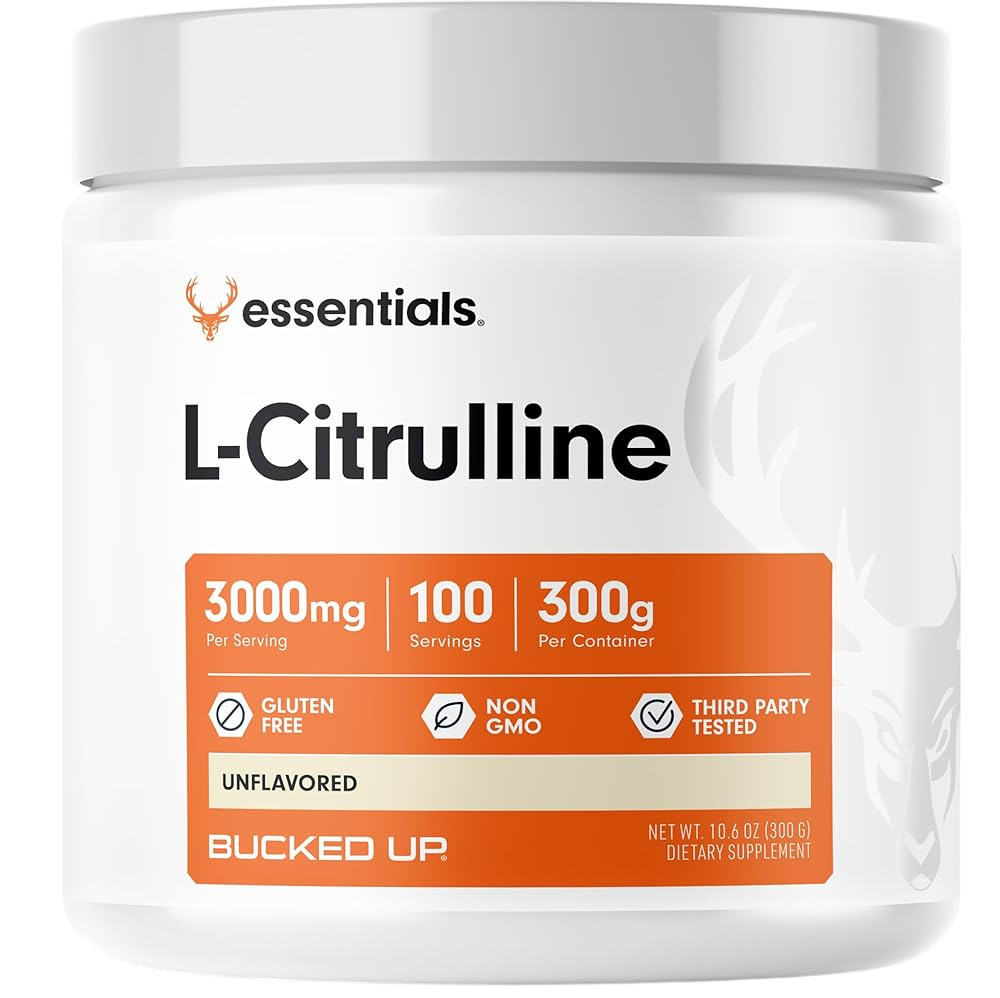
Astragin®, an absorption-support ingredient studied to support citrulline bioavailability*, appears across the pre-workout line.1 For athletes who want standalone dosing flexibility, Bucked Up also offers a Pure L-Citrulline Powder (300g) with 3,000mg per scoop in an unflavored format that mixes into almost any beverage.
How People Typically Dose L-Citrulline
For acute performance support, many athletes take L-citrulline about 60 minutes before intense physical activity to match the window for peak plasma arginine elevation. Some athletes use it daily for ongoing cardiovascular function support*, and doses of 3 to 6g of pure L-citrulline per day have been studied in healthy adults.1 Because maintaining stable plasma levels matters more than peak timing in a daily protocol, these doses can be split into two servings. Whether you prefer a single pre-workout dose or a daily stack, dosing decisions should reflect your goals, tolerance, and guidance from a healthcare provider.
Performance Benefits and Realistic Expectations
The research base for L-citrulline covers several performance-related outcomes. Studies using 8g of citrulline malate have examined total repetitions to muscular failure across multiple sets during resistance exercise. L-citrulline has also been studied for its role in supporting oxygen uptake in muscle tissue, with some cycling studies reporting effects on time-to-exhaustion and power output.1 Citrulline malate has further been examined for its role in supporting recovery from delayed onset muscle soreness (DOMS) in the days after exercise.1
In practice, L-citrulline supports nitric oxide production*, blood flow*, muscle pump*, muscle endurance*, and recovery from intense training*.1 It does not replace consistent training, adequate protein intake, or quality sleep. The pump it supports reflects nutrient and blood flow to working tissue, which is why Bucked Up pairs citrulline with Astragin® to support absorption of every gram listed on the label.
*These statements have not been evaluated by the Food and Drug Administration. This product is not intended to diagnose, treat, cure, or prevent any disease.
Who L-Citrulline May Be Right For
L-citrulline suits regular trainers who want to understand the science behind their pre-workout ingredients, athletes frustrated by proprietary blends that obscure dosing, and people who tried L-arginine and felt underwhelmed by the results. It also works well for stimulant-sensitive individuals, because L-citrulline has no stimulant properties, does not affect the central nervous system, and carries no habituation risk at performance doses. Bucked Up’s Non-Stimulant Pre-Workout includes 6,000mg of Citrulline Malate (2:1) for athletes who train at night or prefer a caffeine-free option while still chasing a strong pump.
Safety, Interactions, and Product Quality
L-citrulline supplementation has generally been safe and well-tolerated at the doses used in research. Reported side effects are usually mild and infrequent, and can include gastrointestinal discomfort, heartburn (especially with the malate form), or headaches in sensitive individuals. L-citrulline is less likely to cause gastrointestinal upset than L-arginine at comparable doses.
Individuals with naturally low blood pressure, kidney conditions, or scheduled surgery should consult a healthcare provider before using L-citrulline. People taking blood pressure medications, nitrate medications, or anticoagulants should also speak with a healthcare provider before combining L-citrulline with those drugs, because additive vasodilatory or blood-thinning effects are possible. Pregnant or breastfeeding individuals should avoid use without guidance from a healthcare provider. Bucked Up products are manufactured in GMP-certified facilities in the USA.
How to Read and Compare L-Citrulline Labels
When you compare L-citrulline products, start with the label. A fully disclosed gram count for citrulline, whether as pure L-citrulline or citrulline malate with the ratio listed, should be a baseline requirement. Products that list citrulline inside a proprietary blend make it impossible to know whether the dose matches research-backed ranges. The next factor is form. Citrulline malate (2:1) delivers both L-citrulline and malic acid for combined support of vasodilation and energy metabolism, while pure L-citrulline delivers a higher concentration of the active amino acid per gram of product.
Absorption support is the third consideration. Astragin® appears across Bucked Up’s pre-workout line to support citrulline bioavailability*, which matters when your goal is getting full value from every gram disclosed on the label.1
Frequently Asked Questions
Why does L-citrulline support nitric oxide production more effectively than L-arginine?
L-arginine is the direct substrate for nitric oxide synthase, but a large portion of an oral L-arginine dose is broken down by arginase enzymes in the gut and liver before it reaches systemic circulation. As explained in the mechanism section, L-citrulline bypasses this first-pass metabolism and travels to the kidneys, where it converts into L-arginine. This route produces a more sustained elevation of plasma arginine levels, which provides more substrate for nitric oxide production over a longer window. In practice, L-citrulline often supports nitric oxide-related effects more reliably than an equivalent oral dose of L-arginine.
What is the urea cycle, and why does it matter for exercise performance?
The urea cycle is the metabolic process that converts ammonia, a byproduct of protein metabolism and intense exercise, into urea for excretion through the kidneys. L-citrulline is a key intermediate in this cycle. During high-intensity training, ammonia accumulates in skeletal muscle and contributes to central fatigue, the feeling that makes you want to stop a set before your muscles truly fail. By supporting ammonia clearance, L-citrulline may help maintain endurance and training quality across multiple sets or extended sessions. This dual role is one reason citrulline malate (2:1) appears frequently in endurance and resistance training research.
What is the difference between citrulline malate and pure L-citrulline, and which should I use?
Citrulline malate combines L-citrulline with malic acid, typically in a 2:1 ratio. The malic acid portion is a Krebs Cycle intermediate that may support aerobic ATP production alongside citrulline’s role in nitric oxide support. Pure L-citrulline delivers only the amino acid at a higher concentration per gram of product. A 6g dose of citrulline malate (2:1) provides approximately 4g of actual L-citrulline, while a 4g dose of pure L-citrulline delivers the full 4g. The right form depends on your training goals, tolerance, and whether you value the dual-pathway support of citrulline malate. A healthcare provider can help you choose an approach that fits your situation.
How long before a workout should I take L-citrulline?
Many athletes follow the 60-minute pre-workout window discussed earlier to match their training session. The 60-minute timing aligns with pharmacokinetic data showing peak plasma citrulline concentrations within 0.7 to 2 hours after ingestion, followed by conversion to plasma arginine that supports nitric oxide production during the workout. Some athletes use L-citrulline daily rather than only on training days, especially for ongoing cardiovascular function support, and in that case timing relative to exercise matters less. Individual responses vary, so starting at the lower end of the studied dose range is a reasonable approach for people new to the ingredient.
Bringing It All Together
L-citrulline supports nitric oxide production through its conversion to L-arginine in the kidneys and participates in the urea cycle for ammonia clearance. Together, these roles give it a clear mechanistic basis for use in sports nutrition. The pharmacokinetic advantage over direct L-arginine supplementation appears in peer-reviewed literature and helps explain its popularity in pre-workout formulas. Dosing ranges of 3 to 8g per serving, depending on form and goal, reflect the amounts studied in performance research. Label transparency, the citrulline-to-malate ratio, and the presence of absorption-support ingredients are the main variables that separate practical products from those that only look strong on paper.
Smart supplementation starts with understanding the science and then choosing a product whose label reflects that science. Bucked Up’s pre-workout line discloses every gram of citrulline on the label, uses the 2:1 citrulline malate ratio in foundational formulas, and includes Astragin® across the line to support absorption of what is disclosed. For athletes who want standalone dosing control, the Pure L-Citrulline Powder offers 3,000mg per scoop in an unflavored, stackable format.
*These statements have not been evaluated by the Food and Drug Administration. This product is not intended to diagnose, treat, cure, or prevent any disease.
References
Breuillard, C., Cynober, L., and Moinard, C. (2015). Safety and tolerability of L-citrulline supplementation. Cited in: Dr. Stanfield. (2024). L-citrulline benefits, forms, dosing, and side effects. https://drstanfield.com/blogs/articles/l-citrulline-benefits-forms-dosing-and-side-effects
1 The content provided in this article is for informational purposes only and is not medical advice. Consult with a medical professional before implementing any changes to your diet, health, or exercise routines. Individual results will vary and are based on a combination of each individual’s diet, exercise, age, and health circumstances. These statements have not been evaluated by the Food and Drug Administration. This product is not intended to diagnose, treat, cure or prevent any disease.
This article was written by Ryan Gardner, CEO of Bucked Up. As the maker of Bucked Up Protein Soda, we have a financial interest in this information. The views expressed are our own and should be read with that context in mind.