Last updated: April 22, 2026
Key Takeaways
- L-citrulline helps endurance athletes push past stamina plateaus by boosting nitric oxide and clearing ammonia during hard training.1
- Research shows mixed but promising results, including longer time-to-exhaustion in cycling, better VO2 max kinetics, and less post-workout soreness.1
- L-citrulline can outperform L-arginine because it bypasses liver metabolism and sustains plasma arginine without common GI side effects.1
- Common performance doses are 3–4g pure L-citrulline or 6–8g citrulline malate, taken about 60 minutes before training.1
- Bucked Up offers pure L-citrulline and citrulline malate in transparent formulas, so you can dial in your endurance stack with confidence.1
7 Research-Backed L-Citrulline Benefits for Endurance Athletes
1. Extends time-to-exhaustion
L-citrulline can help some athletes stay in the effort longer.1 Suzuki et al.’s 2016 study found that oral L-citrulline supplementation enhanced cycling time trial performance in healthy trained men.1 At the same time, a 2023 systematic review and meta-analysis of 9 randomized controlled trials found no significant difference in endurance performance after acute L-citrulline supplementation.1 Overall, the evidence for time-to-exhaustion remains mixed.
2. Supports VO2 kinetics and power output
Bailey et al.’s 2015 research showed that L-citrulline supplementation improved oxygen uptake kinetics during aerobic exercise and high-intensity exercise performance.1 In that work, L-citrulline outperformed both L-arginine and placebo in trained individuals.1 These findings suggest potential benefits for athletes who push sustained efforts or repeated surges.1
3. Reduces ammonia-related fatigue
L-citrulline plays a central role in the urea cycle, which converts toxic ammonia into urea for excretion. During long or intense sessions, ammonia can build up and contribute to central fatigue in skeletal muscle. By supporting ammonia clearance, L-citrulline may help athletes feel sharper and less drained late in a workout.1
4. Buffers exercise-induced muscle soreness
Perez-Guisado and Jakeman’s 2010 study found that 8g of citrulline malate significantly reduced post-exercise muscle soreness.1 The same protocol also improved performance in resistance exercise.1 Endurance athletes who lift for strength or power may notice easier recovery between hard gym sessions.1
5. Enhances resistance training performance
For endurance athletes who include strength work, citrulline malate can support higher training volume.1 Research shows citrulline malate can increase the total number of repetitions performed to muscular failure by up to 53% across multiple sets.1 More quality reps can translate into better strength and muscular endurance over time.
6. Supports recovery between training sessions
The ammonia-clearing effect of L-citrulline may support faster recovery between workouts.1 Lower metabolic waste can reduce lingering fatigue, especially after back-to-back hard days. In citrulline malate, the malate component may also support cellular energy production through the Krebs cycle, which can further aid recovery.1
7. Provides more sustained effects than arginine
Schwedhelm et al.’s 2008 research showed that L-citrulline increases plasma arginine and nitric oxide metabolites more effectively than L-arginine.1 This advantage comes from bypassing first-pass metabolism in the gut and liver, which allows more of the dose to reach systemic circulation. For athletes, that can mean steadier nitric oxide support during training.1
How L-Citrulline Works in Your Body
L-citrulline works through a distinct metabolic pathway that favors nitric oxide production.1 After you take it orally, it bypasses liver metabolism and converts to L-arginine in the kidneys. This conversion supports a sustained rise in plasma arginine, which your body then uses for nitric oxide synthesis.1 Its role in the urea cycle also supports ammonia detoxification, while the malate in citrulline malate may contribute to ATP production through the Krebs cycle.1
When you choose a citrulline supplement, the main differences involve how much active citrulline you get and whether you want added support for energy metabolism:
| Form | Citrulline yield | Best for |
|---|---|---|
| Pure L-citrulline | 100% active amino acid | Direct nitric oxide support |
| Citrulline malate 2:1 | Approximately two-thirds L-citrulline | Endurance plus energy metabolism support |
L-Citrulline vs. Arginine for Endurance
Research shows that L-citrulline raises plasma arginine levels more effectively than direct arginine supplementation.1 About 40% of supplemental arginine undergoes first-pass metabolism, while nearly all supplemented citrulline reaches systemic circulation. L-citrulline is well-tolerated at doses up to 15 grams without gastrointestinal side effects, whereas arginine often causes digestive discomfort at higher effective doses.1 For many athletes, this combination of better delivery and tolerance makes L-citrulline a practical choice.
Practical L-Citrulline Dosing and Timing for Athletes
| Sport/persona | Form/dose (g) | Timing | Primary goal |
|---|---|---|---|
| Cyclists | 6–8g citrulline malate | 60 minutes pre-exercise | Longer time-to-exhaustion |
| Runners | 3–4g pure L-citrulline | 60 minutes pre-exercise | Reduced muscular fatigue |
| Triathletes | 6g citrulline malate | 60 minutes pre-training | Support across swim, bike, and run |
Peak plasma concentrations typically occur between about 0.7 and 2 hours after ingestion.1 Some protocols use daily dosing of 1.5 to 3 grams split between morning and evening to maintain steadier levels over time. Athletes can start at the lower end of the range to assess tolerance, then adjust toward performance-focused doses if needed.
Bucked Up uses research-informed doses of citrulline malate and pure L-citrulline in its formulas. Explore L-citrulline options that match your training style.
Why Bucked Up’s L-Citrulline Line Fits Endurance Training
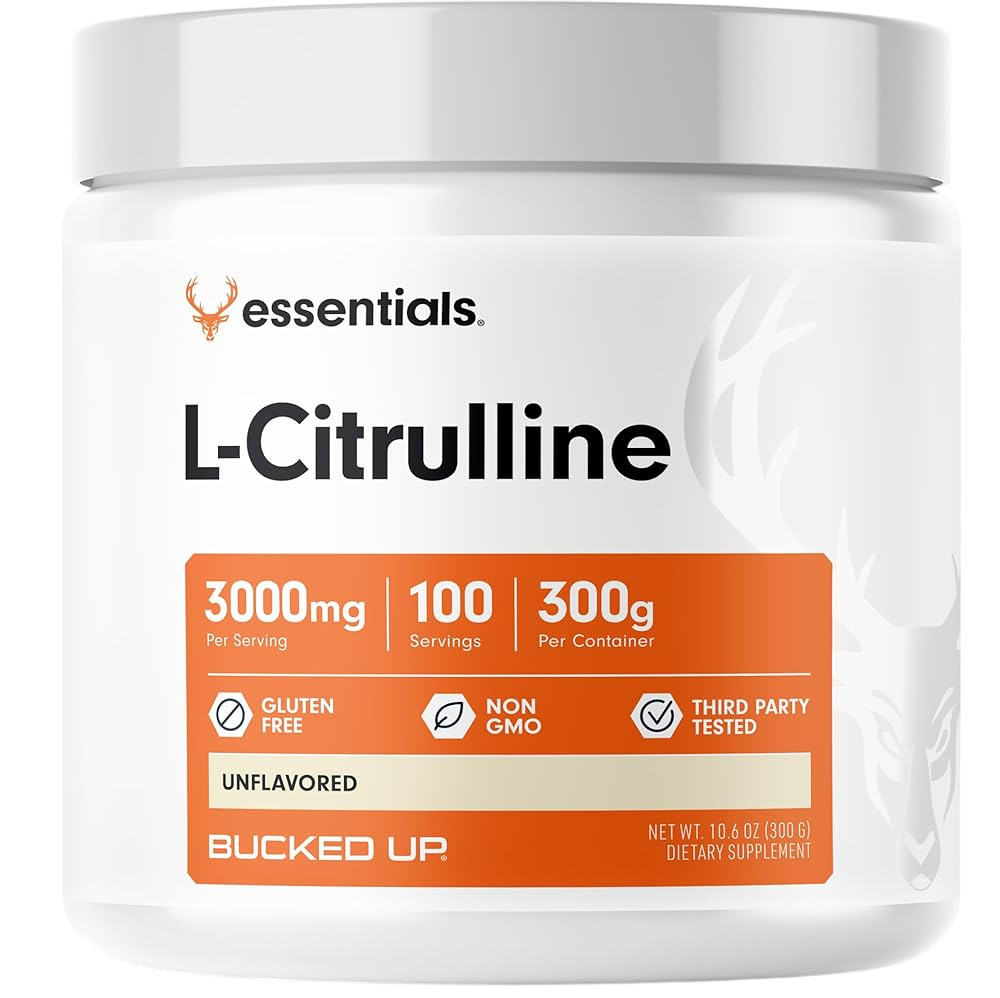
Bucked Up focuses on clear labeling and meaningful citrulline doses for endurance and mixed-sport athletes. Foundational pre-workouts provide 6g citrulline malate, while advanced formulas include 4g pure L-citrulline. Astragin® appears in select products to support ingredient absorption,1 and the 2:1 citrulline-to-malate ratio offers both nitric oxide support and potential energy metabolism benefits.
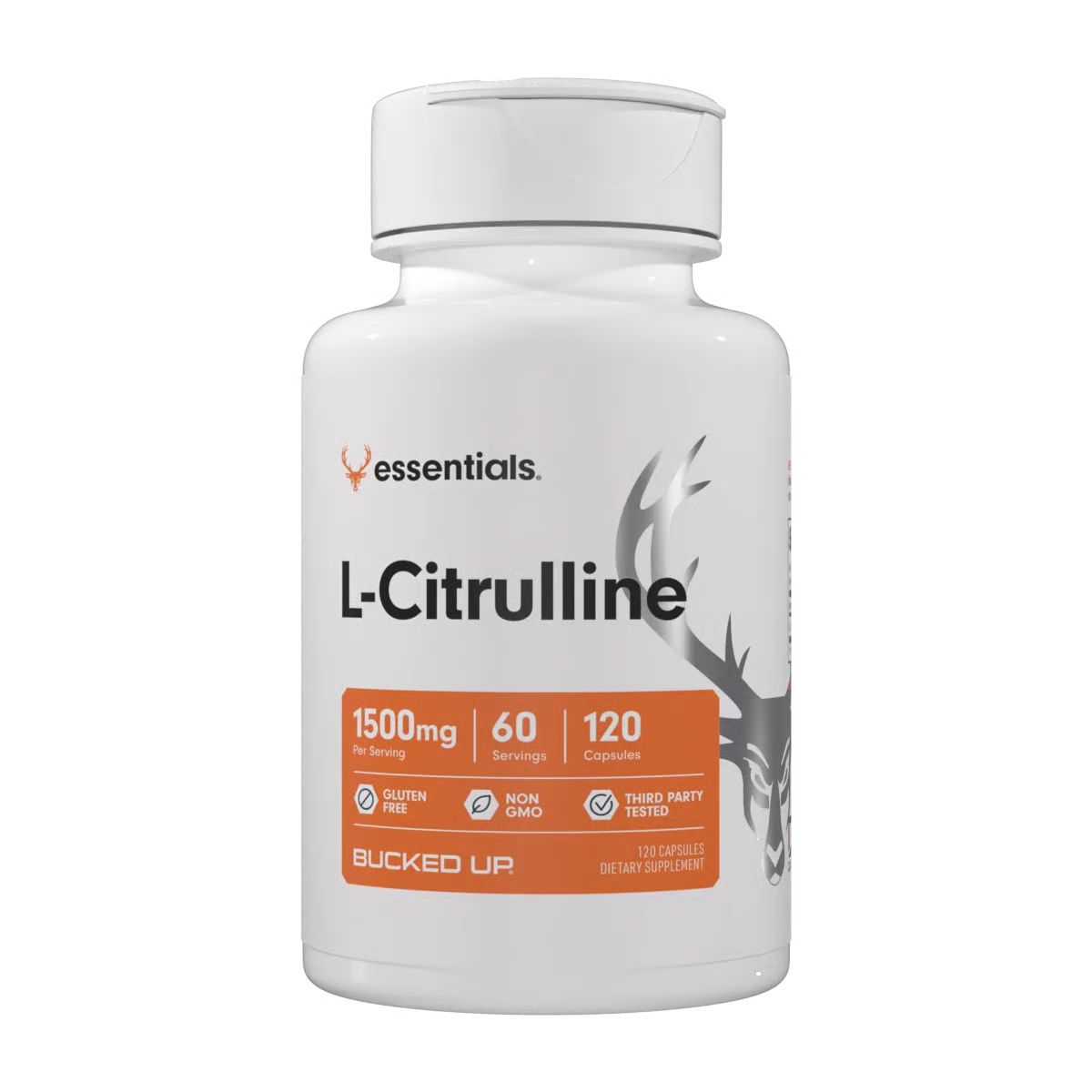
Bucked Up’s product line addresses different needs through varied caffeine levels and citrulline forms. For moderate stimulation, Bucked Up Pre-Workout delivers 200mg caffeine with 6g citrulline malate. Athletes who want higher energy can choose Woke AF with 333mg caffeine or Mother Bucker with 400mg caffeine and 4g pure L-citrulline plus Nitrosigine®. Those who avoid stimulants can use the Non-Stimulant version with 6g citrulline malate or build their own stack with standalone L-citrulline powder and capsules. All products are manufactured in USA GMP-certified facilities and avoid proprietary blends.
Customer feedback reflects how these formulas show up in training. One user reported, “PR’d a cycling session the first use and steady lift gains since.”1 Another shared, “Great, unflavored citrulline. I add some of this to my preworkout for amazing pumps.”1 These experiences illustrate how transparent dosing can translate into real-world performance changes.
Safety, Side Effects, and Common Questions
As noted in comparative research, L-citrulline is well-tolerated at doses up to 15 grams, with no gastrointestinal side effects reported in clinical studies.1 Mild digestive discomfort can still occur in some people at very high single doses above about 10g.1 Individuals with low blood pressure, kidney issues, or upcoming surgery should speak with a healthcare professional before use. L-citrulline may also interact with antihypertensive medications and PDE5 inhibitors.1
Is L-citrulline good for endurance athletes?
Current research shows mixed outcomes for direct endurance performance. Some studies report benefits for oxygen uptake kinetics and cycling performance,1 while recent meta-analyses do not find consistent acute effects on time-to-exhaustion. Individual responses can vary based on training level, dose, timing, and the specific sport.
Does L-citrulline increase VO2 max?
Studies suggest that L-citrulline may improve oxygen uptake kinetics during aerobic exercise,1 but clear increases in VO2 max need more research. The main mechanism appears to involve better blood flow and oxygen delivery through vascular effects,1 rather than a direct change in maximal oxygen consumption capacity.
How long does L-citrulline take to kick in?
Peak plasma levels usually appear between about 0.7 and 2 hours after ingestion. For acute performance goals, taking L-citrulline around 60 minutes before exercise lines up with this window. Consistent daily use over 4–6 weeks may provide more cumulative benefits for some athletes.1
How much L-citrulline per day works for athletes?
Many performance protocols use 3–4g pure L-citrulline or 6–8g citrulline malate before training. Daily approaches often rely on 1.5–3g split into two doses to maintain steadier levels. Higher pre-exercise doses usually target immediate performance, while lower daily doses focus on ongoing support.
What is the difference between citrulline malate and pure L-citrulline?
Citrulline malate combines L-citrulline with malic acid in a 2:1 ratio (as noted in the comparison above). Pure L-citrulline provides only the amino acid. Both forms support nitric oxide production, while the malate portion may add a small boost to energy metabolism through the Krebs cycle.1
Conclusion: Where L-Citrulline Fits in an Endurance Plan
L-citrulline gives endurance athletes a science-informed tool for addressing stamina plateaus through nitric oxide support, ammonia clearance, and potential energy metabolism effects.1 Evidence for acute endurance gains remains mixed, yet the underlying mechanisms and some positive trials suggest a role for certain athletes and use cases.
Effective strategies follow the dosing and timing guidelines outlined above, with some athletes favoring consistent daily use over single pre-workout doses. Responses differ based on training history, sport demands, and how L-citrulline fits into the broader nutrition and supplement plan.
Bucked Up builds its formulas around research-backed ingredients such as citrulline malate and pure L-citrulline. Explore L-citrulline options that support your endurance goals.
1 The content provided in this article is for informational purposes only and is not medical advice. Consult with a medical professional before implementing any changes to your diet, health, or exercise routines.
Individual results will vary and are based on a combination of each individual’s diet, exercise, age, and health circumstances.
These statements have not been evaluated by the Food and Drug Administration. This product is not intended to diagnose, treat, cure or prevent any disease.
This article was written by Ryan Gardner, CEO of Bucked Up. As the maker of Bucked Up Protein Soda, we have a financial interest in this information. The views expressed are our own and should be read with that context in mind.