Key Takeaways
- Muscle fatigue during workouts comes from ammonia buildup, restricted blood flow, and lactate accumulation, which limits reps and performance.
- L-Citrulline raises nitric oxide more effectively than L-Arginine, improving blood flow and oxygen delivery to delay fatigue.
- Clinical studies show 6–8 g Citrulline Malate can increase reps to failure by up to 53% and reduce DOMS by about 40%.
- Citrulline Malate often outperforms pure L-Citrulline for endurance because malate supports ATP production and helps buffer lactate.
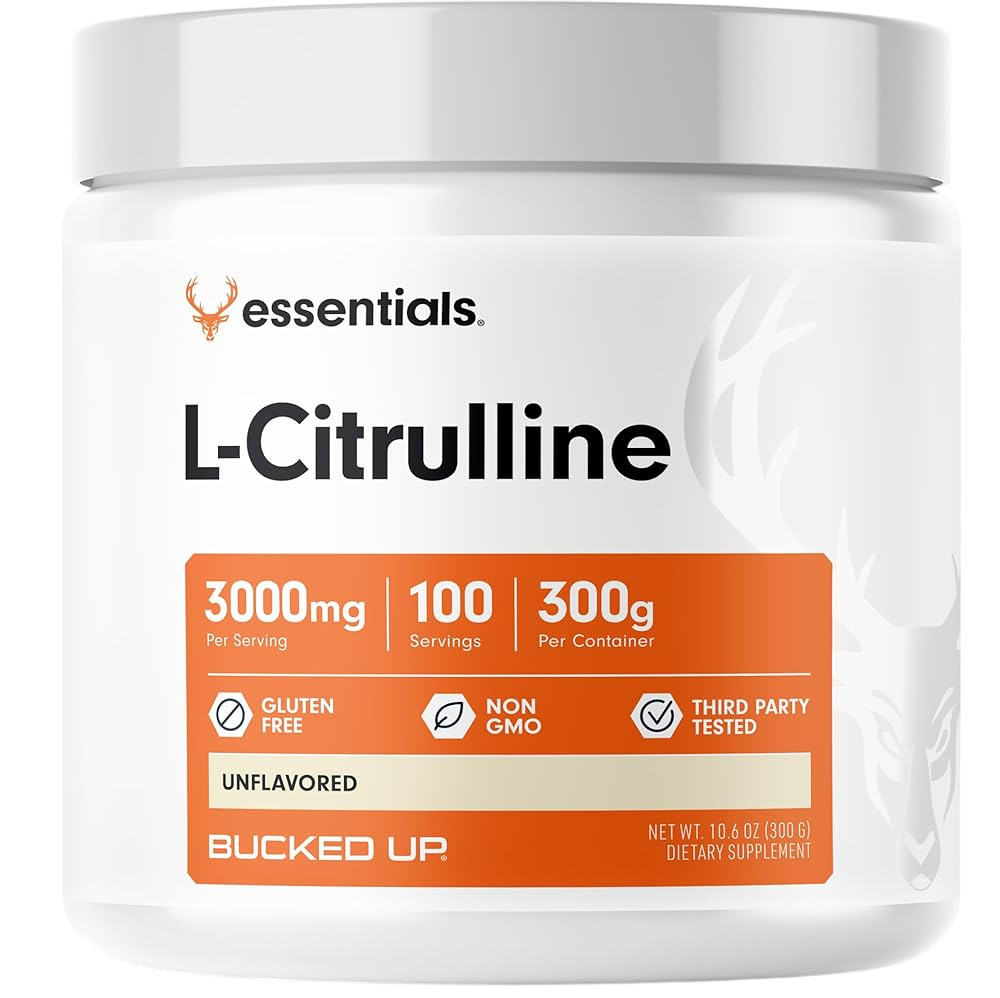
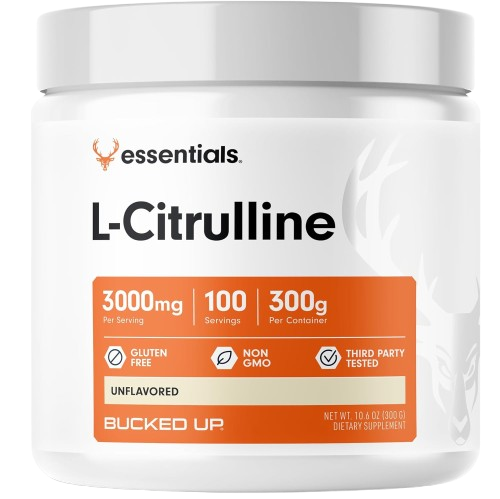
- Choose Bucked Up’s pure L-Citrulline for clear, clinically effective dosing that targets fatigue and supports new PRs.
The Real Reasons Your Muscles Burn Out Mid-Workout
Muscle fatigue during resistance training comes from several connected mechanisms that overwhelm your ability to keep performing. Ammonia builds up as a natural byproduct of protein metabolism during intense exercise and contributes to central nervous system fatigue. This central fatigue reduces your brain’s ability to recruit muscle fibers effectively. At the same time, restricted blood flow limits oxygen and nutrient delivery, while lactate accumulation creates the familiar burning sensation that forces you to cut sets short.
Traditional approaches like L-Arginine supplementation often fall short because L-Arginine has poor oral bioavailability. Arginase enzymes in the gut and liver break down much of it before it reaches circulation. L-Citrulline avoids this breakdown and reaches the kidneys, where it converts to L-Arginine more efficiently, which makes it a more reliable option for athletes who want real fatigue reduction.
How L-Citrulline Fights Fatigue: Mechanisms and Study Proof
L-Citrulline reduces muscle fatigue through three main physiological pathways that work together to extend training capacity. First, it acts as a highly bioavailable precursor to L-Arginine. Nitric oxide synthase enzymes convert L-Arginine into nitric oxide, a vasodilator that relaxes vascular smooth muscle and increases blood flow to working tissues. Better circulation delivers more oxygen, glucose, and other substrates to muscles under stress.
Second, L-Citrulline supports the urea cycle and helps convert toxic ammonia into urea for excretion. It aids ammonium clearance from muscle tissues via the urea cycle and delays fatigue. Lower ammonia levels support better neural drive and muscle recruitment during hard sets.
Third, combining L-Citrulline with malic acid creates Citrulline Malate, which adds an energy and buffering advantage. The malate component supports ATP production through the Krebs cycle and helps limit lactate buildup. Citrulline Malate reduces perceived exertion by about 15% and increases total work by 12.4% compared to pure L-Citrulline’s 8.7%. The malate also reduces lactic acid accumulation, supports ATP generation through aerobic pathways, and improves endurance in high-intensity exercise.
Clinical research backs these mechanisms with measurable performance changes. Studies using 8 g of Citrulline Malate have shown up to 53% more repetitions to failure during resistance exercise compared to placebo. Some newer trials report mixed findings. For example, a randomized double-blind placebo-controlled trial in 46 trained men using combined L-arginine and citrulline malate found no significant improvements in repetitions or performance metrics for CrossFit workouts. Likewise, a study in 15 trained female youth kayakers using 8 g citrulline malate showed no improvement in 1-km kayak ergometer time-trial performance compared to placebo.
Despite these mixed findings, the weight of evidence from successful trials still shows meaningful performance benefits across several training styles:
|
Study Type |
Dose/Form |
Fatigue Outcome |
|
Resistance Training RCTs |
8g Citrulline Malate |
+53% reps to failure |
|
Endurance Studies |
6-8g L-Citrulline |
+12% time to exhaustion |
|
Multiple RCTs |
6-8g Malate |
-40% DOMS reduction |
Citrulline Malate vs Pure L-Citrulline vs Competitors
Your choice between Citrulline Malate and pure L-Citrulline should match your training goals and how you typically fatigue. Pure L-Citrulline mainly boosts nitric oxide for muscle pumps by widening blood vessels, while Citrulline Malate combines L-Citrulline with malic acid, which supports ATP production through the Krebs cycle and delays fatigue during intense workouts.
Citrulline Malate usually works better for repetition-based training and endurance because malate supports energy metabolism and lactate buffering. Citrulline Malate may clear ammonia and lactate more efficiently, which can reduce delayed onset muscle soreness. Pure L-Citrulline suits lifters who mainly want stronger pumps and vasodilation with maximum nitric oxide precursor availability.
Many commercial pre-workouts underdose citrulline and hide it in proprietary blends, often providing only 1–2 g instead of the 6–8 g used in research. Bucked Up lists ingredients clearly and includes 6 g of Citrulline Malate in the foundational pre-workout, along with AstraGin to support absorption. Timing also matters. Peak plasma levels appear about 60 minutes after ingestion, so taking citrulline before training is essential for noticeable fatigue reduction.
Dialing In Your L-Citrulline Dose Before Training
Effective L-Citrulline dosing follows clinical ranges that balance fatigue reduction with comfort and safety. Useful gym doses for resistance training include 6–8 g per day of pure L-Citrulline or about 8 g per day of Citrulline Malate (2:1) taken 30–60 minutes pre-workout. Studies often use 3–5 g per day of L-Citrulline powder, while Citrulline Malate usually requires 6–8 g daily for maximum results, taken about one hour before exercise.
Timing plays a central role in results. Performance-focused protocols often recommend 6–8 g of L-Citrulline taken 30–60 minutes before exercise, with some suggesting up to 10 g of pure L-Citrulline about 30 minutes before training. This window matches L-Citrulline’s pharmacokinetics and allows time for kidney conversion to L-Arginine and subsequent nitric oxide production.
For reliable results, start with products that list exact citrulline amounts instead of proprietary blends that hide content. A 6 g serving of Citrulline Malate typically provides about 4 g of actual L-Citrulline. After you understand your response to citrulline alone, consider stacking it with ingredients like beta-alanine for extra lactate buffering, beginning with lower doses to gauge tolerance. Throughout this process, track reps, time to fatigue, and recovery between sets so you can see whether your adjustments actually improve performance.
Safety remains strong for most users at standard doses. Mild gastrointestinal discomfort can appear at very high intakes above 10 g, and vasodilation may interact with blood pressure medications. L-Citrulline is generally safe for daily use at 2,000–6,000 mg per day, depending on your goal. People with low blood pressure should use extra caution and monitor how they feel.
When L-Citrulline Works Best And When It Does Not
L-Citrulline does not deliver the same benefit in every training situation. Recent research shows mixed outcomes, especially in highly trained athletes who already have strong cardiovascular and metabolic adaptations. Intermediate lifters who clearly hit fatigue walls during sets usually see the most noticeable improvements.
Response also varies with baseline nitric oxide production, kidney function, and training status. Some people feel little difference during low-intensity exercise because fatigue is not the main limiter. Very high doses above 10 g rarely improve performance further and more often cause digestive issues.
Not all nitric oxide boosters perform equally. L-Citrulline consistently outperforms L-Arginine for oral use because it survives digestion better and raises plasma arginine more effectively. It still cannot fix poor programming, lack of sleep, or weak nutrition. Realistic expectations include modest but measurable increases in repetitions, lower perceived exertion, and faster recovery between sets when the rest of your plan is solid.
Who Gets The Most From L-Citrulline In Real Gym Life
L-Citrulline supplementation helps certain lifters and scenarios more than others. Beginners who fatigue quickly in moderate rep ranges around 8–15 often notice clear improvements with 6 g of Citrulline Malate taken about 60 minutes before training. Better blood flow and ammonia clearance help them finish full sets and maintain form.
High-stimulant users face a different problem because caffeine constricts blood vessels and can blunt pumps. Bucked Up’s Woke AF pairs 333 mg caffeine with 6 g Citrulline Malate so vasodilation still wins over stimulant-driven constriction. Advanced athletes can use stacking strategies such as Mother Bucker, which combines 4 g pure L-Citrulline with Nitrosigine for stronger nitric oxide support.
Lifters who avoid stimulants or train at night can use Bucked Up’s stimulant-free pre-workout with 6 g Citrulline Malate to reduce fatigue without affecting sleep. The best approach matches citrulline form and dose to your schedule, stimulant tolerance, and training style.
Verdict: Use Clinical Doses For Real Fatigue Reduction
Research supports L-Citrulline as a real tool for reducing workout fatigue when you use the right dose and form. Enhanced nitric oxide production improves blood flow, ammonia detoxification delays central fatigue, and malate supports ATP regeneration. The performance gains discussed earlier, including large jumps in repetitions to failure and meaningful DOMS reductions, appear consistently when lifters follow clinical dosing ranges.
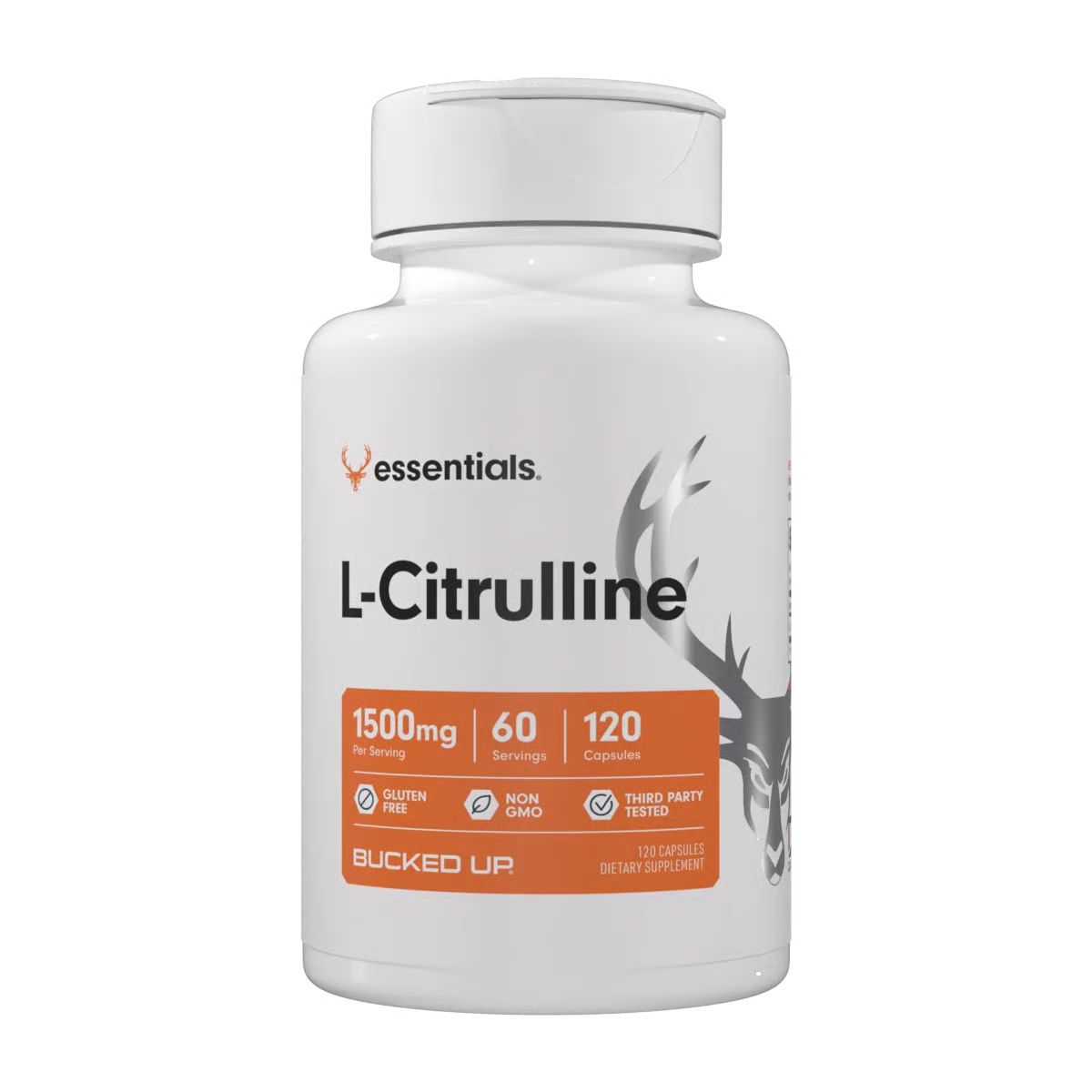
Bucked Up stands out by avoiding proprietary blends and listing exact L-Citrulline amounts. The foundational pre-workout delivers 6 g Citrulline Malate with AstraGin to support absorption, and Woke AF keeps the same clinical dose even with a high caffeine load. Mother Bucker adds 4 g pure L-Citrulline with Nitrosigine for advanced users who want a more aggressive nitric oxide stack.
Customer feedback often mentions stronger pumps, less mid-set burnout, and new PRs during early use, which lines up with the clinical data. The most reliable path involves choosing products with transparent labels, clinical dosing, and absorption support instead of underdosed blends that cannot match their claims.
L-Citrulline Muscle Fatigue FAQs
Does L-Citrulline reduce fatigue?
L-Citrulline can significantly reduce muscle fatigue through several mechanisms. It raises nitric oxide for better blood flow, supports ammonia detoxification through the urea cycle, and, when paired with malate, helps ATP production and lactate buffering. Clinical studies show large improvements in repetitions to failure and notable drops in delayed onset muscle soreness when people use 6–8 g doses.
What’s the optimal L-Citrulline dosage for workouts?
For resistance training, many lifters do well with 6–8 g of Citrulline Malate or 6–10 g of pure L-Citrulline taken about 60 minutes before training. This window allows plasma levels to peak and supports conversion to L-Arginine in the kidneys. Start at the lower end to test tolerance and avoid going beyond 10 g in a single serving to reduce the risk of digestive discomfort.
Citrulline Malate vs pure L-Citrulline for fatigue?
Citrulline Malate usually works better for endurance and high-repetition training because malate supports ATP production and lactate buffering. Pure L-Citrulline focuses more on maximizing nitric oxide for pumps and vascularity. Choose Citrulline Malate when fatigue and work capacity are your main concerns, and pure L-Citrulline when pump and blood flow sit at the top of your priority list.
How long does L-Citrulline take to work?
L-Citrulline typically reaches peak plasma levels within 60–120 minutes after ingestion. For workout benefits, take it about 60 minutes before training so the kidneys can convert it to L-Arginine, and nitric oxide production can rise. Many users notice better pumps and less fatigue during the first workout when they use clinically supported doses.
Are there side effects from L-Citrulline?
L-Citrulline is usually well tolerated at recommended doses. Some people experience mild nausea, bloating, or stomach discomfort at very high intakes above 10 g. People with low blood pressure should be cautious because of its vasodilatory effects. Less common effects include headaches from increased blood flow and mild sweating during intense sessions.