Written by: Ryan Gardner, Owner, Managing Partner, CEO, Bucked Up
Key Takeaways for Daily L-Citrulline
- Daily L-citrulline at 3–6 g is generally well-tolerated in healthy adults and holds self-affirmed GRAS status for oral use.
- Multi-day supplementation usually delivers more consistent performance support than single pre-workout doses because plasma arginine levels build over time.1
- Always confirm exact gram amounts and the form (pure L-citrulline vs. citrulline malate) on labels, since the two are not interchangeable gram-for-gram.
- Reported side effects are typically mild, but people on blood-pressure medications or with kidney concerns should talk with a healthcare provider first.1
- For a transparent, research-aligned option, check out Bucked Up L-Citrulline to support your daily performance goals.*
What Current Research Shows About Daily L-Citrulline
Available research supports daily L-citrulline use for most healthy adults at studied amounts. L-citrulline carries self-affirmed GRAS (Generally Recognized as Safe) status for oral use, which reflects broad agreement on its tolerability at typical supplement doses.
L-citrulline behaves differently in the body than L-arginine. L-citrulline bypasses first-pass metabolism and is converted to L-arginine in the kidneys, which supports a more sustained rise in plasma arginine. That pharmacokinetic advantage explains why many researchers focus on L-citrulline instead of L-arginine.
Multi-day use shows more consistent performance benefits than single pre-exercise doses.1 A 2015 trial reported that several days of L-citrulline supported severe-intensity cycling performance, while single acute doses generally did not (Bailey et al., Journal of Applied Physiology). This pattern supports a daily approach rather than occasional use only on workout days.
A 2021 critical review by Gough et al. in the European Journal of Applied Physiology also highlights a key label issue. Citrulline malate and pure L-citrulline are not interchangeable gram-for-gram, and some studies blur the line between the two forms when reporting doses.
Recommended Daily L-Citrulline Dose Ranges
Research-based ranges from peer-reviewed studies appear below.1 Doses refer to the active amino acid unless noted. Talk with your healthcare provider before exceeding these ranges or combining L-citrulline with medications.*
General daily support (healthy adults): 3–6 g pure L-citrulline per day, usually in divided doses.
Resistance training performance: 6–8 g citrulline malate (2:1), taken about 45–60 minutes before exercise.
Endurance and aerobic support: Multiple grams of pure L-citrulline per day over several consecutive days.1
Upper boundary (short-term, healthy adults): Higher doses have been explored in short-term trials.
Label details matter when you compare your product to a study. A 2:1 citrulline malate product delivers roughly 57% of its listed weight as active L-citrulline, so a 6 g serving provides about 3.4 g of pure L-citrulline. Matching a study’s dose requires knowing which form that study used.
Daily vs Training-Day-Only L-Citrulline Timing
Evidence favors consistent daily intake over training-day-only use. Benefits from L-citrulline tend to build over several weeks of steady intake1 rather than appearing reliably after a single dose.
For acute performance support, studies usually time L-citrulline about 45–60 minutes before intense activity. This window gives the body time to raise plasma arginine and support nitric oxide production.*1
For general daily support, many protocols split the total amount into two servings, such as morning and pre-workout. This approach can feel easier on digestion at higher daily totals.
For daily consistency or pre-workout timing, Bucked Up offers both Citrulline Malate and Pure L-Citrulline formulas with clearly stated doses. Explore your options at Bucked Up L-Citrulline.*
Potential Side Effects and Practical Upper Limits
Most reports describe mild side effects with L-citrulline. Common issues include gastrointestinal upset such as nausea, bloating, diarrhea, heartburn, and occasional headache.1 The malate form is more acidic than pure L-citrulline, so heartburn or reflux may occur more often with citrulline malate.
Higher doses have been linked with mild bloating and diarrhea1, and some people report headache or a flushed feeling. Compared with L-arginine and L-ornithine, L-citrulline usually causes less gastrointestinal distress at higher doses, which gives it a relatively favorable tolerability profile among nitric oxide precursors.
Single doses above 10 g can oversaturate arginine pathways and have been associated with respiratory complaints at the high end of dosing. These reactions appear uncommon at typical supplement amounts. Seek urgent medical care if you experience severe dizziness, chest pain, or fainting.
Who Should Talk With a Doctor Before Using L-Citrulline Daily
Several groups face higher risk because L-citrulline can influence blood pressure and kidney handling of amino acids. These people should work with a healthcare provider before starting daily use.
Pregnant or breastfeeding individuals. Safe doses during pregnancy and lactation have not been established, so supplementation should be avoided or used only under medical supervision.
People with low blood pressure. Rare cases of hypotension have been reported with L-citrulline, and naturally low blood pressure could magnify this effect.
People with serious kidney conditions. Limited data in severe kidney disease calls for caution, since impaired renal function changes how the body handles L-citrulline.
Anyone scheduled for surgery. Some sources recommend stopping L-citrulline at least 2 weeks before surgery because of potential effects on blood pressure control. Follow your surgical team’s instructions.
Key Drug and Supplement Interactions
L-citrulline supports nitric oxide production*, which can affect blood vessel tone and blood pressure.1 This mechanism creates interaction potential with several medication classes, so always involve your healthcare provider when prescriptions are in play.
Blood pressure medications. L-citrulline may add to the blood-pressure-lowering effects of ACE inhibitors, ARBs, calcium channel blockers, and beta-blockers. Monitoring and medical guidance are essential.
Nitrate medications. Using L-citrulline with nitrates such as nitroglycerin or isosorbide dinitrate may amplify vasodilation, which raises concern for excessive drops in blood pressure.
PDE5 inhibitors. L-citrulline may enhance the vasodilatory effects of PDE5 inhibitors, again increasing the risk of low blood pressure.
Anticoagulants and antiplatelet drugs. The interaction risk here remains theoretical and less documented, but a cautious approach with medical oversight is still wise.
How to Pick an L-Citrulline Product That Matches the Research
Label transparency makes or breaks your ability to match a product to studied doses. Three connected criteria help you confirm whether a supplement actually delivers a research-aligned amount.
Exact gram disclosure. The label should list the precise gram amount of L-citrulline or citrulline malate per serving. Without this baseline number, you cannot compare the product to any study, and the next criteria lose meaning.
Form clarity. Once you know the gram amount, you need to know the form. Pure L-citrulline and citrulline malate are not equivalent gram-for-gram. A 6 g citrulline malate (2:1) serving delivers roughly 3.4 g of active L-citrulline. A disclosed gram amount means little if you cannot tell how much of that weight is the amino acid.
Absorption support. Even a clearly labeled, correctly dosed product must be absorbed to matter. Unabsorbed citrulline does not contribute to the effects seen in studies. Astragin® is one ingredient studied for supporting citrulline absorption and bioavailability.*
Bucked Up lists exact gram amounts and forms on every label. The foundational pre-workout formulas (Bucked Up Pre-Workout and Woke AF) each provide 6,000 mg of Citrulline Malate (2:1), which supports nitric oxide production* and ammonia clearance*, while the malate component participates in the Krebs Cycle.1 Mother Bucker uses a different strategy, pairing 4,000 mg of Pure L-Citrulline with Nitrosigine® and Hydroprime® Glycerol for a stacked approach to supporting muscle pump* and cellular hydration*.1 Every formula in the line includes Astragin® to support citrulline absorption.*1
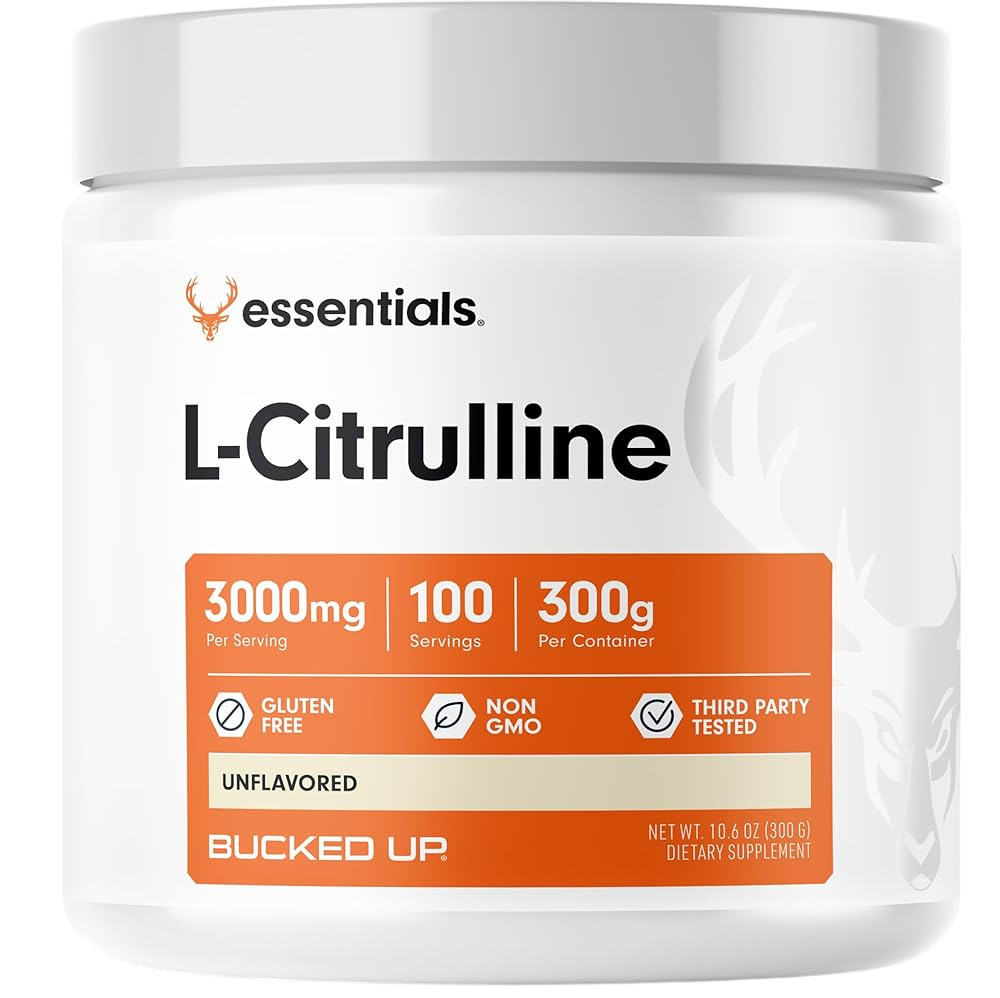
For athletes who want standalone flexibility, Bucked Up L-Citrulline Powder supplies 3,000 mg of Pure L-Citrulline per scoop with no other active ingredients. This setup makes it straightforward to dial in a daily target within the studied ranges.
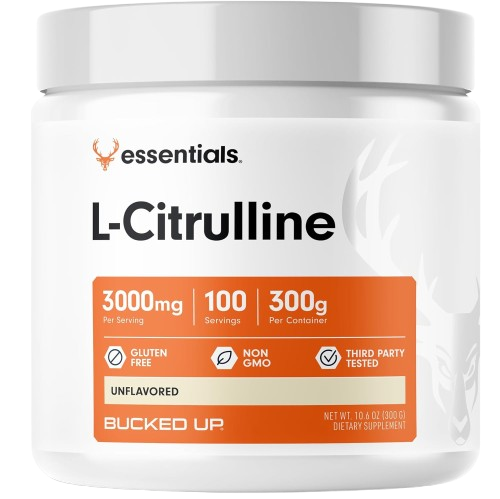
No proprietary blends, no guessing, and clear grams on the label. See the transparent dosing at Bucked Up L-Citrulline.*
For healthy adults, daily L-citrulline at 3–6 g aligns with a consistent body of human research, shows a generally mild side-effect profile, and presents notable interaction risks mainly for specific medication users who should involve a healthcare professional. The practical approach is simple: choose a product that lists the exact form and gram amount, use it consistently rather than sporadically, and time workout-focused doses about 45–60 minutes before training for performance support.*
Ready to apply these dosing principles? Start with Bucked Up L-Citrulline for transparent, research-aligned formulas.*
*These statements have not been evaluated by the Food and Drug Administration. This product is not intended to diagnose, treat, cure, or prevent any disease.
Frequently Asked Questions
Is it safe to take L-citrulline every day long-term?
For healthy adults, daily L-citrulline at 3–6 g appears generally well-tolerated based on current human research. Studies have followed daily doses of 6 g for several weeks without identifying a toxic threshold at typical supplement amounts. Long-term multi-year data remain limited, so anyone with underlying health conditions, kidney concerns, or low blood pressure should work with a healthcare provider before committing to a daily plan. The available evidence supports consistent daily use as more effective than sporadic dosing for maintaining elevated plasma arginine.
What is the difference between citrulline malate and pure L-citrulline for daily use?
Pure L-citrulline provides 100% of its listed weight as the active amino acid. Citrulline malate (2:1) combines L-citrulline with malic acid, and roughly 57% of the listed weight is active L-citrulline, so a 6 g serving supplies about 3.4 g of pure L-citrulline. The malate portion is a Krebs Cycle intermediate that may support aerobic ATP production, which explains its frequent use in endurance and resistance training products. For general daily support, pure L-citrulline allows more precise control over the active amino acid dose. Current data do not show one form as universally superior, so the better fit often depends on training goals and overall formula design.
When is the best time to take L-citrulline each day?
For acute training performance, research usually places L-citrulline about 45–60 minutes before intense exercise. For everyday support, many people split the total into two servings, such as morning and pre-workout, which can ease digestion at higher daily amounts. Research points to consistency as the main driver of results, so regular daily intake over multiple days matters more than exact clock time when the goal is sustained plasma arginine.
Who should avoid daily L-citrulline without medical guidance?
Several groups should involve a healthcare provider before using L-citrulline every day. These include people taking blood pressure medications (ACE inhibitors, ARBs, calcium channel blockers, beta-blockers), nitrate medications, or PDE5 inhibitors, because L-citrulline may enhance the blood-pressure-lowering effects of these drugs. Individuals with naturally low blood pressure, serious kidney disease, or significant liver disease should also seek medical input. Pregnant and breastfeeding individuals should avoid L-citrulline supplementation, since safe doses have not been established. Anyone scheduled for surgery should stop L-citrulline at least 2 weeks before the procedure and follow their medical team’s guidance.
How do I know if a pre-workout actually contains a studied dose of L-citrulline?
Start by checking whether the label lists the exact gram amount of L-citrulline or citrulline malate per serving as a separate line, not hidden inside a proprietary blend total. Once you see the gram amount, confirm the form, because pure L-citrulline and citrulline malate (2:1) are not equivalent gram-for-gram. A 6 g citrulline malate dose and a 6 g pure L-citrulline dose deliver different amounts of the active amino acid. Studied ranges for resistance training performance usually begin around 6–8 g of citrulline malate or 3–6 g of pure L-citrulline. Products that include an absorption-support ingredient such as Astragin® may further support the bioavailability of the stated dose. If a label omits individual ingredient amounts, you cannot verify whether the product matches any studied range.
References
Gough, L. A., Sparks, S. A., McNaughton, L. R., Higgins, M. F., Newbury, J. W., Trexler, E., Faghy, M. A., & Bridge, C. A. (2021). A critical review of citrulline malate supplementation and exercise performance. European Journal of Applied Physiology, 121(12), 3283–3295. https://doi.org/10.1007/s00421-021-04774-6
Caballero-Garcia, A., Noriega-Gonzalez, D. C., Roche, E., Drobnic, F., & Córdova, A. (2021). Effects of L-citrulline supplementation on exercise and muscle injury markers in older adults. Nutrients, 13(9), 3133. https://doi.org/10.3390/nu13093133
1 The content provided in this article is for informational purposes only and is not medical advice. Consult with a medical professional before implementing any changes to your diet, health, or exercise routines.
Individual results will vary and are based on a combination of each individual’s diet, exercise, age, and health circumstances.
These statements have not been evaluated by the Food and Drug Administration. This product is not intended to diagnose, treat, cure or prevent any disease.
This article was written by Ryan Gardner, CEO of Bucked Up. As the maker of Bucked Up Protein Soda, we have a financial interest in this information. The views expressed are our own and should be read with that context in mind.