Last updated: April 22, 2026
Key Takeaways
- L-Citrulline boosts workout energy through nitric oxide production and ammonia detoxification, significantly increasing endurance and work capacity.1
- L-Citrulline can raise arginine levels more effectively than direct L-Arginine because the kidneys convert it while bypassing liver metabolism.1
- Compared with caffeine’s quick spike and crash, L-Citrulline supports steadier energy, less fatigue, and reduced soreness.1
- L-Citrulline pairs well with creatine and beta-alanine by targeting central fatigue and recovery, which suits high-volume training.1
- You can experience noticeable pumps and endurance by using Bucked Up’s pure L-Citrulline at research-backed 6–8 gram pre-workout doses.1
L-Citrulline vs Other Workout Supplements: Quick Comparison
The following table compares how L-Citrulline supports energy and endurance next to other popular workout ingredients, so you can see where each one fits in your routine.
| Supplement | Energy Mechanism | Endurance/Fatigue Impact | Bioavailability Edge | Typical Dose for Energy | Pros for Workouts | Cons |
|---|---|---|---|---|---|---|
| L-Citrulline | Nitric oxide production, ammonia detox1 | Increased bench press repetitions, 12% longer cycling1 | Kidney conversion bypasses liver | 6–8g Citrulline Malate | Sustained pumps, reduced soreness1 | Mild GI discomfort at high doses1 |
| L-Arginine | Direct nitric oxide precursor | Limited due to absorption challenges | Lower gut/liver absorption | 3–6g daily | Direct NO pathway | Impacted by liver enzymes |
| Caffeine | Adenosine receptor blocking | Quick energy, potential crash | Rapid absorption | 200–400mg | Immediate alertness, focus | Jitters, crash, tolerance buildup |
| Creatine | ATP regeneration | Power focus, limited endurance | Good with loading | 3–5g daily | Strength, short bursts | Minimal endurance benefits |
| Beta-Alanine | Lactic acid buffering | Delays muscle fatigue | Requires 2-week loading | 3.2–6.4g daily | High-rep endurance | Tingling sensation, no pump |
| Beetroot | Natural nitrates | Mild endurance improvement | Variable nitrate content | 5–10g powder | Natural source | Variable potency |
| B-Vitamins | Energy metabolism support | Mild fatigue relief | Good absorption | RDA amounts | General wellness | Limited acute performance impact |
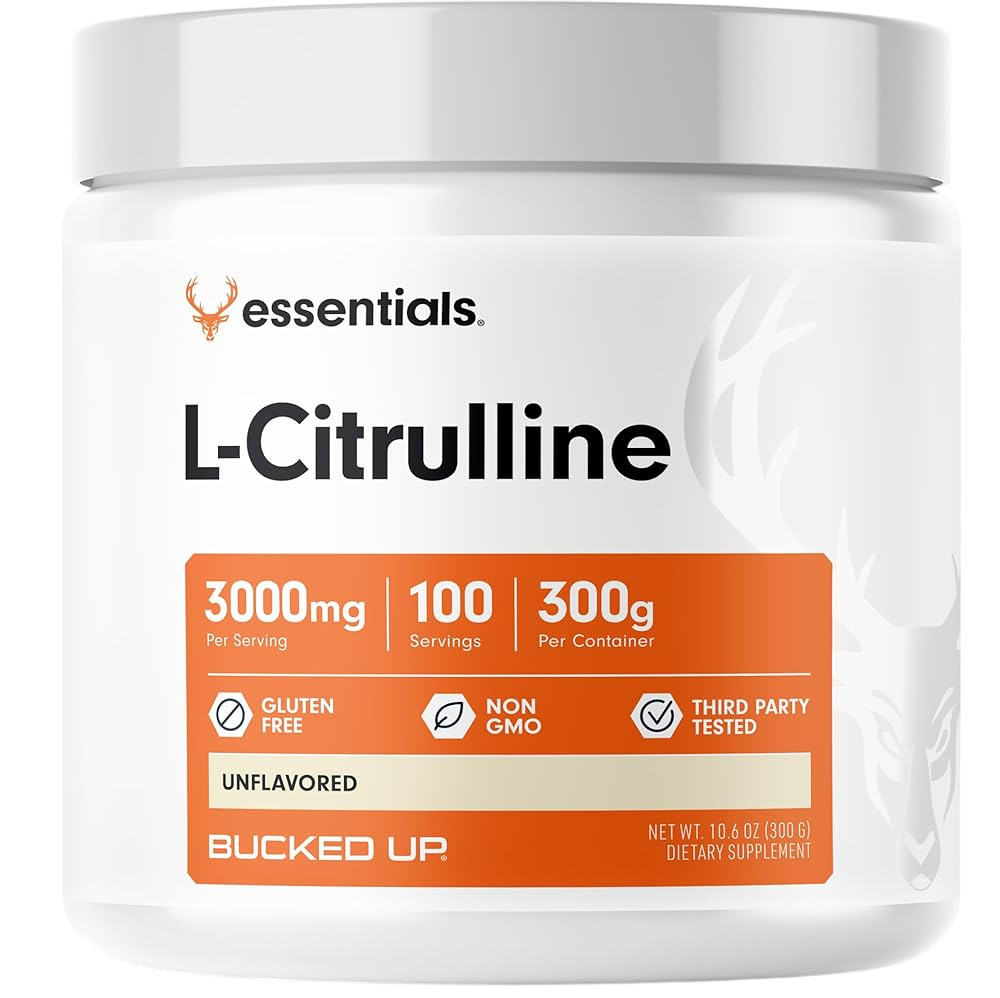
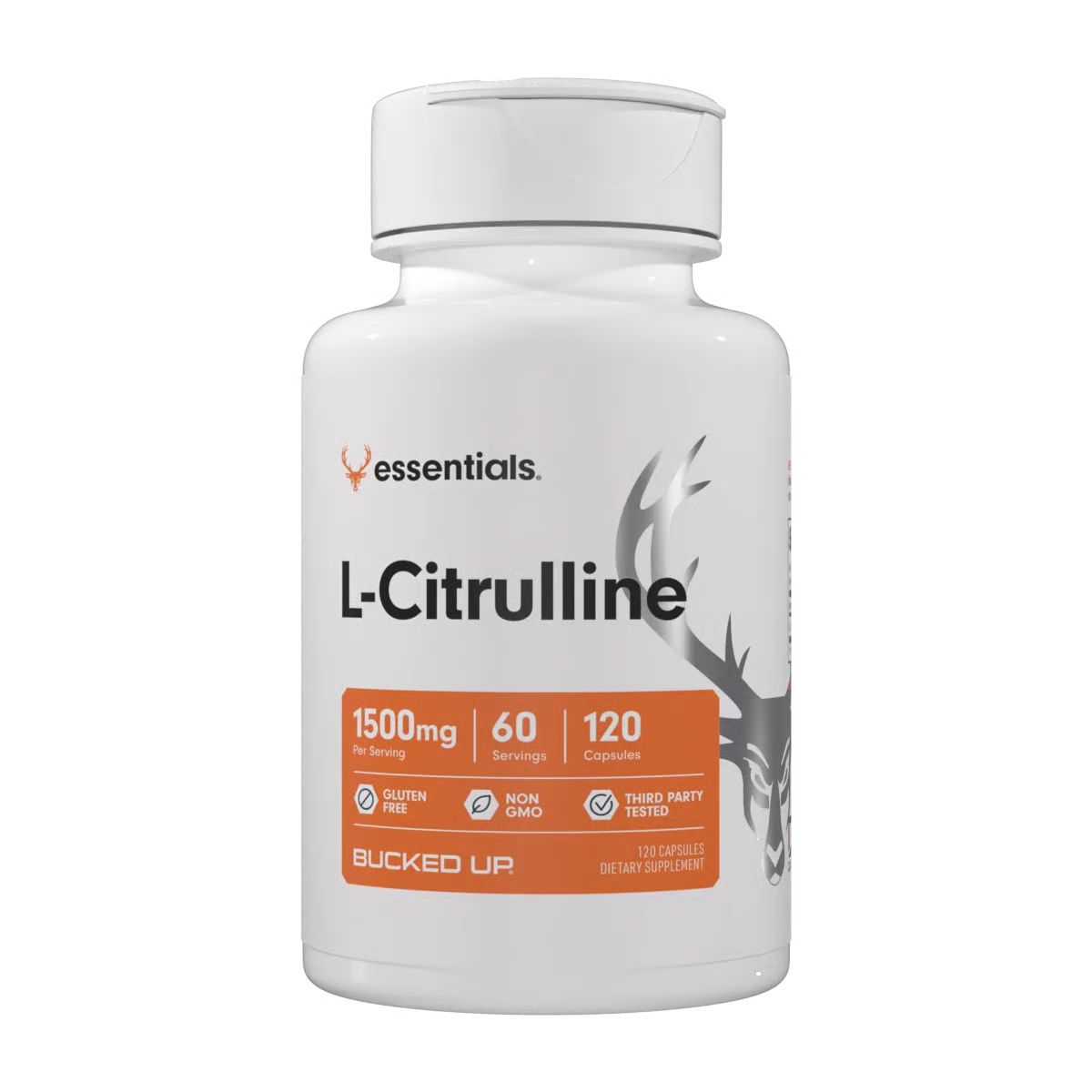
Explore Bucked Up’s citrulline options to match your dose and format to your current training goals.
How L-Citrulline Fuels Workout Energy
L-Citrulline supports workout energy through three main pathways that separate it from many other supplements.1 First, it converts to L-Arginine in the kidneys and avoids the liver enzymes that often limit direct arginine use. This conversion increases nitric oxide, which improves blood flow, oxygen delivery, and nutrient transport to working muscles.1
Second, L-Citrulline supports the urea cycle and helps clear ammonia, a byproduct that contributes to central fatigue during hard training.1 Research shows that citrulline malate can increase bench press repetitions compared with placebo, while cyclists experienced 12% longer time to exhaustion with citrulline supplementation.1
Third, citrulline malate adds malic acid, which participates in the Krebs cycle and supports ATP production. Citrulline malate supports reps on push days and can help lifters chasing strength and hypertrophy maintain performance deeper into their sets.1
L-Citrulline vs L-Arginine: Bioavailability and Pump Support
The key difference between L-Citrulline and L-Arginine comes from how the body absorbs and uses them. L-Arginine can undergo significant first-pass metabolism in the liver, where arginase enzymes break it down before it meaningfully raises nitric oxide.
L-Citrulline avoids much of this breakdown by traveling to the kidneys, where it converts to arginine and keeps plasma arginine levels elevated for longer. This renal bypass mechanism supports more consistent pumps and endurance compared with direct arginine supplementation.1 Many athletes still combine both, but citrulline often serves as the primary base for nitric oxide support.
L-Citrulline vs Caffeine: Steady Energy Without the Crash
Caffeine delivers fast energy by blocking adenosine receptors, which can sharpen focus but may also cause jitters and a later crash. L-Citrulline offers a non-stimulant path that improves blood flow and nutrient delivery without directly affecting the central nervous system.1
The two ingredients can work well together in a pre-workout. Bucked Up’s Woke AF, for example, pairs 333 mg of caffeine with 6 g of citrulline malate. Citrulline malate works acutely in 30–45 minutes from a single dose, supporting sustained pumps and endurance while caffeine covers immediate alertness.
L-Citrulline vs Creatine and Beta-Alanine: Endurance Focus
Creatine mainly supports short, explosive efforts by helping regenerate ATP during heavy lifts or sprints. Beta-alanine raises muscle carnosine levels to buffer lactic acid, which delays peripheral fatigue during high-volume work, but it needs a loading phase and does not create pump effects.
L-Citrulline targets different fatigue pathways by supporting blood flow and reducing ammonia buildup.1 It can reduce central fatigue by lowering perceived effort and support recovery with less next-day soreness.1 This profile suits bodybuilders, high-volume lifters, and endurance athletes who want both performance and recovery support.
L-Citrulline vs Beetroot and Other Nitric Oxide Boosters
Beetroot extract supplies natural nitrates that convert to nitric oxide, but nitrate content can vary widely between products and batches. L-Citrulline offers a more predictable nitric oxide boost because its conversion pathway is consistent.
Other nitric oxide boosters, such as Nitrosigine (inositol-stabilized arginine), also support blood flow and can pair well with citrulline. Bucked Up’s Mother Bucker formula uses this strategy by stacking 4 g of pure L-Citrulline with Nitrosigine for multiple nitric oxide pathways.
How L-Citrulline Reduces Fatigue and Supports Energy
L-Citrulline reduces fatigue through more than simple “energy” in the stimulant sense.1 By helping move ammonia through the urea cycle, it addresses a major driver of central nervous system fatigue during long or intense sessions. Studies show L-Citrulline supplementation reduced feelings of fatigue and improved concentration immediately after exercise.1
The energy support shows up as higher work capacity instead of a wired feeling. Research demonstrates enhanced endurance and high-intensity exercise performance, which helps athletes hold challenging intensities for longer periods.1
Experience these fatigue-fighting benefits with Bucked Up’s pure L-Citrulline or citrulline malate formulas as part of your pre-workout stack.1
Optimal L-Citrulline Dosing and Stacking for Energy
For performance improvements including pump and endurance, 6 to 8 grams of citrulline malate daily is effective.1 Take this dose 30–60 minutes before training so blood levels peak during your workout.
Bucked Up’s formulations apply these research-backed protocols across their pre-workout line. The standard Bucked Up pre-workout delivers 6 g of citrulline malate with Astragin to support absorption and help you reach the effective threshold. Mother Bucker uses 4 g of pure L-Citrulline with Nitrosigine and Hydroprime glycerol, which creates several routes for blood flow and hydration support.
Safety, Side Effects, and Who L-Citrulline Fits Best
Studies show citrulline doses up to 15 grams per day were safe and well-tolerated, with relatively few side effects compared with many performance supplements.1 Research also reports no adverse events from oral L-Citrulline at doses up to 15 grams in healthy adults.1
People with naturally low blood pressure should speak with a healthcare professional before using high doses because of potential vasodilatory effects.1 L-Citrulline often suits pump-focused lifters, bodybuilders, and endurance athletes who want sustained energy without relying only on stimulants. Bucked Up’s transparent labels and use of absorption enhancers can appeal to athletes who track their ingredient doses closely.
Frequently Asked Questions
How long does it take for L-Citrulline to work for energy?
L-Citrulline usually begins working within 30–60 minutes, with peak plasma levels around 0.7 to 2 hours after ingestion. Most people feel the benefits as better work capacity and less fatigue, not as a jolt of energy. For training, many athletes take citrulline malate about 30–45 minutes before their workout.
Can I take L-Citrulline with caffeine for better energy?
L-Citrulline pairs well with caffeine for many lifters. Caffeine provides fast alertness through adenosine receptor blocking, while citrulline improves blood flow and helps reduce fatigue through nitric oxide production. This combination can offset some vasoconstriction from higher caffeine doses and support more stable energy across the session.
Is L-Citrulline better than creatine for workout energy?
L-Citrulline and creatine address different aspects of workout performance. Creatine supports short-burst power and strength by helping regenerate ATP. L-Citrulline supports endurance and pumps by improving oxygen delivery and assisting with ammonia removal. Many athletes use both together because they target different energy systems and fatigue mechanisms.
Should I take L-Citrulline on rest days?
L-Citrulline can be taken daily, but its strongest effects on energy and performance are acute around training. Most users focus on pre-workout timing to get the biggest impact on pumps and endurance. Some athletes still choose lower daily doses on rest days to support recovery and maintain more consistent nitric oxide levels.
What’s the difference between L-Citrulline and Citrulline Malate for energy?
Pure L-Citrulline provides only the amino acid that drives nitric oxide production. Citrulline malate combines L-Citrulline with malic acid in a 2:1 ratio, which supports energy metabolism through the Krebs cycle. Both forms can enhance workout energy, while citrulline malate may offer extra ATP support during longer or higher-volume sessions.
Conclusion
L-Citrulline supports sustained workout energy through nitric oxide enhancement, fatigue reduction, and improved endurance. Caffeine often delivers quick energy with a possible crash, and creatine mainly targets power, while citrulline focuses on blood flow and ammonia clearance. Research highlights its advantages over direct arginine and its ability to stack well with other performance ingredients.
Start with Bucked Up’s research-backed citrulline doses to build steadier workout energy, stronger pumps, and better training capacity.1
1 The content provided in this article is for informational purposes only and is not medical advice. Consult with a medical professional before implementing any changes to your diet, health, or exercise routines.
Individual results will vary and are based on a combination of each individual’s diet, exercise, age, and health circumstances.
These statements have not been evaluated by the Food and Drug Administration. This product is not intended to diagnose, treat, cure or prevent any disease.
This article was written by Ryan Gardner, CEO of Bucked Up. As the maker of Bucked Up Protein Soda, we have a financial interest in this information. The views expressed are our own and should be read with that context in mind.