Last updated: April 22, 2026
Key Takeaways
- L-citrulline bypasses liver first-pass metabolism and can raise plasma arginine levels up to 55% higher than L-arginine, which supports stronger nitric oxide production.1
- Clinical studies report that L-citrulline increases exercise reps by 53%, boosts endurance by 12%, and cuts soreness by 40%, while L-arginine shows no meaningful performance gains in similar settings.1
- L-citrulline generally offers better tolerability, with minimal side effects reported up to 15g daily, while L-arginine often causes GI distress such as diarrhea and cramping at effective doses.1
- Effective targets include 6–8g citrulline malate pre-workout for performance or 3–6g pure L-citrulline daily for ongoing support, and stacking with L-arginine usually adds little benefit.1
- Choose Bucked Up’s pure L-citrulline for clinically aligned, absorption-supported dosing that can help you chase bigger pumps and better performance.1
How L-Citrulline and L-Arginine Work in Your Body
L-citrulline is a non-essential amino acid first isolated from watermelon that serves as a precursor to L-arginine. The body converts L-citrulline to L-arginine primarily in the kidneys, which then produces nitric oxide for vasodilation and improved muscle pumps.1 L-arginine is a semi-essential amino acid that directly produces nitric oxide but faces significant breakdown in the digestive system and liver.
Both amino acids aim to increase nitric oxide levels, yet their absorption and effectiveness differ substantially.1 Food sources like watermelon contain L-citrulline, but reaching useful doses through diet alone is unrealistic. You would need roughly 2.2 to 3.3 lbs of watermelon daily just to reach 3 grams of citrulline, so supplementation becomes the practical route.
Head-to-Head Comparison of L-Citrulline vs L-Arginine
The table below highlights how L-citrulline and L-arginine compare across bioavailability, performance, and side effects so you can see where citrulline often holds the advantage.
| Metric | L-Citrulline | L-Arginine | Verdict |
|---|---|---|---|
| Bioavailability | Bypasses first-pass metabolism | Substantial losses to first-pass metabolism | Citrulline Advantage |
| Plasma Arginine Increase | 55%+ sustained elevation | Short-lived spike | Citrulline Advantage |
| Exercise Performance | 53% more reps, 12% endurance boost | No significant improvement | Citrulline Advantage |
| Side Effects | Well-tolerated up to 15g | GI distress, cramping, diarrhea | Citrulline Advantage |
| Peak Effect Time | 0.7–2 hours | 1–2 hours | Similar |
Why L-Citrulline Stands Out: Science Breakdown
L-citrulline has a distinct pharmacokinetic profile that favors nitric oxide production. It largely avoids intestinal and liver first-pass extraction, while L-arginine undergoes heavy presystemic metabolism. This metabolic advantage allows citrulline to convert to arginine mainly in the kidneys, which then release arginine directly into systemic circulation.
Schwedhelm et al.’s 2008 randomized crossover trial in 20 healthy adults showed how this plays out in practice. L-citrulline raised plasma arginine levels and nitric oxide-dependent signaling more effectively than equal-mole doses of L-arginine.
For bodybuilders and athletes, these mechanisms show up as real-world performance changes. The rep increases and soreness reduction mentioned earlier stem from citrulline’s superior bioavailability and its impact on nitric oxide.1 The malate component in citrulline malate further supports energy metabolism through the Krebs cycle and can enhance ATP production and phosphocreatine recovery.1
Meanwhile, L-arginine faces the “L-arginine paradox.” It serves as the direct precursor to nitric oxide, yet oral supplementation often produces rapid but short-lived plasma spikes with substantial losses to first-pass metabolism.
L-Arginine vs L-Citrulline for ED and Vascular Performance
Beyond the gym, L-citrulline’s nitric oxide support also applies to vascular health and erectile function, where steady arginine levels matter. For erectile dysfunction and broader vascular support, L-citrulline again shows promising effectiveness.
Fukui and Yamaguchi’s 2010 randomized, double-blind trial found that 1.5g daily L-citrulline for 4 weeks improved erection hardness scores in men with mild erectile dysfunction, with only mild gastrointestinal upset in a few participants.1
For ED specifically, sustained arginine elevation matters more than short-term spikes. Consistent nitric oxide availability supports vascular function throughout the day, not just immediately after a dose, which aligns well with citrulline’s pharmacokinetic profile.
Practical Dosing and Timing Guidelines
Effective L-citrulline dosing depends on your primary goal:
- Exercise Performance: 6–8g citrulline malate (providing about 3.4–4.5g pure L-citrulline) taken roughly 60 minutes before training.
- Daily Health Support: 3–6g pure L-citrulline per day, split or taken at once based on preference.
- Vascular Support: Doses at or above 6g have shown meaningful diastolic blood pressure reductions in research settings.1
L-citrulline comes in two primary forms: pure L-citrulline (100% active) and citrulline malate, usually in a 2:1 ratio. A 1.76g serving of citrulline malate provides approximately 1g of pure L-citrulline. Studies report good tolerability up to 15g with minimal side effects in healthy adults.1
Can You Stack L-Citrulline and L-Arginine?
Most people do not need to stack L-citrulline and L-arginine. Since L-citrulline raises plasma arginine levels more effectively than direct L-arginine supplementation, adding arginine usually brings little extra benefit and may increase the chance of GI issues.1
Advanced formulations like those in Bucked Up products focus on improving L-citrulline delivery with absorption enhancers such as AstraGin® instead of pairing it with less efficient arginine sources. Explore Bucked Up’s absorption-focused citrulline options to see how AstraGin® supports each serving.
Why Bucked Up’s L-Citrulline Line Can Stand Out
Bucked Up uses a science-forward approach to L-citrulline, with clear dosing across multiple product lines. The foundational pre-workouts feature 6,000mg of citrulline malate in a 2:1 ratio, which aligns with clinical thresholds for nitric oxide support.1 For more advanced users, Mother Bucker provides 4,000mg of pure L-citrulline stacked with Nitrosigine® and Hydroprime® glycerol.
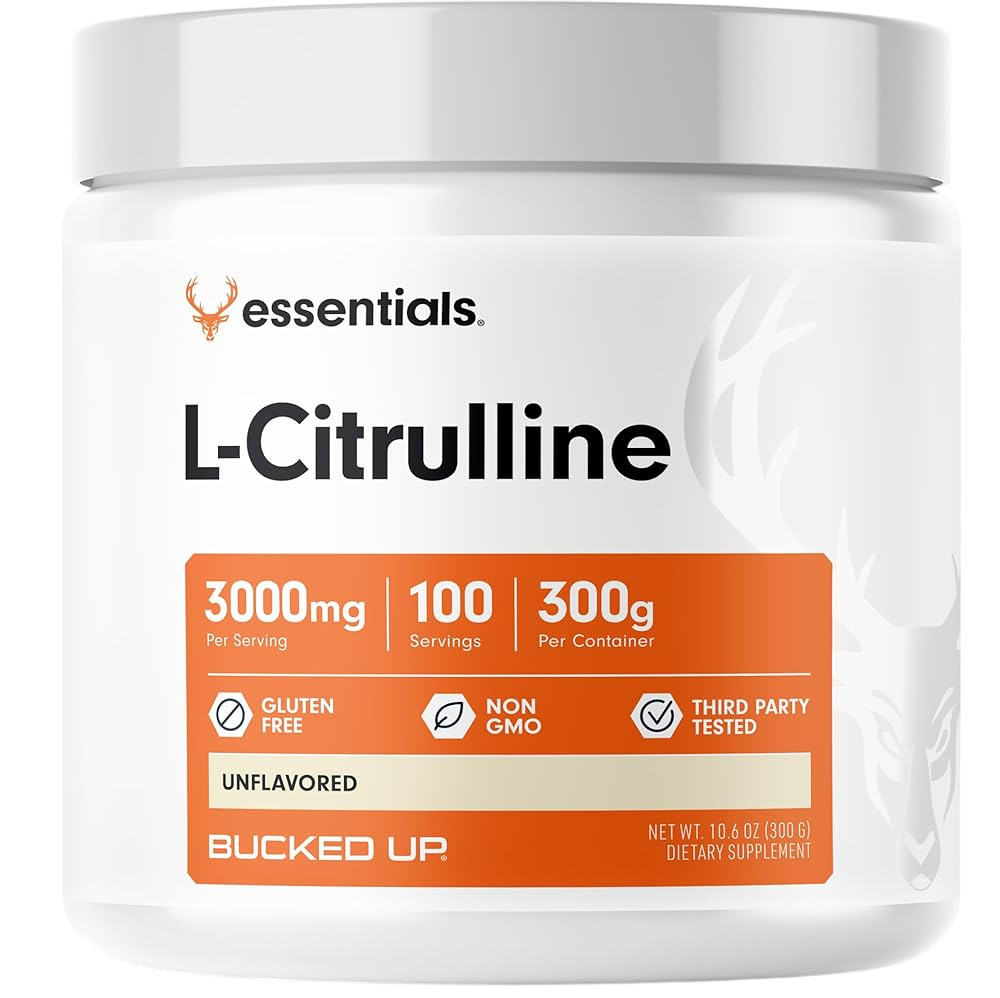
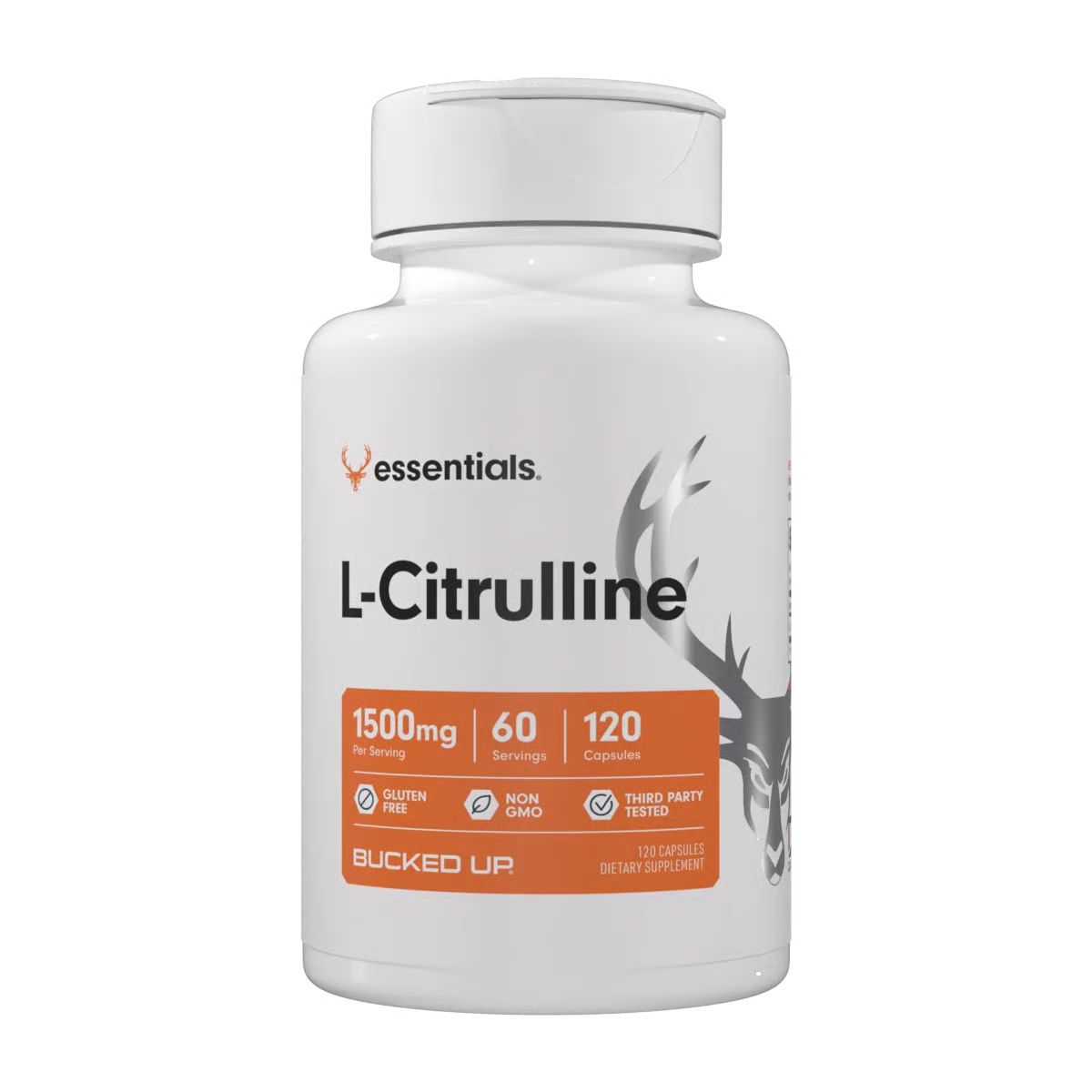
Bucked Up’s approach centers on four connected principles. Transparent labeling gives full ingredient disclosure with clinical-style doses, so you know exactly what you are taking. This clarity pairs with absorption support, since every formula includes AstraGin® to help more citrulline reach your bloodstream. To match different training styles, the line includes pure L-citrulline powder at 3g per scoop, capsules at 750mg each, and integrated pre-workout formulas. All options are manufactured in GMP-certified USA facilities to keep quality consistent across formats.
Whether you chase skin-tight pumps, prefer a balanced stimulant profile, or focus on evidence-based nitric oxide support, Bucked Up offers targeted citrulline setups that can fit your training style.1
Side Effects and Who Should Be Careful
L-citrulline generally shows a stronger safety profile than L-arginine. L-arginine commonly causes gastrointestinal side effects such as nausea, abdominal pain, diarrhea, and bloating, especially at doses above 10g. In contrast, L-citrulline appears well-tolerated up to 15g daily with relatively few adverse events reported.1
Some people should still proceed carefully. Anyone taking blood pressure medications, nitrates, or PDE5 inhibitors should talk with a healthcare professional, since L-citrulline’s vasodilatory effects may amplify these drugs. Pregnant or breastfeeding women should also consult a provider before using citrulline supplements.
Conclusion
L-citrulline outperforms L-arginine for nitric oxide support, exercise performance, and overall tolerability in the available research.1 Its bioavailability, sustained plasma arginine elevation, and performance benefits make it a compelling option for serious athletes and fitness enthusiasts.
Get clinically dosed L-citrulline from Bucked Up and apply the dosing strategies in this guide to test the performance differences for yourself.
Frequently Asked Questions
Is L-arginine better than L-citrulline?
Current research favors L-citrulline over L-arginine for raising plasma arginine levels and supporting nitric oxide. L-citrulline bypasses first-pass metabolism in the liver and gut, which leads to higher and more sustained plasma arginine levels than direct L-arginine supplementation. Many users experience better pumps, improved training performance, and fewer side effects with citrulline.1
Should you take L-citrulline and L-arginine together?
Most people do not need to combine L-citrulline and L-arginine. Since L-citrulline already raises plasma arginine more effectively than direct L-arginine, stacking them usually adds little benefit and may increase the risk of gastrointestinal discomfort. Focusing on dialed-in L-citrulline dosing tends to be the more efficient strategy.
What is the difference between citrulline malate and L-arginine?
Citrulline malate pairs L-citrulline with malic acid in a 2:1 ratio, which supports both nitric oxide production and energy metabolism through the Krebs cycle. It offers higher bioavailability and more sustained effects than L-arginine, which faces significant breakdown in the digestive system. Citrulline malate also tends to cause fewer gastrointestinal side effects at effective doses.
Which is better for erectile dysfunction: L-citrulline or L-arginine?
Research suggests L-citrulline can provide stronger support for mild erectile dysfunction. Clinical trials report that 1.5–3g daily L-citrulline improves erection hardness scores with minimal side effects.1 Its bioavailability and sustained plasma arginine elevation offer more consistent nitric oxide support than L-arginine’s shorter-lived effects.
What is the optimal L-citrulline dose for bodybuilding?
For bodybuilding and resistance training, 6–8g of citrulline malate, which provides about 3.4–4.5g pure L-citrulline, taken around 60 minutes pre-workout, is a common target. This range has been linked with higher rep counts and noticeable reductions in muscle soreness.1 For daily support outside of training, 3–6g of pure L-citrulline works well for many lifters.
How does Bucked Up dose L-citrulline in their products?
Bucked Up uses clinically aligned doses across its product line. Foundational pre-workouts like Bucked Up and Woke AF include 6,000mg citrulline malate, Mother Bucker features 4,000mg pure L-citrulline stacked with Nitrosigine®, and the pure L-citrulline powder delivers 3g per scoop. All formulas include AstraGin® to support absorption.
1 The content provided in this article is for informational purposes only and is not medical advice. Consult with a medical professional before implementing any changes to your diet, health, or exercise routines.
Individual results will vary and are based on a combination of each individual’s diet, exercise, age, and health circumstances.
These statements have not been evaluated by the Food and Drug Administration. This product is not intended to diagnose, treat, cure or prevent any disease.
This article was written by Ryan Gardner, CEO of Bucked Up. As the maker of Bucked Up Protein Soda, we have a financial interest in this information. The views expressed are our own and should be read with that context in mind.