Written by: Ryan Gardner, Owner, Managing Partner, CEO, Bucked Up
Key Takeaways
-
Flat pumps and stalled endurance often come from low dosing, poor timing, or weak absorption before L-citrulline reaches the kidneys.
-
L-citrulline bypasses first-pass metabolism more effectively than L-arginine, raises plasma arginine levels, and supports nitric oxide production* more reliably.1
-
This 6-step daily protocol covers form, timing, dosing, absorption support, stacking, and tracking so more of what you take shows up in training.1
-
Training goal, body weight in lbs, workout timing, and label transparency all shape how well this protocol supports performance*.1
-
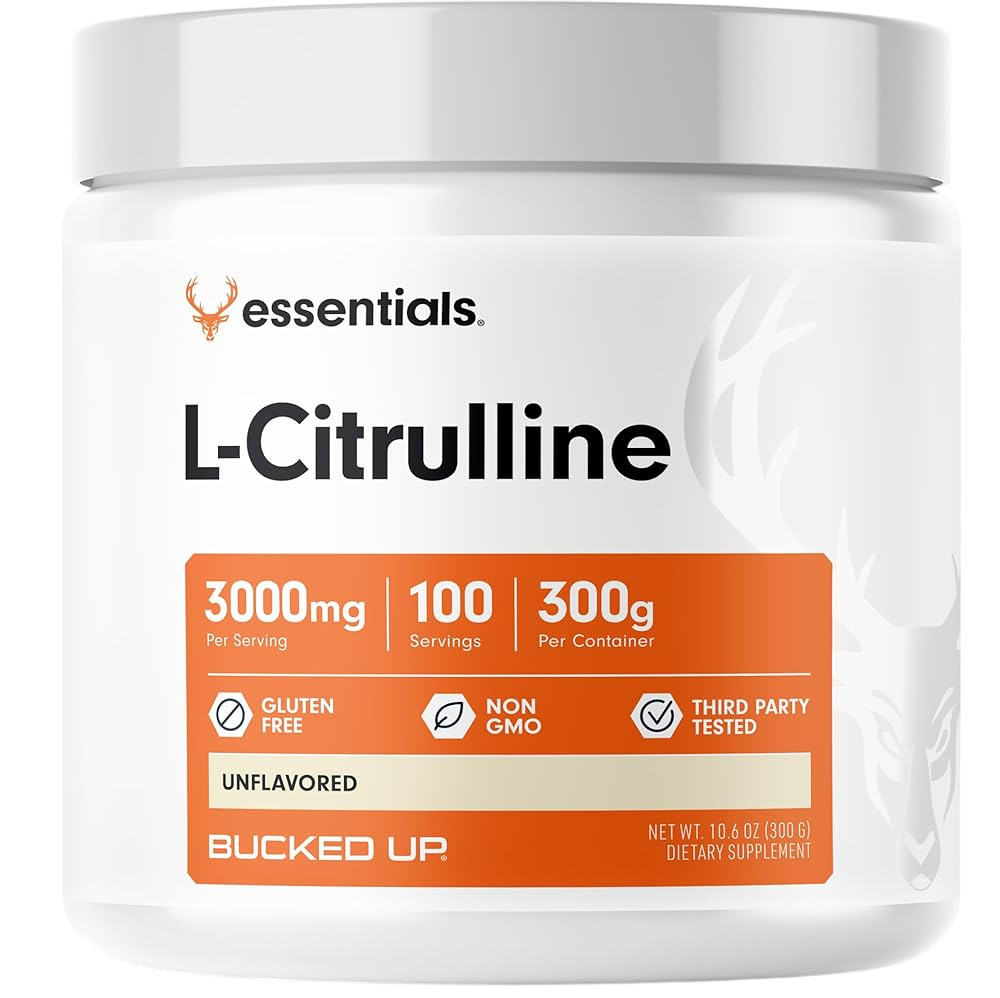
Ready to put the protocol into action? Grab Bucked Up L-Citrulline and start maximizing absorption and benefits today.
Why Many Users Feel Little Difference from L-Citrulline
Most gaps between taking L-citrulline and feeling L-citrulline trace back to dose, timing, or absorption.1 The dose may sit below the range studied for performance support, the timing may miss peak plasma concentration during training, or absorption may fall short before the ingredient reaches the kidneys for conversion.1
Some products can use proprietary blends that obscure how much L-citrulline is present per serving. A label that lists “citrulline malate blend” without disclosing grams does not confirm whether the dose is meaningful. Separately, L-citrulline malate contains only approximately 56.6% citrulline by weight, so an 8 g dose delivers roughly 4.5 g of actual citrulline. If the label lists 3 g of citrulline malate and you assume you are getting 3 g of citrulline, you are working with roughly half that amount. These are the mechanics of limited results, and they are fixable. The protocol below walks through how to correct each of these barriers step by step.
6-Step Daily Protocol for Better L-Citrulline Results
This protocol targets the most common absorption and efficacy barriers. Each step includes the physiological rationale and notes for beginners and more advanced users.
-
Choose the right form (pure L-citrulline or 2:1 citrulline malate based on your training goal).
-
Take on an empty stomach 45 to 60 minutes before training to align peak plasma concentration with your session.
-
Use a 3 to 6 g total daily dose, split across two servings when possible to sustain plasma arginine levels.
-
Pair with an absorption-support ingredient such as Astragin® to support bioavailability of every gram on the label.
-
Consider stacking with complementary compounds like Nitrosigine® or glycerol for multi-pathway support of the pump*.
-
Track training metrics for two weeks before adjusting so you respond to data, not guesswork.
Step 1: Match Citrulline Form to Your Training Goal
Pure L-citrulline delivers 100% citrulline per gram. Citrulline malate 2:1 delivers approximately 56.6% citrulline by weight alongside malic acid, a Krebs Cycle intermediate theorized to support oxidative ATP production and ammonia clearance during high-volume training. Pure L-citrulline is efficiently absorbed in the small intestine via amino acid transporters without significant hepatic first-pass metabolism.
Beginners who want a first noticeable pump* can start with citrulline malate 2:1 at 6 g, the threshold studied for performance support, while also getting the malate component for energy metabolism support. Advanced athletes running higher-dose stacking protocols or prioritizing pure nitric oxide support* often prefer 3 to 4 g of pure L-citrulline, which provides more citrulline per gram of powder and stacks cleanly with other nitric oxide compounds.
Step 2: Time Your Dose 45 to 60 Minutes Before Training
Peak plasma concentrations of both citrulline and arginine occur after oral L-citrulline ingestion. Taking L-citrulline on an empty stomach reduces competition from other amino acids for intestinal transporters and avoids the delayed gastric emptying that a large meal produces, which can blunt the absorption curve.
Beginners can start with 45 minutes before training and then adjust based on when they notice the pump* arriving relative to their warm-up. Advanced users who train twice per day may add a second smaller dose of 1 to 2 g in the morning to support baseline plasma arginine levels, while keeping the primary pre-workout dose timed 45 to 60 minutes before the main session.
Step 3: Use 3 to 6 g Daily, Split into Two Servings
Research suggests that L-citrulline can increase markers of nitric oxide production in a dose-dependent manner.1 Splitting the daily dose into two servings, such as one in the morning and one pre-workout, supports more sustained plasma arginine availability compared to a single bolus.1
Beginners should start at the lower end, around 3 g total daily, to assess tolerance. This conservative approach helps you spot any gastrointestinal sensitivity before moving higher. Once tolerance is clear, advanced users focused on endurance support* or high-volume resistance training can work toward 6 g of pure L-citrulline, which sits at the upper end of the range studied for performance support. When using citrulline malate instead, remember that 6 g of pure citrulline requires roughly 10.6 g of citrulline malate 2:1, so always factor in the weight-to-citrulline conversion when reading labels.
Step 4: Support Absorption with Astragin®
Citrulline that is not absorbed cannot be converted. Astragin® is a patented compound derived from Astragalus membranaceus and Panax notoginseng that is studied to support the absorption of amino acids including citrulline*.1 Bucked Up includes Astragin® across the pre-workout line, from the foundational Bucked Up Pre-Workout to Woke AF and Mother Bucker, to support the bioavailability of every gram disclosed on the label.
Users who take standalone L-citrulline powder or capsules can pair them with a product that contains Astragin® or take L-citrulline alongside a formula that includes it. This approach supports absorption without requiring dose escalation. Beginners benefit from this pairing from day one. Advanced users who have already dialed in timing and dosing often find that absorption support is the remaining variable that closes the gap between label dose and felt effect.
Step 5: Stack with Nitrosigine® and Glycerol for a Pump Focus
L-citrulline supports nitric oxide production* through the arginine-NOS pathway.1 Nitrosigine® (inositol-stabilized arginine silicate) supports blood flow* through a related but distinct mechanism, and Hydroprime® Glycerol supports cellular hydration and plasma volume, which contributes to the pump* through a separate osmotic pathway.1 Stacking these three compounds creates what Bucked Up calls the Pump Trifecta, the formulation approach used in Mother Bucker.
Beginners do not need stacking during the first two weeks. Establish a clear baseline with L-citrulline alone before adding new variables. Advanced athletes who have plateaued on citrulline malate alone may benefit from the Pump Trifecta approach, where pure L-citrulline plus Nitrosigine® plus glycerol address multiple biological pathways at once and can stand out in nitric oxide support* formulation within the pre-workout category.
Step 6: Track Metrics for Two Weeks Before You Adjust
Two weeks of consistent use at a fixed dose and timing provide a realistic window to judge whether the protocol is working. Changes to plasma arginine levels and nitric oxide availability build over time rather than appearing instantly. Adjusting dose or timing before two weeks have passed means you are reacting to noise instead of a clear signal.
Record reps completed per set, time to exhaustion on conditioning work, and a subjective pump* rating from 1 to 10 at the end of each session. If objective markers such as reps and time stay flat and subjective pump* remains low after 14 days of adherence, adjust one variable at a time. Start with dose, then timing, then form.
Key Inputs That Shape Your Personal Protocol
Training goal shapes form selection. Endurance-focused athletes may prefer citrulline malate for the dual support of nitric oxide production* and ammonia clearance*, while hypertrophy-focused athletes often prefer pure L-citrulline for its higher citrulline density per gram.1 Once you have chosen a form, workout timing determines whether a morning dose or a pre-workout dose becomes your primary serving. Body weight in lbs then helps you scale that dose, with heavier athletes at 200 lbs and above often working toward the higher end of the 3 to 6 g range. Finally, a simple training log, on paper or in an app, gives you the tracking tool needed to see whether your chosen form, timing, and dose are producing measurable results.
Label reading is a non-negotiable input. Always verify whether a product lists citrulline malate or pure L-citrulline, and confirm that the gram amount per serving is disclosed. Undisclosed amounts in proprietary blends make it impossible to know whether the dose sits within the range studied for performance support.
Common Pitfalls and Simple Fixes
Taking L-citrulline with a large meal delays gastric emptying and can blunt the absorption curve, which may push peak plasma concentration past the training window. If you train within 90 minutes of a full meal, consider a smaller pre-workout dose timed more precisely rather than a larger dose taken with food.
If a label does not show grams of citrulline per serving, whether due to proprietary blends or vague terminology, you cannot confirm whether the dose falls within the studied range. This is the label-reading gap mentioned earlier, and it is non-negotiable for running this protocol.
Escalating dose too quickly, such as jumping from 3 g to 8 g in a single week, can cause gastrointestinal discomfort, particularly with the acidic malate form. Increase by 1 g increments over one-week periods. Introducing multiple new supplements at once also muddies the picture, because you cannot attribute any change, positive or negative, to L-citrulline specifically. Change one variable at a time.
How to Judge Whether L-Citrulline Is Working
Objective markers include total reps completed across all working sets in a session, time to exhaustion on conditioning intervals, and total session volume, calculated as sets multiplied by reps multiplied by load. Subjective markers include perceived pump* intensity, perceived effort at a given load, and recovery soreness in the 24 to 48 hours after training. Many users who follow the protocol consistently notice changes in subjective pump* within 7 to 14 days. Objective performance markers usually need 3 to 4 weeks to show meaningful trends in a training log.
Advanced Tweaks for Twice-Daily or Periodized Training
Athletes who train twice daily can split the daily dose across both sessions. A smaller dose of 1 to 2 g pure L-citrulline 45 to 60 minutes before the morning session and a primary dose of 3 to 4 g before the afternoon or evening session support more consistent plasma arginine availability across the full training day without a single large bolus.
During deload weeks or lower-intensity blocks, reducing to a single daily dose of 3 g makes sense. Current evidence does not show clear benefits from maintaining higher doses during periods of reduced training stimulus. Cycling back to a lower dose before a higher-intensity block may also help preserve sensitivity to the ingredient’s effects.
Always consult your healthcare provider before beginning any new supplementation protocol, especially if you have existing health conditions, take prescription medications, or are pregnant or breastfeeding.
Bucked Up’s L-citrulline products are formulated with transparent dosing and absorption support built in. Shop Bucked Up L-Citrulline now.
Frequently Asked Questions
Is L-citrulline safe for daily use?
L-citrulline is generally well tolerated at doses studied for performance support. Side effects tend to be mild and infrequent, such as occasional gastrointestinal discomfort, particularly at higher single doses or with the acidic malate form. Individuals with low blood pressure, serious kidney conditions, or urea cycle disorders should consult a healthcare provider before use. Anyone scheduled for surgery should discontinue use at least two weeks prior and follow their healthcare provider’s guidance.
Should I take L-citrulline at the same time as caffeine?
Taking L-citrulline alongside caffeine in a pre-workout formula is a common and practical approach. Caffeine supports energy and alertness, while L-citrulline supports blood flow and nutrient delivery*, so the two compounds address different aspects of training performance. High-stimulant formulas can sometimes produce vasoconstriction as a side effect of sympathetic nervous system activation, which is one reason Bucked Up’s high-stim formulas, Woke AF and Mother Bucker, include meaningful citrulline doses alongside caffeine. The timing recommendation stays the same: take the combined formula 45 to 60 minutes before training on an empty or near-empty stomach.
Does capsule versus powder form affect how L-citrulline works?
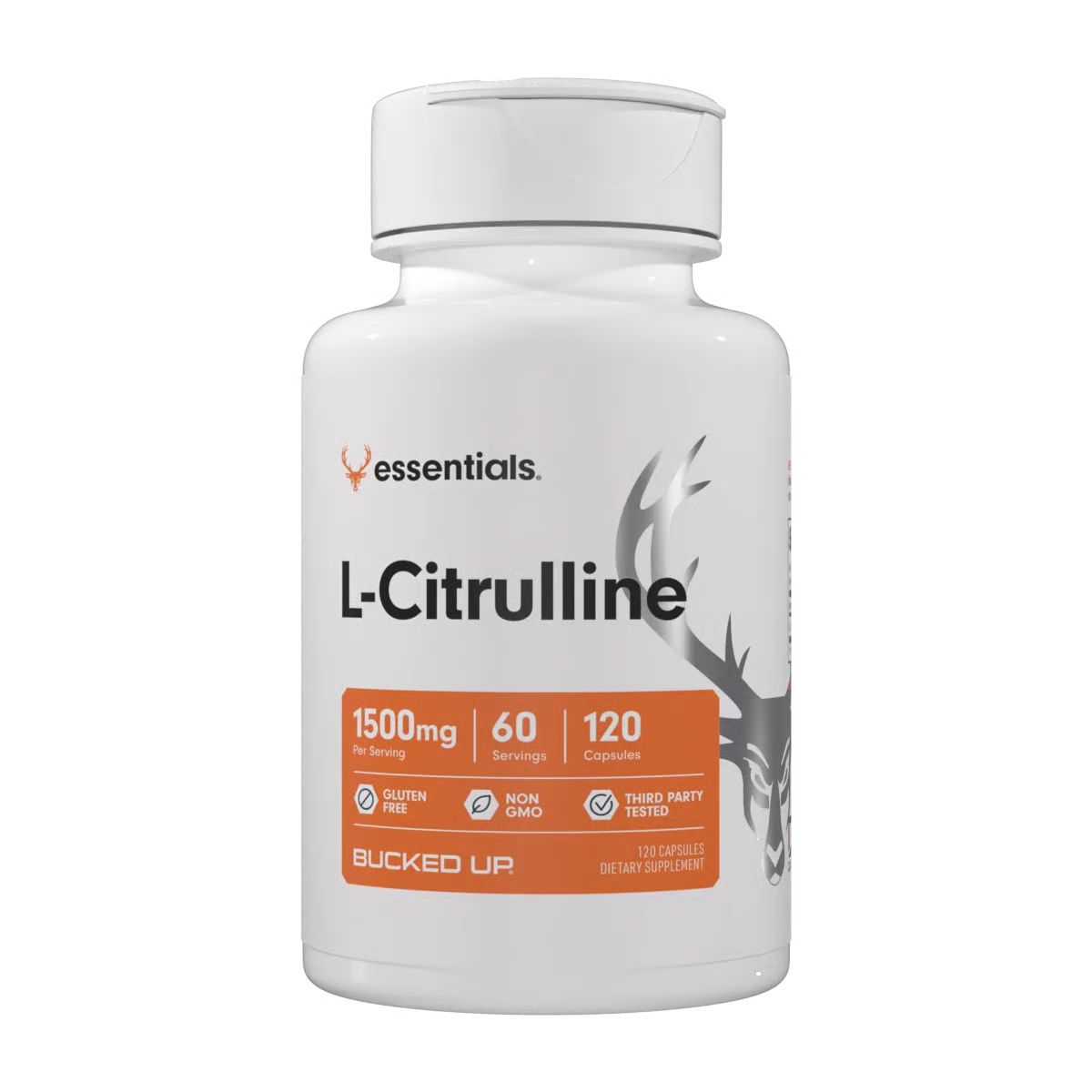
The delivery form, capsule versus powder, does not meaningfully change the absorption kinetics of L-citrulline when the dose is equivalent. Capsules offer convenience and exact dosing without measuring, which suits users who stack L-citrulline with other supplements or prefer not to mix powders. Powder offers flexibility for users running higher-dose protocols or who want precise dose adjustments. Bucked Up offers both formats: L-Citrulline Capsules at 750 mg per capsule and L-Citrulline Powder at 3 g per scoop from a 300 g container, both unflavored and stackable with any pre-workout formula.
How is citrulline malate different from pure L-citrulline, and which should I choose?
Citrulline malate combines L-citrulline with malic acid in a 2:1 ratio, which means you get less citrulline per gram than with the pure form, as explained in Step 1 above. The malic acid component is a Krebs Cycle intermediate theorized to support aerobic ATP production and ammonia clearance during high-volume training. Pure L-citrulline delivers 100% citrulline per gram, making it more dose-efficient for users focused specifically on nitric oxide support* and the pump*.
The choice depends on training goal. Citrulline malate at 6 g is a practical starting point for general gym use and endurance support*, while pure L-citrulline at 3 to 4 g suits advanced stacking protocols or users who want to maximize citrulline content per serving. Always check the label for disclosed gram amounts regardless of which form you choose.
Who should consult a healthcare provider before taking L-citrulline?
Anyone who takes prescription medications for blood pressure, uses nitrate medications, or takes phosphodiesterase-5 inhibitors should consult a healthcare provider before adding L-citrulline, because the vasodilatory effects of L-citrulline may compound with these medications. Individuals with naturally low blood pressure, serious kidney conditions, or urea cycle disorders should also seek medical guidance.
Pregnant or breastfeeding individuals should avoid L-citrulline supplementation or consult a healthcare provider, as safety data for these populations is limited. If you are unsure whether L-citrulline is appropriate for your situation, consult your healthcare provider before starting.
Conclusion
This 6-step protocol targets the main reasons L-citrulline users see limited results: wrong form for the goal, poor timing relative to peak plasma concentration, insufficient dose, no absorption support, missed stacking opportunities, and no objective tracking window. Applying these steps consistently for two weeks, with one variable changed at a time, gives you a reliable way to judge whether L-citrulline supports your training.
Bucked Up’s pre-workout line centers on transparent label disclosure, Astragin® for absorption support*, and citrulline doses at thresholds studied for performance support, from 6,000 mg Citrulline Malate 2:1 in Bucked Up Pre-Workout and Woke AF to the Pump Trifecta of pure L-Citrulline, Nitrosigine®, and Hydroprime® Glycerol in Mother Bucker. The protocol described in this article is already built into these formulas. Bucked Up’s L-citrulline products are formulated with transparent dosing and absorption support built in, so you can apply this protocol from day one.
Shop Bucked Up L-Citrulline now.
*These statements have not been evaluated by the Food and Drug Administration. This product is not intended to diagnose, treat, cure, or prevent any disease.
References
Romero, M. J., Platt, D. H., Caldwell, R. B., & Caldwell, R. W. (2008). Therapeutic use of citrulline in cardiovascular disease. British Journal of Clinical Pharmacology, 65(1), 51–59. https://doi.org/10.1111/j.1365-2125.2007.02990.x
Martin-Olmedo, J. J., et al. (2024). Citrulline malate versus pure L-citrulline in resistance-trained adults. International Journal of Sport Nutrition and Exercise Metabolism. Referenced via Dr. Stanfield: L-Citrulline Benefits, Forms, Dosing, and Side Effects.
1 The content provided in this article is for informational purposes only and is not medical advice. Consult with a medical professional before implementing any changes to your diet, health, or exercise routines. Individual results will vary and are based on a combination of each individual’s diet, exercise, age, and health circumstances. These statements have not been evaluated by the Food and Drug Administration. This product is not intended to diagnose, treat, cure or prevent any disease.
This article was written by Ryan Gardner, CEO of Bucked Up. As the maker of Bucked Up Protein Soda, we have a financial interest in this information. The views expressed are our own and should be read with that context in mind.