Written by: Ryan Gardner, Owner, Managing Partner, CEO, Bucked Up
Key Takeaways
-
Nitric oxide precursors like L-Arginine and L-Citrulline are common in pre-workouts, and their safety depends on dose, form, and your health status.
-
L-Citrulline generally offers better tolerability and bioavailability than L-Arginine, with fewer gastrointestinal side effects at effective doses.1
-
Key risks include blood pressure drops, medication interactions (especially with nitrates, PDE5 inhibitors, and antihypertensives), and contraindications for people with low blood pressure, kidney issues, or recent cardiac events.
-
People who are pregnant, breastfeeding, pre-surgery, or have a history of herpes should avoid these supplements or use them only under medical supervision.
-
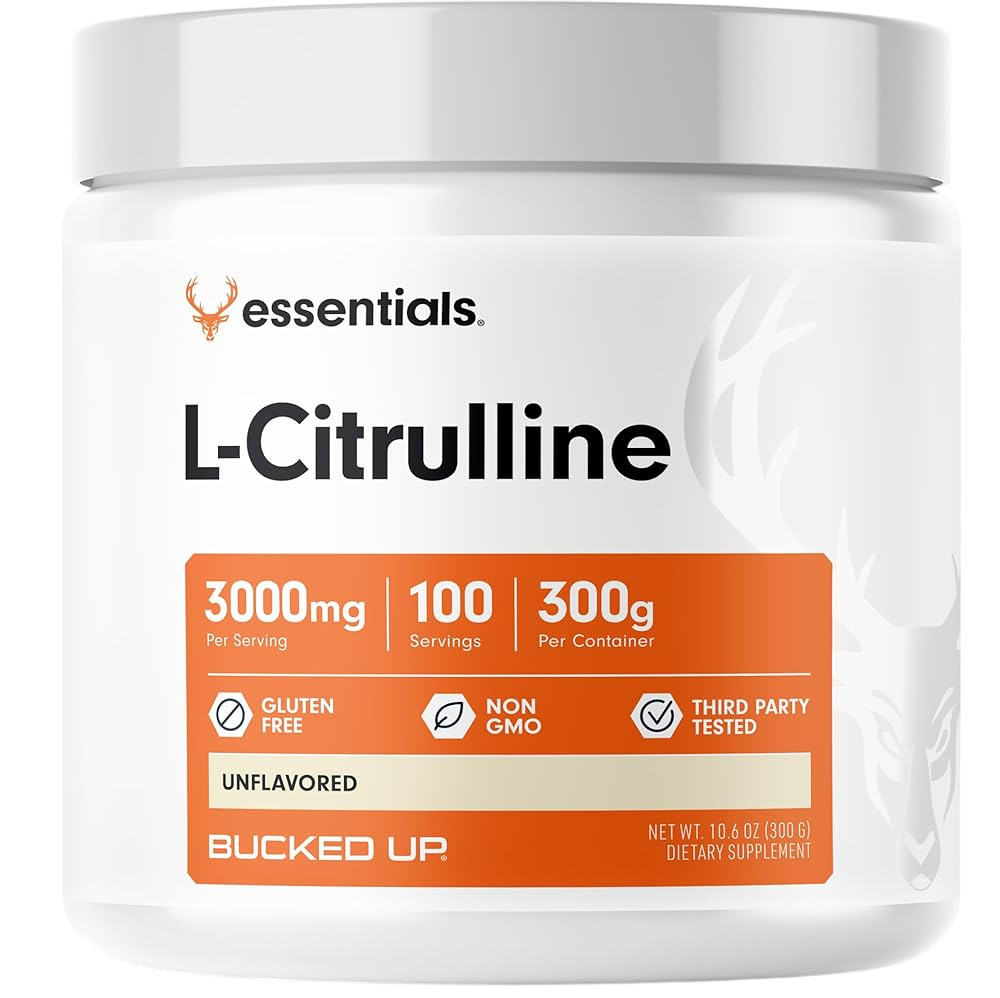
For a high-quality, transparently dosed L-Citrulline option, shop Bucked Up L-Citrulline to support your performance goals responsibly.1
Key Risks at a Glance
-
Potential blood pressure changes, particularly when combined with antihypertensive medications, nitrates, or PDE5 inhibitors
-
Gastrointestinal distress (nausea, cramping, diarrhea) at high single doses, especially with L-Arginine
-
Medication interactions with ACE inhibitors, beta-blockers, nitrates, and blood thinners
-
Contraindications for people with low blood pressure, kidney impairment, or recent cardiac events
-
Insufficient safety data for pregnant or breastfeeding people
Is Nitric Oxide Safe in Pre-Workout?
Most healthy adults face a manageable risk profile from nitric oxide precursor supplements when they use studied doses. Safety still varies by ingredient form, dose, and individual health status.
L-Citrulline, one of the most common nitric oxide precursors in modern pre-workouts, has been well tolerated in trials at daily doses up to 10 g for periods ranging from one week to several months, with mild gastrointestinal side effects occurring in fewer than 5% of participants. That finding is encouraging, yet individual tolerance still differs.
L-Arginine, the older and more commonly misunderstood precursor, presents a different picture. Approximately 70% of supplemental L-Arginine undergoes first-pass splanchnic extraction in the gut and liver, which means effective doses must be substantially higher to produce systemic effects. Higher doses are where gastrointestinal problems tend to emerge.
Baseline blood pressure, concurrent medications, kidney function, and the specific precursor form all influence how you respond. Mild, short-lived effects such as headaches or flushing are the most commonly reported outcomes in otherwise healthy users. More serious effects occur mainly in specific populations and with certain drug combinations covered below. Anyone with an underlying health condition should talk with a healthcare provider before using nitric oxide precursor supplements.
Why Some People Should Skip Nitric Oxide Supplements
The main reasons to avoid or limit nitric oxide precursor supplements involve blood pressure changes, gastrointestinal limits, and medication conflicts.
Blood pressure interactions. Nitric oxide precursors support vasodilation, which can lower blood pressure. Research indicates that nitric oxide precursor supplements produce an average systolic blood pressure reduction of approximately 4 to 6 mmHg. For someone on antihypertensive medications, that additive effect can push blood pressure into symptomatic hypotension territory. Consult your healthcare provider before combining nitric oxide precursor supplements with any blood pressure medication.
Nitrate medications. Mayo Clinic specifically warns that combining L-Arginine with nitrate medications used for chest pain can cause blood pressure to become dangerously low. The same mechanism applies to other nitric oxide precursors. Consult your healthcare provider if you use any nitrate medication.
PDE5 inhibitors. Combining nitric oxide precursor supplements with PDE5 inhibitors activates the nitric oxide/cGMP pathway additively, carrying a risk of excessive hypotension. Consult your healthcare provider before combining these substances.
Gastrointestinal thresholds. Direct L-Arginine supplementation at effective doses often requires amounts that cause significant gastrointestinal distress, including severe cramping and diarrhea, as unabsorbed amino acid draws water into the intestines. L-Citrulline is generally better tolerated at equivalent or higher doses due to its absorption profile, but single doses above 10 g of any amino acid precursor can produce GI discomfort in sensitive people.
Additional medication interactions. Mayo Clinic also identifies interactions between L-Arginine and anticoagulants or antiplatelet drugs (increased bleeding risk), diabetes medications (possible blood sugar changes), and potassium-sparing diuretics (increased hyperkalemia risk). Consult your healthcare provider before combining nitric oxide precursor supplements with any prescription medication.
Who Should Not Take Nitric Oxide Supplements?
Certain groups face documented risks that make nitric oxide precursor supplementation inadvisable without direct medical supervision.
Who should avoid or use with caution:
-
People with low blood pressure (below 90/60 mmHg). People with low blood pressure or who are prone to dizziness should avoid nitric oxide supplements due to the risk of further blood pressure reduction. Consult your healthcare provider.
-
People with kidney impairment. Significant renal impairment affects nitric oxide metabolism and increases safety concerns with these supplements. Consult your healthcare provider.
-
People with recent cardiac events. L-Arginine supplementation may increase the risk of adverse cardiac events in people recovering from a heart attack, which represents a serious contraindication. Consult your healthcare provider.
-
People with unstable cardiovascular conditions or severe arrhythmias. Unstable cardiovascular disease and severe arrhythmias are listed as contraindications for nitric oxide supplement use. Consult your healthcare provider.
-
Pregnant or breastfeeding people. Insufficient evidence exists to establish the safety of nitric oxide precursor supplements during pregnancy and breastfeeding. Consult your healthcare provider.
-
People pre-surgery. Nitric oxide supplements should be discontinued at least two weeks before any scheduled surgery due to potential interference with blood pressure regulation. Consult your healthcare provider.
-
People with a history of herpes simplex virus. Excess L-Arginine may promote viral reactivation in people with a history of herpes simplex infections. Consult your healthcare provider.
-
Children and adolescents. Nitric oxide supplements have not been adequately studied in pediatric populations and should be avoided by children and adolescents.
Seek immediate medical attention if you experience severe dizziness, fainting, chest pain, palpitations, persistent headache, or vision changes while using nitric oxide precursor supplements.
Scientific Background: Nitric Oxide Production and the Urea Cycle
Understanding how nitric oxide precursors work in the body explains why certain groups face higher risks and why L-Citrulline often offers advantages over L-Arginine. Nitric oxide is a gaseous signaling molecule produced primarily through the conversion of L-Arginine to nitric oxide by Nitric Oxide Synthase (NOS) enzymes. Nitric oxide supports the relaxation of vascular smooth muscle, which supports blood flow to active tissues including skeletal muscle.
L-Citrulline participates in this process as a precursor. It is a non-essential amino acid and an intermediate in the urea cycle, the metabolic pathway that converts ammonia, a byproduct of protein metabolism and intense exercise, into urea for excretion. By supporting ammonia clearance, L-Citrulline may help reduce exercise-induced ammonia accumulation, which is associated with central fatigue.*1
Why L-Citrulline outperforms L-Arginine pharmacokinetically. L-Citrulline exhibits approximately 97% oral bioavailability and is not a substrate for arginase, meaning it experiences negligible hepatic first-pass metabolism. After absorption in the small intestine, it travels to the kidneys, where it is converted into L-Arginine through the enzymes argininosuccinate synthase and argininosuccinate lyase. A 2008 randomized controlled trial published in the British Journal of Clinical Pharmacology (n=20) found that oral L-Citrulline dose-dependently raises plasma arginine and nitric oxide metabolites more effectively than L-Arginine due to bypassing presystemic elimination via intestinal arginase.
By contrast, the first-pass extraction discussed earlier limits how much L-Arginine reaches systemic circulation, which explains why direct supplementation requires higher doses. L-Arginine produces a rapid but short-lived plasma spike, while L-Citrulline produces a more sustained elevation of plasma arginine levels.
Studied dose ranges and timing. Research on L-Citrulline for exercise performance support has used 3 to 6 g of pure L-Citrulline or 6 to 8 g of Citrulline Malate (2:1 ratio), taken approximately 30 to 60 minutes before exercise. Peak plasma concentrations of both citrulline and arginine occur approximately one hour after oral ingestion of L-Citrulline, which guides the standard pre-exercise timing recommendation.
Bucked Up promotes a science-backed approach to nitric oxide support, including Citrulline Malate and Pure L-Citrulline at transparently disclosed doses. Explore Bucked Up’s science-backed L-Citrulline formulations with transparent dosing.
Safety Profile and Common Side Effects
L-Citrulline usually carries a milder side-effect profile than L-Arginine at comparable doses, yet adverse effects can still occur, especially at high single doses or in sensitive people.
Common mild effects:
-
Gastrointestinal discomfort. Nausea, bloating, cramping, or diarrhea may occur. Single doses at or above 10 g can lead to arginine over-saturation and are associated with a higher likelihood of GI complaints. At doses studied for exercise performance support (3 to 8 g), GI effects are infrequent.
-
Headaches. Vasodilatory effects can cause headaches in sensitive people, particularly at higher doses or in those unaccustomed to nitric oxide precursor supplements.
-
Flushing or sweating. These effects are reported less commonly and are generally transient.
L-Arginine versus L-Citrulline tolerability. L-Arginine is associated with gastrointestinal side effects such as cramping and diarrhea at effective doses of 10 g or more, whereas L-Citrulline is generally well tolerated at doses up to 15 g with no reported gastrointestinal side effects in the cited literature. This difference reflects L-Arginine’s first-pass degradation, which requires higher doses to achieve systemic effect, while L-Citrulline reaches systemic circulation largely intact at lower doses.
Absorption considerations. Ingredients that support the bioavailability of L-Citrulline may allow effective nitric oxide support* at lower doses, which can reduce the likelihood of dose-dependent GI discomfort.1 Bucked Up includes Astragin® across its pre-workout line, which is studied to support citrulline absorption.*1 Consult your healthcare provider if you experience persistent or severe side effects.
*These statements have not been evaluated by the Food and Drug Administration. This product is not intended to diagnose, treat, cure, or prevent any disease.
Practical Framework for Responsible Nitric Oxide Use
A simple framework helps you decide whether nitric oxide precursor supplementation fits your situation and how to use it responsibly.
Goal. Clarify what you want to support: training performance, blood flow during exercise, or general cardiovascular function support.* Your goal determines which form and dose range matter, because different outcomes have been studied at different doses. Use the dose ranges established in the research above: pure L-Citrulline for general support or Citrulline Malate for exercise-specific performance support.*
Form. Choose the form that matches your goal and tolerance. L-Citrulline bypasses first-pass metabolism and is generally better tolerated than L-Arginine.* Citrulline Malate (2:1 ratio) adds a malate component studied in the context of energy metabolism support.* Transparent labels that disclose exact gram amounts let you confirm that you are within studied dose ranges.
Timing. For exercise performance support, L-Citrulline is typically taken about 60 minutes before training, consistent with peak plasma concentration data. For daily cardiovascular function support,* timing matters less, and doses are often divided across two servings.
Monitoring. If you combine nitric oxide supplements with antihypertensive medications, start with the lowest supplement dose and monitor blood pressure at home to detect excessive hypotension. Beyond blood pressure, track any GI symptoms, headaches, or dizziness, particularly in the first two weeks of use when your body is adapting to the supplement. Anyone in a contraindicated population should consult their healthcare provider before starting any monitoring plan.
Adjustment. If GI discomfort occurs, reduce the single dose and see whether splitting the dose across two servings helps. If blood pressure symptoms appear, discontinue use and consult your healthcare provider. If no adverse effects occur after two to four weeks at a starting dose, you and your healthcare provider can evaluate whether adjusting the dose makes sense.
Bucked Up promotes a science-backed approach to nitric oxide support, including Citrulline Malate and Pure L-Citrulline at transparently disclosed doses. Start your responsible supplementation approach with Bucked Up’s transparently dosed L-Citrulline.
Frequently Asked Questions
What is the difference between L-Citrulline and L-Arginine in terms of safety?
L-Citrulline and L-Arginine both support nitric oxide production, yet they behave differently in the body. L-Arginine is substantially degraded in the gut and liver before reaching systemic circulation, which means effective doses tend to be higher and are more likely to cause gastrointestinal distress. L-Citrulline bypasses this first-pass degradation, reaches the kidneys largely intact, and is converted into L-Arginine there, producing a more sustained elevation of plasma arginine at lower doses with a generally milder GI profile. For many healthy adults seeking nitric oxide support in a pre-workout context, L-Citrulline is considered the better-tolerated option. Consult your healthcare provider if you have any underlying health condition.
At what dose does L-Citrulline start causing side effects?
Mild gastrointestinal side effects such as nausea, bloating, or cramping become more likely at single doses at or above 10 g. At the doses commonly studied for exercise performance support (3 to 8 g of pure L-Citrulline, or 6 to 8 g of Citrulline Malate), adverse effects are infrequent in healthy adults. Headaches related to vasodilation can occur at any dose in sensitive people. Starting at a lower dose and assessing tolerance before increasing is a reasonable approach. Consult your healthcare provider if you experience persistent side effects.
Can nitric oxide supplements interact with my blood pressure medication?
Nitric oxide precursor supplements support vasodilation, which can lower blood pressure. When combined with antihypertensive medications such as ACE inhibitors, beta-blockers, calcium channel blockers, or diuretics, the additive effect can cause blood pressure to drop further than intended. The interaction is more severe with nitrate medications used for chest pain and PDE5 inhibitors, where the combination can cause dangerous hypotension. Anyone on blood pressure medication should consult their healthcare provider before using any nitric oxide precursor supplement.
Who should completely avoid nitric oxide supplements?
People who should avoid nitric oxide precursor supplements entirely, or use them only under direct medical supervision, include those with blood pressure below 90/60 mmHg, those with significant kidney or liver impairment, those recovering from a recent heart attack or with unstable cardiovascular conditions, those taking nitrate medications or PDE5 inhibitors, those scheduled for surgery within two weeks, pregnant or breastfeeding people, children and adolescents, and people with a history of herpes simplex virus infections who are considering L-Arginine-containing products. Consult your healthcare provider if any of these apply to you.
How does Bucked Up’s approach to L-Citrulline dosing differ from typical pre-workout formulas?
Many pre-workout formulas can use proprietary blends that do not disclose exact ingredient amounts, which makes it difficult to verify whether the dose of L-Citrulline falls within studied ranges. Bucked Up discloses exact gram amounts on the label across its pre-workout line. The foundational Bucked Up and Woke AF pre-workouts use 6,000 mg of Citrulline Malate (2:1 ratio), which aligns with the dose ranges studied for exercise performance support.
The advanced Mother Bucker formula uses 4,000 mg of Pure L-Citrulline stacked with Nitrosigine® and Hydroprime® Glycerol. Astragin® is included across the line to support citrulline absorption.* Transparent dosing lets users evaluate whether a product falls within studied ranges rather than guessing. Consult your healthcare provider before starting any supplement regimen. *These statements have not been evaluated by the Food and Drug Administration. This product is not intended to diagnose, treat, cure, or prevent any disease.
Conclusion
Nitric oxide precursor supplements carry documented risks that vary meaningfully by ingredient form, dose, and individual health status. L-Citrulline’s pharmacokinetic profile supports a generally milder tolerability picture than L-Arginine at equivalent doses, yet both can pose risks for specific populations. Blood pressure interactions, medication conflicts, and contraindications for people with kidney conditions, recent cardiac events, or pregnancy deserve the most attention. Evaluating ingredient form, disclosed dose, and your own health status before purchasing offers a practical way to decide whether these products fit your routine. Consult your healthcare provider before starting any new supplement.
Bucked Up promotes a science-backed approach to nitric oxide support, including Citrulline Malate and Pure L-Citrulline at transparently disclosed doses. Make an informed choice with Bucked Up’s L-Citrulline, featuring transparent dosing backed by research.
1 The content provided in this article is for informational purposes only and is not medical advice. Consult with a medical professional before implementing any changes to your diet, health, or exercise routines. Individual results will vary and are based on a combination of each individual’s diet, exercise, age, and health circumstances. These statements have not been evaluated by the Food and Drug Administration. This product is not intended to diagnose, treat, cure or prevent any disease.
This article was written by Ryan Gardner, CEO of Bucked Up. As the maker of Bucked Up Protein Soda, we have a financial interest in this information. The views expressed are our own and should be read with that context in mind.