Last updated: April 22, 2026
Key Takeaways: L-Citrulline, Nitric Oxide, and Your Workout
- Nitric oxide supplements work most effectively with L-citrulline rather than L-arginine because L-citrulline has better bioavailability and sustains plasma arginine levels longer.1
- Research shows 6–8 grams of L-citrulline or citrulline malate can increase reps to failure by up to 53% and support endurance.1
- Taking L-citrulline 30–60 minutes before training aligns peak blood flow, pumps, and nutrient delivery with your workout.1
- L-citrulline appears safe up to 15 grams with minimal side effects, while high-dose arginine often causes gastrointestinal distress.1
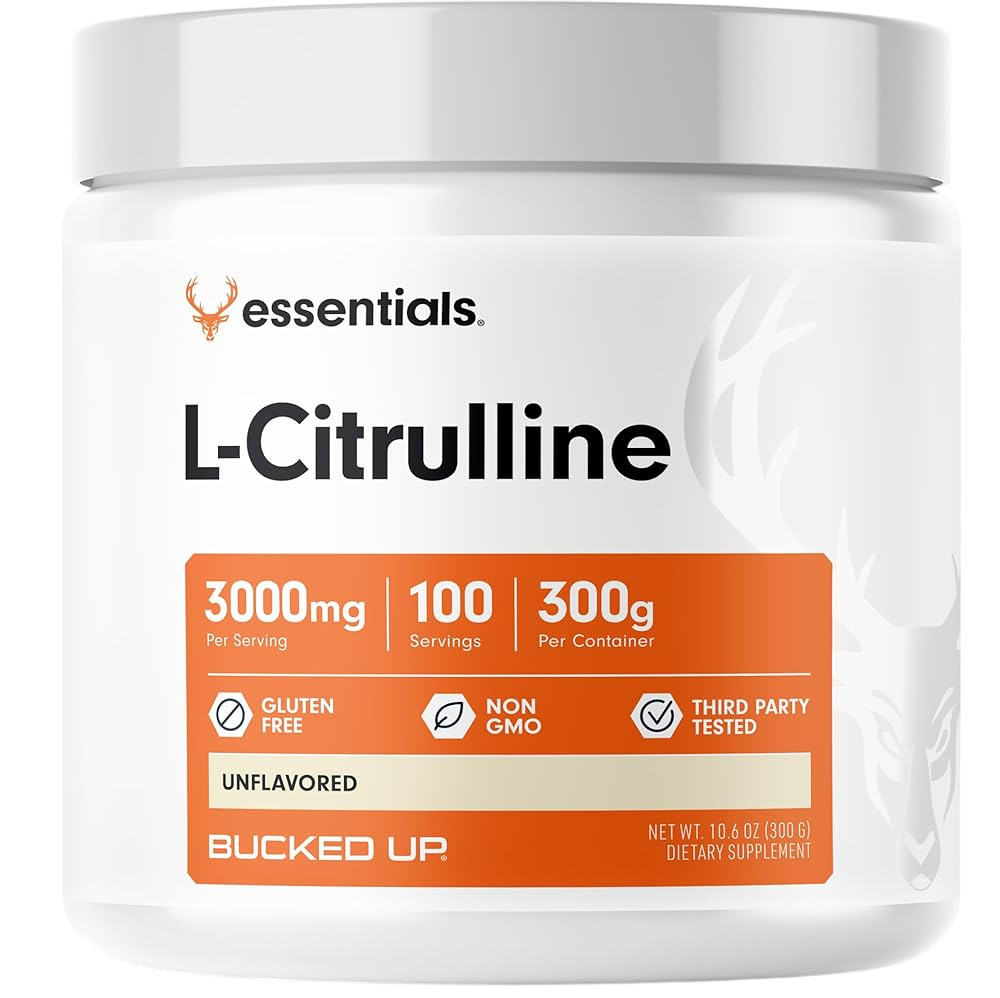
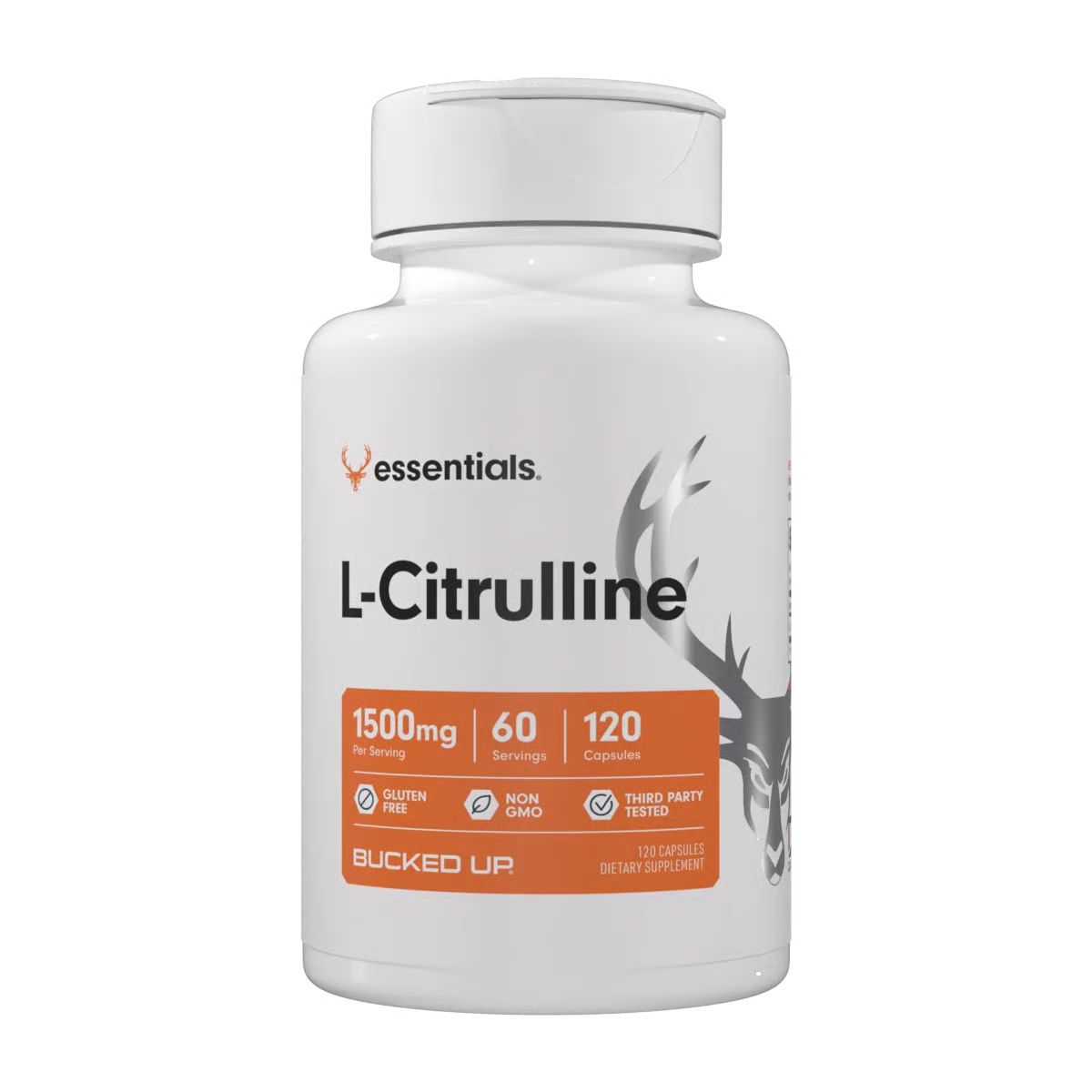
- Choose Bucked Up’s pure L-Citrulline when you want clearly labeled, research-aligned dosing for your pre-workout routine.
Nitric Oxide Pre Workout: How Low NO Slows Your Gains
Low nitric oxide production limits performance by restricting blood flow. Reduced vasodilation means less oxygen and fewer nutrients reach working muscles, which brings on fatigue sooner and cuts your reps short. Strength athletes miss chances for progressive overload, endurance athletes hit exhaustion earlier, and recreational lifters struggle to get the full, hard pumps that signal a strong training stimulus.
Poor nitric oxide synthesis also slows the removal of metabolic waste products. When blood flow is restricted, ammonia builds up during intense exercise and contributes to central fatigue. This cycle of limited vasodilation, rising waste, and slower clearance leads to reduced performance and longer recovery times.
The Science Behind L-Citrulline and Nitric Oxide Boosters
Nitric oxide acts as a signaling molecule that tells blood vessels to relax and widen. This vasodilation increases blood flow, supports oxygen and nutrient delivery to active muscles, and helps clear metabolic waste more efficiently.
L-citrulline stands out as a nitric oxide precursor because of its metabolic pathway. Unlike L-arginine, which loses a large portion of the dose to first-pass metabolism in the gut and liver, L-citrulline largely bypasses intestinal and liver first-pass metabolism. The kidneys then convert L-citrulline into L-arginine, which the body uses as the direct substrate for nitric oxide production.
Research supports meaningful performance benefits when dosing is high enough.1 A 2025 comprehensive review by Dembicki et al. examined L-citrulline and L-arginine supplementation in cardiovascular and exercise physiology. Studies using 8 grams of citrulline malate demonstrate the rep-to-failure improvements mentioned earlier, while Suzuki et al.’s 2016 study found that oral L-citrulline supplementation improved cycling time trial performance by about 1.5%.1
Citrulline malate pairs L-citrulline with malic acid, which supports energy metabolism. The malate component feeds into the Krebs cycle, which may enhance ATP production and reduce fatigue beyond the vasodilation effect alone.1
Bucked Up’s formulas use citrulline malate and pure L-citrulline at research-aligned levels. Explore Bucked Up L-citrulline products and match your dose to your training style.
L-Citrulline vs Arginine Pre Workout: How They Really Compare
The bioavailability gap between L-citrulline and L-arginine leads to very different outcomes for nitric oxide production and exercise performance.
| Metric | L-Citrulline | L-Arginine |
|---|---|---|
| Plasma Arginine Peak | Sustained (2x AUC) | Short and transient |
| Reps to Failure | Up to +53% at 8g citrulline malate1 | Minimal improvement |
| GI Tolerance | Well tolerated up to higher doses | GI distress often above 10g |
Significant portions of an oral L-arginine dose are broken down by arginase enzymes in the intestinal wall and during hepatic first-pass metabolism before reaching circulation. In contrast, a 2007 pharmacokinetic trial reported that oral L-citrulline at 750 milligrams twice daily produced a plasma arginine AUC (271 ± 38 µmol h l⁻¹) similar to L-arginine at 1600 milligrams twice daily (289 ± 50 µmol h l⁻¹) after one week. L-citrulline therefore delivers comparable or greater arginine availability at lower doses.1
Some advanced pre-workout formulas combine L-citrulline with ingredients such as Nitrosigine (inositol-stabilized arginine silicate) and glycerol to further support pumps and hydration. Bucked Up’s standard pre-workout formulation includes 6 grams of citrulline malate in a 2:1 ratio and uses AstraGin to support absorption.1 Always verify product labels for exact ingredient amounts and ratios.
Practical L-Citrulline Protocols: Timing and Dosing Before Your Workout
Timing and dose both shape how well a nitric oxide supplement works. Peak plasma concentrations of L-citrulline typically occur within 0.7 to 2 hours after ingestion, so taking it 30–60 minutes before training usually lines up peak blood levels with your working sets.
Effective dosing changes slightly based on your experience level and training demands:
- Beginners: Start with 6 grams citrulline malate, which provides about 3.4 grams L-citrulline, paired with moderate caffeine around 200 milligrams to establish your baseline response.
- High-tolerance users: After you adapt to standard doses, use 6 grams citrulline malate with higher caffeine around 333 milligrams to help counteract stimulant-related vasoconstriction.
- Advanced athletes: For a more concentrated pump stack, use 4 grams pure L-citrulline with Nitrosigine and glycerol to push vasodilation and cell hydration.
For gym performance benefits such as nitric oxide production, blood flow, muscle pump, endurance, and reduced perceived exertion, research supports 6–8 grams per day of pure L-citrulline or about 8 grams per day of citrulline malate (2:1 ratio) taken before training.1
Keep these points in mind for consistent results:
- Choose products that clearly list citrulline amounts and avoid proprietary blends that hide exact doses.
- Begin with lower doses to see how your body responds, then adjust gradually.
- Take your dose at roughly the same time before each workout to build a routine.
- Look for absorption-support ingredients such as AstraGin when you want to get the most from each scoop.
Ready to put these dosing strategies into practice? Shop Bucked Up L-citrulline and match your pre-workout to your training goals.
Nitric Oxide Pre Workout: Side Effects, Myths, and Real Limits
L-citrulline shows a strong safety profile at performance-focused doses. Research reports no adverse events with oral L-citrulline doses up to 15 grams in healthy adults, which supports the safety range discussed earlier.1
Some users may notice mild side effects, including:
- Gastrointestinal discomfort at doses above roughly 10 grams
- Occasional headaches in sensitive individuals
- Slight reductions in blood pressure, which can be helpful for many people1
Use caution if you take PDE5 inhibitors or blood pressure medications and speak with a healthcare professional before combining them. Citrulline malate can slightly lower blood pressure and may cause lightheadedness if you are dehydrated.1
Several common myths still circulate around nitric oxide boosters:
- Myth: All nitric oxide boosters work the same.
- Reality: L-citrulline generally outperforms L-arginine in both bioavailability and practical effectiveness.
- Myth: Higher doses always deliver better results.
- Reality: Most users see strong benefits in the 6–8 gram range, with little reason to push much higher.
Use Cases: Matching Bucked Up Formulas to Your Training Style
Different goals, stimulant tolerances, and training schedules call for slightly different nitric oxide strategies.
Beginners: Bucked Up Pre-Workout includes 6 grams citrulline malate with 200 milligrams caffeine, which supports solid pumps and steady energy without feeling overly wired.1 Verify product labels for exact details.
For lifters who already handle higher caffeine intake, high-stimulant users can move to Woke AF. It delivers 6 grams citrulline malate with 333 milligrams caffeine, which helps keep blood vessels open while stimulants can encourage vasoconstriction.1 Verify product labels for exact details.
Those chasing more advanced stacks, such as competitors or high-volume trainees, fit the advanced athletes category. Mother Bucker combines 4 grams pure L-citrulline with Nitrosigine and HydroPrime glycerol to support intense pumps and performance.1 Verify product labels for exact details.
Stimulant-sensitive individuals or evening lifters can use Non-Stim Pre-Workout. It keeps 6 grams citrulline malate for pump and blood flow benefits while removing caffeine1, which suits late sessions or users avoiding stimulants. Verify product labels for exact details.
Want a formula that matches your experience level and caffeine needs? Browse Bucked Up’s L-citrulline lineup and choose the pre-workout that fits your training.
FAQ
Do nitric oxide supplements work for pre-workout?
Nitric oxide supplements can support pre-workout performance when they use effective ingredients at solid doses. L-citrulline at 6 grams or more shows meaningful benefits such as increased reps to failure and better endurance.1 Look for products that clearly state their L-citrulline content.
Is creatine or nitric oxide better for performance?
Creatine and nitric oxide supplements address different parts of performance and can work well together. Creatine supports power and strength by fueling the phosphocreatine system, while nitric oxide boosters focus on blood flow, endurance, and pumps. Many lifters use both for a more complete stack.
What are the side effects of nitric oxide supplements?
L-citrulline is generally well tolerated at performance doses. Some people may notice mild gastrointestinal discomfort above about 10 grams or occasional headaches. Slight reductions in blood pressure can occur and may cause lightheadedness if you are already prone to low blood pressure or dehydration.1
How long does nitric oxide take to kick in?
Peak plasma concentrations usually appear between 0.7 and 2 hours after taking L-citrulline, and many users feel effects within 30–60 minutes. For most workouts, taking your dose 45–60 minutes before your first working set aligns peak levels with your hardest efforts.
Can I take nitric oxide supplements daily?
Daily L-citrulline use at recommended doses is common in research and practice. Studies support ongoing supplementation for consistent benefits, especially for people who train regularly. Over time, daily use may support vascular health and exercise performance.
Conclusion: Turn Nitric Oxide Science into Real-World Gym Results
Nitric oxide supplements can support pre-workout performance when you choose the right ingredient and dose. L-citrulline at 6 grams or higher consistently shows performance benefits, while L-arginine often falls short because of poor bioavailability.1 Bucked Up’s transparent formulas list exact citrulline amounts, which helps you line up your pumps, endurance, and performance with what research supports.
Ready to dial in your nitric oxide stack? Check out Bucked Up L-citrulline options and build a pre-workout routine that matches your goals.
1 The content provided in this article is for informational purposes only and is not medical advice. Consult with a medical professional before implementing any changes to your diet, health, or exercise routines.
Individual results will vary and are based on a combination of each individual’s diet, exercise, age, and health circumstances.
These statements have not been evaluated by the Food and Drug Administration. This product is not intended to diagnose, treat, cure or prevent any disease.
This article was written by Ryan Gardner, CEO of Bucked Up. As the maker of Bucked Up Protein Soda, we have a financial interest in this information. The views expressed are our own and should be read with that context in mind.