Key Takeaways
- Nitric oxide supplements with L-citrulline significantly enhance muscle pumps by improving blood flow, oxygen delivery, and nutrient transport to working muscles.
- L-citrulline outperforms L-arginine due to 97% bioavailability and bypasses first-pass metabolism for sustained nitric oxide production and stronger pumps.
- Clinical doses of 6–8g citrulline malate or 3–6g pure L-citrulline, taken 30–60 minutes pre-workout, can boost reps by up to 53% and delay fatigue.
- Citrulline malate adds endurance benefits through malic acid, while pure L-citrulline maximizes vascularity; both are safer and more effective than beetroot or arginine.
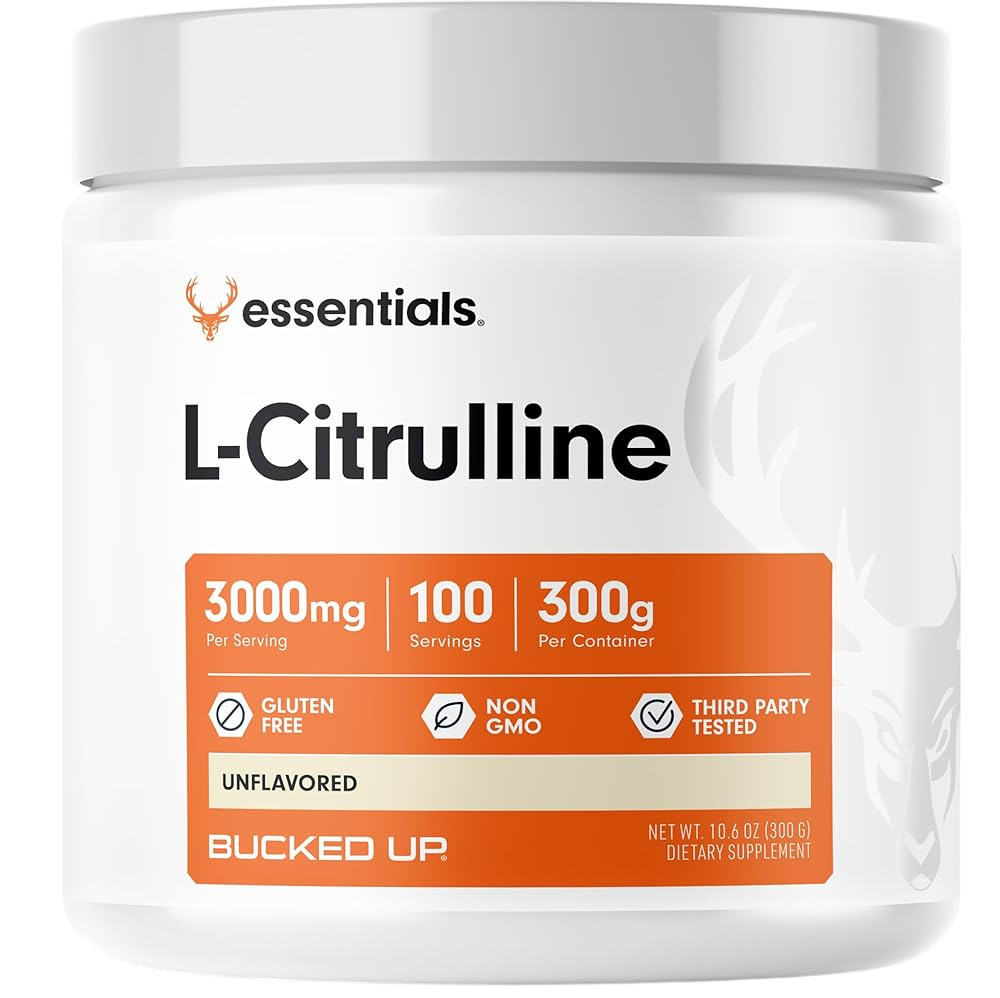
- Experience clinical-grade pumps with Bucked Up’s L-Citrulline options featuring precise dosing of Citrulline Malate and Pure L-Citrulline for peak performance.
Flat Pumps, Flat Progress: Why Blood Flow Matters
Flat pumps signal more than aesthetic disappointment and often reveal suboptimal training conditions that slow progress. Without adequate blood flow, working muscles receive less oxygen, glucose, and key nutrients needed for peak performance. Fatigue arrives sooner, training volume drops, and strength and size gains stall.
Poor circulation during training also weakens the mind-muscle connection and can reduce motivation across multiple sessions. Natural nitric oxide production declines with age and accumulated training stress, so strategic supplementation becomes increasingly valuable. Getting enough L-citrulline from food alone is unrealistic, since you would need 2.2 to 3.3 pounds of watermelon daily to reach just 3 grams of citrulline.
How Nitric Oxide Works and Why L-Citrulline Dominates
Nitric oxide acts as a gaseous signaling molecule that relaxes vascular smooth muscle, which widens blood vessels and improves blood flow. Better circulation increases delivery of oxygen, glucose, and other substrates to active tissues, including skeletal muscle.
L-citrulline delivers stronger results than direct L-arginine supplementation because of its superior pharmacokinetic profile. L-citrulline reaches about 97% oral bioavailability, with peak plasma levels appearing within 0.7–1 hour after ingestion. Arginine breaks down heavily in the gut and liver, while L-citrulline bypasses first-pass metabolism and converts to arginine in the kidneys. This process produces larger and longer-lasting increases in circulating arginine and nitric oxide.
Citrulline Malate combines L-citrulline with malic acid in a 2:1 ratio and adds support for the Krebs cycle. The malate portion supports aerobic ATP production and phosphocreatine recovery, which can improve endurance and reduce fatigue and delayed onset muscle soreness by up to 40%.
Clinical evidence links citrulline supplementation with increased muscular strength, endurance, and training volume during resistance exercise. These benefits relate to better ammonia clearance, improved oxygen and nutrient delivery, and lower perceived exertion. Research also shows that 7 days of 6 grams daily L-citrulline significantly increased time-to-exhaustion during moderate-intensity cycling in recreationally active men.
|
Ingredient |
Absorption Rate |
NO Boost |
Pump Efficacy |
|
L-Citrulline |
97% bioavailability |
Superior |
Excellent |
|
L-Arginine |
Poor (liver degradation) |
Limited |
Minimal |
|
Citrulline Malate |
High |
Superior + ATP support |
Excellent + endurance |
NO Boosters vs Creatine and Nitrates for Pumps
Nitric oxide supplements fill a different role than other performance aids. Creatine increases strength and power by elevating phosphocreatine stores, yet it does not create the immediate vasodilation and pump that L-citrulline provides. Creatine monohydrate supports measurable muscle hypertrophy through higher training volume over 8–12 or more weeks, while citrulline improves nitric oxide-driven blood flow and exercise tolerance with more acute functional effects.
Beetroot juice and other nitrate sources offer mild nitric oxide support but rarely match the potency or consistency of L-citrulline. Direct arginine supplementation underperforms because of poor absorption and heavy first-pass metabolism, which makes it a weaker option for pump-focused athletes.
The trade-off becomes clear. Creatine supports strength and long-term muscle growth, while L-citrulline enhances immediate training performance through better blood flow, nutrient delivery, and pump intensity. For hypertrophy-focused lifters who rely on the pump to deepen the mind-muscle connection and drive volume, L-citrulline becomes a key tool.
Pure L-citrulline focuses on maximum vascularity and blood flow. Citrulline malate combines those pump benefits with added endurance support from malic acid and its role in energy metabolism. Your primary training goal should guide the choice between these forms.
Dialed-In Pumps: Dosing Guidelines and Bucked Up Protocols
The effective performance dose for citrulline malate is 6–8 grams taken 30–60 minutes before exercise. For pure L-citrulline, 3–6 grams delivers similar nitric oxide and pump benefits. Timing matters because peak plasma levels appear within about 60 minutes, which makes pre-workout use the most effective strategy.
Stacking citrulline with beta-alanine can further enhance training performance, and absorption aids such as Astragin may support uptake. Safety data indicates that L-citrulline intake up to 15 grams daily is well tolerated for short-term use in healthy adults, with only mild gastrointestinal upset at higher doses.
Bucked Up includes clinical doses across several pre-workout formulas. The original Bucked Up pre-workout and Woke AF each provide 6 grams of citrulline malate, with 200 milligrams and 333 milligrams of caffeine respectively. Mother Bucker delivers 4 grams of pure L-citrulline combined with Nitrosigine and Hydroprime glycerol for advanced users who prefer 400 milligrams of stimulants. Pure powder and capsule options allow precise control over your daily citrulline intake.
|
Product |
Citrulline Dose |
Key Stacks |
Target User |
|
Bucked Up |
6g Malate |
200mg caffeine, Beta-alanine |
Beginners |
|
Woke AF |
6g Malate |
333mg caffeine, Dendrobium |
High tolerance |
|
Mother Bucker |
4g Pure + Nitrosigine |
400mg caffeine, Glycerol |
Advanced athletes |
Myths, Side Effects, and Realistic Pump Expectations
Common nitric oxide myths often downplay how much the pump can support performance. The pump effect feels temporary, yet it improves nutrient delivery and strengthens the mind-muscle connection during each session. Better training quality and recovery then support long-term muscle growth.
The “more is better” mindset does not apply to citrulline. Both L-citrulline and citrulline malate appear well tolerated up to 10 grams daily, with only mild digestive discomfort at higher intakes. Doses above 10 grams at once increase the risk of gastrointestinal issues without adding extra performance benefits.
Side effects remain uncommon and usually mild. Short-term L-citrulline use appears generally safe in healthy adults, with no serious adverse effects reported in trials. People with low blood pressure should proceed carefully because of the vasodilating effect, and anyone on blood pressure medication should speak with a healthcare professional first.
Customer feedback frequently highlights stronger pumps and better training sessions. Phrases like “crazy pumps and PRs” show how users feel the difference when they switch to clinical dosing.
Who Benefits Most from L-Citrulline Pumps
Different lifters can tailor L-citrulline use to match their style of training. Pump chasers who struggle with flat, unmotivating workouts often respond quickly to Bucked Up’s 6-gram citrulline malate dose, which reaches the clinical range for strong nitric oxide support.
High-tolerance veterans sometimes experience stimulant-driven vasoconstriction, where heavy caffeine intake narrows blood vessels even as energy rises. Woke AF offsets this effect with a high citrulline load, which helps 333 milligrams of caffeine and dendrobium reach working muscles more effectively.
Science-focused bodybuilders often choose Mother Bucker for advanced nitric oxide support. Its blend of pure L-citrulline, Nitrosigine, and glycerol targets vasodilation and cellular hydration through several pathways, creating pumps that combine blood volume expansion with fuller, more hydrated muscle cells.
Stimulant-sensitive lifters can still chase serious pumps by using non-stimulant formulas that deliver full clinical citrulline doses. Strong nitric oxide support does not require caffeine dependence.
Final Verdict: Are Nitric Oxide Boosters Worth It?
Nitric oxide supplements earn their place in a serious lifter’s stack when they use clinically effective L-citrulline doses. Research supports meaningful improvements in blood flow, performance, and training capacity when dosing and timing are dialed in. Results depend on using the right ingredient at the right amount.
Underdosed proprietary blends and arginine-heavy formulas often waste money and fail to deliver noticeable pumps. L-citrulline at 6–8 grams as malate or 3–6 grams as pure powder can turn flat, low-energy sessions into vascular, high-output workouts that help you push closer to your genetic ceiling.
FAQ: Nitric Oxide Pumps and L-Citrulline
Does nitric oxide give you a better pump?
Nitric oxide significantly enhances muscle pumps through vasodilation and improved blood flow. L-citrulline supplementation raises nitric oxide production more effectively than direct arginine intake, which leads to greater muscle fullness, vascularity, and nutrient delivery while you train. The pump sensation often lines up with better performance and higher training capacity.
How does L-citrulline compare to arginine for pumps?
L-citrulline outperforms arginine for pump support in most lifters. Arginine breaks down heavily in the gut and liver, while L-citrulline bypasses this first-pass metabolism and converts to arginine in the kidneys. This process produces higher and more stable plasma arginine levels, which drives stronger nitric oxide production and more noticeable pumps.
What is the best timing for nitric oxide supplements?
Take L-citrulline 30–60 minutes before training for the strongest pump effects. Peak plasma levels appear within about 60 minutes after ingestion, so consistent pre-workout timing matters. Some lifters split doses for very long sessions or use extended-release formulas, but most users see reliable results from a single pre-workout serving.
Do nitric oxide supplements work better than creatine for pumps?
Nitric oxide supplements and creatine support different aspects of performance and work well together. L-citrulline shines for immediate pump enhancement through vasodilation and improved blood flow, while creatine supports strength and power by boosting phosphocreatine stores. For pure pump effects, L-citrulline has the edge, but stacking both ingredients creates a more complete performance strategy.
Are there any side effects from nitric oxide boosters?
Nitric oxide boosters such as L-citrulline are generally well tolerated with few side effects in healthy adults. Mild digestive discomfort can appear at very high doses above about 10 grams, and people with low blood pressure should use caution because of the vasodilating effect. Anyone taking blood pressure medication should consult a healthcare provider before starting supplementation. Some sensitive users occasionally report headaches related to increased blood flow.
*These statements have not been evaluated by the Food and Drug Administration. This product is not intended to diagnose, treat, cure, or prevent any disease.