Written by: Ryan Gardner, Owner, Managing Partner, CEO, Bucked Up
Key Takeaways
-
L-citrulline and creatine work through separate biological pathways and target different performance needs, so they complement each other.
-
L-citrulline supports nitric oxide production for acute blood flow and pump benefits when taken 30 to 60 minutes before training.1*
-
Creatine increases phosphocreatine stores for strength and power, with benefits building over weeks of consistent daily use.1*
-
Both ingredients can be safely stacked without interference, covering blood flow and energy system support for resistance training.1*
-
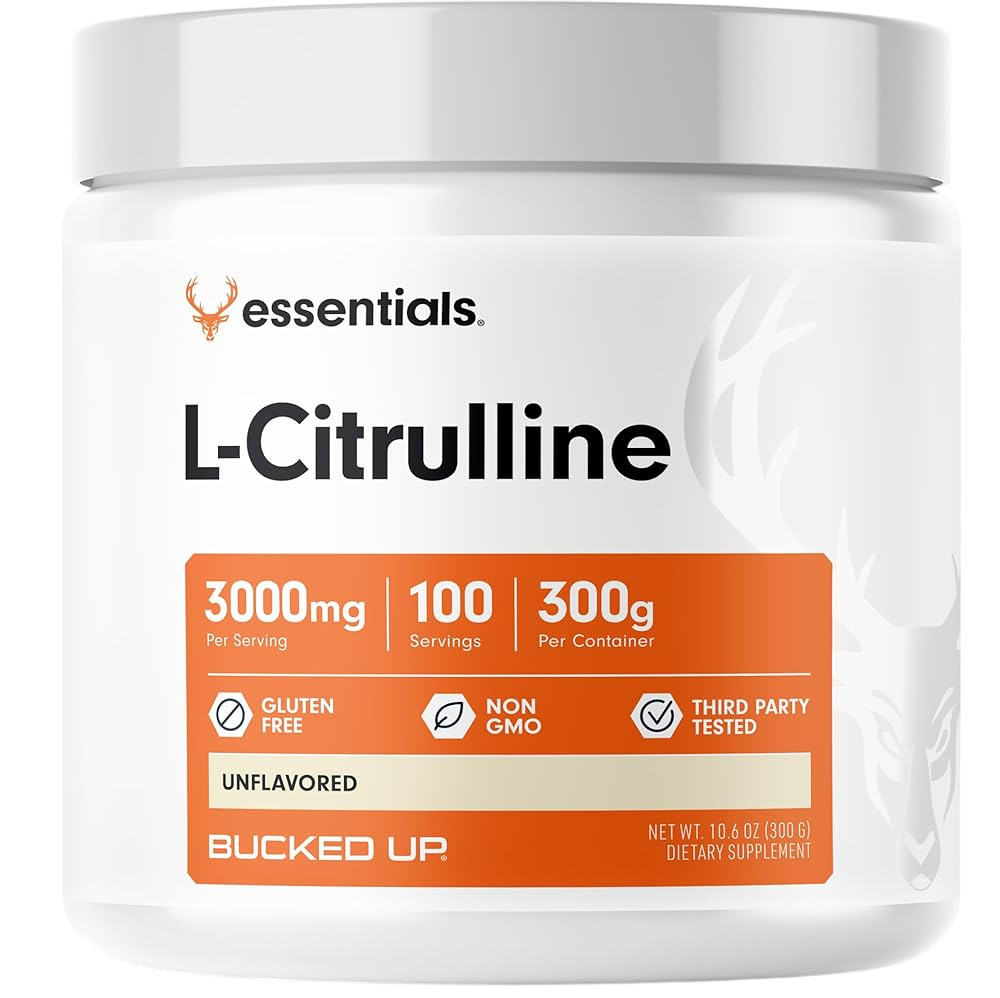
For flexible standalone dosing of pure L-citrulline, Bucked Up offers a 300g powder option that lets you control your exact intake.
How L-Citrulline Drives Nitric Oxide and the Pump
L-citrulline is a non-essential amino acid that takes an indirect but effective route to nitric oxide support.1* You ingest L-citrulline orally, and it largely bypasses first-pass metabolism in the gut and liver, a pharmacokinetic advantage that direct L-arginine supplementation does not share. Approximately 70% of supplemental arginine undergoes splanchnic extraction before reaching systemic circulation, which helps explain why arginine supplements often underdeliver on the pump.
L-citrulline travels to the kidneys, where enzymes in the urea cycle convert it into L-arginine. That L-arginine then serves as substrate for Nitric Oxide Synthase (NOS) enzymes, which produce nitric oxide, a gaseous signaling molecule that supports relaxation of vascular smooth muscle and vasodilation.1* Wider blood vessels support the delivery of oxygen, glucose, and other metabolic substrates to working muscle.1*
A single 3 g dose of L-citrulline can raise plasma L-arginine levels by 40 to 50 percent within one to two hours, according to pharmacokinetic data cited in Schwedhelm et al. (2008). Peak plasma concentrations typically occur within 0.7 to 2 hours after ingestion, which supports the common 30 to 60 minute pre-workout timing for acute performance support.1*
L-citrulline also participates in the urea cycle, which supports ammonia clearance during intense exercise.1* Ammonia buildup is linked to central fatigue, so better clearance may help you maintain output across multiple sets.* When L-citrulline is bonded with malic acid to form Citrulline Malate, the malate acts as a Krebs Cycle intermediate, which is theorized to support oxidative ATP production and phosphocreatine recovery.1*
How Creatine Fuels Strength and Power
Creatine targets a different system than L-citrulline. It does not affect the nitric oxide pathway. Instead, creatine supports the phosphocreatine energy system, which is the body’s fastest way to regenerate ATP during short, explosive efforts like heavy compound lifts or sprints.1*
Creatine supplementation raises muscle phosphocreatine stores over time rather than acutely. Once saturation is reached, muscles can regenerate ATP faster during repeated high-intensity efforts. This creates a clear distinction from L-citrulline. Creatine does not act as a stimulant and does not provide an immediate energy spike from a single pre-workout dose. Its benefits accumulate with consistent use.
Creatine typically requires about three to four weeks of 3 to 5 g daily dosing to fully saturate muscle stores. That is why a single pre-workout serving has little immediate impact on power output. A 2013 study by Antonio and Ciccone in the Journal of the International Society of Sports Nutrition reported that trained bodybuilders taking 5 g creatine immediately post-workout for four weeks gained 4.4 lbs of fat-free mass and increased bench press one-rep max by 16.8 lbs. The pre-workout group gained 2.0 lbs of fat-free mass and 14.6 lbs on bench. However, a 2021 analysis found that differences between pre- and post-workout creatine timing become statistically insignificant over longer timeframes, with total daily intake playing the larger role.
The practical takeaway is simple. Creatine supports power output and training volume once muscle stores are saturated.1* L-citrulline supports blood flow and nutrient delivery acutely, session by session.1* They are not redundant. They are complementary. This complementary relationship naturally leads into the question of how to use them together in a single routine.
Stacking L-Citrulline and Creatine in One Routine
Stacking L-citrulline and creatine makes sense because each ingredient covers a different side of performance. L-citrulline supports blood flow, which helps deliver oxygen and nutrients to working muscle.1* Creatine supports phosphocreatine resynthesis and ATP availability during high-intensity efforts.1*
Neither ingredient interferes with the other’s mechanism, and no published evidence currently suggests a negative interaction between them in healthy adults. The stack covers two performance gaps at once: acute vascular support from L-citrulline and cumulative strength and power support from creatine.1* For lifters who want clear roles for each ingredient, this combination offers a straightforward, science-informed approach.
Explore standalone L-Citrulline options to build a stack that fits your current creatine routine.
Timing L-Citrulline and Creatine Around Training
Timing strategy differs between L-citrulline and creatine, and mixing them up can reduce results.
For L-citrulline, the research-backed window is about 30 to 60 minutes before training. Research-backed acute pre-exercise dosing for citrulline malate is 6 to 8 g taken about one hour before training, with 8 g often used for high-volume resistance work. This timing lines up with the pharmacokinetic peak discussed earlier, when plasma L-arginine is elevated and nitric oxide support is active.1* Taking it too close to your session may not give the conversion pathway enough time.
For creatine, the timing principle remains consistency over precision. As established earlier, daily intake matters far more than whether you take it before or after training. Creatine should be taken on both training and rest days to maintain elevated muscle creatine levels. The goal is saturation, not minute-by-minute timing.1*
In practice, you can take L-citrulline 30 to 60 minutes pre-workout for session-specific vascular support,1* and take creatine at any time of day that you can stick with long term.
Choosing the Right L-Citrulline Setup for Your Goals
Your training goal should guide which form and dose of L-citrulline you use. The options below outline how to match the product to the outcome you want.
Goal: Endurance and pump support with ammonia clearance. Citrulline Malate 2:1 is the primary studied form for this application. Bucked Up’s foundational pre-workout and Woke AF both deliver 6,000 mg of Citrulline Malate 2:1.1* The malate component supports the energy metabolism side through its role in the Krebs Cycle.1*
Goal: Advanced nitric oxide support with cellular hydration. Pure L-Citrulline stacked with Nitrosigine® and Hydroprime® Glycerol, as in Mother Bucker, targets vasodilation through multiple biological pathways.1* The malic acid is removed to make room for 4,000 mg of pure L-citrulline alongside Nitrosigine® for blood flow support and Hydroprime® for cellular hydration support.*
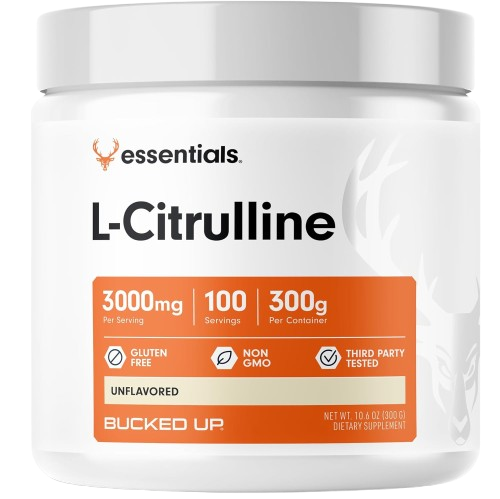
Goal: Flexible standalone dosing. Bucked Up’s L-Citrulline Powder (300g) delivers 3,000 mg of Pure L-Citrulline per scoop, unflavored, and mixes easily into any pre-workout stack or beverage. This format suits athletes running higher-dose protocols or anyone who wants precise control over L-citrulline intake separate from a full pre-workout formula.
Across the Bucked Up pre-workout line, Astragin® is included to support citrulline absorption and bioavailability.1* Better absorption means more citrulline available to drive the pump.
Sample Daily Stacking Protocol
A simple same-day stacking protocol for L-citrulline and creatine can look like this.
Daily, any time (training and rest days): 3 to 5 g creatine monohydrate. Consistency is the key variable. A gradual creatine protocol of 3 to 5 g per day reaches full muscle saturation and comparable performance benefits after about 3 to 4 weeks, similar to a loading phase.
Thirty to sixty minutes pre-workout: L-citrulline from your chosen Bucked Up formula. For foundational support, Bucked Up Pre-Workout or Woke AF provide 6,000 mg Citrulline Malate 2:1 alongside energy, focus, and endurance ingredients.1* For a more advanced stack, Mother Bucker pairs 4,000 mg Pure L-Citrulline with Nitrosigine® and Hydroprime® Glycerol for a focused pump and hydration combination.1* For stimulant-free or evening training, the Non-Stimulant Pre-Workout still delivers 6,000 mg Citrulline Malate 2:1 without caffeine.*
No proprietary blends and no dusting appear on these labels. Every gram is listed so you can see exactly what you are taking.
Shop pure L-Citrulline powder if you want precise control over your dosing alongside your creatine.
Frequently Asked Questions
How does nitric oxide support compare to creatine?
Nitric oxide support and creatine address different roles rather than competing with each other. Nitric oxide support via L-citrulline focuses on blood flow and nutrient delivery to working muscle on a session-by-session basis.1* Creatine focuses on phosphocreatine resynthesis and ATP availability during high-intensity efforts, with benefits that build over weeks of consistent daily use.1* A lifter focused mainly on strength and power will likely view creatine as essential. A lifter focused on training volume, endurance, and pump will likely view L-citrulline as equally valuable. Many serious athletes use both, since the mechanisms cover different performance gaps without overlap or interference.
Does nitric oxide support work as a pre-workout approach?
L-citrulline, as a nitric oxide precursor, fits well as a pre-workout ingredient because its pharmacokinetic profile lines up with the pre-training window. Taken 30 to 60 minutes before exercise, L-citrulline converts to L-arginine in the kidneys, raising plasma arginine levels and supporting nitric oxide production during the session.1* This supports vasodilation, which in turn supports delivery of oxygen and metabolic substrates to active muscle.1* It does not act as a stimulant and does not create an energy spike. Its role centers on vascular support and endurance, not alertness. For energy and focus, ingredients such as caffeine and AlphaSize® Alpha GPC fill that role in a full pre-workout formula.
Can I use nitric oxide support with pre-workout and creatine?
L-citrulline, a full pre-workout stack, and creatine can be used together for most healthy adults. The three target separate mechanisms. L-citrulline supports blood flow,1* stimulant and focus ingredients in a pre-workout support energy and mental performance,1* and creatine supports phosphocreatine resynthesis and power output over time.1* Current evidence does not document a negative interaction between L-citrulline and creatine in healthy adults. As with any supplement combination, talk with your healthcare provider if you have underlying health conditions, take prescription medications, or have questions about how these ingredients fit your specific situation.
Conclusion: Using L-Citrulline and Creatine with Confidence
Nitric oxide support via L-citrulline and creatine address separate performance needs, use separate mechanisms, and follow separate timing strategies. L-citrulline supports blood flow, ammonia clearance, and vascular pump on a session-by-session basis.1* Creatine supports phosphocreatine resynthesis and power output through consistent daily saturation over weeks.1* Used together, they cover two major performance gaps in resistance training.
Transparent labeling lets you see exactly what you are getting and at what dose, so you can build your own stack with clarity instead of guesswork. Get started with transparent-label L-Citrulline backed by the science discussed in this guide.
*These statements have not been evaluated by the Food and Drug Administration. This product is not intended to diagnose, treat, cure, or prevent any disease.
References
Schwedhelm, E., Maas, R., Freese, R., Jung, D., Lukacs, Z., Jambrecina, A., Spickler, W., Schulze, F., & Böger, R. H. (2008). Pharmacokinetic and pharmacodynamic properties of oral L-citrulline and L-arginine: Impact on nitric oxide metabolism. British Journal of Clinical Pharmacology, 65(1), 51–59. https://ubiehealth.com/doctors-note/l-citrulline-erectile-dysfunction-dosing-safety-3811e3
1 The content provided in this article is for informational purposes only and is not medical advice. Consult with a medical professional before implementing any changes to your diet, health, or exercise routines. Individual results will vary and are based on a combination of each individual’s diet, exercise, age, and health circumstances. These statements have not been evaluated by the Food and Drug Administration. This product is not intended to diagnose, treat, cure or prevent any disease.
This article was written by Ryan Gardner, CEO of Bucked Up. As the maker of Bucked Up Protein Soda, we have a financial interest in this information. The views expressed are our own and should be read with that context in mind.