Written by: Ryan Gardner, Owner, Managing Partner, CEO, Bucked Up
Key Takeaways
- L-Citrulline converts to L-Arginine in the kidneys and supports sustained nitric oxide production and vasodilation during training.*1
- Research-supported dosing for weight training is 6–8 g of Citrulline Malate (2:1) or 3–4 g of Pure L-Citrulline taken 30–60 minutes pre-workout.
- Citrulline and caffeine target different systems, energy versus blood-flow delivery, so they work together in a pre-workout stack.1
- Transparent labels with individual gram amounts help you confirm whether citrulline reaches performance-relevant thresholds.
- Stacking a disclosed, research-backed dose of L-Citrulline with your pre-workout can support pumps and endurance.1 Shop Bucked Up L-Citrulline here.
How to Use This L-Citrulline Pre-Workout Guide
The U.S. sports nutrition market has matured. Lifters who once grabbed any tub with a skull on it now read labels and cross-reference ingredient lists. Many want to know whether nitric oxide support with pre-workout adds real value or functions as an upsell. This guide walks through the science behind L-Citrulline so you can answer that for yourself. By the end, you will see how L-Citrulline works, why it can outperform L-Arginine on a pharmacokinetic level, what doses and timing research supports, and how to read a label so you stop paying for products that dust you with 1g of citrulline and call it a pump formula.
Transparent Nitric Oxide Support in Modern Pre-Workouts
The pre-workout category relied on proprietary blends for years. This labeling approach lists ingredients without disclosing individual gram amounts. A product can list L-Citrulline and technically contain 500mg, which sits far below doses studied for performance support. Consumers have no way to verify what they receive per scoop.
That dynamic has shifted. A growing segment of U.S. lifters now looks for fully disclosed labels, single-ingredient nitric oxide powders they can stack, and brands that publish exact gram amounts per serving. This demand reflects a clear understanding that caffeine supports energy, while blood flow supports delivery. When the delivery system is under-dosed, the extra energy has limited impact where it matters.
Bucked Up was built around this gap. Every pre-workout in the line discloses citrulline grams on the label. No proprietary-blend shell games. Just grams.
What L-Citrulline Is and Why It Matters for Nitric Oxide
Now that transparent dosing is on the table, it helps to understand the ingredient behind the number. L-Citrulline is a non-essential alpha-amino acid produced naturally in the body, primarily in the intestines and liver, and found in food sources including watermelon (Citrullus lanatus), where it was first identified. It also appears in cucumbers, squash, pumpkins, and muskmelon. Reaching a performance-relevant dose from food alone would require roughly 2.2 to 3.3 lbs of watermelon per day, so supplementation becomes the practical route.
In nitric oxide production, L-Citrulline functions as a precursor. It is absorbed from the small intestine, transported to the kidneys, and converted into L-Arginine through the enzymes argininosuccinate synthase and argininosuccinate lyase.1 That L-Arginine then serves as the substrate for Nitric Oxide Synthase (NOS) enzymes, which produce nitric oxide, a gaseous signaling molecule that supports relaxation of vascular smooth muscle and vasodilation.*1
L-Citrulline also plays a structural role in the urea cycle, the metabolic process that converts ammonia, a byproduct of intense exercise and protein metabolism, into urea for excretion. This pathway supports fatigue management and often receives less attention than pump-focused marketing.*1
How L-Citrulline Supports Blood Flow and Endurance
The mechanism explains why timing and dose matter so much. When L-Citrulline is ingested, peak plasma concentrations typically occur within 0.7 to 2 hours post-ingestion. This window is why most protocols recommend taking it 30 to 60 minutes before exercise. Taking it too late means your warm-up sets start before the curve peaks.
Once converted to L-Arginine and then to nitric oxide, the vasodilatory effect supports blood flow to active skeletal muscle. That blood flow supports delivery of oxygen, glucose, and other metabolic substrates during training.* The practical outcome is better nutrient delivery to working muscle, which supports endurance and the pump.*1
The ammonia clearance pathway matters for endurance athletes and high-volume lifters. Ammonia accumulation during strenuous exercise is implicated in central fatigue. By supporting the urea cycle, L-Citrulline may help support ammonia clearance, which supports the ability to sustain output across multiple sets or longer sessions.*1 Some research also suggests a role in supporting lower blood lactate concentrations during exercise, though individual responses vary.1
When L-Citrulline is combined with Malic Acid to form Citrulline Malate, another theorized benefit appears. Malic Acid is a Krebs Cycle intermediate, and its presence is theorized to support oxidative ATP production and phosphocreatine recovery, which may support endurance and reduce fatigue.*1 This rationale underlies the 2:1 Citrulline Malate ratio used in Bucked Up Pre-Workout, Woke AF, and the Non-Stimulant Pre-Workout.
Who Gets the Most from L-Citrulline in Pre-Workout
Three reader profiles come up consistently in this category, and many lifters will see themselves in at least one.
The Pump Chaser. Trains hard but feels flat. Vascularity does not match the months of consistent work. The issue often relates to delivery rather than effort. A pre-workout with a disclosed, relevant dose of Citrulline Malate sits at the threshold studied for supporting nitric oxide production and the pump.*1 Bucked Up Pre-Workout uses 6,000mg of Citrulline Malate (2:1) for this purpose.
The High-Stim Veteran. Takes 300mg or more of caffeine per session and notices strong energy but restricted blood flow. High stimulant loads can cause vasoconstriction, which works against the pump. Woke AF pairs 333mg of caffeine with 6,000mg of Citrulline Malate (2:1) to support vasodilation alongside the stim load.*1 The citrulline serves a functional role against the vasoconstriction that high caffeine can produce.
The Science-Based Bodybuilder. Knows the research and wants an advanced stack. Mother Bucker pairs 4,000mg of Pure L-Citrulline with Nitrosigine® and Hydroprime® Glycerol for what Bucked Up calls the Pump Trifecta: vasodilation support, cellular hydration support, and multiple biological pathways working at the same time.*1 This formula suits lifters who have already used standard Citrulline Malate and want a different tier.
Bucked Up promotes a science-backed approach to nitric oxide support, including Citrulline Malate and Pure L-Citrulline at disclosed, relevant doses. Shop standalone L-Citrulline to customize your stack based on your training profile.
Forms, Dosing Thresholds, and Timing That Deliver
This section gives the practical numbers. Research on L-Citrulline dosing is more specific than many supplement categories, and the gap between an effective dose and a dusting is large.
Pure L-Citrulline vs. Citrulline Malate 2:1. Pure L-Citrulline delivers 100% L-Citrulline per gram. Citrulline Malate 2:1 delivers approximately 1g of L-Citrulline per 1.76g of the compound, with the remaining weight as Malic Acid. Neither form works as a universal choice for every scenario. Pure L-Citrulline is often favored for direct nitric oxide and vascularity support. Citrulline Malate 2:1 adds the theorized Krebs Cycle benefit from the malate component, which many lifters choose for endurance-focused training.
Dosing and timing protocol for performance support:
- For weight training support: 6 to 8g of Citrulline Malate (2:1), providing approximately 3.4 to 4.5g of L-Citrulline, taken 30 to 60 minutes before exercise.
- For general daily support: 3 to 6g of Pure L-Citrulline per day, sometimes divided into two servings.
- For acute performance support: timing approximately 60 minutes before intense physical activity aligns with the peak plasma concentration window described earlier.
- For the advanced stack (Mother Bucker protocol): 4g of Pure L-Citrulline alongside Nitrosigine® and Hydroprime® Glycerol, taken 30 to 60 minutes pre-training.
- For stim-sensitive or caffeine-free training: 6,000mg Citrulline Malate (2:1) in a non-stimulant formula still supports nutrient delivery and the pump without caffeine.* Bucked Up’s Non-Stimulant Pre-Workout follows this approach.
Note on stacking with caffeine: caffeine and L-Citrulline address different physiological targets. Caffeine supports energy and alertness. L-Citrulline supports the vascular delivery system that helps that energy translate into performance.*1 They are not redundant. They work together. High-stim formulas raise concern about vasoconstriction from caffeine, which makes a meaningful citrulline dose more relevant, not less, in high-caffeine pre-workouts.
How to Read Pre-Workout Labels for Real Nitric Oxide Support
Label evaluation functions as a skill you can practice. These checkpoints help you decide whether a pre-workout’s nitric oxide support is substantial or decorative.
Disclosed grams, not just ingredient names. If the label says “Citrulline Malate” inside a proprietary blend with a total blend weight of 8g shared across six ingredients, the actual citrulline content remains unknown. Look for a fully disclosed label with individual gram amounts per ingredient.
The 2:1 ratio for Citrulline Malate. If a label lists Citrulline Malate without specifying the ratio, the malate content stays ambiguous. The 2:1 ratio, 2 parts L-Citrulline to 1 part Malic Acid, is the form used in foundational research. Confirm that the ratio appears on the label.
Dose threshold. For weight training support, research points to 6 to 8g of Citrulline Malate or 3 to 4g of Pure L-Citrulline as a relevant range. A product listing 2g of Citrulline Malate does not reach that range, regardless of marketing language.
Absorption support. Citrulline that is not absorbed does not help performance. Astragin® is an ingredient studied to support citrulline absorption and bioavailability.*1 Bucked Up includes Astragin® across the pre-workout line. Check whether a formula includes an absorption-support ingredient or relies only on the citrulline dose.
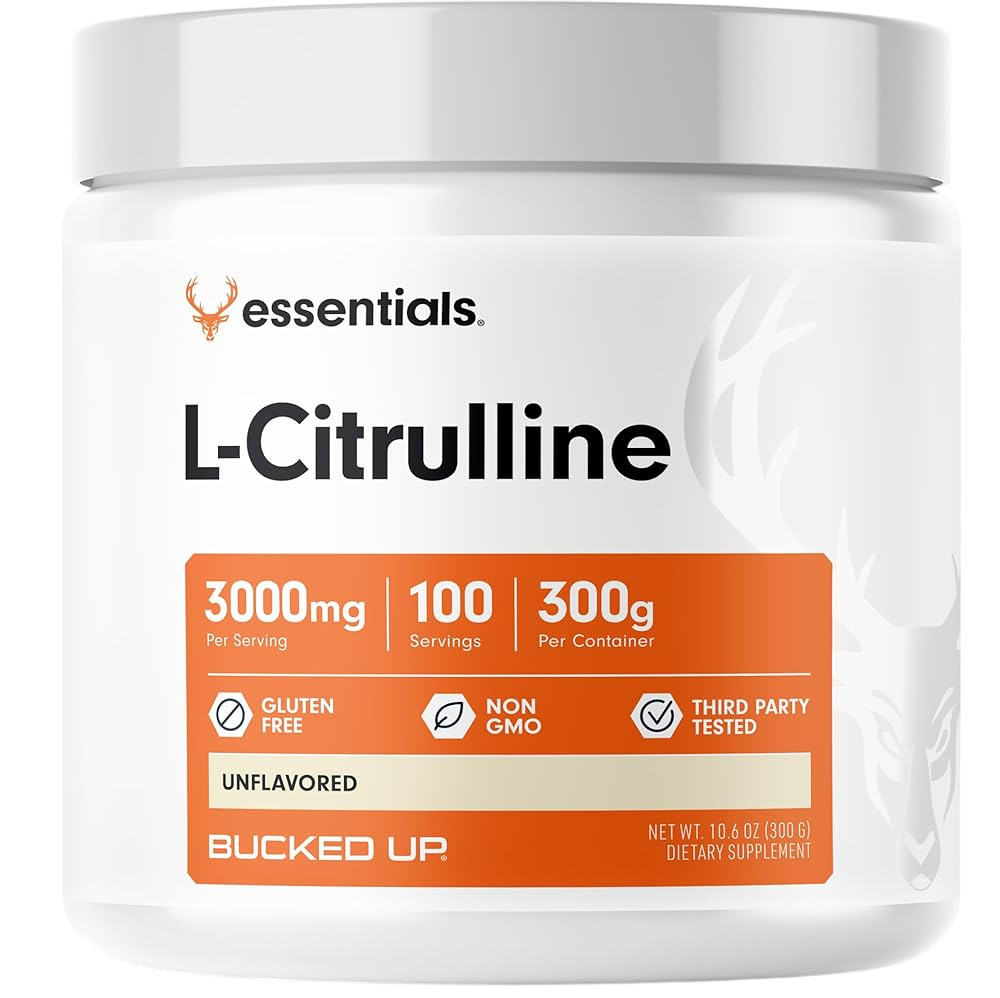
Form compatibility. If you stack a standalone L-Citrulline powder on top of an existing pre-workout, check the citrulline content already present to avoid redundant dosing. Bucked Up’s L-Citrulline Powder (300g) is unflavored and mixes with any beverage, which makes dialing in an exact additional dose straightforward.
Common Challenges and Realistic Results with L-Citrulline
Several recurring issues can shape how lifters experience L-Citrulline.
Proprietary-blend confusion. Some pre-workouts list L-Citrulline prominently in marketing but place it inside a blend where the actual dose stays hidden. The only way to know what you are getting is a fully disclosed label. If the label does not show individual gram amounts, the dose remains unknown.
Immediate-result expectations. L-Citrulline supports nitric oxide production through a metabolic pathway that takes time. Peak plasma concentrations occur within 0.7 to 2 hours. Taking it 10 minutes before training and expecting a dramatic pump in the first set does not match how the pharmacokinetics work. Timing matters.
Individual response variability. Some lifters notice the pump effect clearly. Others notice it less. Factors including training intensity, hydration status, baseline nitric oxide levels, and individual metabolic variation all influence the subjective experience. This variation reflects normal biology rather than a failure of the ingredient.
Safety, Side Effects, and When to Talk to a Provider
L-Citrulline is generally well-tolerated at doses studied for performance support and often shows a milder side-effect profile than L-Arginine. Mild and infrequent side effects can include gastrointestinal discomfort such as nausea, bloating, or cramps, particularly at very high single doses of 10g or more. Some sensitive individuals also report occasional headaches related to vasodilatory effects.
Consult your healthcare provider before using L-Citrulline if you are pregnant or breastfeeding, have naturally low blood pressure, have serious kidney conditions, or are scheduled for surgery. Discontinue at least 2 weeks before any scheduled procedure and follow your healthcare provider’s guidance.
L-Citrulline may interact with blood pressure medications, nitrate medications, and phosphodiesterase-5 inhibitors. Consult your healthcare provider before combining L-Citrulline with any prescription medications. Bucked Up products are manufactured in GMP-certified facilities in the USA.
*These statements have not been evaluated by the Food and Drug Administration. This product is not intended to diagnose, treat, cure, or prevent any disease.
Bucked Up promotes a science-backed approach to nitric oxide support, including Citrulline Malate and Pure L-Citrulline at disclosed, relevant doses. Get unflavored L-Citrulline powder for flexible stacking.
Frequently Asked Questions
What does L-Citrulline actually do in a pre-workout?
L-Citrulline is absorbed from the small intestine, transported to the kidneys, and converted into L-Arginine. That L-Arginine serves as the substrate for Nitric Oxide Synthase enzymes, which produce nitric oxide, a signaling molecule that supports vascular smooth muscle relaxation and vasodilation. The practical result is support for blood flow and nutrient delivery to active muscle during training, which supports the pump and muscle endurance. L-Citrulline also plays a role in the urea cycle, supporting ammonia clearance, which is relevant for fatigue management during high-volume training.
Why is L-Citrulline considered more effective than L-Arginine for nitric oxide support?
The difference comes down to pharmacokinetics. Oral L-Arginine is significantly degraded by arginase enzymes in the gut and liver before it reaches systemic circulation, which limits how much becomes available for nitric oxide production. L-Citrulline bypasses this first-pass metabolism, is absorbed efficiently, and is then converted to L-Arginine in the kidneys. This metabolic pathway results in a more substantial and sustained increase in circulating L-Arginine plasma concentrations compared to direct L-Arginine supplementation, providing more substrate for nitric oxide synthesis. In short, taking L-Citrulline can be a more efficient way to raise plasma L-Arginine than taking L-Arginine directly.
What is the difference between Pure L-Citrulline and Citrulline Malate 2:1?
Pure L-Citrulline delivers 100% L-Citrulline per gram and is often favored for direct nitric oxide and vascularity support. Citrulline Malate 2:1 is a compound of L-Citrulline and Malic Acid in a 2:1 ratio, meaning approximately 1g of L-Citrulline is delivered per 1.76g of the compound. The Malic Acid component is a Krebs Cycle intermediate theorized to support oxidative ATP production and phosphocreatine recovery, which may support endurance and reduce fatigue. For weight training and endurance-focused sessions, Citrulline Malate 2:1 is a strong choice. For lifters who want to stack a precise additional dose of L-Citrulline on top of an existing pre-workout, Pure L-Citrulline powder offers flexible dosing without additional compounds.
When should I take L-Citrulline before a workout?
For acute performance support, many lifters take L-Citrulline approximately 60 minutes before intense physical activity. This timing aligns with the peak concentration window mentioned earlier in the article. Taking it too close to training means the curve has not yet peaked when you need it most. If your pre-workout already contains a disclosed dose of Citrulline Malate or Pure L-Citrulline, mixing it 30 to 60 minutes before training covers the timing window adequately.
Are there any reasons I should not take L-Citrulline?
L-Citrulline is generally well-tolerated at performance-relevant doses, but certain individuals should consult a healthcare provider before use. These include people with naturally low blood pressure, serious kidney conditions, those who are pregnant or breastfeeding, and anyone taking prescription medications including blood pressure medications, nitrate medications, or phosphodiesterase-5 inhibitors. Anyone scheduled for surgery should discontinue L-Citrulline at least 2 weeks before the procedure. When in doubt, consult your healthcare provider before adding any new supplement to your routine.
Key Takeaways: Evidence-Aware Nitric Oxide Stacking with Pre-Workout
Nitric oxide support with pre-workout can be beneficial when the precursor is L-Citrulline, the dose is relevant, the timing is dialed in, and the label discloses what you actually get. L-Citrulline can outperform L-Arginine on a pharmacokinetic basis because it bypasses first-pass metabolism and supports more sustained plasma L-Arginine availability. The research-supported dose range for weight training centers on 6 to 8g of Citrulline Malate (2:1) or 3 to 4g of Pure L-Citrulline, taken 30 to 60 minutes before training. Caffeine and L-Citrulline work together rather than overlap, and a label that does not disclose individual gram amounts cannot confirm that it delivers a relevant dose.
Bucked Up’s pre-workout line follows this framework. The line uses disclosed citrulline dosing with Astragin® for absorption support in stimulant and non-stimulant options, and Mother Bucker adds Nitrosigine® and Hydroprime® Glycerol for a multi-pathway pump stack. Every gram appears on the label so you can match products to your training style and tolerance.
Bucked Up promotes a science-backed approach to nitric oxide support, including Citrulline Malate and Pure L-Citrulline at disclosed, relevant doses. Explore Bucked Up’s disclosed-dose L-Citrulline options.
*These statements have not been evaluated by the Food and Drug Administration. This product is not intended to diagnose, treat, cure, or prevent any disease.
References
Schwedhelm, E., Maas, R., Freese, R., Jung, D., Lukacs, Z., Jambrecina, A., Spickler, W., Schulze, F., & Böger, R. H. (2008). Pharmacokinetic and pharmacodynamic properties of oral L-citrulline and L-arginine: impact on nitric oxide metabolism. British Journal of Clinical Pharmacology, 65(1), 51–59.
Pérez-Guisado, J., & Jakeman, P. M. (2010). Citrulline malate enhances athletic anaerobic performance and relieves muscle soreness. Journal of Strength and Conditioning Research, 24(5), 1215–1222.
1 The content provided in this article is for informational purposes only and is not medical advice. Consult with a medical professional before implementing any changes to your diet, health, or exercise routines.
Individual results will vary and are based on a combination of each individual’s diet, exercise, age, and health circumstances.
These statements have not been evaluated by the Food and Drug Administration. This product is not intended to diagnose, treat, cure or prevent any disease.
This article was written by Ryan Gardner, CEO of Bucked Up. As the maker of Bucked Up Protein Soda, we have a financial interest in this information. The views expressed are our own and should be read with that context in mind.