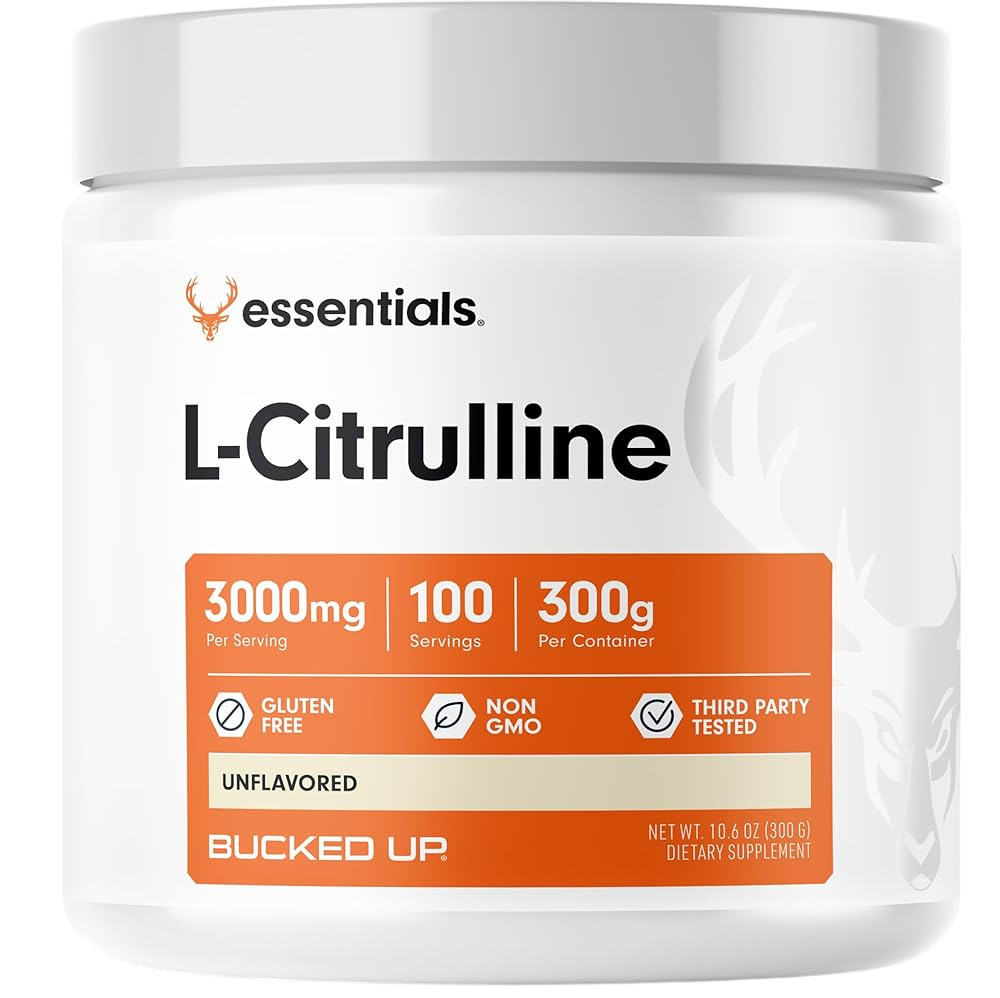
Written by: Ryan Gardner, Owner, Managing Partner, CEO, Bucked Up
Key Takeaways
- Many pre-workouts underdeliver because of weak ingredients or low doses, while L-Citrulline stands out for nitric oxide support due to higher bioavailability.1
- L-Citrulline bypasses first-pass metabolism and raises L-Arginine levels more effectively, which supports blood flow and ammonia clearance during hard training.1
- Use pure L-Citrulline when you want precise stacking control, or choose Citrulline Malate when you want both endurance and pump support.1
- Effective daily ranges include 6–10 g of pure L-Citrulline or 6–8 g of Citrulline Malate, taken about 30–60 minutes before workouts.
- Stack L-Citrulline with complementary ingredients and absorption enhancers like Astragin for stronger performance support, and explore Bucked Up’s higher-dose options to unlock your peak performance.1
Why Many Pre-Workouts Miss the Mark on Nitric Oxide
Effective nitric oxide support starts with enough raw material available when your muscles demand it. L-Citrulline supplies that substrate and plays a central role in nitric oxide synthesis and the urea cycle, which helps clear ammonia from working muscles.1
The key difference between L-Citrulline and L-Arginine is bioavailability. L-Arginine often breaks down in the gut and liver before it can be used. L-Citrulline largely bypasses this first-pass metabolism and converts to L-Arginine in the kidneys instead. This pathway produces higher and more sustained L-Arginine levels in the blood, which supports nitric oxide production.1
Intermediate and advanced lifters benefit from knowing this pharmacology because it explains why some pre-workouts create a strong pump while others feel flat.1 The real goal is better nutrient delivery and performance, not just visible veins.
Supplement regulations in the United States allow structure and function claims but not disease treatment claims. Always talk with your healthcare provider before starting a new supplement, especially if you take medications or have underlying health conditions.
Step 1: Use L-Citrulline as Your Main Nitric Oxide Support
L-Citrulline supports nitric oxide production through a clear biological pathway.1 After absorption, it travels to the kidneys, where enzymes convert it into L-Arginine. L-Arginine then serves as the substrate for nitric oxide synthase enzymes, which support vasodilation and blood flow to active tissues.
Peak blood levels of L-Citrulline usually appear within about 0.7 to 2 hours after ingestion, so pre-workout timing stays simple. Research has shown that L-citrulline is typically taken 30–60 minutes before training to support nitric oxide production and the muscle pump during workouts.1
L-Citrulline also participates in the urea cycle, which helps clear ammonia.1 This dual role means it may help limit exercise-induced ammonia buildup in skeletal muscle, a factor linked to central fatigue during intense sessions.
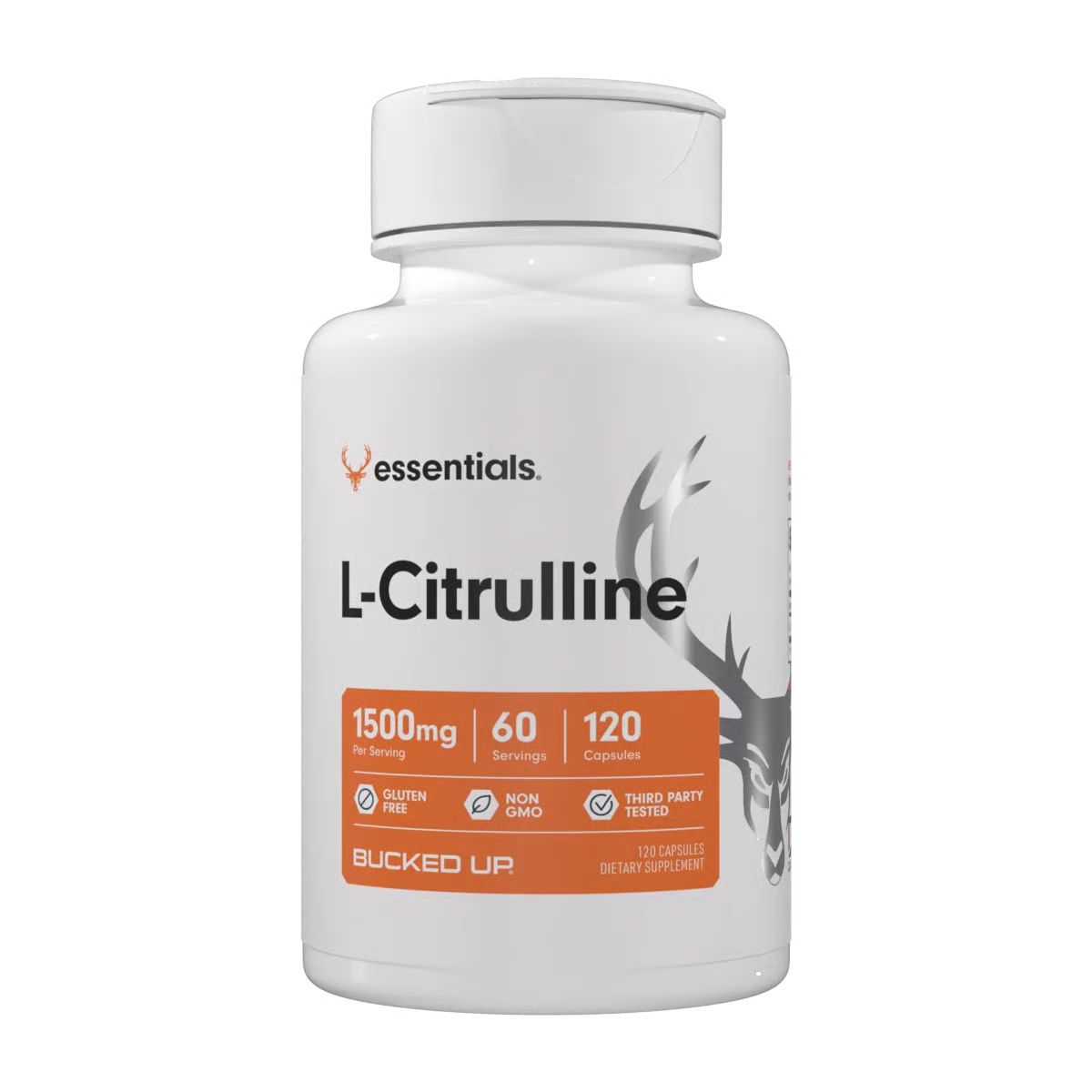
Bucked Up offers science-backed ingredients, including Citrulline Malate and Pure L-Citrulline. Find the L-Citrulline option that fits your training.
Step 2: Match L-Citrulline Form to Your Training Style
Two main forms appear in most pre-workouts: pure L-Citrulline and Citrulline Malate. Knowing how they differ helps you match the ingredient to your training style.
Pure L-Citrulline delivers only L-Citrulline. This form gives direct nitric oxide support and works well when you want tight control over your dose or plan to build custom stacks.
Citrulline Malate combines L-Citrulline with malic acid, usually in a 2:1 ratio. Citrulline malate is often dosed at 6–8 g daily for gym performance because it contains only about 56% L-citrulline by weight in a standard 2:1 ratio. Malic acid participates in the Krebs Cycle, which supports aerobic ATP production and may help phosphocreatine recovery.1
Endurance-focused training often pairs well with Citrulline Malate because it supports both vasodilation and energy metabolism.1 Pump-focused sessions or advanced stacks often favor pure L-Citrulline for greater flexibility.
Step 3: Dial In L-Citrulline Dosing and Timing
Effective dosing depends on the form you use and your training background. For performance improvements including the pump during weight training, 8 grams of citrulline malate (providing approximately 4.5 grams of L-citrulline) has been used in studies.1
For pure L-Citrulline, studies have examined L-citrulline powder at doses ranging from 3 g/day to 6–10 g/day, with many using approximately 6 g. More recent work has explored 6 grams or more of pure L-Citrulline per day for seven days for oxygen uptake kinetics and exercise performance.1
Follow the 30–60 minute pre-workout window described earlier. This timing gives L-Citrulline enough time to absorb and convert to L-Arginine before your working sets begin.
Beginners benefit from starting at the lower end of studied ranges to gauge tolerance. More experienced users can gradually move toward the higher end. This stepwise approach matters because body weight in lbs, training intensity, and individual response all shape how you react to a given dose.
Step 4: Build Smart L-Citrulline Stacks
L-Citrulline pairs well with several other performance-supporting ingredients. Beta-alanine supports muscular endurance by helping buffer lactic acid, which makes it a logical partner for high-volume training.1
Advanced formulas may also include nitric oxide supporters such as Nitrosigine (inositol-stabilized arginine silicate) or glycerol compounds for cellular hydration. These ingredients act through different mechanisms to support blood flow and nutrient delivery.1
Bucked Up’s Mother Bucker follows this approach by combining 4 g of Pure L-Citrulline with Nitrosigine and Hydroprime Glycerol in what they call the “Pump Trifecta.” This strategy supports vasodilation and hydration through multiple biological pathways instead of relying on a single route.1
When you evaluate stacks, consider your tolerance and how each ingredient interacts with the others. Some combinations may feel powerful, while aggressive doses can cause digestive discomfort for some users.
Step 5: Improve L-Citrulline Absorption With Astragin
Even well-planned L-Citrulline dosing will not help if your body does not absorb it consistently. Bioavailability agents help address this issue. Astragin is a patented compound studied for its potential to support nutrient absorption.1
Including absorption enhancers supports more predictable results from the same dose. Digestive health, meal timing, and gut microbiome differences all influence how well you absorb oral supplements.
Bucked Up includes Astragin across many pre-workouts to support the bioavailability of L-Citrulline and other ingredients.1 This approach recognizes that label claims only matter when those grams actually reach your bloodstream.
Key Tips for Getting the Most From L-Citrulline
Several variables shape how well L-Citrulline supports your training. Training intensity and volume influence how much nitric oxide support you may notice. Higher-intensity work with shorter rest often benefits more than low-intensity, long-duration sessions.
Workout timing also plays a role. Morning sessions may call for different pre-workout routines than evening training, especially if you use stimulants alongside L-Citrulline.
Consistent use usually beats sporadic dosing. Research has found high citrulline doses to be safe and well tolerated, yet many people find their ideal range at moderate levels used regularly.
Careful label reading helps you avoid underdosed products. Look for clear gram amounts instead of proprietary blends that hide exact doses. Quality brands state whether they use pure L-Citrulline or Citrulline Malate and list the ratio.
Common L-Citrulline Mistakes to Watch For
Unrealistic expectations often cause disappointment. L-Citrulline supports nitric oxide production, but it does not replace solid training, nutrition, and recovery. The effects usually feel subtle yet noticeable once you pay attention to performance and pump quality.
Inconsistent timing can blunt results. Taking L-Citrulline 15 minutes before training does not match the absorption curve as well as taking it about 60 minutes beforehand. Plan your pre-workout routine around this window.
Confusion between pure L-Citrulline and Citrulline Malate can lead to dosing errors. Six grams of Citrulline Malate provides roughly 3.4 g of actual L-Citrulline because of the malic acid portion. Adjust your dose when you switch forms.
Very high single doses, especially above 10 g, may cause digestive discomfort in some people.1 If you notice nausea, bloating, or cramping, lower the dose or split it into two servings. When unsure, ask your healthcare provider about appropriate dosing for your situation.
How to Measure Your L-Citrulline Results
Objective tracking helps you see whether L-Citrulline supports your training. Monitor total training volume, time to fatigue on higher-rep sets, and perceived exertion during key lifts or intervals.
Endurance changes may show up as holding power output longer during cardio or completing more reps at a given weight. Recovery improvements may appear as faster readiness between sets or less fatigue the day after intense training.
Give any new L-Citrulline protocol at least two to three weeks before judging it. Some benefits appear quickly, but the full impact of consistent use takes time. Keep your training variables as steady as possible while you evaluate the supplement.
Bucked Up offers science-backed ingredients, including Citrulline Malate and Pure L-Citrulline. Explore L-Citrulline options that match your goals.
Advanced L-Citrulline Strategies for Experienced Lifters
Experienced lifters can experiment with more detailed stacking and cycling strategies. Rotating between pure L-Citrulline and Citrulline Malate across different training phases can add variety and may help keep sessions feeling fresh.
High-volume phases often pair well with Citrulline Malate because of its potential support for ammonia clearance and energy production. Strength-focused blocks may benefit more from pure L-Citrulline stacked with other nitric oxide supporters for intense, shorter efforts.
Advanced users should also consider how L-Citrulline fits into their full supplement plan. If you already use other vasodilators or nitric oxide supporters, you may need to adjust L-Citrulline doses to avoid redundancy or excessive effects.
Conclusion: Turn L-Citrulline Research Into Better Workouts
Choosing effective supplements for gym performance starts with understanding how each ingredient works. L-Citrulline stands out because of its higher bioavailability compared to L-Arginine and its combined support for nitric oxide production and ammonia clearance.
The five-step framework in this guide gives you a practical way to apply that science. You identify L-Citrulline as your main nitric oxide supporter, choose the form that fits your goals, set dosing and timing, build smart stacks, and support absorption.
Bucked Up’s transparent, higher-dose formulations show how these principles appear on real labels. Whether you use their Citrulline Malate products or their Pure L-Citrulline stacks, you get clearly stated doses and ingredient forms.
Bucked Up offers science-backed ingredients, including Citrulline Malate and Pure L-Citrulline. Find the L-Citrulline product that fits your training plan.
Frequently Asked Questions
Is L-Citrulline safe for daily use?
L-Citrulline is generally well tolerated at doses used for performance support. Research has examined daily use between 3 and 15 grams with minimal side effects reported. The most common issues involve mild gastrointestinal discomfort at very high doses.1 Individual tolerance still varies, so start with a lower dose and increase gradually. If you have health conditions or take medications, especially those that affect blood pressure or cardiovascular function, talk with your healthcare provider before using L-Citrulline daily.
How long before a workout should I take L-Citrulline?
A 30–60 minute pre-workout window works well for most people. This timing allows absorption and conversion to L-Arginine in the kidneys. Peak blood levels usually appear within about 0.7 to 2 hours after ingestion, so taking L-Citrulline about an hour before training often aligns with your working sets. If you take it with a larger meal, consider extending the window to 60–90 minutes to account for slower digestion. Staying consistent with timing helps you judge how it affects your performance.
What is the difference between pure L-Citrulline and Citrulline Malate?
Pure L-Citrulline contains only L-Citrulline, which makes it useful when you want precise dosing or plan to build custom stacks. Citrulline Malate combines L-Citrulline with malic acid, usually in a 2:1 ratio, so you receive about 56% L-Citrulline by weight. Malic acid supports energy metabolism through the Krebs Cycle and may help with endurance and ammonia handling. Choose pure L-Citrulline when you want maximum control over nitric oxide support. Choose Citrulline Malate when you want both vasodilation and added energy metabolism support, especially for endurance-heavy training.
Can I stack L-Citrulline with other nitric oxide supporters?
L-Citrulline can be stacked with other nitric oxide supporting ingredients such as Nitrosigine, beta-alanine, and glycerol compounds. These ingredients act through different mechanisms and may create complementary effects. Start with conservative doses when combining multiple vasodilators to see how your body responds. Some people experience headaches or digestive discomfort when stacking high doses of several nitric oxide supporters. Advanced formulas like Bucked Up’s Mother Bucker show one way to combine L-Citrulline with Nitrosigine and Hydroprime Glycerol. Monitor your response and adjust doses as needed.
1 The content provided in this article is for informational purposes only and is not medical advice. Consult with a medical professional before implementing any changes to your diet, health, or exercise routines.
Individual results will vary and are based on a combination of each individual’s diet, exercise, age, and health circumstances.
These statements have not been evaluated by the Food and Drug Administration. This product is not intended to diagnose, treat, cure or prevent any disease.
This article was written by Ryan Gardner, CEO of Bucked Up. As the maker of Bucked Up Protein Soda, we have a financial interest in this information. The views expressed are our own and should be read with that context in mind.